


What is giclée print? Collector's guide to fine art
TL;DR:
- Giclée prints are high-quality, archival inkjet reproductions used in museums and private collections.
- They outperform traditional printing in color fidelity, longevity, and detail, making them highly valued.
- Buyers should verify authenticity, edition size, signature, and materials to ensure quality and value.
Many art collectors already own works produced by museum-grade technology without realizing it. Giclée prints hang in prestigious galleries, appear in major museum shops, and fill the walls of serious private collections worldwide. Yet the term remains misunderstood, dismissed by some as “just a fancy inkjet,” or confused with cheaper digital copies. This guide cuts through that noise. You will find a clear, factual breakdown of what giclée printing is, how it compares to other methods, why artists and collectors increasingly rely on it, and exactly what to check before you buy or sell one.
Table of Contents
- Defining giclée print: Origins and technology
- Giclée vs. other print methods: What sets it apart?
- Why choose giclée prints: Value for artists and collectors
- Considerations before buying or selling giclée prints
- A collector’s take: Why giclée matters beyond the hype
- Explore museum-quality prints and originals
- Frequently asked questions
Key Takeaways
| Point | Details |
|---|---|
| Giclée defined | Giclée prints use specialty inkjet technology and archival materials for museum-quality art reproduction. |
| Superior print quality | They outperform standard prints in color accuracy, detail, and longevity. |
| Value for collectors | Signed limited edition giclée prints are collectible, accessible, and can offer resale value. |
| Verify authenticity | Check for signature, edition number, and archival materials to ensure your print’s quality. |
Defining giclée print: Origins and technology
The word “giclée” comes from the French verb gicler, meaning “to squirt” or “to spray.” The term was coined in the early 1990s by printmaker Jack Duganne to describe a new category of fine art output being produced on Iris inkjet printers. At the time, the goal was simple: give the format a name that distinguished it from low-quality office inkjet output and signaled its fine art credentials.
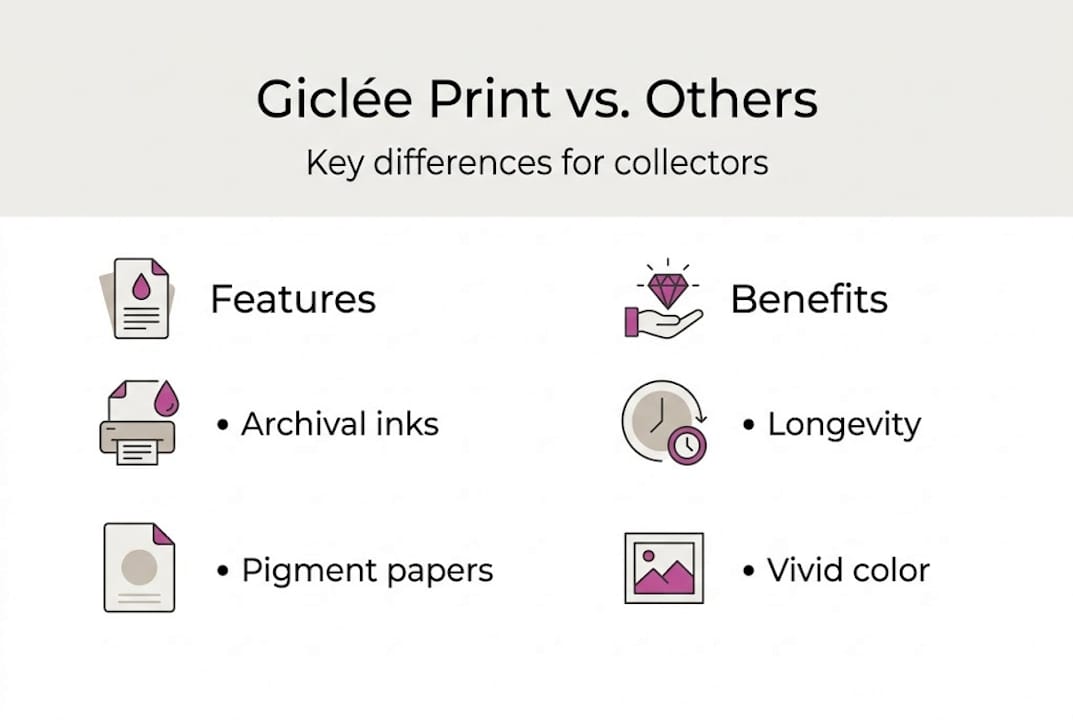
Today, a giclée print is a high-quality fine art reproduction method using specialized inkjet printers that spray microscopic droplets of pigment-based archival inks onto premium substrates like acid-free papers or canvas. That definition contains several important technical terms worth unpacking.
Pigment-based inks are chemically different from dye-based inks used in standard photo printers. Pigment particles sit on top of the substrate rather than soaking into it, which means they resist fading for far longer. Archival substrates refer to acid-free papers and cotton rag canvas that do not degrade or yellow over time. These two elements, combined with high-resolution printing (typically 1440 dpi or above), are what separate giclée from ordinary output.
To understand fine art printing explained in depth, it helps to know the core materials involved:
- A wide-format inkjet printer (such as those made by Epson or Canon, calibrated for fine art output)
- Archival, acid-free paper or cotton canvas substrate
- Pigment-based inks with long-term lightfastness ratings
- A high-resolution digital file of the original artwork (captured via professional scanning or photography)
- Color management software for accurate reproduction
Each of these elements contributes to the final print’s fidelity and longevity. Remove one, and the quality degrades.
Pro Tip: Always ask a printer or studio about their substrate before ordering. A great ink set on low-quality paper will still fade prematurely. Look for 100% cotton rag or alpha-cellulose acid-free papers with an ISO-rated lifespan.
Giclée vs. other print methods: What sets it apart?
Comparing giclée to other print formats helps clarify why artists and galleries have largely embraced it over older reproduction methods.
| Feature | Giclée | Lithograph | Offset print | Standard inkjet/photo |
|---|---|---|---|---|
| Color fidelity | Very high | High | Moderate | Moderate |
| Estimated lifespan | 75 to 200+ years | 50 to 100 years | 10 to 30 years | 10 to 25 years |
| Short-run suitability | Excellent | Poor | Poor | Good |
| Handmade element | Digital process | Hand-drawn plates | None | None |
| Typical cost | High | High to very high | Low | Low |
As the data shows, giclée is superior to offset and lithograph printing in color accuracy, detail, and short-run production, though it lacks the traditional handmade appeal of lithography. It consistently outperforms standard inkjet and photo prints in archival quality, though at a higher cost.
Artists and galleries prefer giclée for several practical reasons:
- Editions of any size can be printed on demand without setting up plates
- Color output matches the original painting more closely than any other reproduction method
- Prints can be produced on canvas, giving them a texture similar to original paintings
- Artists retain full control over edition size, paper choice, and finish
- Signed and numbered editions can be produced with the same quality consistency throughout
“Giclée is not a compromise. In terms of color range and fine detail, it can render what the artist actually painted more faithfully than any traditional print method.”
For those interested in long-term ownership, understanding archival preservation for prints and gallery quality standards is essential context when evaluating any fine art purchase.
Exploring the full range of art print mediums also helps collectors make more informed comparisons across formats.
Why choose giclée prints: Value for artists and collectors
Understanding what distinguishes giclée leads to the question: why do so many collectors and artists now choose this format?

Giclée revolutionized art reproduction by enabling limited editions with museum-quality fidelity, monetization for artists, and accessibility for collectors who cannot access or afford original works. That is not a small claim. It represents a structural shift in how the art market operates.
For collectors, the benefits are concrete:
- Access to important works. Collectors can acquire museum-quality reproductions of paintings — such as our framed archival art prints — that would otherwise be priced out of reach or unavailable.
- Consistent quality across an edition. Every print in a limited run is produced to the same standard, unlike hand-pulled prints where variation exists.
- Signed and numbered editions. When an artist signs and numbers a giclée, it becomes a documented, limited artwork with clear provenance.
- Resale potential. Limited giclée editions by established or rising artists can appreciate in value, particularly when editions are small and demand increases.
- Longevity as an asset. With archival materials and proper care, a giclée print retains its visual quality for generations.
The global fine art print market has grown consistently in recent years, with giclée editions representing an increasingly significant share of secondary market sales at auction and through dealers.
Pro Tip: Before buying any giclée, verify the edition size (smaller is better for resale), confirm the artist’s signature is original (not printed), and ask for a certificate of authenticity that specifies the ink type and substrate used.
The value of signed prints is directly tied to documentation and edition control. Artists who produce exclusive art prints in small runs create conditions for long-term value that standard open-edition prints cannot match.
Considerations before buying or selling giclée prints
With those reasons in mind, it is important to know what to look for before adding a giclée to your collection.
Start with a basic checklist:
- Certificate of authenticity: Confirms the print is a genuine limited edition with details on edition size, ink type, and substrate.
- Edition number: A handwritten number like “12/50” tells you exactly where the print falls in the run.
- Substrate specification: Ask whether the paper is acid-free and what the lightfastness rating is for the inks used.
- Artist signature: Should be original, not printed. Look for slight pressure variations that indicate a real pen or pencil.
- Print resolution: A genuine giclée will show fine gradients and detail without visible dot patterns at close inspection.
Red flags that suggest poor quality or misrepresentation:
- Visible halftone dot patterns (indicates offset or standard inkjet, not giclée)
- No certificate or vague documentation
- Printed signatures rather than handwritten ones
- Open editions labeled as “limited” without edition numbers
- Unusually low prices for supposedly archival materials
For collectors: value in signed limited editions is directly tied to resale potential if an artist gains wider recognition. Lithographs carry historical craft appeal, but giclée offers superior accuracy and longevity for contemporary works.
| Care factor | Giclée print | Standard print |
|---|---|---|
| Light exposure | Avoid direct sunlight; UV-filtering glass recommended | Minimal light tolerance |
| Humidity | 40 to 50% relative humidity | Prone to warping above 60% |
| Storage | Acid-free sleeves, flat or rolled in tubes | Standard folders acceptable |
| Handling | Cotton gloves; hold by edges only | Moderate care sufficient |
Knowing how to store art prints correctly and following a collecting art prints checklist helps protect your investment over the long term.
A collector’s take: Why giclée matters beyond the hype
Conventional wisdom in art collecting holds that only originals carry real value. That view is increasingly outdated. Museums store and exhibit giclée editions. Auction houses list them with provenance documentation. Galleries present them alongside paintings without apology.
The more useful question is not “is it original?” but “is it authentic to the artist’s intent?” A giclée produced under an artist’s direct supervision, printed on archival materials, signed, and issued in a controlled edition is a legitimate artwork in its own right. It is not a lesser object.
Giclée also makes collecting sustainable. Not every collector has the budget or the wall space for large-scale originals. A well-chosen limited edition giclée allows meaningful engagement with an artist’s body of work without requiring the highest price point of entry.
The impact of digital art prints on the broader art market demonstrates that technology, when applied with intention and rigor, does not diminish art. It extends its reach. Value is not just about the medium, but the artist’s intent and fidelity to the original.
Explore museum-quality prints and originals
If this guide has clarified what giclée printing is and why it matters, the next step is seeing the format in practice.
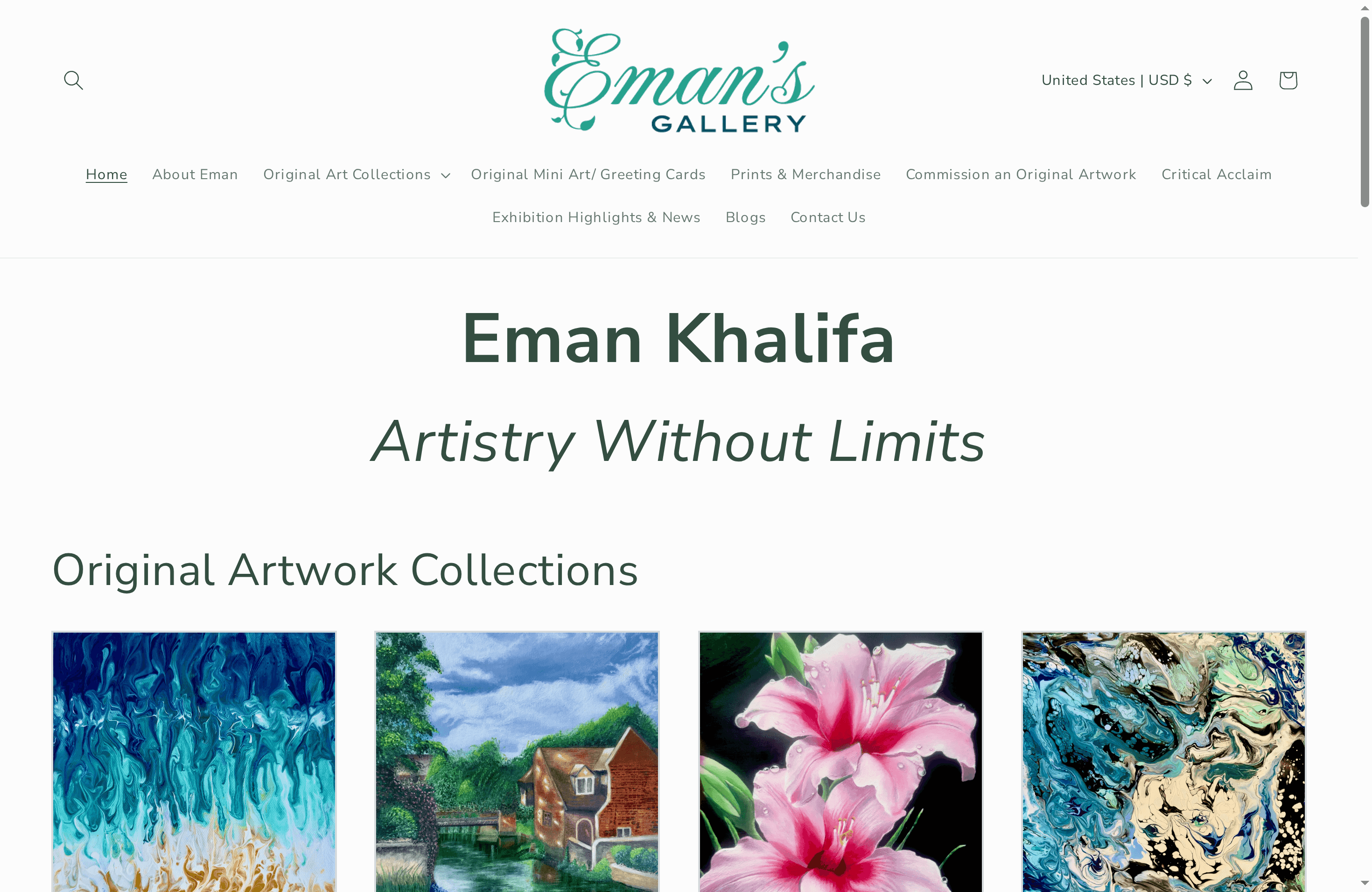
At Eman’s Gallery, you can browse museum-quality wall art prints collection produced to archival standards, including works like the Fragments of Memory giclée print, a fine example of how pigment printing translates a painting’s depth and detail onto canvas. If you prefer an original, the Good Tidings original painting by Eman Khalifa is available as a one-of-a-kind handmade work. Both options reflect the same commitment to material quality and artistic authenticity.
Frequently asked questions
Is a giclée print worth collecting?
Giclée prints in signed limited editions are highly collectible, offering museum-quality reproduction, archival durability, and measurable resale value when the artist gains wider recognition.
How can I tell if my print is a real giclée?
A genuine giclée will use archival pigment-based inks on acid-free paper or canvas, with a handwritten artist signature and edition number supported by a certificate of authenticity.
Do giclée prints fade over time?
Properly produced giclée prints using pigment inks on archival substrates can maintain their color integrity for 75 to 200 years or more when stored correctly and kept from direct sunlight.
Can artists make money from giclée prints?
Yes. Giclée enabled limited edition monetization for artists, allowing them to sell museum-quality prints at multiple price points while maintaining edition control and documentation.
Recommended
- What Is Fine Art Printing and Why It Matters
- What Is an Art Print? Complete Guide for 2025 - Eman’s Gallery
- Complete Guide to Why Collect Art Prints - Eman’s Gallery
- Complete Guide to Valuing Art Prints - Eman’s Gallery
Stay Connected
- ✨ Explore Eman Khalifa’s original art and fine art prints
- 📸 Follow Eman Khalifa’s art journey on: Instagram @emans_gallery and Facebook Eman’s Gallery
- 📹 Watch Eman Khalifa creating live art on: YouTube @emans_gallery
Shop Giclée & Fine Art Prints
Browse Eman's Gallery's archival-quality print collections:
- Framed Archival Art Prints — signed, limited edition giclée prints, ready to hang
- Canvas Art Prints — pigment-printed on premium canvas in multiple sizes
- Original Paintings — one-of-a-kind works for collectors ready to go beyond prints
