


Art Print Mediums Explained: Key Types and Uses
Over 60 percent of american art buyers say they are confused by the different print mediums available. This confusion often leads to common mistakes and missed opportunities to enjoy artwork at its full potential. With so many techniques and materials shaping how art is created and experienced, understanding what truly defines an art print medium clears away misconceptions and helps collectors make informed, confident choices.
Table of Contents
- Defining Art Print Mediums And Misconceptions
- Major Art Print Medium Types Compared
- How Print Mediums Impact Art Quality
- Selecting The Best Medium For Your Needs
- Costs, Longevity, And Common Mistakes
Key Takeaways
| Point | Details |
|---|---|
| Understanding Art Print Mediums | Art print mediums are essential for artistic expression and encompass complex processes, not just materials. |
| Diverse Techniques and Characteristics | Common art print mediums include screen printing, lithography, giclée printing, etching, and woodblock printing, each with unique properties shaping the final artwork. |
| Selection Considerations | Choosing an art print medium requires evaluating artwork style, display environment, budget, and personal aesthetic preferences. |
| Investment in Quality and Preservation | Understanding the balance between cost, longevity, and preservation is critical in making informed choices about art prints. |
Defining Art Print Mediums and Misconceptions
An art print medium represents the fundamental material and technique through which an artist creates and reproduces visual artwork, extending far beyond simple materials to encompass complex creative processes. According to Internet Encyclopedia of Philosophy, a medium is not merely a raw material but a sophisticated art-critical concept defined through artists’ intentional exploration and use.
Common misconceptions about art print mediums often stem from oversimplified understandings of artistic reproduction techniques. While many people assume art prints are straightforward copies, they actually involve intricate processes that require significant artistic skill and technical expertise. Grinnell College highlights how artists challenge traditional medium perceptions by utilizing unexpected materials and techniques to create complex, multi-layered artistic expressions.
The primary art print mediums include screen printing, lithography, giclée printing, etching, and woodblock printing. Each technique offers unique characteristics that influence the final artwork’s texture, color depth, and visual impact. Professional artists and printmakers carefully select specific mediums based on their creative vision, understanding that the chosen medium profoundly shapes how viewers perceive and experience the artwork.
Understanding art print mediums requires recognizing them as more than mere technical processes.
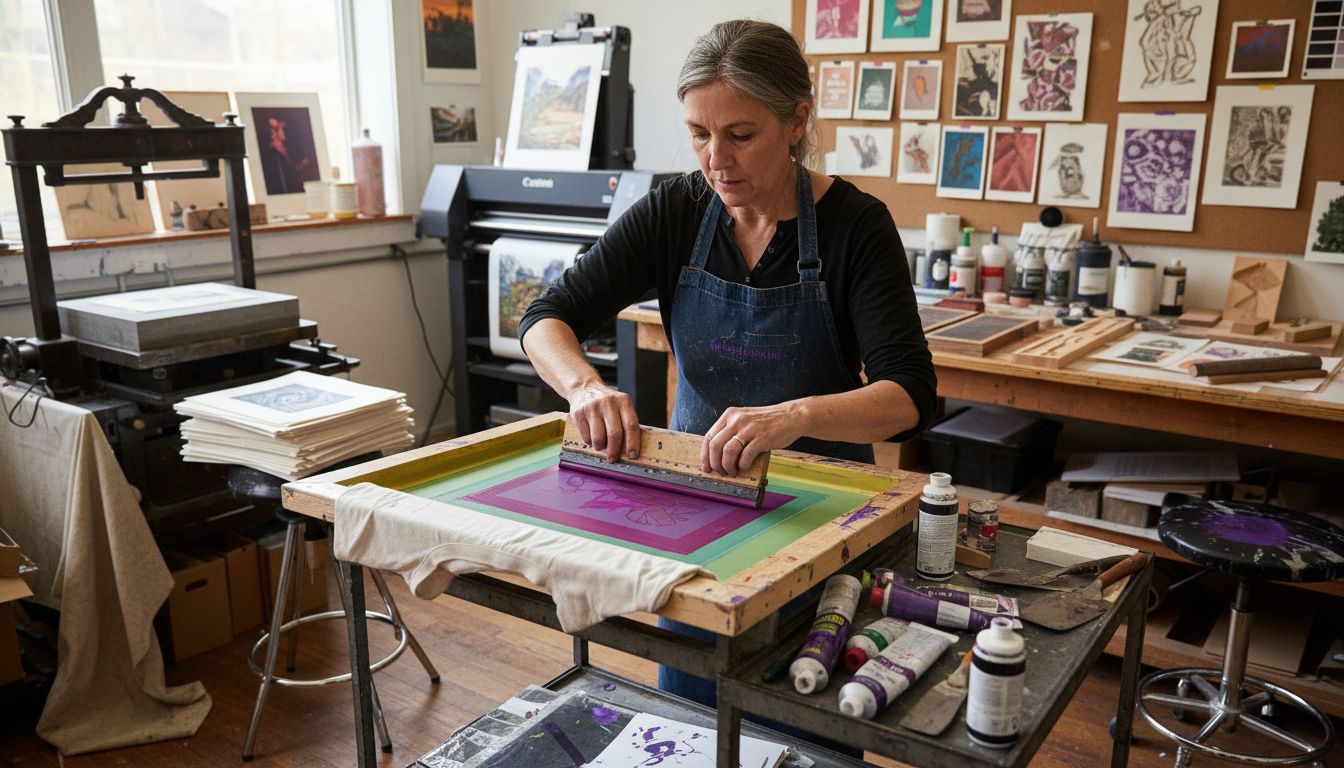 They represent a nuanced dialogue between artistic intention, material properties, and reproductive techniques. Artists like those featured in Eman’s Gallery continue to push boundaries, demonstrating that art print mediums are dynamic, evolving forms of creative expression that transcend traditional limitations.
Major Art Print Medium Types Compared
Art print mediums represent diverse techniques that transform artistic vision into reproducible works, each offering unique characteristics and creative possibilities. Podbase highlights the complexity of these mediums, detailing over ten distinct art print types including giclée, canvas, metal prints, lithography, and screen printing. Understanding these mediums involves recognizing their individual strengths and ideal applications in artistic production.
According to Luxwisp, printmaking techniques can be categorized into several fundamental approaches: relief printing, intaglio, lithography, and screen printing. Each technique produces distinctive textures and visual effects that profoundly impact the artwork’s aesthetic. Relief printing, for instance, involves carving images into surfaces like wood or linoleum, while intaglio techniques create designs by etching or engraving into metal plates.
Comparative analysis reveals significant variations among art print mediums:
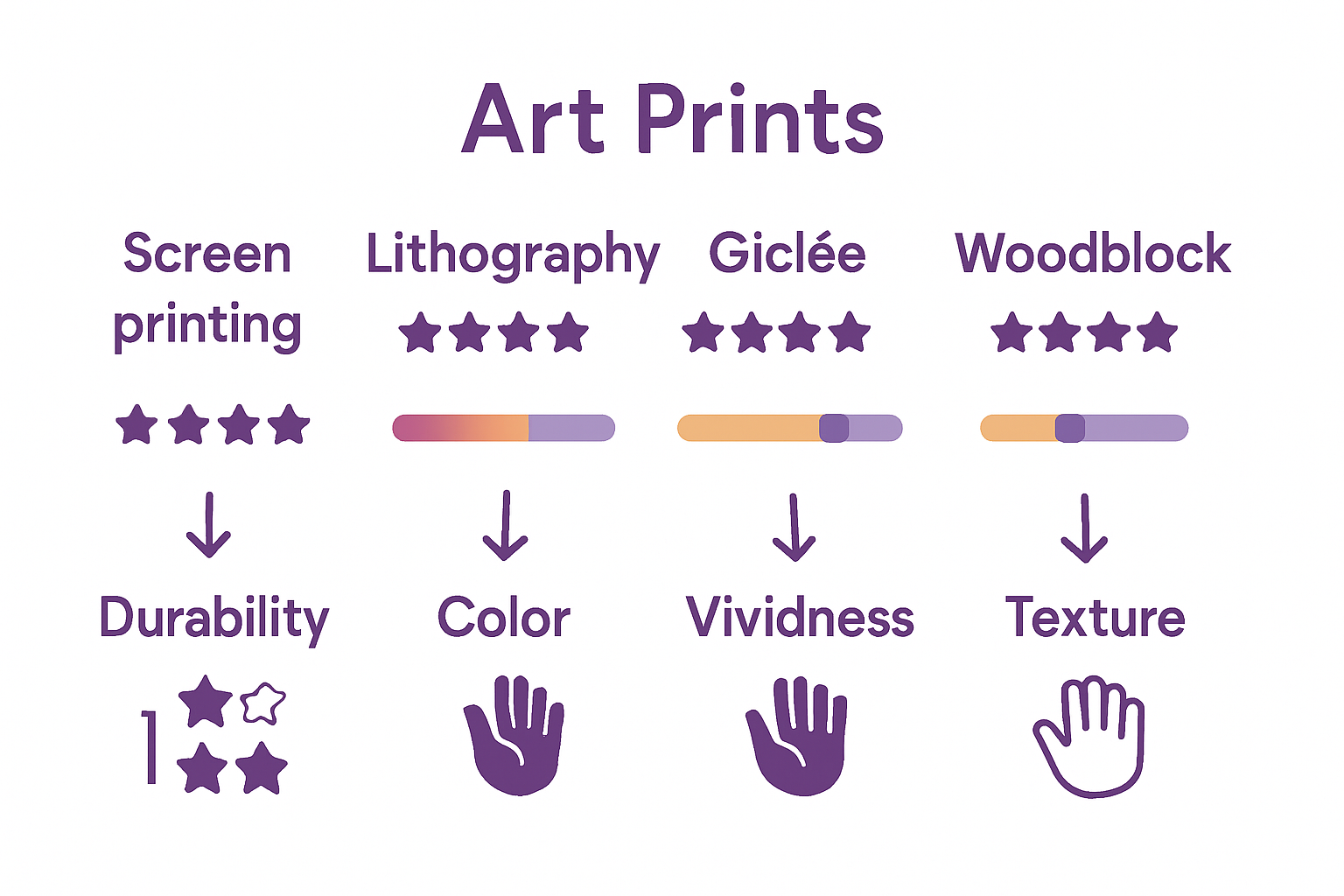
- Screen Printing: High durability, vibrant colors, works best for bold graphic designs
- Lithography: Excellent for detailed, nuanced images with smooth color transitions
- Giclée: Premium quality, archival-grade prints with exceptional color accuracy
- Etching: Offers intricate line work and rich textural details
- Woodblock Printing: Provides rustic, organic aesthetic with distinct grain characteristics
Professional artists strategically select print mediums based on their specific creative goals, understanding that each technique communicates artistic intent through its unique material properties. The choice of medium becomes an integral part of the artwork’s conceptual and visual narrative, transforming reproduction into a sophisticated form of artistic expression.
How Print Mediums Impact Art Quality
Print mediums fundamentally transform an artwork’s visual impact, durability, and aesthetic expression. Max Foster Photography reveals how different mediums like acrylic, metal, canvas, and paper critically influence the visual presentation and longevity of art prints, making medium selection a crucial artistic decision.
Arteum Prints emphasizes that selecting the appropriate medium requires careful consideration of the artwork’s inherent characteristics. Different mediums interact uniquely with color, light, and texture, potentially enhancing or diminishing an artwork’s original creative intent. For instance, metallic prints might amplify high-contrast images with sharp lines, while canvas prints can soften photographic or painterly compositions.
Key factors influencing art print quality include:
- Color Reproduction: How accurately the medium captures the original artwork’s color palette
- Texture Interaction: The medium’s surface characteristics that complement or modify the image
- Longevity: Resistance to fading, environmental degradation, and physical wear
- Light Reflection: How different mediums interact with ambient and directional lighting
- Archival Quality: The print’s ability to maintain its original appearance over extended periods
Professional artists and collectors understand that print mediums are not merely technical choices but critical artistic statements. Learn more about art print styles in our comprehensive reference guide, which explores the nuanced world of print mediums and their transformative potential in contemporary art presentation.
Selecting the Best Medium for Your Needs
Choosing the right art print medium is a nuanced process that requires careful consideration of multiple artistic and practical factors. Art print selection involves more than aesthetic preference—it demands understanding how different mediums interact with specific artistic styles, interior design contexts, and personal collection goals.
Artists and collectors should evaluate several critical dimensions when selecting a print medium:
- Artwork Style: Some mediums complement specific artistic genres better than others
- Display Environment: Consider lighting, humidity, and physical space characteristics
- Budget: Different mediums have varying production and preservation costs
- Intended Longevity: Some mediums offer superior archival qualities
- Personal Aesthetic Preference: How the medium enhances or transforms the original artwork
Practical decision-making involves matching the print medium to the artwork’s inherent qualities. High-contrast graphic designs might shine on metallic or acrylic surfaces, while soft watercolor paintings could benefit from the textural warmth of canvas prints. The goal is creating a harmonious interaction between the artwork’s original essence and its reproductive medium.
Professional art collectors understand that medium selection is an extension of artistic expression. Explore our comprehensive art print styles reference guide to deepen your understanding of how different print mediums can transform and elevate original artworks, helping you make informed decisions that respect the artist’s creative vision.
Costs, Longevity, and Common Mistakes
Art print investment requires understanding the delicate balance between cost, quality, and preservation. Art Classes UK reveals that digital prints have become increasingly economical and popular, while traditional methods like screen printing and lithography maintain a specialized market niche for discerning collectors.
Max Foster Photography highlights critical considerations in print medium selection, noting that while acrylic prints offer exceptional visual impact and durability, they come with a higher price point. Canvas and paper prints provide more budget-friendly alternatives but often require additional investment in framing and preservation.
Common mistakes artists and collectors should avoid include:
- Overlooking Environmental Factors: Ignoring humidity, direct sunlight, and temperature fluctuations
- Neglecting Archival Quality: Choosing cheaper prints that deteriorate quickly
- Improper Handling: Not using archival-grade materials for storage and display
- Mismatching Medium and Artwork: Selecting a print medium that doesn’t complement the original piece
- Underestimating Preservation Costs: Failing to budget for long-term artwork maintenance
Learn more about preserving your art prints in our comprehensive art print terminologies guide, which offers expert insights into protecting and maintaining your valuable art collection through informed medium selection and careful preservation techniques.
Discover How the Right Print Medium Elevates Your Art Experience
Understanding the power of different art print mediums can transform how you appreciate and display artwork. The challenges artists and collectors face in selecting the perfect medium—whether it be canvas, giclée, or screen printing—directly impact the artwork’s color vibrancy, texture, and longevity. At Eman’s Gallery, we solve this problem by offering premium museum-quality prints meticulously crafted to preserve the artist’s original intent and bring your space to life.
Explore our exquisite collection of Canvas Art Prints to experience firsthand how the print medium influences the depth and vibrancy of each piece. Whether you want to enhance your home with large-scale wall art or find one-of-a-kind original paintings, you will find the perfect match at Eman’s Gallery. Don’t wait to elevate your art collection with prints that combine creative vision and printmaking mastery. Start your journey today by browsing our durable and visually stunning Wall Art Prints — including framed archival giclée prints.
Frequently Asked Questions
What are the main types of art print mediums?
The primary art print mediums include screen printing, lithography, giclée printing, etching, and woodblock printing. Each medium has unique characteristics that influence the texture, color depth, and overall visual impact of the final artwork.
How does the choice of art print medium affect the quality of artwork?
The choice of medium impacts several key factors, including color reproduction, texture interaction, longevity, light reflection, and archival quality. Each medium interacts differently with these elements, enhancing or diminishing the artwork’s original creative intent.
What should I consider when selecting an art print medium?
When selecting an art print medium, consider the artwork’s style, display environment, budget, intended longevity, and personal aesthetic preferences. Matching the medium to the artwork’s specific qualities can enhance its overall presentation.
What are common mistakes to avoid when investing in art prints?
Common mistakes include overlooking environmental factors that can affect the print, neglecting archival quality, improper handling, mismatching the medium with the artwork, and underestimating preservation costs.
Shop by Print Medium
Experience the difference that medium makes — browse Eman's Gallery collections:
- Framed Archival Giclée Prints — museum-quality, archival-grade colour accuracy
- Canvas Art Prints — gallery-wrapped with rich texture and depth
- Wall Art Prints — all formats and sizes in one place
- Original Paintings — the ultimate medium: one-of-a-kind originals
Recommended
- Complete Guide to Why Buy Art Prints – Eman’s Gallery
- What Is an Art Print? Complete Guide for 2025 – Eman’s Gallery
- Art Print Terminologies: Complete Reference Guide – Eman’s Gallery
- 7 Essential Types of Art Prints for Every Decor Style – Eman’s Gallery
Stay Connected
- ✨ Explore Eman Khalifa’s original art and fine art prints
- 📸 Follow Eman Khalifa’s art journey on: Instagram @emans_gallery and Facebook Eman’s Gallery
- 📹 Watch Eman Khalifa creating live art on: YouTube @emans_gallery
- Supported by BabyLoveGrowth
