


How to Store Art Prints & Preserve Quality
How to Store Art Prints & Preserve Quality
Nearly half of collectors see their cherished art prints lose value because of poor storage and handling. Artwork is more than decor, it can hold deep personal meaning and even increase in worth over time. Knowing how to properly store and protect your prints helps keep them vibrant and damage free for years to come. With a few simple steps, anyone can create a safe home for their collection and avoid costly mistakes.
Table of Contents
- Step 1: Assess And Prepare Your Storage Space
- Step 2: Choose Appropriate Archival Materials
- Step 3: Handle Art Prints With Clean, Dry Hands
- Step 4: Store Art Prints Flat Or Rolled Securely
- Step 5: Control Temperature And Humidity Levels
- Step 6: Check And Maintain Print Condition Regularly
Quick Summary
| Key Point | Explanation |
|---|---|
| 1. Create a controlled environment | Store art prints in spaces with stable temperature and humidity, avoiding direct sunlight and quick changes in climate. |
| 2. Use archival materials for storage | Invest in acid-free folders and archival boxes to prevent chemical reactions that can damage your artwork. |
| 3. Handle prints with clean hands or gloves | Always wash hands or wear gloves to avoid transferring oils or dirt that can degrade print surfaces. |
| 4. Store prints flat or securely rolled | Optimize storage by keeping prints flat in protective boxes or using neutral-support folders if vertical storage is necessary. |
| 5. Inspect art prints regularly for damage | Schedule routine checks to identify and document any signs of deterioration or damage to your art prints. |
Step 1: Assess and prepare your storage space
When it comes to preserving your precious art prints, selecting the right storage space is more than just finding an empty shelf. You need a strategic environment that protects your artwork from potential damage. According to the New York State Library, the key is creating an environment with moderate temperature, good air circulation, and minimal exposure to harmful elements.
Start by scanning your potential storage areas with a critical eye. Look for spaces away from direct sunlight, heating vents, air conditioning units, and windows. These locations can cause dramatic temperature fluctuations that stress your artwork. The National Museum of African American History and Culture recommends maintaining a consistent temperature and avoiding bright or direct light to prevent fading and degradation.
Ideal storage areas include interior closets, dedicated art storage cabinets, or climate controlled spaces with stable humidity levels. Avoid basements, attics, or garages where temperature and moisture can change rapidly. If you’re serious about preservation, consider investing in a small dehumidifier or climate control device to maintain optimal conditions for your art prints. Your future self will thank you for taking these proactive steps to protect your valuable artwork.
Step 2: Choose appropriate archival materials
Protecting your art prints starts with selecting the right storage materials that prevent long term damage. As The National Archives emphasizes, the materials you choose are critical for preserving your artwork’s integrity and preventing deterioration over time.
Look for acid-free folders, archival quality storage boxes, and protective sleeves specifically designed for art preservation. The Library of Congress recommends using polyester, polypropylene, or polyethylene sleeves that provide stable protection without causing chemical reactions. Avoid standard plastic sheets, cardboard, or wood containers which can release harmful acids that gradually degrade your prints.
Consider investing in professional archival materials like lignin-free protective paper enclosures, archival tape, and museum grade storage boxes. These materials might seem like an extra expense, but they are your artwork’s best defense against environmental damage. Think of these materials as an insurance policy for your art prints protecting them from dust, moisture, and chemical breakdown. Your carefully selected prints deserve nothing less than top tier preservation materials.
Step 3: Handle art prints with clean, dry hands
Protecting your art prints starts with understanding the most critical preservation technique clean and careful handling. The Library of Congress emphasizes that how you touch your artwork can make the difference between preservation and permanent damage. Your hands carry oils, dirt, and microscopic particles that can slowly degrade delicate print surfaces.
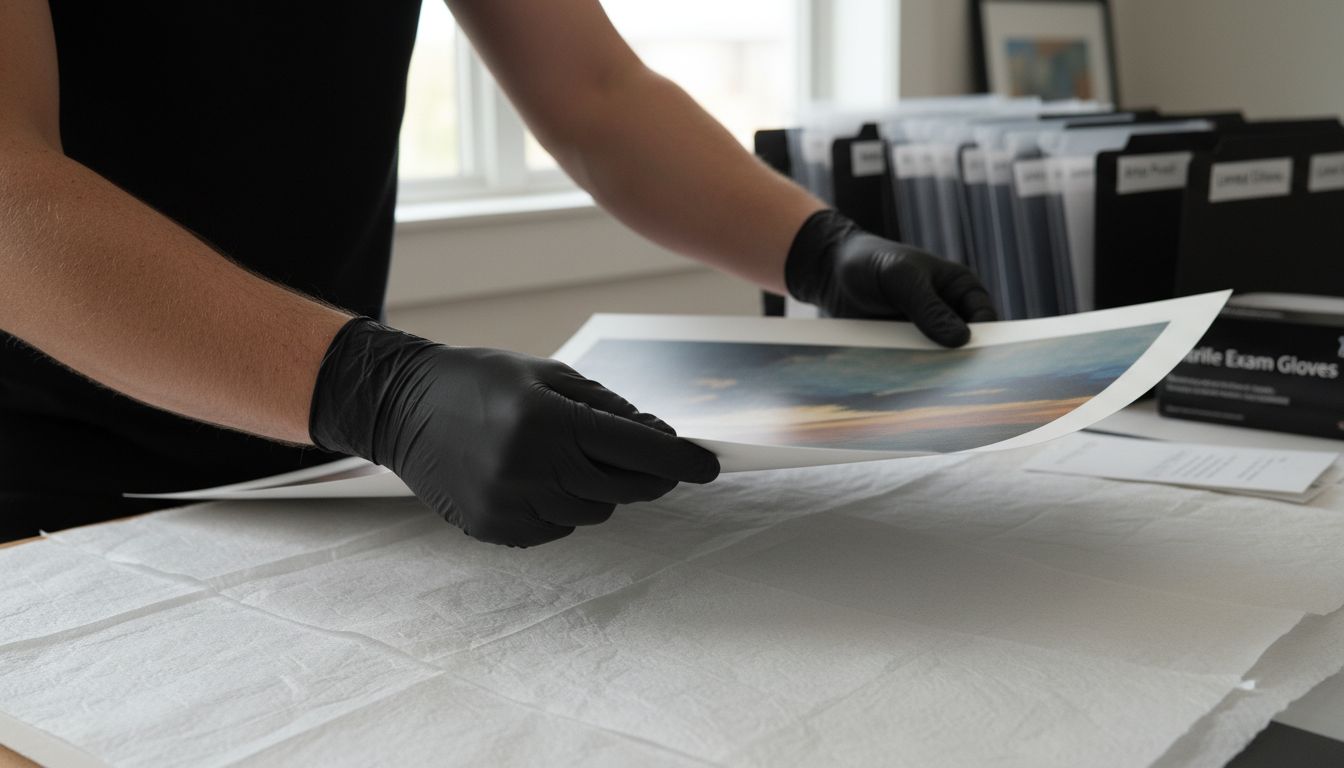
Always wash and thoroughly dry your hands before handling art prints, or better yet, use clean nitrile gloves as recommended by conservation experts. When moving or examining your prints, hold them by the edges only never touch the image area. The Northeast Document Conservation Center warns against using paper clips, rubber bands, or any adhesive materials that might leave residue or cause mechanical stress.
If you need to move multiple prints, create a safe handling environment by laying down a clean, soft surface like acid-free tissue paper. Work slowly and deliberately, keeping prints flat and supported at all times. Remember that each touch is a potential risk to your artwork. Your goal is to minimize direct contact and treat each print as the delicate historical artifact it truly is.
 Learn more about art print preservation in our complete guide to art prints.
Step 4: Store art prints flat or rolled securely
Choosing the right storage method can make the difference between preserving your art prints for decades or watching them deteriorate prematurely. The Northeast Document Conservation Center recommends storing oversized prints flat in specialized archival environments like map drawers or large protective boxes to minimize potential damage.
The National Archives strongly cautions against rolling photographs or prints, as this can cause permanent cracking of the delicate emulsion layer. If you must store prints vertically, use rigid archival folders with neutral or buffered materials to provide a protective barrier. When laying prints flat, create a supportive environment by using acid-free tissue paper between each print and ensuring they are not stacked too heavily.
For those with limited storage space, invest in archival quality print sleeves and rigid portfolio cases that keep your artwork protected and supported. Always store prints away from direct light, heat sources, and areas with fluctuating humidity. If you want to learn more about preserving your art collection, check out our guide to why collect art prints for additional insights into art preservation and collecting.
Step 5: Control temperature and humidity levels
Maintaining the right environmental conditions is crucial for preserving the longevity of your art prints. The Augusta Museum of History provides clear guidelines recommending a stable environment with temperatures around 70 degrees Fahrenheit and humidity levels between 40% and 50% to protect delicate paper materials.
The New York State Library warns against storing valuable items in areas prone to heat, dampness, or pollution. Invest in a small digital hygrometer to monitor temperature and humidity levels in your storage space. Consider using a dehumidifier or humidifier to maintain consistent conditions, especially if you live in an area with extreme seasonal changes. Avoid storing prints in basements, attics, or near windows where temperature fluctuations can cause rapid degradation.
Creating a controlled microclimate for your art prints might seem like extra work, but it is your best defense against environmental damage. Place silica gel packets in storage containers to help regulate moisture, and try to keep your artwork in an interior closet or room with minimal external wall exposure. If you want to dive deeper into art preservation techniques, check out our guide to why collect art prints for more professional insights.
Step 6: Check and maintain print condition regularly
The Smithsonian Associates Art Collectors Program emphasizes the critical importance of regularly inspecting your artwork for potential signs of damage. Your art prints are living documents that can quietly deteriorate without careful monitoring, making periodic check ups an essential part of preservation strategy.
The Northeast Document Conservation Center recommends a systematic approach to preventive conservation. Create a quarterly inspection routine where you carefully remove prints from storage and examine them under good lighting conditions. Look for subtle changes like discoloration, tiny tears, emerging creases, or any signs of moisture damage. Wear clean cotton gloves during these inspections to prevent transferring oils or dirt onto the prints.
Document your findings in a simple preservation log noting the date, condition, and any observations.
INFOGRAPHIC:infographic_content] If you notice significant damage, consult a professional art conservator rather than attempting repairs yourself. Small issues can quickly become major problems if left unchecked. For additional insights into maintaining your art collection, explore our [guide to why collect art prints and learn more about professional preservation techniques.
Protect Your Art Prints with Premium Solutions for Long-lasting Beauty
Storing art prints safely is essential to preserving their quality for years to come. You want to avoid damage from light, moisture, and handling while maintaining stable temperature and humidity. Investing in proper materials and a controlled environment makes all the difference. If you appreciate the delicate nature of your collection, you deserve artwork that is designed to last and be showcased without worry.
Explore our selection of Artwork Printed on Canvas – Eman’s Gallery to find durable, high-quality pieces that hold up beautifully over time. Our carefully crafted prints and originals are ready to enhance your space with lasting vibrancy and style. Take action now to protect your art by choosing trusted products from Eman’s Gallery. For a curated experience, browse unique styles in our Contemporary collection and Floral collection that blend artistic expression with lasting quality.
Frequently Asked Questions
How should I assess my storage space for art prints?
To assess your storage space, look for areas away from direct sunlight, heating vents, and windows. Choose a stable environment that maintains moderate temperature and humidity levels.
What archival materials are recommended for storing art prints?
Use acid-free folders, archival quality storage boxes, and protective sleeves made of polyester, polypropylene, or polyethylene. Make sure these materials are chemical-free to prevent damage from acids that can degrade your prints.
How can I handle my art prints safely?
Always handle art prints with clean, dry hands or wear clean nitrile gloves. Hold prints by the edges and avoid touching the image area to prevent oils or dirt from transferring onto the artwork.
What is the best way to store art prints—flat or rolled?
Store art prints flat in specialized archival environments like protective boxes to minimize damage. If you must store prints vertically, use rigid archival folders to protect them adequately.
How can I maintain ideal temperature and humidity levels for my art prints?
Aim to keep the storage area at approximately 70 degrees Fahrenheit with humidity levels between 40% and 50%. Use a hygrometer to monitor these conditions, and consider using a dehumidifier or humidifier as needed.
How often should I check the condition of my art prints?
Inspect your art prints at least quarterly for signs of damage, such as discoloration or creases. Document your findings in a preservation log to keep track of any changes over time.
Recommended
- What Is an Art Print? Complete Guide for 2025 – Eman’s Gallery
- Complete Guide to Why Collect Art Prints – Eman’s Gallery
- Complete Guide to Decorating With Art Prints – Eman’s Gallery
- Complete Guide to Why Buy Art Prints – Eman’s Gallery
- How to Buy Original Art Online: A Step-by-Step Guide – The Mansion Press
Stay Connected
- ✨ Explore Eman Khalifa’s original art and fine art prints
- 📸 Follow Eman Khalifa’s art journey on: Instagram @emans_gallery and Facebook Eman’s Gallery
- 📹 Watch Eman Khalifa creating live art on: YouTube @emans_gallery
- Supported by BabyLoveGrowth
