


Signed Art Prints: Value, Authenticity, and Investment
Collectors across the American art market know that a single signature can multiply an artwork’s value, with some signed prints commanding prices up to 300 percent higher than unsigned versions. For discerning American art collectors and interior designers, understanding what defines a true signed art print is crucial to making sound investment choices and curating luxury spaces. This resource lays out how authentic signatures impact worth, trust, and the allure of every piece displayed in a high-end setting.
Table of Contents
- What Is A Signed Art Print
- Types Of Signed Art Prints Explained
- Signature Placement And Authenticity Importance
- How Signatures Affect Print Value
- Risks, Legal Issues, And What To Avoid
Key Takeaways
| Point | Details |
|---|---|
| Signed Art Print Importance | A signed art print confirms authenticity, verifies artist approval, and enhances provenance, making it valuable to collectors. |
| Types of Signed Art Prints | Key categories include limited editions, artist’s proofs, and monoprints, each impacting market value based on scarcity and uniqueness. |
| Signature Authentication | Ensure signature legitimacy through professional verification and comparison with known examples to avoid forgery risks. |
| Potential Risks | Be aware of signature forgery, misrepresented editions, and unverified provenance, which can undermine investment value. |
What Is a Signed Art Print
A signed art print is a carefully crafted reproduction of an original artwork that carries the artist’s direct authentication through their personal signature. These specialized prints are created through intricate printmaking techniques like etching, lithography, or screen printing, transforming the original artwork into a reproducible format while maintaining artistic integrity.
The signature serves multiple critical purposes beyond mere decoration. It confirms the print’s authenticity, verifies the artist’s approval of the reproduction, and establishes the work’s provenance. Signed lithographs, for instance, represent a unique artistic process where the image is chemically transferred from a stone or metal plate, with the artist’s signature adding significant value and collectibility.
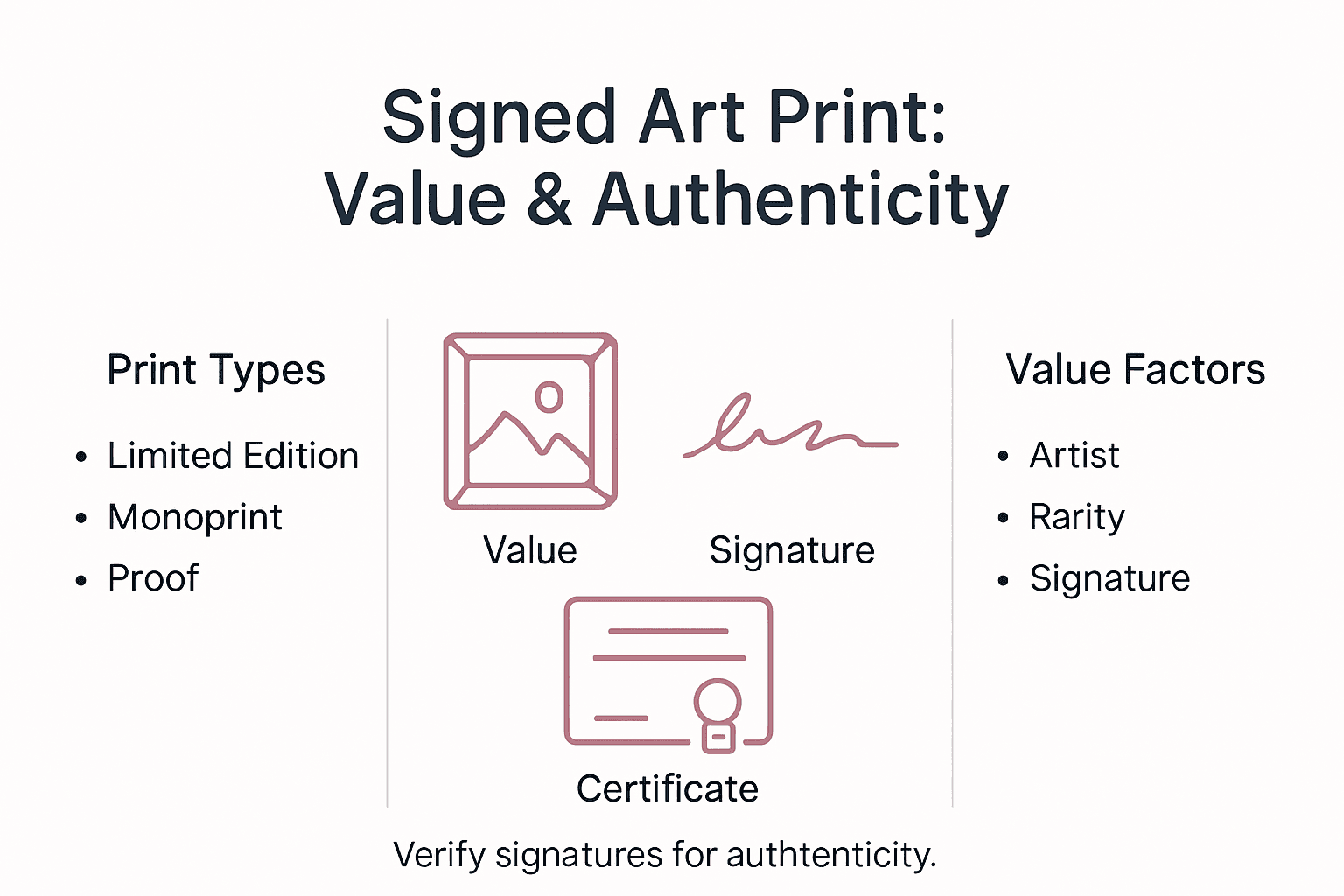
Typically, signed art prints fall into several categories that art collectors prize: limited edition prints (numbered and signed), artist’s proofs, monoprints, and special commemorative editions. Each type carries unique characteristics that influence its market value, with factors like edition size, print condition, and the artist’s reputation playing crucial roles in determining investment potential.
Pro Tip: When evaluating a signed art print, always verify the signature’s authenticity by comparing it with known examples from the artist and consider obtaining a certificate of authenticity from a reputable art expert or gallery.
Types of Signed Art Prints Explained
Different types of signed art prints represent unique artistic expressions that offer collectors diverse options for acquiring authenticated artwork. The primary categories include limited edition prints, artist’s proofs, and specialized reproduction techniques that each carry distinct characteristics and value propositions.

Limited edition prints are carefully numbered and signed by the artist, establishing a clear sense of scarcity and exclusivity. These prints typically have a predetermined maximum number of reproductions, with each piece numbered (e.g., 5/100) to indicate its specific place within the total edition. Lithographs represent another significant category, with hand-signed prints being particularly prized by collectors, distinguished from plate-signed prints which feature signatures printed as part of the original image.
The most notable signed print categories encompass several specialized types:
- Limited Edition Prints: Numbered and signed, with a fixed total reproduction count
- Artist’s Proofs: Special prints retained by the artist for quality control
- Monoprints: Unique prints with singular designs, each signed individually
- Commemorative Editions: Special prints created to mark significant artistic moments
Pro Tip: When collecting signed art prints, always verify the authenticity of the signature and request documentation that confirms the print’s provenance and edition details.
Here’s a quick overview of the unique characteristics of major signed print types:
| Print Type | Defining Feature | Collector Value Impact |
|---|---|---|
| Limited Edition Print | Fixed, numbered edition | High exclusivity, prized |
| Artist’s Proof | Set aside by artist, unique | Often valued above edition |
| Monoprint | Single one-off design | Maximum uniqueness |
| Commemorative Edition | Marks a special event or period | Heightened interest, variable |
Signature Placement and Authenticity Importance
Signature placement represents a critical element in art print authentication, serving as more than a mere decorative element. Artists carefully consider their signature’s location, often choosing between the artwork’s verso (back) or visible front margins to maintain aesthetic integrity while ensuring the print’s historical documentation.
The authentication process involves multiple sophisticated verification techniques. Collectors and experts employ detailed examination methods to confirm signature legitimacy, including:
- Comparing signature style against known authentic examples
- Magnification analysis to detect potential forgery
- Cross-referencing edition numbers and provenance documentation
- Analyzing ink consistency and signature characteristics
Signature positioning typically follows established art world conventions, with most artists preferring to sign:
- Below the image area
- In the bottom right margin
- On the verso (back) of the artwork
- Using consistent ink color and style
Pro Tip: Request a professional authentication certificate when purchasing signed art prints, and always photograph the signature from multiple angles to document its original condition and placement.
Compare common signature placements and their benefits:
| Placement Location | Frequency Among Artists | Authentication Benefit |
|---|---|---|
| Bottom right margin | Most common | Highly visible, enhances provenance |
| Below image area | Frequent | Retains image aesthetics |
| Verso (back) | Less common | Preserves unobstructed view, discreet |
How Signatures Affect Print Value
Artist signatures fundamentally transform an art print’s market value, elevating it from a simple reproduction to a verified, collectible artwork. Hand-signed limited editions represent the pinnacle of print desirability, with collectors and investors placing significant premium on authentically signed works that demonstrate direct connection to the artist.
Print signatures serve multiple critical functions in determining investment potential, influencing market perception through several key factors:
- Verifying artistic authenticity
- Confirming limited edition status
- Establishing direct artist provenance
- Documenting the work’s unique historical context
The value calculation for signed prints involves complex considerations:
- Edition Size: Smaller editions increase rarity and collector interest
- Artist Reputation: Renowned artists command higher signature values
- Print Condition: Pristine signatures enhance overall artwork worth
- Verification Methods: Professional authentication significantly boosts market confidence
Pro Tip: Invest in signed prints from emerging artists with consistent signature styles and maintain comprehensive documentation to maximize potential future value.
Risks, Legal Issues, and What to Avoid
Legal complexities surrounding signed art prints present significant challenges for collectors and investors, demanding vigilant authentication and comprehensive understanding of potential risks. The art market’s intricate landscape requires careful navigation to protect financial investments and ensure genuine artistic acquisitions.
Collectors must be acutely aware of multiple critical risks when purchasing signed prints, including:
- Signature Forgery: Unauthorized reproductions mimicking artist signatures
- Edition Number Misrepresentation: False claims about print scarcity
- Provenance Inconsistencies: Unclear or fabricated artwork documentation
- Copyright Violations: Unauthorized reproductions without artist consent
Key warning signs that should immediately raise suspicion include:
- Signatures inconsistent with known artist styles
- Prints lacking proper authentication certificates
- Unusually low prices for allegedly rare editions
- Sellers unable to provide comprehensive artwork documentation
- Missing or questionable edition numbering
Pro Tip: Always request comprehensive documentation, employ independent authentication experts, and purchase signed prints exclusively from reputable galleries with transparent verification processes.
Elevate Your Collection with Authentic Signed Art Prints from Eman Khalifa
Navigating the complex world of signed art prints can be challenging, especially when authenticity and investment value are at stake. This article highlights the importance of verifying signatures, understanding edition sizes, and avoiding common risks in acquiring valuable artwork. If you seek genuine, museum-quality signed prints that combine exclusivity with artistic integrity, start exploring Eman Khalifa’s curated collections.
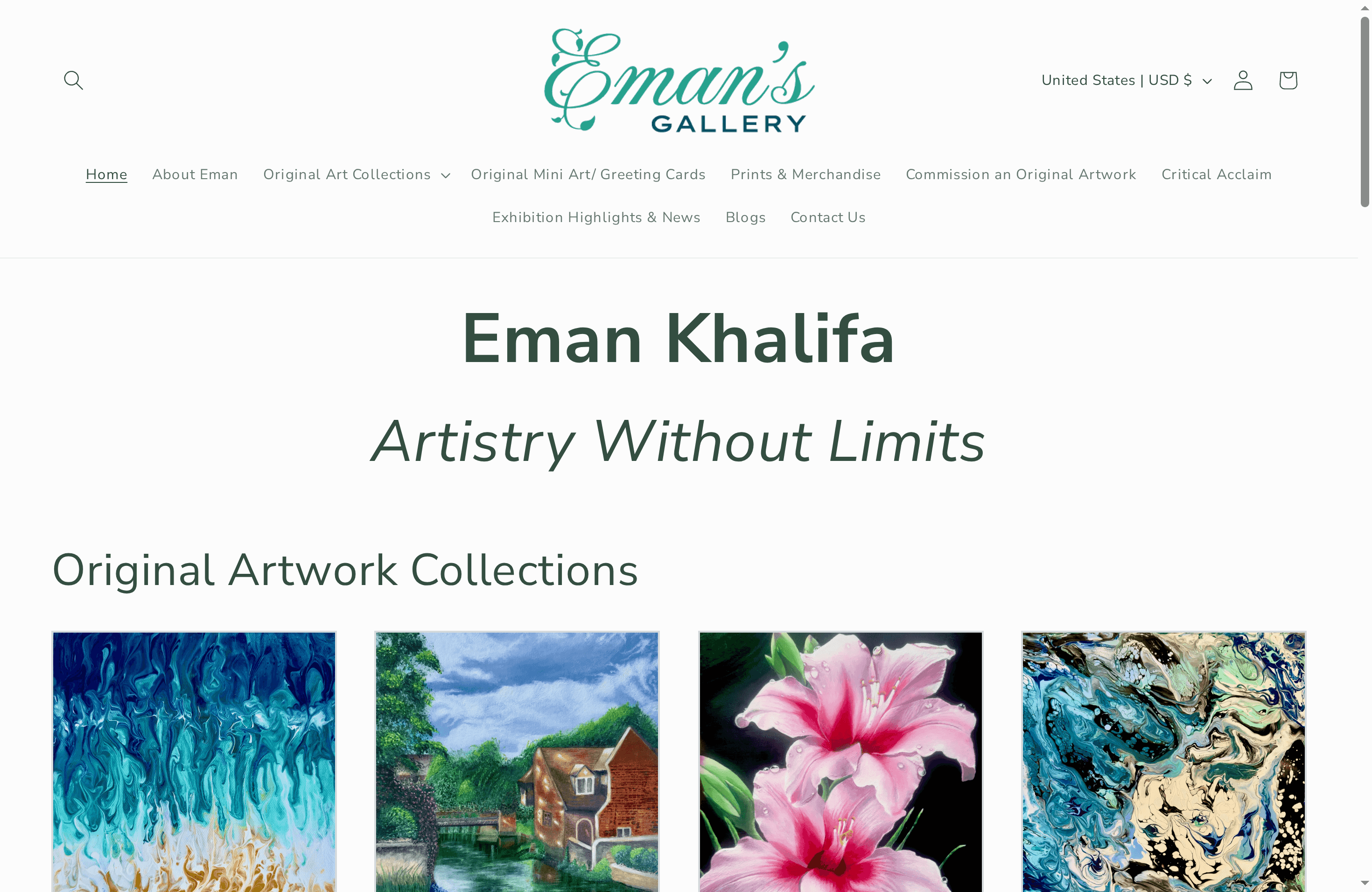
Discover the beauty and authenticity of limited edition pieces in the Canvas Art Prints by Eman Khalifa | Premium Giclée Wall Art collection. For those inspired by nature’s forms, explore the elegant designs in Desire - From Floral Art to Prints & Merch | by Eman Khalifa. These works come with the assurance of direct artist involvement and provenance, perfect for serious collectors and first-time investors alike. Act now to secure a unique signed print that holds lasting value. Visit Eman’s Gallery to begin your authentic art journey today.
Frequently Asked Questions
What is a signed art print?
A signed art print is a reproduction of original artwork that includes the artist’s signature, confirming its authenticity and value.
How does the signature affect the value of a signed art print?
The signature elevates the artwork’s market value by verifying its authenticity, confirming limited edition status, and establishing a direct connection with the artist.
What are the different types of signed art prints?
Different types of signed art prints include limited edition prints, artist’s proofs, monoprints, and commemorative editions, each with unique characteristics and varying values.
How can I verify the authenticity of a signed art print?
To verify authenticity, compare the signature with known examples, analyze ink consistency, and consider obtaining a certificate of authenticity from a reputable expert or gallery.
Recommended
- Complete Guide to Valuing Art Prints – Eman’s Gallery
- What Is an Art Print? Complete Guide for 2025 – Eman’s Gallery
- Top Art Print Merchandise – Expert Comparison 2026
- Complete Guide to Why Collect Art Prints – Eman’s Gallery
Stay Connected
- ✨ Explore Eman Khalifa’s original art and fine art prints
- 📸 Follow Eman Khalifa’s art journey on: Instagram @emans_gallery and Facebook Eman’s Gallery
- 📹 Watch Eman Khalifa creating live art on: YouTube @emans_gallery
