


Exclusive Art Prints: Elevating Luxury Home Spaces
Selecting art prints for a luxury space or investment collection brings a unique challenge when the term exclusive is so often misapplied. For collectors in the United Kingdom and the United States, distinguishing a true exclusive art print from a mass-market reproduction is vital for both style and financial return. In this guide, you will discover how original prints are handcrafted artworks created using traditional printmaking techniques while fine art prints use museum-quality materials that stand the test of time.
Table of Contents
- Exclusive Art Prints Defined and Debunked
- Types of Exclusive Art Prints and Editions
- Key Features: Rarity, Authentication, and Value
- Collector Rights, Copyright, and Legal Concerns
- Investment Potential and Common Pitfalls
Key Takeaways
| Point | Details |
|---|---|
| Understanding Exclusivity | Exclusive art prints are numbered, signed reproductions made in limited quantities, differentiating them from standard posters and commercial prints. |
| Importance of Rarity | Rarity drives investment value; smaller editions of prints command higher prices due to their limited availability. |
| Need for Authentication | Always seek documentation to verify authenticity, as this significantly impacts resale value and market appeal. |
| Collector Responsibilities | Understand copyright laws and moral rights, ensuring that you comply with legal obligations when displaying or selling art prints. |
Exclusive Art Prints Defined and Debunked
The term “exclusive art prints” carries weight in luxury design circles, yet it often gets misused or misunderstood. What exactly separates a genuine exclusive art print from a mass-produced poster or standard reproduction? The answer lies in the intersection of technique, materials, and intentional limitation. An exclusive art print is fundamentally a high-quality reproduction created using archival methods, produced in limited quantities, and typically numbered and signed by the artist. This distinction matters enormously when you’re investing in pieces for your home’s aesthetic and financial value.
Let’s clear up the confusion around what makes a print “exclusive.” Many collectors unknowingly conflate several different types of prints. Original prints are handcrafted artworks created using traditional printmaking techniques, such as lithography, etching, or screen printing, where the artist directly creates each piece. Fine art prints, by contrast, are high-quality reproductions using archival inkjet printing, often called giclée prints, which employ museum-grade inks and papers designed to last 100+ years. Then you have digital prints, which are mass-produced using standard printers and offer minimal longevity. Finally, there are posters: inexpensive reproductions on lightweight paper that fade quickly and lack any collectible value.
For an art print to qualify as truly exclusive, it must meet specific criteria. The edition size must be limited, meaning only a predetermined number of copies are produced before the printing plate or digital file is destroyed or retired. Each print in that edition should be numbered (for example, “5/50” means this is the fifth print in an edition of fifty) and signed by the artist, authenticating it as an intentional creation rather than a casual reproduction. The materials used matter equally. Archival-quality paper and pigments ensure your investment maintains its color vibrancy and structural integrity over decades. The production method should employ professional equipment and processes that honor the original artwork’s intent. Without these elements, you’re simply purchasing wall decoration, not an investment piece.
Here’s where many designers and collectors trip up: not all numbered prints are created equal. Some artists produce editions of 500 or 1,000 copies, which technically makes them limited but hardly exclusive. Others offer “open editions,” where prints are made indefinitely. The market value and desirability of a print depend heavily on edition size, artist reputation, historical significance, and condition. When evaluating prints for your luxury home, consider whether the edition size aligns with your definition of exclusivity. A 25-piece limited edition carries more prestige than a 500-piece run, and original printmaking techniques command higher prices than reproduction methods due to their unique nature and labor intensity.
Here’s a quick reference on how exclusivity factors affect art print value:
| Exclusivity Factor | Impact on Value | Practical Example |
|---|---|---|
| Edition Size | Smaller raises price | 25-piece run vs. 500-piece run |
| Artist Signature | Increases authenticity | Hand-signed vs. unsigned prints |
| Documentation | Essential for resale | Certificate of authenticity provided |
| Material Quality | Ensures longevity | Archival paper vs. standard paper |
The confusion deepens when marketing language obscures reality. Terms like “limited edition print,” “fine art print,” and “artist print” get thrown around casually, sometimes referring to products that don’t truly merit those labels. This is why understanding the fundamentals of printmaking and reproduction methods protects your purchasing decisions. When you’re sourcing pieces from professional artists offering museum-quality prints, you gain access to works where every detail has been carefully considered: the artist’s signature, the numbered edition, the archival materials, and the production process all combine to create something genuinely valuable.
Pro tip: Always request documentation of the edition number, total edition size, and production method before purchasing an exclusive art print for your collection, as this information directly impacts both aesthetic longevity and resale value.
Types of Exclusive Art Prints and Editions
When you start building a luxury art collection, understanding the different types of prints available becomes your foundation for making informed decisions. Not all prints carry the same weight in terms of investment value, longevity, or authenticity. The market distinguishes between several categories, each with its own characteristics, price point, and appeal to collectors. Knowing where each type sits on the spectrum helps you allocate your budget wisely and select pieces that genuinely align with your home’s aesthetic and financial goals.
Original Prints and Traditional Techniques
At the top of the exclusivity hierarchy sit original prints. These are artworks created directly by the artist using traditional printmaking methods such as etching, lithography, woodcut, and screen printing. What makes these special is that each print in the edition differs slightly because of the hand-driven nature of the process. The artist physically creates each impression, meaning no two are identical. Lithography, for instance, involves drawing on a stone with grease-based materials, then using chemical processes to create prints from that stone. Etching requires the artist to incise lines into a metal plate. Screen printing involves hand-pulling ink through silk screens for each layer of color. These techniques demand significant skill, time, and craftsmanship. Because of their labor-intensive nature and the artist’s direct involvement, original prints command premium prices. They represent true creative collaboration between artist and medium, and collectors recognize this authenticity.
Fine Art Prints and Giclée Reproductions
Fine art prints, commonly called giclée prints, occupy the middle tier of exclusive art prints. These are high-quality reproductions created using archival pigment-based inks and acid-free papers, designed to remain vibrant and structurally sound for over a century. The term “giclée” comes from the French word for spray, referring to the inkjet technology that applies color with remarkable precision. What distinguishes fine art prints from standard digital prints is the meticulous attention to material quality and production standards. Museums use giclée technology to create authorized reproductions of their collections because the color accuracy and longevity rival framed original artworks. When produced in limited editions with proper numbering and artist signatures, giclée prints become legitimate collectible pieces. Interior designers and collectors favor these because they offer the aesthetic impact of an original at a more accessible price point, without sacrificing quality or permanence.

Screenprints represent another category of fine art print. Artists create a separate screen for each color layer, manually pulling ink through those screens onto paper or canvas. This method allows for artistic control and variation within editions, making each piece in the run slightly unique. Screenprints typically command higher prices than giclée prints but remain more affordable than original etchings or lithographs.
Commercial and Digital Prints
At the lower end of the market sit commercial prints and standard digital prints. Commercial prints are mass-produced using offset printing, the method used for posters and retail art. Digital prints simply mean an image file sent directly to a standard printer, resulting in unlimited copies without numbered editions or artist involvement. Both categories lack the archival qualities of fine art prints. The paper deteriorates faster, colors fade within years, and there is no scarcity or collectibility. You might display them in a rental apartment or guest bedroom, but they do not belong in a luxury investment collection.
Edition Types and What They Mean for Value
Beyond the production method, exclusivity hinges on edition structure. A numbered limited edition means the artist declares a specific quantity before production begins. An edition of 50 prints, numbered 1/50 through 50/50, is more exclusive than an edition of 500. Some artists create open editions, printing continuously until they retire the artwork, which eliminates scarcity. Artist’s proofs (marked A.P.) are test prints created before the main edition, typically kept by the artist or given to galleries. These sometimes trade at premium prices because they represent the artist’s personal selection. When evaluating pieces for your collection, understanding the value and authenticity implications of signed prints becomes essential, as signature placement and numbering directly impact market desirability.
Another distinction involves publisher editions versus artist editions. Publisher editions mean a gallery, museum, or commercial publisher controlled production and owns the printing plate or digital file. Artist editions mean the artist retains control and ownership of the original artwork and all subsequent printing. For luxury collectors, artist-controlled editions typically hold more value because the artist can ensure quality standards and ultimately retire the edition if desired.
The table below summarizes how these categories compare:
| Print Type | Production Method | Longevity | Typical Edition Size | Price Range | Investment Value |
|---|---|---|---|---|---|
| Original Print | Etching, lithography, screen print | 100+ years | 50-200 | $500-5,000+ | High |
| Giclée Fine Art | Archival inkjet | 100+ years | 100-500 | $200-2,000 | Medium-High |
| Screenprint | Hand-pulled through screens | 80-100 years | 50-250 | $150-1,500 | Medium |
| Commercial Print | Offset printing | 10-20 years | Unlimited | $20-200 | Low |
| Digital Print | Standard printer | 5-10 years | Unlimited | $10-100 | Very Low |
When shopping for pieces to elevate your luxury home, the type of print fundamentally shapes your investment. Original prints and limited-edition fine art prints appreciate over time as the artist gains recognition and pieces leave circulation. Commercial and digital prints depreciate immediately and offer no collector value. Your decision should reflect both your immediate aesthetic needs and your long-term vision for your collection.
Pro tip: When comparing prints in the same price range, always prioritize edition size over production method, as scarcity drives market appreciation far more than the specific printing technique.
Key Features: Rarity, Authentication, and Value
Three elements separate a truly valuable art print from a mediocre purchase: how rare it is, whether it can be authenticated, and what the market will pay for it. These factors intertwine in ways that catch many collectors off guard. You might find a beautiful print at an affordable price, only to discover later that thousands of identical copies exist or that its authenticity cannot be verified. Understanding how rarity, authentication, and value connect protects your investment and ensures your collection appreciates rather than depreciates over time.
Rarity: The Foundation of Investment Value
Rarity creates scarcity, and scarcity drives value. An original print from a run of 25 copies carries exponentially more collector appeal than the same artwork printed 5,000 times. When artists retire their plates or digital files after completing a limited edition, they lock in scarcity permanently. This is why numbered limited editions command premium prices compared to open editions. But rarity extends beyond edition size. Prints by deceased artists cannot be reproduced with new editions, making existing copies increasingly valuable as time passes. Prints from historically significant movements or by artists who later gained prominence become scarcer as collectors hold them rather than sell. Market demand compounds this effect. A print that initially seemed common becomes rare once collectors recognize its significance and begin acquiring it, pulling copies from the market.
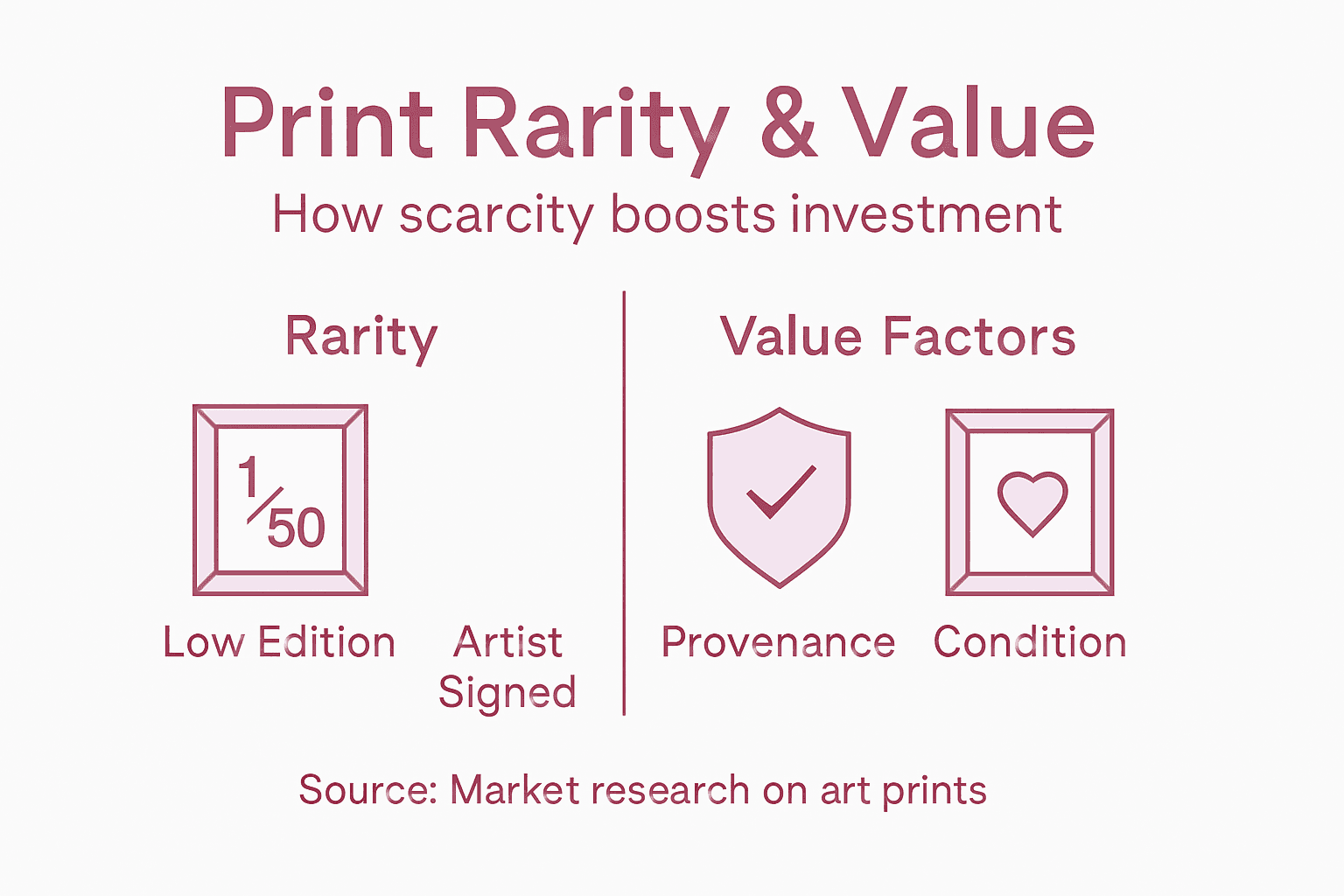
Rarity and condition strongly impact print value, making these two factors inseparable in your assessment strategy. A pristine print in an edition of 100 might be worth twice what a faded print from an edition of 50 commands, because condition issues signal deterioration and suggest the piece may not survive another 50 years in your collection. Collectors paying premium prices expect their investments to retain physical integrity alongside rarity.
Authentication: Verifying What You Own
Authentication answers a critical question: Is this print genuine, and can you prove it? Counterfeit art prints exist, particularly for high-demand artists and vintage pieces. Authenticated prints come with documentation proving the artist created or approved them, the production method used, the edition details, and the printing date. This documentation transforms a questionable print into a defensible asset.
Authentication occurs through multiple channels. Artist signatures and numbered editions provide the first layer, though signatures alone do not guarantee authenticity since they can be forged. Verified provenance tells the ownership history of a piece from artist to current owner. Gallery certificates of authenticity from reputable dealers carry weight because galleries stake their reputation on accurate authentication. For high-value purchases, third-party authentication from art experts or auction houses becomes essential. These professionals examine paper type, ink characteristics, aging patterns, and printing technique to determine if a print matches known production records.
The challenge intensifies with vintage prints. Knowing the historical context, original production methods, and print edition size helps assess authenticity, but verifying this information requires research or expert consultation. Vintage prints from the early 20th century present particular authentication difficulties because production records may not exist, artists may not have signed works consistently, and editions may have been printed in multiple batches over years. This is why vintage print values depend so heavily on documented provenance and condition.
The Value Equation: When Rarity Meets Authentication
Value emerges from the intersection of rarity and authentication. A rare, authenticated print commands top-tier prices. A rare print that cannot be authenticated drops significantly in value because buyers cannot confidently resell it later. An authenticated print that is common holds modest value. An unauthenticated, common print has minimal value beyond decoration.
Market demand amplifies this dynamic. A print by a living artist gaining international recognition becomes more valuable even if edition size remains constant, because collector demand increases faster than the supply of available copies. Conversely, a print by a forgotten artist, however rare, may struggle to find buyers at any price. This is why understanding an artist’s trajectory matters. Emerging artists whose work shows gallery representation, critical recognition, and exhibition history represent better long-term investments than prints by unknown artists, regardless of current pricing.
Pro tip: Request detailed authentication documentation and complete provenance records before purchasing any print above $500, and store these documents separately from the artwork in archival-quality folders to preserve your proof of ownership.
Collector Rights, Copyright, and Legal Concerns
Owning an art print is not as simple as hanging it on your wall and enjoying it. Behind every legitimate print sits a web of legal frameworks protecting artists, publishers, and collectors. Understanding your rights and responsibilities as a collector prevents costly mistakes and ensures your collection remains defensible if you ever decide to sell, donate, or display pieces publicly. The legal landscape covers copyright ownership, reproduction rights, moral rights, and compliance obligations that many collectors overlook until they face a problem.
Understanding Copyright and Reproduction Rights
Copyright is the legal right to control how an artwork is used, reproduced, distributed, and displayed. When you purchase an art print, you do not automatically own the copyright to the original artwork. You own the physical print itself, but the artist or their estate typically retains copyright unless explicitly transferred through a written agreement. This distinction matters tremendously. Copyright protects original artworks and controls reproduction and distribution, meaning you cannot legally scan, photograph, and reproduce prints for sale or commercial purposes without permission from the copyright holder.
The copyright term extends for the artist’s lifetime plus 70 years in the United States, creating a long period during which the artist’s heirs or representatives control reproduction. For prints by deceased artists, determining who currently holds copyright requires research into estate transfers and licensing agreements. When you purchase a limited edition print, the artist has typically authorized that specific production run but has not authorized you to create additional copies. This is why unauthorized reproductions constitute copyright infringement, even if you own an original print.
What you can legally do with a print you own includes display in your private home, sale of the physical print itself to another collector, and preservation through proper storage and conservation. What you cannot do includes creating derivative works, reproducing the image for merchandise or fine art printing, or publishing the image without permission. These restrictions protect artists’ ability to control their work’s distribution and monetization.
Moral Rights and Artist Attribution
Beyond copyright, moral rights protect artists’ interests in how their work is presented and attributed. Moral rights allow artists to claim authorship, prevent modifications to their work, and object to treatments that harm their reputation. In the United States, moral rights protections are more limited than in European countries, but they still carry legal weight. If you own a print, you cannot alter it significantly, misattribute it to a different artist, or use it in ways that damage the original artist’s reputation.
Attribution matters legally and ethically. When displaying or discussing a print you own, accurately credit the artist. If you sell a print, provide the buyer with correct artist information and provenance details. Misrepresenting a print’s origin or authorship constitutes fraud and exposes you to legal liability, particularly if the misrepresentation affects the purchase price.
Collector Responsibilities and Legal Compliance
As a collector, you bear responsibility for legal compliance in several areas. Collectors must determine and satisfy copyright or other use restrictions when publishing or distributing art prints, meaning due diligence falls on you before taking any public action with your prints. If you plan to photograph prints for insurance documentation, share images on social media, or publish them in articles or books, you must verify copyright status and obtain permission if necessary.
Import and export laws add another layer. Transporting valuable prints across international borders requires understanding customs regulations and cultural heritage protections. Certain countries restrict the export of national artistic treasures, and collectors unknowingly violating these laws face confiscation and legal penalties. When purchasing prints internationally or importing them into the United States, verify compliance with relevant laws.
Provenance documentation also carries legal importance. Maintaining records of how you acquired each print, including invoices from galleries or auction houses, protects you if questions arise about the print’s legitimacy. This documentation becomes essential if you ever sell pieces, as buyers increasingly demand proof of ownership history before making substantial purchases.
Consider these differences in legal rights for art print owners:
| Action | Collector’s Right | Notes on Limitations |
|---|---|---|
| Display at home | Permitted | No public exhibition issues |
| Resell print | Allowed | Provenance documentation needed |
| Create reproductions | Not allowed | Infringes artist’s copyright |
| Alter the image | Restricted | Moral rights may protect image |
Practical Steps for Legal Protection
Consider these actions to protect your collection legally:
- Request written documentation of copyright status from the seller before purchasing high-value prints
- Maintain original purchase receipts and certificates of authenticity in a secure location
- Verify edition details, numbering, and artist signatures match documentation
- Avoid reproducing or distributing images of prints you own without explicit permission
- Consult an art law attorney before making large purchases or public displays of controversial artwork
- Understand insurance requirements, which often demand proof of provenance and value assessment
Pro tip: Create a detailed inventory of your collection including photographs, certificates of authenticity, purchase receipts, and artist contact information, then store copies in a secure cloud backup separate from the physical documents kept with your print’s documentation.
Investment Potential and Common Pitfalls
Art prints occupy an interesting position in the investment world. They sit between mass-market consumer goods and ultra-high-value fine art, offering genuine appreciation potential without requiring the six-figure commitments that paintings demand. But treating art prints as investments requires discipline, research, and realistic expectations. The prints that appreciate significantly over time share specific characteristics, while common pitfalls trap collectors who approach purchases emotionally rather than strategically. Understanding both sides protects your portfolio and separates smart acquisitions from expensive mistakes.
When Art Prints Appreciate in Value
Art prints do appreciate, but conditions must align. Contemporary art dominates with strong long-term appreciation potential, especially from blue-chip and emerging artists. This means prints by established artists with gallery representation, museum exhibitions, and critical recognition tend to gain value over decades. A print by an artist whose work now sells at major auction houses for thousands of dollars will appreciate if you acquired it when the artist was relatively unknown and affordable.
The key is timing and artist selection. Emerging artists represent higher-risk, higher-reward opportunities. Their work may gain substantial value if they achieve prominence, or it may never gain traction. Blue-chip artists, those with established careers and proven market demand, offer lower-risk appreciation because their value is already recognized and tends to grow predictably as scarcity increases. A limited edition print from a deceased artist becomes more valuable annually because no new editions can be created. As existing prints leave the market through permanent collections or damage, remaining copies become rarer and more expensive.
Edition size directly impacts appreciation potential. A 25-piece edition appreciates faster than a 500-piece edition because scarcity intensifies as collectors acquire and hold pieces. Artist reputation matters equally. Prints by unknown local artists, however beautiful, rarely appreciate because demand remains limited. Institutional validation also signals value. Prints held by museums, featured in major exhibitions, or discussed in serious art criticism gain credibility that translates to price appreciation.
The Investment Pitfalls You Must Avoid
Most collectors lose money on art prints because they ignore these common pitfalls. Lack of liquidity tops the list. Unlike stocks you can sell instantly, art prints take time to sell. Finding a buyer at your desired price may require months or years, and you cannot quickly convert your collection to cash if you need funds. This is why art should never represent your emergency savings.
Forgery risk destroys investment value instantly. A print authenticated as a rare limited edition by an important artist could be worthless if it turns out to be a counterfeit. This is why purchasing from reputable galleries and obtaining third-party authentication matters enormously for high-value acquisitions. Unscrupulous sellers create fake limited edition prints or misrepresent open editions as numbered limited runs.
Market volatility affects certain artists and genres more than others. Contemporary art markets fluctuate based on trends, media attention, and collector interest. An artist whose work trends on social media might see prices spike, then crash when attention moves elsewhere. Diversification across multiple artists and styles reduces this risk. Prints purchased purely because they match your living room décor rarely appreciate. Emotional purchases based on aesthetics rather than artistic merit or market potential frequently depreciate.
High transaction costs erode returns. Auction houses, galleries, and dealers charge commissions ranging from 10 to 25 percent on sales. A print you purchased for $500 that appreciates to $750 might net you only $525 after selling fees, leaving minimal profit. This is why substantial appreciation is necessary before selling makes financial sense.
Poor provenance documentation kills resale value. Without clear ownership history and authentication records, even genuine prints lose marketability. Buyers of high-value pieces increasingly demand complete documentation. Prints without it become hard to sell at fair prices.
Building an Investment-Grade Collection
Approach art print investing with the same rigor you would apply to stock or real estate investments. Research artist trajectories before purchasing. Does the artist have gallery representation? Exhibition history? Critical reviews? Are prices increasing at auctions? These indicators suggest an emerging artist with investment potential.
Diversify across multiple artists, genres, and styles rather than concentrating in one artist or movement. This reduces risk if a particular trend loses favor. Prioritize authenticated, limited-edition prints with complete documentation over unsigned or improperly documented pieces. Purchase from established galleries and reputable dealers rather than unknown sellers. Request detailed authenticity documentation before paying premium prices.
Understand that art print investments require patience. Short-term appreciation is rare. Plan to hold pieces for 5 to 10 years minimum before expecting meaningful returns. Balance aesthetic enjoyment with investment potential. The best art investment is one you genuinely want to display while you own it, because the financial return is a bonus rather than the sole reason for purchase.
Pro tip: Track your collection in a spreadsheet noting purchase date, price, artist, edition details, and authentication records, then review annually to identify which artists are gaining market recognition so you can strategically acquire additional works by emerging stars before their prices rise substantially.
Elevate Your Luxury Home with Authentic Exclusive Art Prints
Finding truly exclusive art prints that combine rarity, impeccable quality, and authentic artist signatures can be a challenging journey. Many struggle to define what makes a print an investment piece rather than just wall decoration. If you are searching for limited-edition, museum-quality giclée prints that enhance your home’s aesthetic while promising lasting value, you are not alone. Understanding the importance of archival materials, limited edition sizes, and artist authentication is key to making confident art acquisitions.
Discover how you can seamlessly bring these principles to life by exploring the Canvas Art Prints by Eman Khalifa | Premium Giclée Wall Art collection for museum-quality pieces crafted with passion and precision. Dive deeper into themed series such as Desire - From Floral Art to Prints & Merch | by Eman Khalifa to find exclusive designs that speak uniquely to your luxury space.
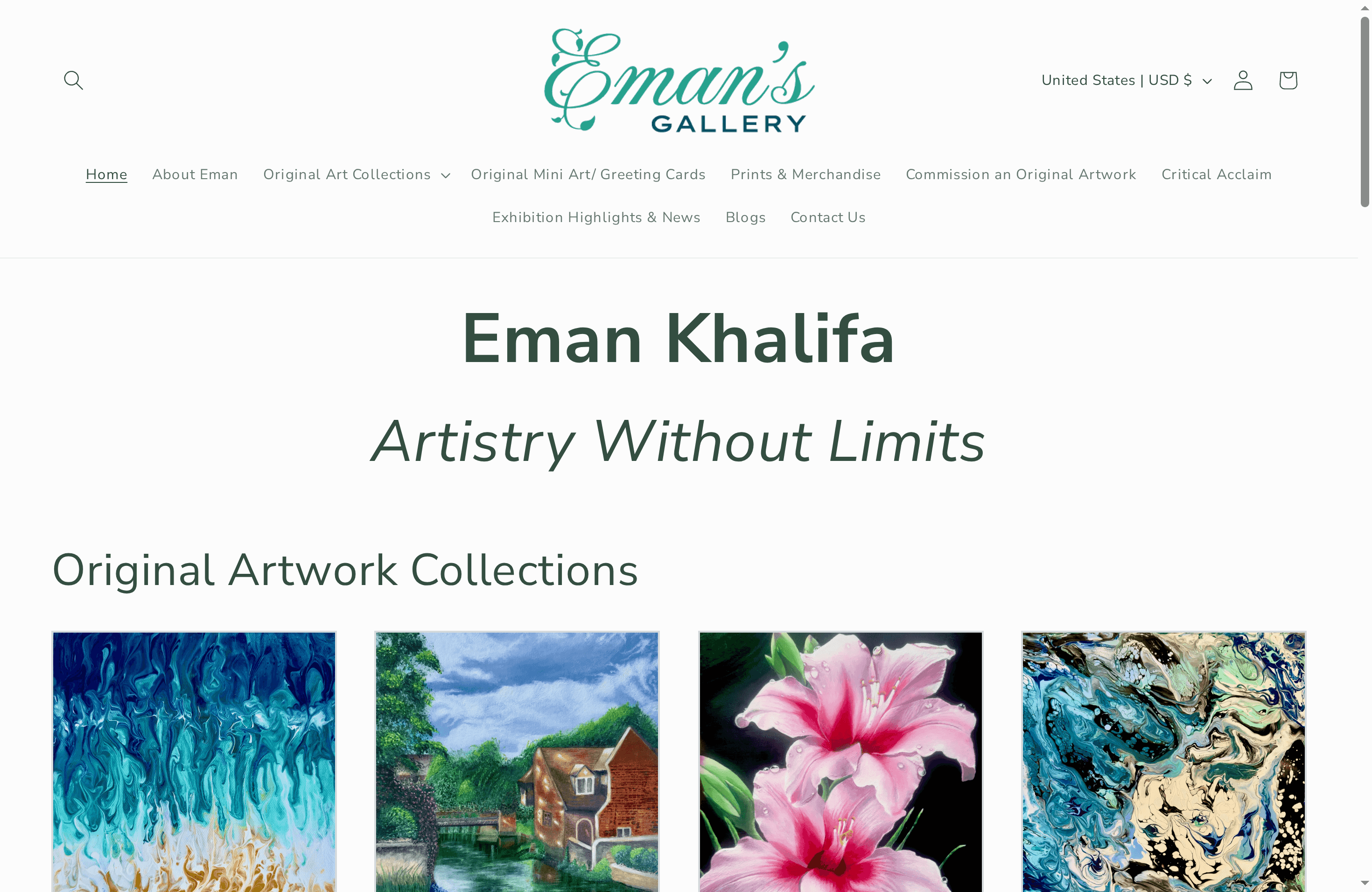
Experience firsthand how authentic limited-edition art transforms your environment and investment portfolio. Browse now at Eman’s Gallery and take the first step towards curating a collection that truly honors the essentials of exclusivity, rarity, and artistic mastery. Don’t settle for mass-produced prints when your home deserves genuine works of art with verified provenance and enduring appeal.
Frequently Asked Questions
What are exclusive art prints?
Exclusive art prints are high-quality reproductions of original artworks, produced in limited quantities, and typically signed and numbered by the artist. They are made using archival methods to ensure longevity and are considered valuable for both aesthetic and financial reasons.
How do original prints differ from fine art prints?
Original prints are handcrafted artworks created using traditional techniques like etching or lithography, where each piece is unique. Fine art prints, often called giclée prints, are high-quality reproductions made with archival inks and papers, emphasizing quality and longevity but not the uniqueness of original prints.
What factors determine the value of exclusive art prints?
Value is primarily influenced by rarity (edition size), artist reputation, authentication (such as signatures and documentation), and material quality. Smaller edition sizes and established artists typically command higher prices.
How can I verify the authenticity of an exclusive art print?
Authenticity can be verified through documentation such as certificates of authenticity, the presence of the artist’s signature, and provenance records. It’s advisable to purchase from reputable galleries and consider third-party authentication for high-value prints.
Recommended
- Role of Art Prints in Interior Design Luxury Spaces
- Role of Prints in Decor: Elevating Luxury Interiors
- Why Seasonal Art Prints Matter in Upscale Interiors
- 7-Step Collecting Art Prints Checklist for Luxury Homes
- Blog – Bettermockups
Stay Connected
- ✨ Explore Eman Khalifa’s original art and fine art prints
- 📸 Follow Eman Khalifa’s art journey on: Instagram @emans_gallery and Facebook Eman’s Gallery
- 📹 Watch Eman Khalifa creating live art on: YouTube @emans_gallery
