


How to display art prints for sale: expert presentation guide
TL;DR:
- Proper presentation, including high-quality framing and optimal placement, is key to selling art prints.
- Using conservation materials and correct environmental conditions preserves print value and appearance.
- Professional online photography with styled room settings boosts buyer confidence and increases sales.
Poorly displayed art prints cost sales. A beautiful print placed at the wrong height, under harsh lighting, or in a cheap frame can lose buyer interest before they even look closely at the image. The difference between a print that sells and one that sits is almost always presentation. This guide covers the materials, setup steps, protective measures, and online photography techniques that sellers and collectors need to showcase prints professionally, whether in a physical space or on a digital storefront.
Table of Contents
- Essential materials and tools for displaying art prints
- Step-by-step guide: Setting up display environments
- Protecting prints: Environmental hazards and best practices
- Showcasing prints for online sale: Presentation tips
- Our perspective: Balancing style and preservation in art print displays
- Find inspiration and shop expertly displayed art prints
- Frequently asked questions
Key Takeaways
| Point | Details |
|---|---|
| Use conservation materials | Acid-free mats and museum glass help preserve and add value to prints. |
| Hang prints at eye level | Positioning artwork at 57-60 inches from the floor is optimal for display. |
| Avoid environmental hazards | Direct sunlight and humidity are damaging, so control these factors for longevity. |
| Showcase for online appeal | Photograph prints with great lighting and background for higher sales conversions. |
| Balance style with protection | Stylish display can attract buyers, but preservation secures print value for collectors. |
Essential materials and tools for displaying art prints
Before any print touches a wall or display stand, having the right materials in place determines whether the result looks professional or amateur. The tools you choose communicate quality to every potential buyer.
Conservation vs. casual materials
There are two levels of framing materials for art print display, and knowing which to use depends on your audience and price point.
Conservation-grade materials are used for prints aimed at collectors, galleries, and serious buyers. These include:
- Acid-free, lignin-free rag or alpha-cellulose mats: Using acid-free mats prevents acid migration and yellowing over time, which is critical for collectible prints that buyers expect to last decades.
- Museum acrylic glazing: Lighter than glass and provides UV filtering of up to 99%, protecting print color from long-term light damage.
- Conservation mounting boards: These back the print inside the frame without touching it with adhesive.
- Sealed hardwood or metal frames: These resist warping and seal out moisture better than inexpensive alternatives.
Casual-grade materials work for affordable decor prints where longevity and archival quality are less of a concern. Basic glass, paper mats, and MDF frames are common choices. They reduce cost and are acceptable for prints priced for general home styling rather than serious collecting.
Knowing your buyer changes everything. For a framing prints guide that matches frame quality to art value, matching materials to market positioning is a reliable starting point.
Display tools and supports
Beyond frames, the following tools support a polished display setup:
- Display stands and easels: Useful for tabletop presentation at art fairs, boutiques, and pop-up shops. Adjustable easels allow angle flexibility.
- Mounting boards and backing: Provide rigid support behind canvas prints to prevent bowing or bending.
- Hanging hardware: D-rings, picture wire, and wall anchors rated for the print’s weight prevent accidents.
- LED track lighting: Adjustable spotlights allow targeted illumination without producing excessive heat. Warm white LEDs in the 3000K range render print colors accurately.
- Level tools and measuring tape: These basics prevent crooked installations and poor spacing.
For guidance on combining these elements with room styling, see styling art prints to match display choices with interior design contexts.
Pro Tip: Investing in conservation-quality mats and museum acrylic for your higher-priced prints sends a clear message to collectors about the care and value behind the work. Buyers notice when framing materials look premium, and it often justifies a higher price point.
| Material type | Best for | Key benefit |
|---|---|---|
| Acid-free rag mat | Collector prints, originals | Prevents yellowing and acid damage |
| Museum acrylic | High-value framed prints | UV protection, lightweight |
| Basic glass | Affordable decor prints | Low cost |
| Sealed hardwood frame | Gallery and premium retail | Moisture resistance, durability |
| MDF frame | Budget decor display | Cost-effective |
Step-by-step guide: Setting up display environments
With materials in hand, the next step is the physical arrangement of prints. Correct placement affects buyer attention, perceived value, and the overall visual flow of the display space.
Step 1: Determine hanging height
Standard eye-level positioning centers artwork at 57 to 60 inches from the floor. This standard applies to galleries, retail shops, and home display environments. The center of the print, not the top or bottom edge, should fall within that range.
For display environments where viewers sit, such as a showroom seating area, lower the center point to around 48 to 54 inches for comfort.
Step 2: Plan spacing for multiple prints
When displaying a group of prints, consistent spacing creates visual order. A gap of 2 to 3 inches between frames is the standard for gallery walls. Larger gaps of 4 to 6 inches work better for oversized prints where you want to prevent crowding.
Lay prints on the floor first to experiment with arrangement before drilling holes. This prevents unnecessary wall damage and lets you test visual balance.
Step 3: Arrange by theme or color
Organizing prints by visual theme, color palette, or series builds a cohesive display story. Buyers respond to groupings that feel intentional. Random mixing can confuse the eye and reduce the perceived value of individual prints.
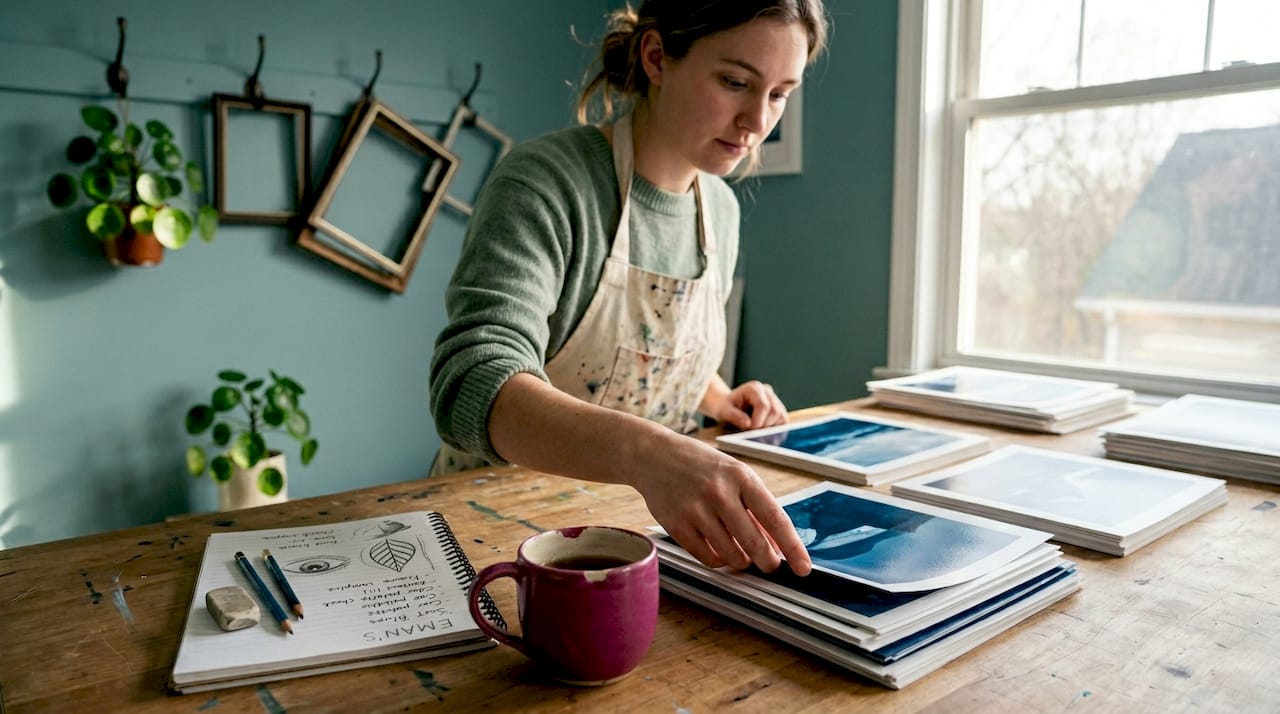
For ideas on arrangement strategies, check displaying art prints tips for room-specific guidance, or small space display ideas for compact environments.
Step 4: Set up lighting
Position adjustable LED spotlights at a 30-degree angle to the wall. This reduces glare on glazed frames while illuminating the surface of the print evenly. Avoid placing lights directly above prints at a 90-degree angle, as this flattens the visual depth and creates reflections.
Step 5: Check safety and stability
Verify that all hanging hardware is rated for the print’s weight. Use wall anchors in drywall rather than relying solely on nails. Prints above seated areas carry added safety responsibility.
Key display reference: When hanging prints for sale in any setting, center them at 57 to 60 inches from the floor to match natural viewer eye level, keeping spacing consistent at 2 to 3 inches between frames for a clean, professional gallery look.
| Display setting | Recommended center height | Spacing between frames |
|---|---|---|
| Standard gallery or retail | 57 to 60 inches | 2 to 3 inches |
| Seated viewing area | 48 to 54 inches | 2 to 4 inches |
| Children’s display space | 40 to 48 inches | 2 to 3 inches |
| Oversized prints | 57 to 60 inches | 4 to 6 inches |
Protecting prints: Environmental hazards and best practices
A print can be perfectly displayed and still be damaged within months if environmental hazards are not controlled. This is one of the most commonly overlooked areas for sellers and collectors.
UV light and fading
Direct sunlight is the most destructive force for art prints. Fading occurs even with UV glass when exposure is prolonged or intense. For sensitive prints, light exposure should remain below 50 lux. Standard indoor lighting is usually acceptable, but direct sunbeams through windows are not.
Use UV-filtering window film in display rooms. Rotate prints if possible to reduce sustained exposure to any single light source.
Humidity and temperature
High humidity causes canvas to warp and paper to buckle inside frames. Frames can also expand and contract with fluctuating temperatures, loosening hardware over time. Ideal conditions for print storage and display are 45 to 55% relative humidity and temperatures between 65 and 70 degrees Fahrenheit.
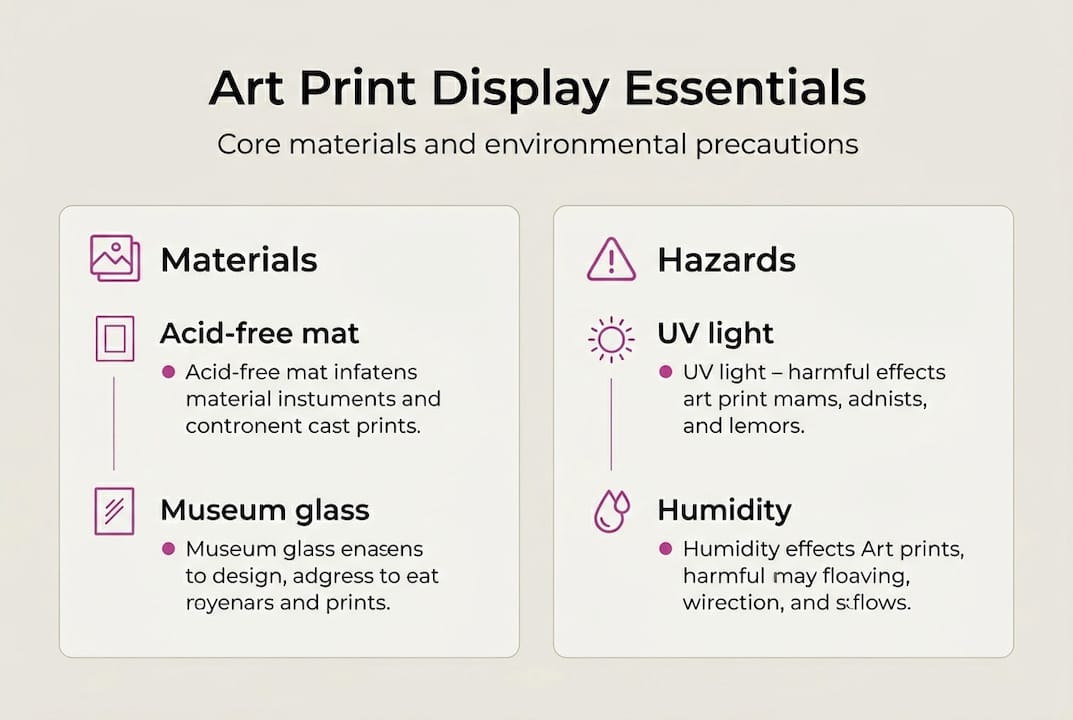
For detailed preservation guidance, see archival art care and fine art care instructions for step-by-step prevention strategies.
Safe mounting practices
Reversible mounting methods such as Japanese paper hinges attached with wheat starch paste are the conservation standard for original prints. These allow the print to be removed later without damage. Dry-mounting, which uses heat to permanently bond a print to a backing board, is irreversible and unacceptable for original or collector-grade prints.
Pro Tip: Even if you plan to sell a print quickly, using reversible mounting from the start protects its resale value. Buyers asking about provenance and condition will notice the difference.
Environmental hazard checklist:
- Keep prints away from exterior walls in humid climates
- Never hang prints above fireplaces or heating vents
- Avoid display near kitchens where grease and moisture are present
- Use silica gel packs inside sealed storage or shipping boxes
- Inspect frames seasonally for signs of warping or hardware loosening
Refer to art caring tips for a broader set of maintenance actions that apply to both displayed and stored works.
Showcasing prints for online sale: Presentation tips
Online buyers cannot see prints in person before purchasing, which makes photography and digital presentation the primary sales tool. The quality of these images directly affects buyer confidence and conversion.
Photography lighting setup
- Use natural diffused light. Position prints near a large window with a sheer curtain diffusing direct sun. This produces soft, even light without harsh shadows.
- Supplement with LED panels. Place two softbox LED lights at 45-degree angles on either side of the print to eliminate shadow zones.
- Avoid camera flash. Direct flash creates hotspots on glossy or textured print surfaces and flattens the visual depth of the work.
- Shoot in RAW format if possible. This allows color correction during editing without degrading image quality.
Photographing in room settings
Styled room shots dramatically increase buyer confidence. A print shown hanging above a sofa with complementary decor nearby answers the buyer’s core question: “Will this work in my home?” Use neutral backgrounds when staging to keep the focus on the print itself.
If you are working with digital art print files for online listings, mock-up tools allow you to place the print realistically into room settings without a physical shoot.
Essential online listing practices
- Show multiple angles: Front view, close-up of texture, and a room-setting shot cover buyer needs.
- Include scale reference: Show the print next to a familiar object or provide a lifestyle image that includes furniture.
- Photograph the frame and mat separately: Buyers want to see the finish and color of the frame in detail.
- Maintain color accuracy: Calibrate your monitor before editing and include a note about how screen colors may vary from print colors.
- Use high resolution: Minimum 1500 pixels on the longest side for zoom capability in listings.
Pro Tip: Take photos of your prints in the best ambient light of day, usually between 9 and 11 a.m. or 3 and 5 p.m. when sunlight is soft and angled. This window gives you consistent, flattering results without the need for heavy editing.
For safe handling of prints between photo sessions and shipping, see art print storage tips to maintain condition from studio to buyer.
Our perspective: Balancing style and preservation in art print displays
There is a practical tension in art print display that sellers rarely discuss openly. On one side, stylish casual display using simple frames and no mats looks clean, modern, and accessible. On the other side, conservation framing with rag mats and museum acrylic communicates serious value but can look clinical in some home settings.
The distinction matters based on who the buyer is. Casual decor buyers respond to how a print looks on a wall right now. Collectors ask different questions: Will this hold its value? Is the framing reversible? What materials are touching the print? Casual framing works for affordable decor prints while conservation methods are essential for high-value contemporary originals and collector prints.
A common mistake is applying conservation-grade pricing to casual-grade presentation, or the reverse. Presenting a serious original artwork in a basic frame with no mat confuses collectors and signals that the seller does not fully understand the work’s value. Equally, using museum-quality framing for an inexpensive print can confuse buyers about the price category.
The practical advice is to segment your display clearly. Group collector-grade and museum-quality prints with conservation framing together. Group decor prints separately with styling-forward presentation. This segmentation helps buyers self-identify and reduces purchase hesitation.
Another overlooked mistake is applying permanent adhesives in a rush before a show or photo session. Even a single dry-mount or tape application on an original or high-value print can remove it from collector consideration entirely. The art maintenance workflow helps sellers build consistent handling habits that protect print value at every stage.
Find inspiration and shop expertly displayed art prints
For collectors and home decorators ready to act on these principles, Eman’s Gallery offers original handmade paintings and museum-quality canvas prints by artist Eman Khalifa. Every work is displayed and photographed to professional standards, giving buyers a clear, accurate view of colors, textures, and scale before purchase.
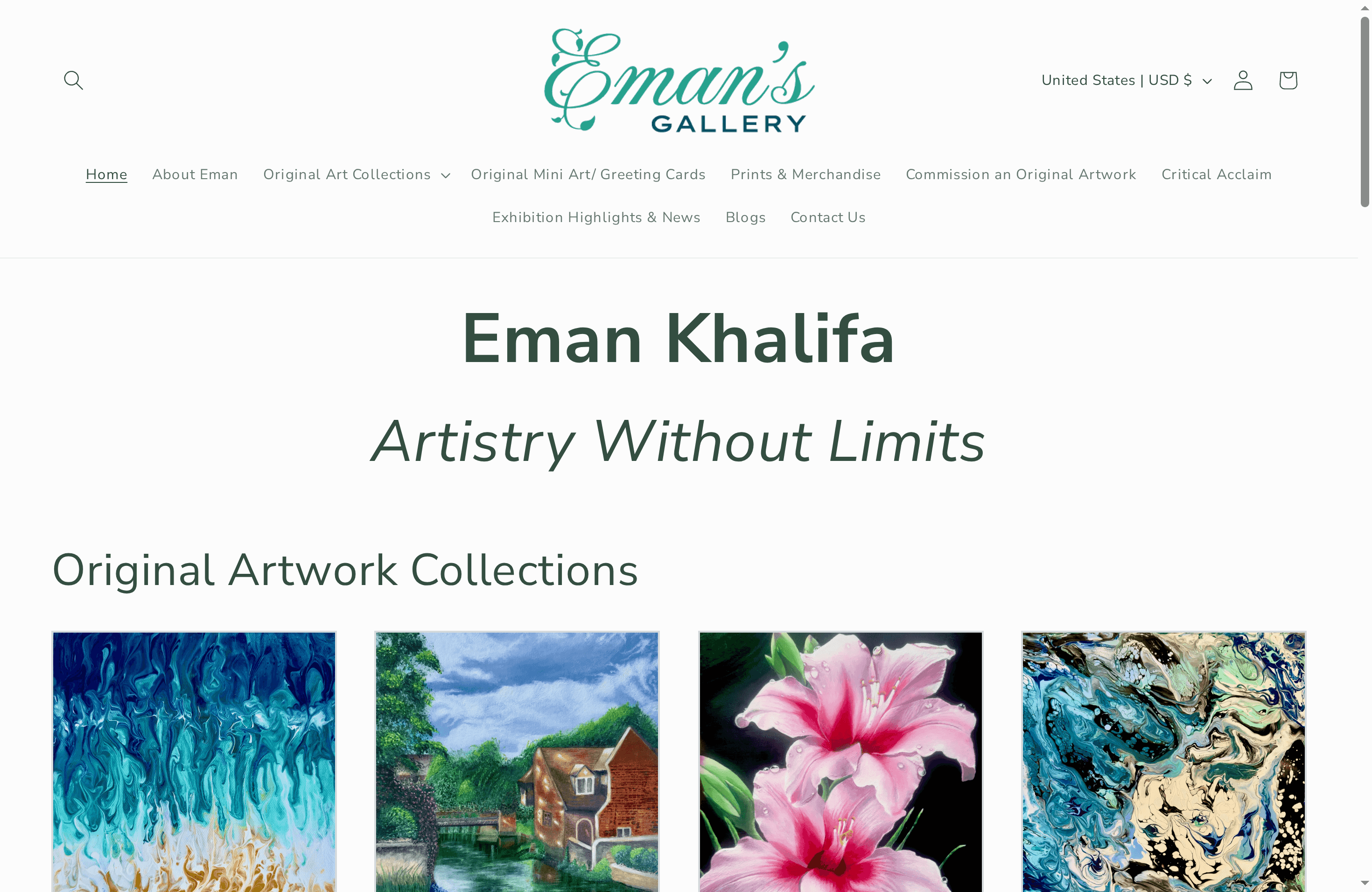
Browse the full wall art prints collection for ready-to-ship options across abstract, floral, geometric, and seascape styles. For an original seascape with fluid movement and rich ocean tones, the fluid ocean art piece is a standout choice. Collectors drawn to bold color and textured depth will find the abstract ocean gold original equally compelling. Shipping is available worldwide from locations including the UK, USA, Canada, Australia, UAE, and across Europe.
Frequently asked questions
What is the best height to hang art prints for sale?
The ideal center is 57 to 60 inches from the floor, which aligns with standard gallery eye level for both retail and home display environments.
Should I use mats and conservation glass for prints aimed at collectors?
Yes. Conservation mats and museum-quality glazing prevent long-term aging, and using acid-free mats with museum acrylic adds measurable value and credibility for collectors of contemporary originals.
How can I avoid fading or warping of art prints when displayed?
Keep prints away from direct sunlight and heat sources, and limit light exposure to below 50 lux for sensitive prints while maintaining stable humidity levels between 45 and 55%.
What mounting method is safest for original prints?
Reversible mounting with Japanese paper hinges and wheat starch paste on conservation boards is the safest option, as it allows removal without any damage to the print surface.
Recommended
- How to make digital art prints: creation & sales guide
- How to Style Art Prints for Interior Display - Eman’s Gallery
- How to display art prints for impactful modern home decor
- Why Artists Make Prints: Complete Expert Guide - Eman’s Gallery
Stay Connected
- ✨ Explore Eman Khalifa’s original art and fine art prints
- 📸 Follow Eman Khalifa’s art journey on: Instagram @emans_gallery and Facebook Eman’s Gallery
- 📹 Watch Eman Khalifa creating live art on: YouTube @emans_gallery
