


How to display art prints for impactful modern home decor
TL;DR:
- Proper placement, lighting, and framing are essential to showcase art prints effectively.
- Regular cleaning and environmental control help preserve print quality over time.
- Creative display choices and personal expression enhance the uniqueness of home art arrangements.
A beautiful art print can sit flat and forgettable on a wall for years. The problem is rarely the print itself. Placement, preparation, lighting, and framing all determine whether a piece commands attention or disappears into the background. Studies show that proper care preserves art print quality and visual impact over time. This guide walks through every step, from selecting the right prints to maintaining them long-term, so your walls reflect exactly the atmosphere you want to create.
Table of Contents
- How to choose and prepare your art prints
- Arranging art prints for maximum impact
- Choosing the right framing and mounting techniques
- Lighting and environment: Setting the perfect mood
- Care and maintenance for long-lasting beauty
- Why personal expression matters more than trends
- Explore unique prints and elevate your space
- Frequently asked questions
Key Takeaways
| Point | Details |
|---|---|
| Choose prints thoughtfully | Select art prints that complement your space and personal style for the best results. |
| Plan layout before hanging | Arrange prints virtually or on the floor before committing to holes in the wall. |
| Invest in proper framing | Frames and archival materials can significantly prolong the life and impact of art prints. |
| Control lighting and environment | Place prints away from direct sunlight and maintain stable indoor conditions. |
| Maintain your display | Regular care and rotation help prints stay vibrant and beautiful year after year. |
How to choose and prepare your art prints
Before you start planning your wall, it’s smart to pick the right prints and ensure they’re properly prepared.
Selecting the right print starts with understanding your room. Match the color palette of the print to existing furniture, textiles, and wall colors. A bold abstract with deep blues works well in a neutral living room. A soft floral print fits a bedroom with warm, muted tones. Size matters too. Large-scale prints anchor a room, while smaller prints work best in clusters or tight spaces like hallways.
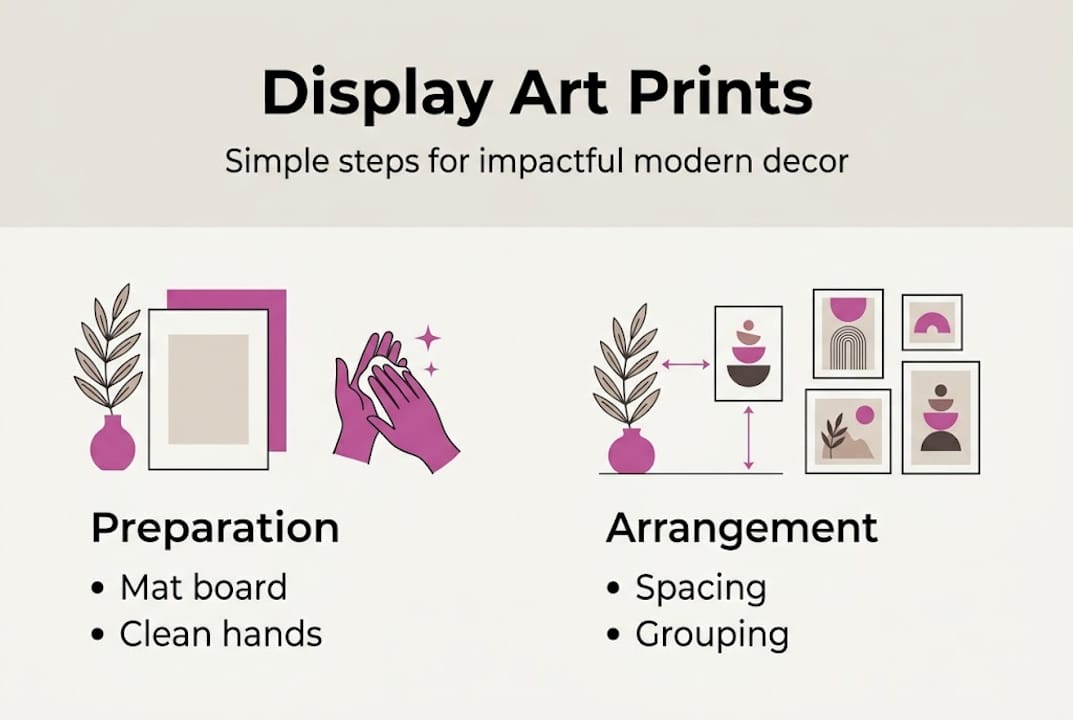
Once you have your prints, preparation is essential before anything goes on the wall. Follow these steps:
- Unframe and inspect each print for creases, dust, or damage before display.
- Flatten rolled prints by placing them face-down under clean, flat books for 24 to 48 hours.
- Clean the glass or acrylic on any existing frames with a lint-free cloth.
- Check the wall surface for moisture, uneven texture, or flaking paint before mounting.
- Use acid-free materials for any matting or backing to prevent chemical damage over time.
“Handle art prints with clean hands and avoid direct sunlight for longevity.”
Environmental factors play a significant role in print health from day one. Rooms with high humidity, such as bathrooms or kitchens, are not ideal for paper-based prints unless they are sealed behind glass. Walls that receive direct afternoon sunlight will cause prints to fade faster. Following print caring tips from the start saves you from costly damage later.
Pro Tip: Always use acid-free mat board when mounting prints. Standard cardboard contains acids that migrate into the print over time, causing yellowing and brittleness.
Refer to hanging art best practices for additional preparation guidance before installation.
| Task | Do | Don’t |
|---|---|---|
| Flattening | Use clean, flat weight | Use heat or steam |
| Cleaning | Lint-free dry cloth | Spray directly on print |
| Backing material | Acid-free board | Standard cardboard |
| Wall prep | Check for moisture first | Mount on damp walls |
| Handling | Clean, dry hands | Touch print surface directly |
Arranging art prints for maximum impact
With your prints ready, let’s explore how to position them on your walls for strong visual impact.
Spacing is one of the most overlooked factors in art display. Gaps that are too wide make a grouping feel scattered. Gaps that are too tight feel cluttered. A consistent gap of 2 to 3 inches between frames creates a clean, intentional look. Alignment matters just as much. Align prints either along their top edges, bottom edges, or center lines to create visual order.
Hanging height is a rule most people get wrong. Styling art prints at eye level, with the center of the piece at roughly 57 to 60 inches from the floor, enhances the viewing experience in any room. In dining rooms or spaces where people are usually seated, lower the center point to about 54 inches.
Here is a step-by-step approach to mapping a gallery wall:
- Gather all prints you plan to display and lay them on the floor in the arrangement you want.
- Trace each frame on kraft paper or newspaper and cut out the shapes.
- Tape the paper templates to the wall with painter’s tape to preview the layout.
- Adjust spacing and alignment on the wall before making any holes.
- Mark your nail or hook positions through the templates, then remove the paper.
- Hang prints starting from the center and working outward.
Pro Tip: Laying out prints on the floor before hanging gives you a clear visual plan and prevents unnecessary holes in your wall.
For layout style, each approach has different strengths:
| Layout type | Pros | Cons | Best rooms |
|---|---|---|---|
| Gallery wall | Dynamic, personal | Can feel busy | Living room, hallway |
| Grid | Clean, structured | Less flexible | Office, bedroom |
| Linear | Simple, modern | Limited variety | Staircase, dining room |
For more display ideas, the display ideas guide covers additional layout approaches. You can also find visual inspiration through gallery wall ideas for different room types.
Choosing the right framing and mounting techniques
Now that you’ve planned your arrangement, let’s ensure every print shines with framing and professional mounting.
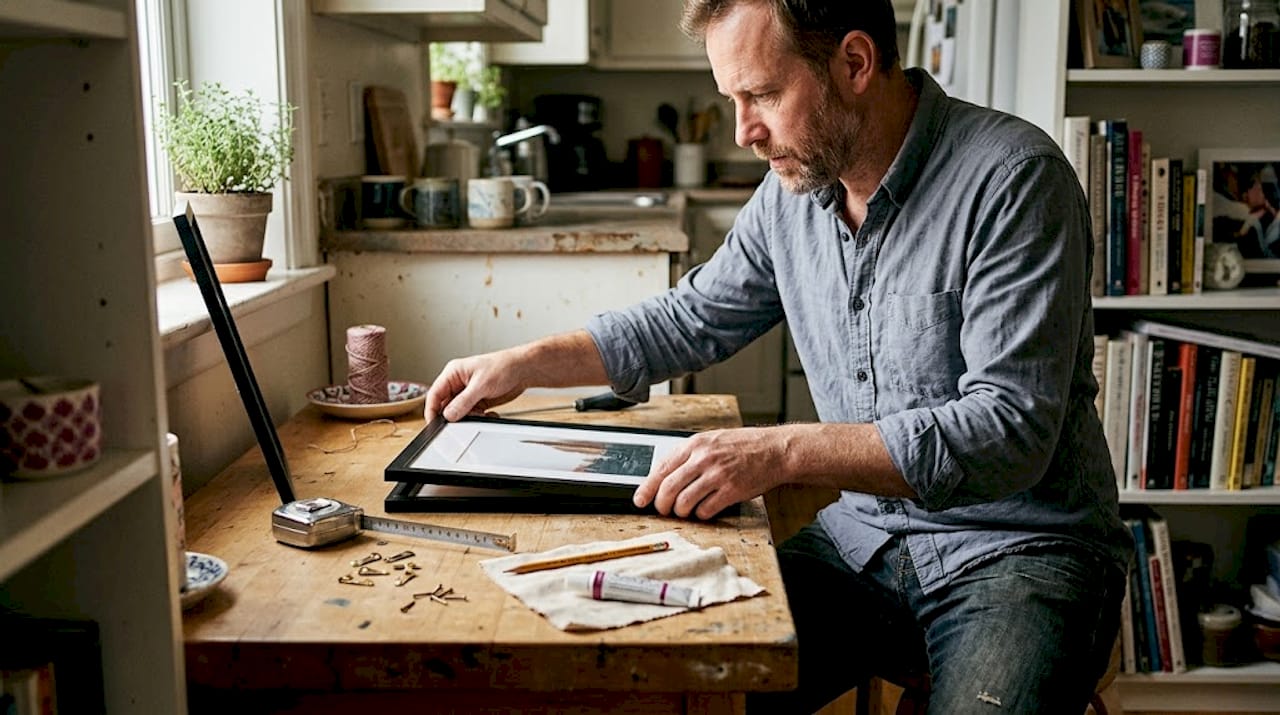
Frame material sets the visual tone. Wood frames add warmth and work well with organic, nature-inspired prints. Metal frames feel sleek and suit geometric or abstract art. Minimalist specialty frames, such as floating frames or frameless clip systems, keep the focus entirely on the print itself.
Glazing options affect both appearance and protection:
- Standard glass is affordable but reflects light and can create glare.
- Acrylic (Plexiglas) is lighter and shatter-resistant, making it a practical choice for larger pieces.
- Museum glass reduces glare significantly and provides UV filtering for superior protection.
- Open frames (no glazing) give a raw, contemporary look but offer no protection from dust or humidity.
For mounting, the method you choose affects both safety and wall integrity:
- D-ring hooks with picture wire distribute weight evenly and allow for easy leveling.
- French cleats provide a secure, flush mount ideal for heavy or large prints.
- Adhesive strips (such as Command strips) work for lightweight prints on smooth walls.
- Art rails allow prints to hang from a track system without any wall damage.
Archival framing methods can extend print life by up to 40%, making the investment in quality framing worthwhile. Matting adds depth between the print and the glass, preventing the print surface from touching the glazing and causing moisture damage.
Pro Tip: Use museum glass for prints displayed in rooms with strong overhead lighting. It reduces glare and filters UV rays without distorting color.
For a full review of tools and hardware, see best hanging tools recommended by product testing experts.
Lighting and environment: Setting the perfect mood
Framing sets the foundation, but lighting brings your art prints to life.
The type of lighting you use changes how color, texture, and detail appear in a print. Natural light is ideal for color accuracy, but it must be managed carefully to prevent UV damage. Track lighting lets you direct focused beams onto individual prints. Spotlights create dramatic emphasis on a single statement piece. Accent lighting, such as LED strip lights above a shelf or behind a frame, adds ambient depth.
Key environmental factors that affect print health include:
- Humidity above 60% causes paper to warp and mold to develop on the back of prints.
- Temperature fluctuations cause materials to expand and contract, stressing the print over time.
- Direct sunlight fades pigments, especially in inkjet prints without UV-protective coatings.
- Heating and cooling vents create dry air that can cause cracking or curling at the edges.
“UV light can damage prints significantly, so consider wall placement and lighting choices carefully before installation.”
For lighting temperature, warm white bulbs (2700K to 3000K) enhance warm-toned prints with reds, oranges, and yellows. Cool white bulbs (4000K to 5000K) suit prints with blues, greens, and neutrals. Angle your light source at about 30 degrees from the wall to minimize glare on glass or acrylic surfaces.
Pro Tip: Place prints away from direct vents or windows. Even indirect heat from a radiator can cause gradual warping or discoloration over months.
For more on using art prints in decor and how lighting ties into overall room design, additional context is available for different interior styles. See also how art prints in luxury interiors use lighting to maximize visual presence. For fixture recommendations, lighting artwork tips covers practical options for different room setups.
Care and maintenance for long-lasting beauty
Great display isn’t just about first impressions. Let’s ensure your art prints stay stunning year after year.
Regular maintenance is straightforward but often skipped. Dust accumulates on frames and glass surfaces and can eventually work its way into the edges of prints. Humidity and temperature shifts happen gradually, and small issues like slight warping or edge lifting can worsen if not caught early. Routine maintenance prevents fading and warping before they become permanent.
Monthly maintenance checklist:
- Dust frames and glass with a dry, lint-free microfiber cloth.
- Inspect edges and corners of frames for loosening or separation.
- Check the wall behind and around the print for moisture or discoloration.
- Look at the print surface (through glass) for any color shifts or yellowing.
- Confirm hanging hardware is still secure and level.
Everyday handling guidelines:
- Do use both hands when moving or adjusting framed prints.
- Do store unframed prints flat in acid-free sleeves if not on display.
- Don’t use household cleaning sprays near prints or frames.
- Don’t stack framed prints face-to-face without protective padding.
- Don’t hang prints in rooms with uncontrolled humidity, such as unventilated bathrooms.
Pro Tip: Rotate prints seasonally. Moving a print from one wall to another reduces prolonged exposure to the same light source and minimizes environmental stress on any single piece.
For common issues: discoloration usually points to UV exposure or acid migration from backing materials. Warping typically signals humidity imbalance. Both are preventable with proper storing art prints practices and controlled environments. For broader guidance, art care tips from the Smithsonian offer expert-level maintenance advice.
Why personal expression matters more than trends
Design rules are useful starting points. They are not the final word. The most memorable homes are never just “by the book.” A perfectly measured gallery wall with matching frames can feel sterile if it doesn’t reflect the person living there.
The prints you choose, the way you cluster them, the unexpected pairing of a landscape with a geometric abstract, all of that tells a story that no trend guide can script for you. Rules about eye-level hanging and consistent spacing exist to solve problems, not to limit creativity. Once you understand why a rule exists, you can break it intentionally and effectively.
The creative use of art prints in high-end interiors often involves deliberate rule-breaking: oversized prints hung low, mismatched frames used as a design feature, or prints leaned against walls instead of hung. These choices work because they are made with purpose.
“The best art display is the one that makes your space feel unmistakably yours.” Follow the technical steps in this guide to get the foundation right. Then let your own taste take over.
Explore unique prints and elevate your space
Ready to turn inspiration into action? Eman’s Gallery offers a curated wall art prints collection spanning abstract, geometric, floral, landscape, seascape, and still-life styles, all available as museum-quality canvas prints.
Whether you’re building a gallery wall or looking for a single statement piece, each print is designed to work in real living spaces. The Private Eye canvas print is one example of a bold, contemporary piece that anchors a modern room with confidence. Browse wall art for every space and find prints that match your interior vision. Worldwide shipping is available from the UK, USA, Canada, Australia, and more.
Frequently asked questions
What is the ideal height to hang art prints?
Hang art prints so the center sits about 57 to 60 inches from the floor. This places the print at eye level for most viewers in a standing position.
How can I prevent art prints from fading or warping?
Keep prints away from direct sunlight, use archival framing materials, and maintain stable room humidity. Proper care from the start is the most effective prevention.
What mounting method is safest for delicate art prints?
Use acid-free matting and avoid adhesives applied directly to the print surface. Archival framing extends print life by up to 40% compared to standard methods.
Are there creative ways to display art prints without frames?
Yes. Art rails, washi tape, and clipboard-style mounts all offer casual, damage-free display options. See creative display methods for more frameless ideas suited to modern interiors.
How often should I clean or check on my displayed art prints?
Dust frames and glass gently once a month and inspect for moisture or fading signs at the same time. A consistent maintenance workflow prevents most long-term damage before it becomes visible.
Recommended
- How to Style Art Prints for Interior Display - Eman’s Gallery
- How to Use Art Prints for Home Decor - Eman’s Gallery
- Why Display Art at Home: Transforming Modern Spaces
- 7 Innovative Interior Art Display Ideas for Modern Homes - Eman’s Gallery
Stay Connected
- Explore Eman's Gallery Original Mini-Art Cards, hand-painted by Eman Khalifa
- ✨ Explore Eman Khalifa’s original art, fine art prints & art merchandise
- 📸 Follow Eman Khalifa’s art journey on: Instagram @emans_gallery and Facebook Eman’s Gallery
- 📹 Watch Eman Khalifa creating live art on: YouTube @emans_gallery
