


Displaying Art in Small Spaces for a Bold Visual Impact
Over 60 percent of urban dwellers in the UK and USA live in homes under 900 square feet, making creative art display a common challenge for every American city resident seeking style in tight quarters. Small spaces force interior designers and collectors to think beyond traditional galleries, especially when showcasing contemporary works. This guide reveals how to use smart lighting, proportion, and strategic arrangements to turn any compact room into an inspiring art showcase.
Table of Contents
- Step 1: Assess Your Space and Lighting
- Step 2: Select Artwork Scaled for Small Areas
- Step 3: Arrange Artwork to Enhance Flow
- Step 4: Install and Secure Pieces for Longevity
- Step 5: Review and Refine the Overall Display
Quick Summary
| Important Insight | Explanation |
|---|---|
| 1. Assess Space and Lighting | Measure wall space and consider light sources to enhance artwork visibility. Ensure art is hung at 57-60 inches for optimal viewing. |
| 2. Choose Scaled Artwork | Select smaller to medium-sized pieces (16-24 inches) to fit well in compact areas without overwhelming the space. |
| 3. Create a Dynamic Arrangement | Use visual anchors and asymmetrical groupings to enhance movement in your display while maintaining balance and flow. |
| 4. Use Proper Installation Techniques | Select appropriate mounting hardware based on artwork weight and wall type to protect both the art and your walls. |
| 5. Continuously Refine Your Display | Regularly review and adjust your arrangement to create a cohesive narrative and keep the display feeling fresh. |
Step 1: Assess Your Space and Lighting
Before hanging artwork, understanding your small space’s unique characteristics is essential. Lighting design plays a critical role in showcasing art effectively and transforming even the most compact area into a dynamic visual experience.
Start by carefully measuring your available wall space and observing the natural and artificial light sources. Aim to hang art at the standard eye level of 57 to 60 inches from the floor’s center, which ensures optimal visibility and balance. Consider the room’s function and existing decor to create a harmonious environment that complements your chosen artwork. Pay attention to how light moves through the space at different times of day, noting areas with direct sunlight or potential glare that might impact your art’s presentation.
Take time to experiment with potential artwork placements using painter’s tape or paper templates. This allows you to visualize how pieces will look without making permanent marks. Notice how different lighting conditions affect the artwork’s colors and details throughout the day.
Pro tip: Use adjustable LED picture lights to create museum-quality illumination that highlights your art while protecting it from heat and UV damage.
Here is a summary of lighting types and their impact on artwork presentation:
| Lighting Type | Effect on Art | Recommended Usage |
|---|---|---|
| Natural light | Enhances colors but may cause fading | Indirect exposure only |
| LED picture lights | Boosts details and protects surfaces | Ideal for all-day display |
| Incandescent bulbs | Adds warmth but can damage materials | Limited use, avoid direct contact |
| Fluorescent lights | Gives consistent tone but may affect color | Use with caution, possible color shift |
Step 2: Select Artwork Scaled for Small Areas
When working with limited square footage, selecting the right artwork becomes a strategic design challenge. Scale drawings help visualize how artwork sizes relate to available display space, ensuring you choose pieces that enhance rather than overwhelm your compact environment.
Focus on smaller to medium sized artworks that create visual interest without consuming precious wall real estate. Understanding how scaling affects area and visual impact/01%3A_Scale_Drawings/1.01%3A_New_Page/1.1.6%3A_Scaling_and_Area) is crucial. Consider pieces between 16 to 24 inches wide for standard small spaces, which provide enough detail to capture attention while maintaining proportional balance. Opt for vertical or square formats that maximize visual depth without extending too far into your room.
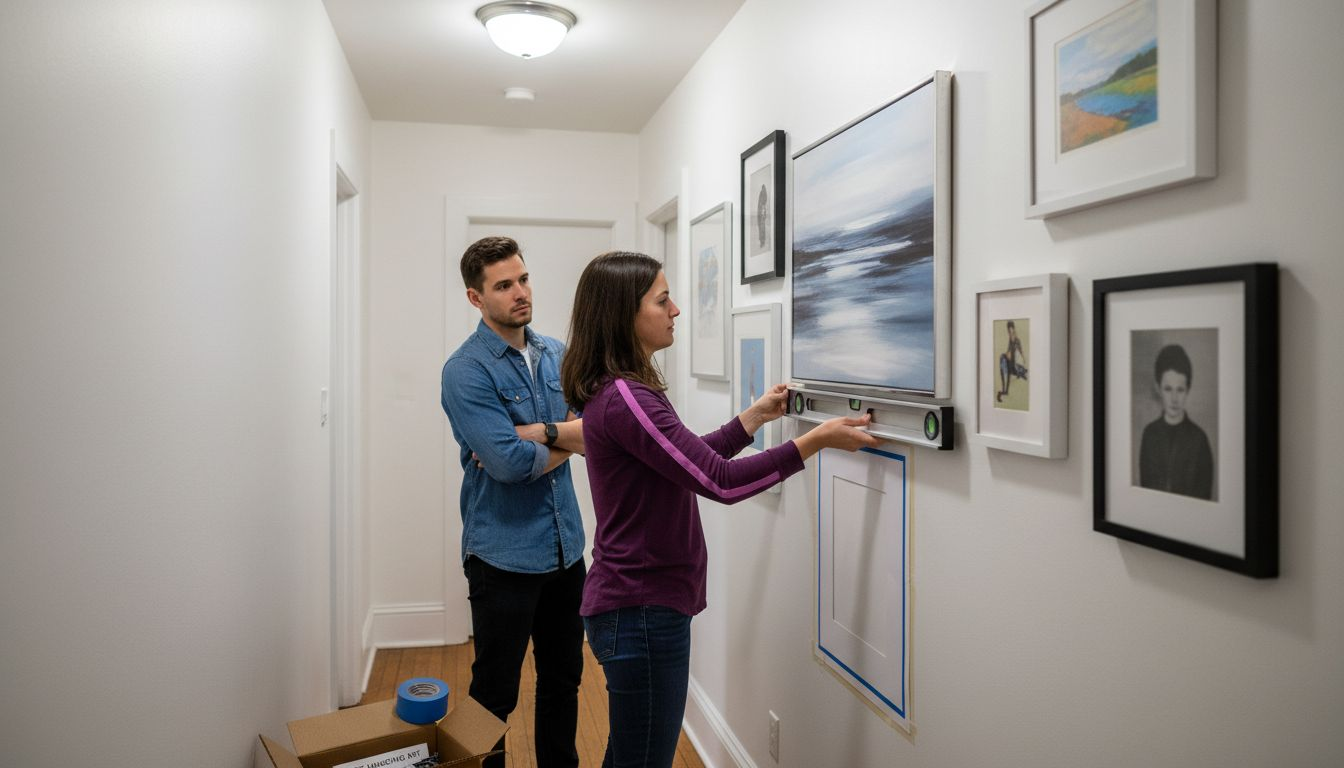
Experiment with gallery wall configurations using smaller pieces that can be grouped creatively. Mix different sizes and orientations to create dynamic visual narratives that draw the eye and make your space feel intentionally curated rather than cluttered. This approach allows you to showcase multiple artworks without overwhelming the limited area.
Pro tip: Measure your wall space beforehand and create paper templates to test artwork placement and scale before making any permanent hanging decisions.
Step 3: Arrange Artwork to Enhance Flow
Transforming a small space into an artistically dynamic environment requires strategic artwork placement that guides the viewer’s visual journey. Composition in visual arts involves deliberately organizing elements to create harmonious movement), ensuring your art collection feels intentional and engaging.
Design principles for creative spaces emphasize thoughtful spatial planning that supports aesthetic balance. Start by creating visual anchors using your largest or most striking piece as a centerpiece, then build surrounding compositions that lead the eye naturally through the space. Consider using vertical arrangements to draw the gaze upward, making the room feel larger and more expansive. Align artwork along imaginary lines that connect different elements, creating a sense of rhythm and continuity that prevents visual chaos.
Experiment with asymmetrical groupings that break traditional grid patterns. Mix different frame sizes and orientations to add dynamism while maintaining an overall sense of cohesion. Leave breathing room between pieces to prevent overcrowding, allowing each artwork to stand out while contributing to a unified visual narrative.
Pro tip: Use a laser level or painter’s tape to create precise alignment guides when arranging multiple artworks, ensuring a professional and intentional display.
Step 4: Install and Secure Pieces for Longevity
Protecting your art investment requires strategic installation techniques that safeguard both the artwork and your walls in small spaces. Guidelines for artwork preservation emphasize the importance of proper mounting and display methods that prevent potential damage and extend the life of your pieces.
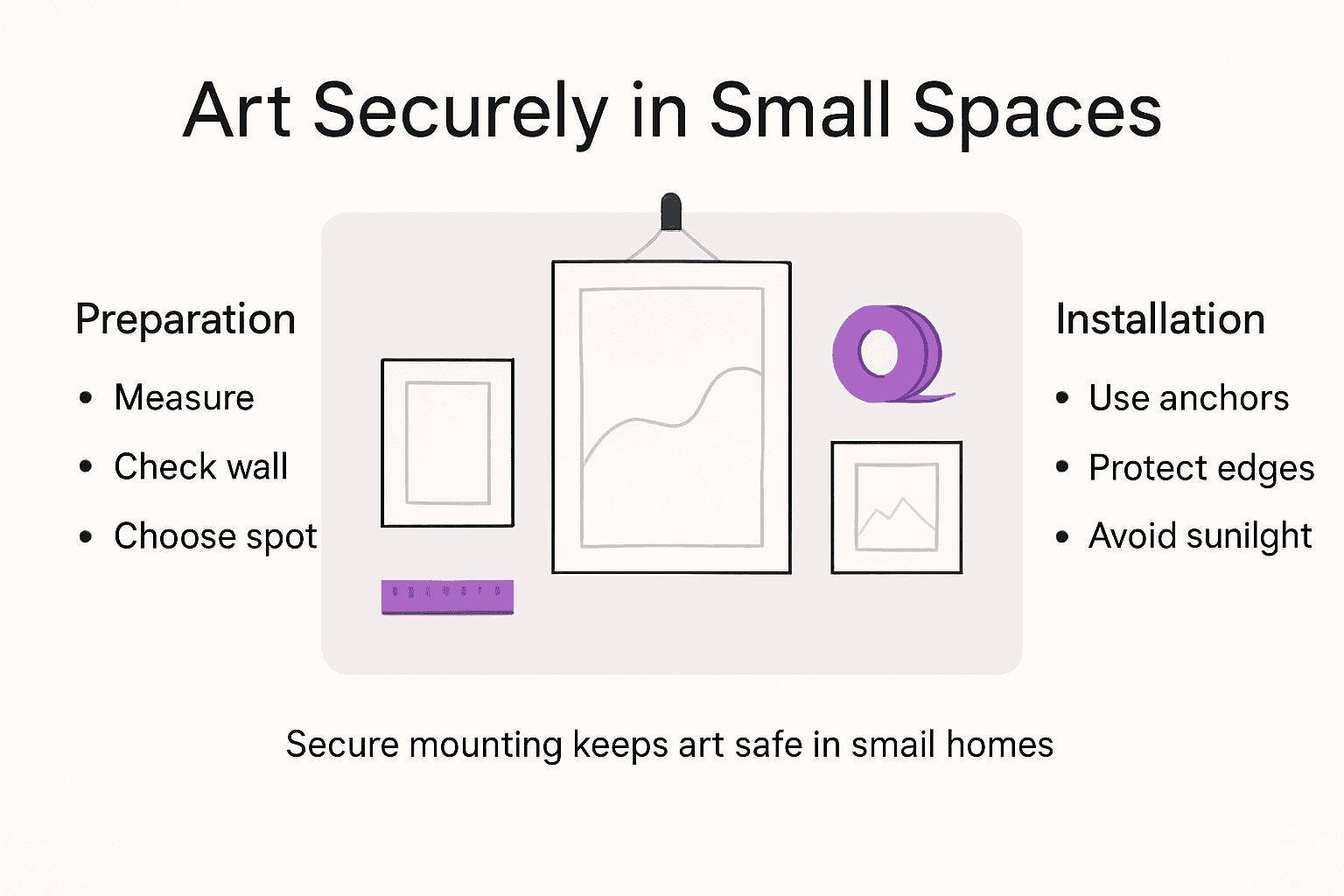
Controlling environmental conditions is crucial for artwork longevity, especially in compact living areas. Select mounting hardware specifically designed for your artwork’s weight and wall type. For lightweight pieces, consider adhesive hooks or picture hanging strips that minimize wall damage. Heavier artworks require wall anchors matched to your wall material—toggle bolts for drywall, masonry anchors for brick or concrete. Install mounting hardware into wall studs whenever possible for maximum support and stability.
Pay close attention to environmental factors that can degrade artwork. Avoid hanging pieces in direct sunlight or near heating vents, which can cause fading and material deterioration. Maintain consistent room temperature and humidity levels to protect delicate art surfaces. Use museum quality glass or acrylic with UV protection for framed pieces, which helps preserve color and prevent gradual degradation.
Pro tip: Invest in a digital level and stud finder to ensure perfectly straight, secure artwork installation that protects both your walls and your art collection.
Use this reference table to select secure mounting hardware for your artwork:
| Art Weight | Wall Type | Best Hardware |
|---|---|---|
| Light (under 5 lbs) | Drywall | Adhesive hooks or strips |
| Medium (5-20 lbs) | Brick/Concrete | Masonry anchors |
| Heavy (over 20 lbs) | Drywall with studs | Toggle bolts and screws |
| All weights | Wooden walls | Standard picture hangers |
Step 5: Review and Refine the Overall Display
Creating an exceptional art display is an iterative process that requires careful observation and intentional refinement. Art critiques provide a structured approach to evaluating and enhancing art displays, helping you transform your initial arrangement into a compelling visual narrative.
Approaching your display both analytically and intuitively allows for thoughtful improvements that elevate the overall aesthetic. Step back and observe your artwork from multiple angles and distances. Take photographs to help you assess the arrangement objectively, looking for balance, visual flow, and emotional impact. Consider how the pieces interact with each other and the surrounding space. Are there areas that feel crowded or empty? Do the artworks create a cohesive story or conversation?
Seek feedback from friends or design enthusiasts who can offer fresh perspectives. Sometimes an outside view can highlight nuances you might have missed. Be willing to make adjustments experiment with different groupings, rotate pieces, or even temporarily remove some artworks to create breathing room. Remember that a dynamic display is never truly finished but continuously evolving with your changing aesthetic and space.
Pro tip: Create a digital mock-up of your art display using smartphone apps or online design tools before making physical changes, allowing you to experiment risk-free.
Elevate Your Small Space with Impactful Art from Eman’s Gallery
Struggling to make your small space feel bold and visually dynamic? This guide shows how smart artwork selection and thoughtful display can transform compact rooms. The key pain points are optimizing scale, lighting, and arrangement without overcrowding. At Eman’s Gallery you will find a curated collection of contemporary and geometric wall art prints designed to fit perfectly in smaller areas while delivering striking visual impact. Each piece is crafted to enhance flow and balance, solving the challenge of limited wall space.
Discover how original handmade paintings and museum-quality canvas prints can brighten your home or office. Act now to choose art that elevates your environment with elegance and personality. Explore the full range of contemporary artworks and start your transformation at Eman’s Gallery today.
Frequently Asked Questions
How do I assess my space for displaying art effectively?
Before displaying art, assess your available wall space and lighting conditions. Measure the area and observe natural and artificial light, then aim to hang art at eye level, typically between 57 to 60 inches from the floor.
What types of artwork work best in small spaces?
In small spaces, select smaller to medium-sized artworks that won’t overwhelm the area. Aim for pieces between 16 to 24 inches wide and consider vertical or square formats to maximize visual depth without taking up too much wall real estate.
How can I arrange artwork to create a balanced display?
To create a balanced display, use your largest or most striking piece as a focal point and arrange smaller pieces around it. Experiment with asymmetrical groupings and ensure there is adequate space between artworks to allow each one to stand out without feeling crowded.
What installation techniques should I use to secure artwork in small spaces?
Use appropriate mounting hardware based on the artwork’s weight and wall type to ensure security and longevity. For lightweight pieces, adhesive hooks work well, while heavier pieces may need toggle bolts or masonry anchors, installed into wall studs for maximum stability.
How can I refine my art display for better visual impact?
Refining your display involves stepping back and observing the arrangement from different angles. Take photographs to assess balance and flow, and be willing to make adjustments by rotating pieces or changing groupings to enhance the overall visual narrative.
What is the importance of lighting when displaying art?
Lighting plays a crucial role in showcasing your art effectively. Use adjustable LED picture lights to highlight your pieces while protecting them from heat and UV damage, ensuring the colors and details are always vibrant and well-preserved.
Recommended
- Complete Guide to Types of Art for Interiors – Eman’s Gallery
- Art and Interior Design Explained: Transforming Modern Spaces
- How to Style Art Prints for Interior Display – Eman’s Gallery
- 7 Inspiring Art Display Ideas to Elevate Your Home Decor – Eman’s Gallery
Stay Connected
- ✨ Explore Eman Khalifa’s original art and fine art prints
- 📸 Follow Eman Khalifa’s art journey on: Instagram @emans_gallery and Facebook Eman’s Gallery
- 📹 Watch Eman Khalifa creating live art on: YouTube @emans_gallery
