


How to Style Art Prints for Interior Display
How to Style Art Prints for Interior Display
Over 60 percent of homeowners struggle to display art prints in a way that truly elevates their space. The way you hang and light your art can make a dramatic difference, transforming ordinary walls into personal galleries. By understanding how room layout, lighting, and thoughtful choices come together, you can create a stunning display that grabs attention and reflects your unique style.
Table of Contents
- Step 1: Assess Your Space And Lighting
- Step 2: Select Complementary Art Prints
- Step 3: Choose Suitable Frames And Finishes
- Step 4: Arrange Prints For Balanced Impact
- Step 5: Verify Placement For Visual Harmony
Quick Summary
| Key Point | Explanation |
|---|---|
| 1. Assess lighting carefully | Natural and artificial light influences how art is perceived; opt for indirect lighting to avoid glare and fading. |
| 2. Choose art with a theme | Select prints that complement each other through shared colors or styles to create a cohesive display. |
| 3. Frame thoughtfully | The right frame can enhance the artwork’s impact; choose styles and colors that match your decor and the art. |
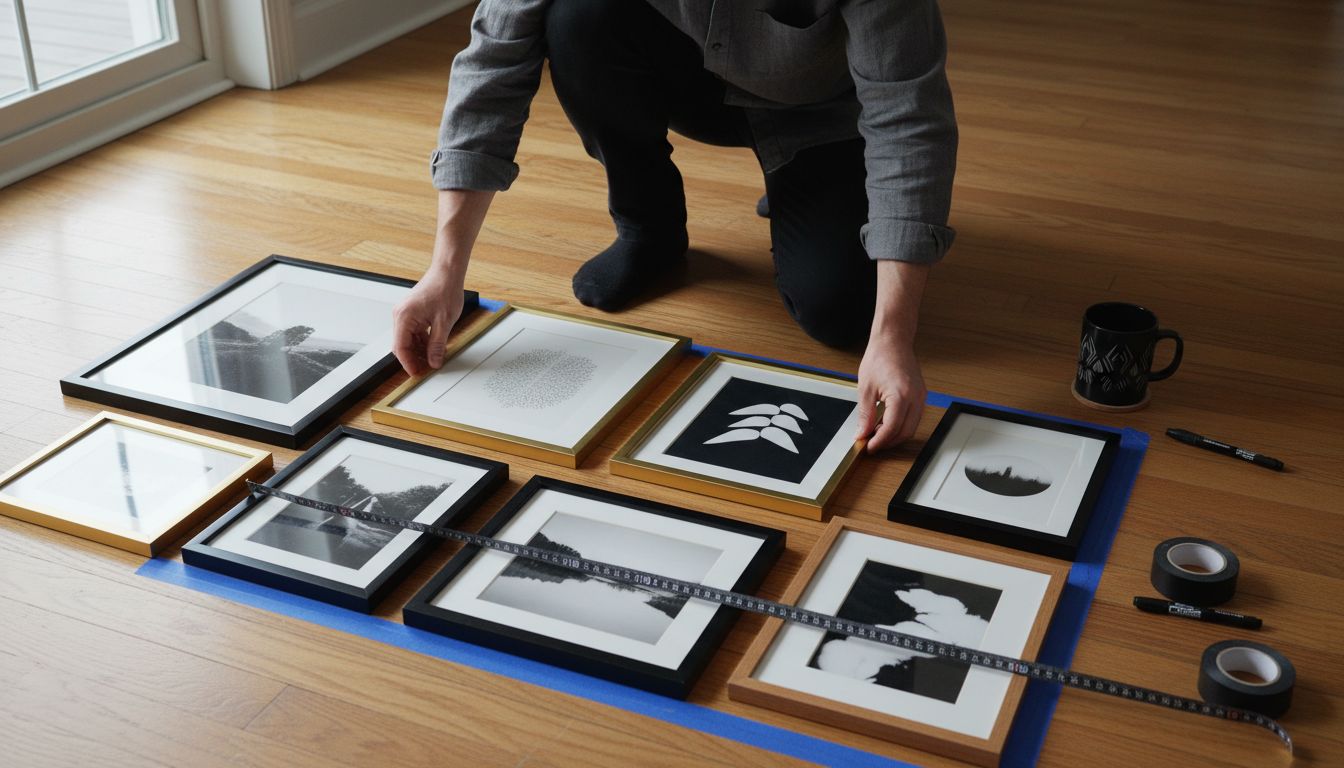
| 4. Plan arrangement on the floor | Lay out prints on the floor first to experiment with arrangements before hanging them, ensuring visual balance. |
 | | 5. Verify placement from multiple angles | Step back to evaluate your art display from different perspectives; use photographs to assess balance and harmony.
Step 1: Assess your space and lighting
Before hanging your art prints, you need to understand how your room’s unique characteristics will impact their visual impact. Lighting plays a critical role in art display, and professionals have long recognized its importance. According to research from MDPI, daylighting patterns significantly influence how artworks are perceived and appreciated.
Start by examining the natural and artificial light sources in your room. Walk around and observe how sunlight moves throughout the day. Look for walls with consistent indirect light that won’t cause glare or harsh shadows on your art prints. North facing walls often provide soft, even illumination perfect for displaying artwork. Avoid hanging prints in direct sunlight, which can fade colors and damage delicate art over time.
Pro tip: Use adjustable lighting like picture lights or track lighting to create drama and highlight specific art pieces. As Francis Press notes in their research on museum displays, strategic lighting can dramatically enhance the visual experience of artwork. Experiment with different angles and intensities to find the most flattering presentation for each print.
Next, you’ll want to measure your wall space and start planning your art print layout.
Step 2: Select complementary art prints
Choosing art prints that work together is an art form in itself. Recent research from ArXiv has explored innovative methods for recommending visual art by analyzing latent semantic representations of paintings, which can help you create a cohesive and visually stunning display.
Start by identifying a core theme or color palette that will tie your art prints together. This could be based on a shared color scheme, artistic style, subject matter, or emotional tone. Consider the overall mood of your space and select prints that either harmonize with or create an intentional contrast in your room. Look for prints that share similar visual elements like color intensity, geometric shapes, or emotional resonance.
Pro tip: Don’t be afraid to mix different sizes and orientations. A gallery wall with varied print sizes can create visual interest and dynamic energy. As recommended by visual art research, aim for a balanced composition that tells a story or creates a cohesive visual narrative. For those seeking inspiration, check out our complete guide to decorating with art prints to explore more advanced styling techniques.
Once you have selected your complementary art prints, you will be ready to plan your layout and arrangement.
Step 3: Choose suitable frames and finishes
Framing can transform an art print from simple decoration to a true design statement. Drawing inspiration from Wikipedia’s insights on scenography, which explores holistic design principles, selecting the right frame is about creating a comprehensive visual experience that complements both the artwork and your interior space.
Consider the overall aesthetic of your room when choosing frames. Minimalist spaces typically benefit from sleek black or white frames with clean lines, while more traditional interiors might call for ornate wooden frames with rich textures. Pay attention to frame width as well. Narrow frames work well for creating a modern gallery feel, while wider frames can add drama and draw more attention to individual pieces.
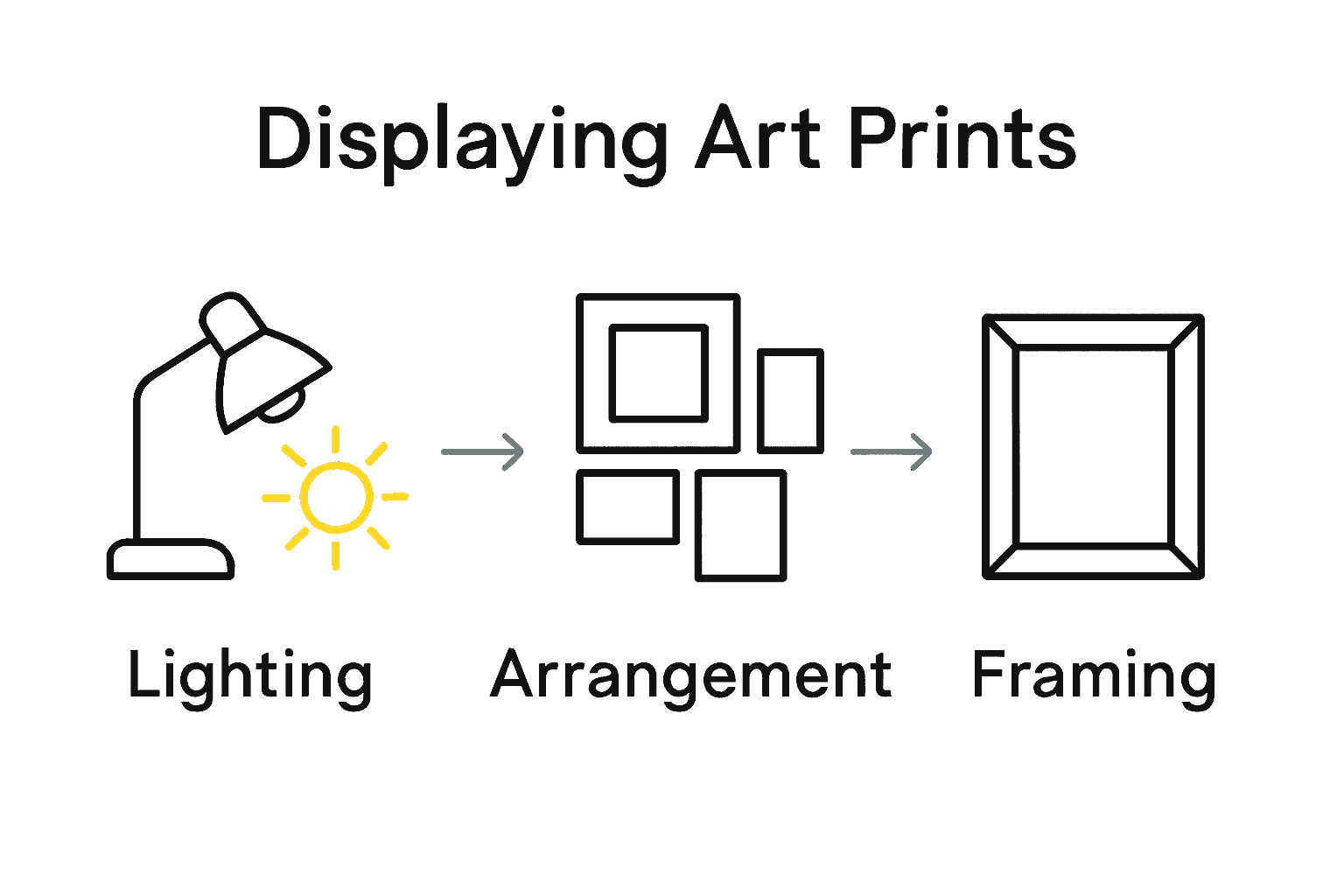 Color matching is crucial select frame colors that either perfectly complement or intentionally contrast with your art print.
Pro tip: Use raking light techniques to highlight your framed art. By positioning lighting at an oblique angle, you can create dramatic shadows and emphasize the texture of both the frame and the print. Look for frames with interesting surface details that will catch and play with light. For deeper guidance, check out our home decor styling tips.
With your frames selected, you are now ready to plan the precise arrangement of your art prints.
Step 4: Arrange prints for balanced impact
Arranging art prints is like composing a visual symphony where each piece plays a crucial role in creating harmony. Inspired by James Turrell’s approach to Dividing the Light, which masterfully explores spatial balance, your goal is to create a composition that feels intentional and visually engaging.
Start by creating a layout template on the floor before hanging anything on the wall. Experiment with different arrangements by placing your framed prints on the ground first. Consider creating a focal point with a larger statement piece and then surrounding it with smaller complementary prints. Maintain consistent spacing between prints typically around 2 to 3 inches to create a sense of visual rhythm. Think about visual weight and balance some larger prints with clusters of smaller ones to create dynamic interest.
Pro tip: Use paper templates or painter’s tape to map out your arrangement on the wall before making any holes. This technique allows you to visualize the final layout and make adjustments without damaging your walls. Drawing from Anthony McCall’s principles in Line Describing a Cone about defining space through strategic placement, treat your wall as a canvas where each print contributes to the overall composition. For more detailed guidance, explore our complete guide to decorating with art prints.
With your prints thoughtfully arranged, you are now ready to bring your artistic vision to life.
Step 5: Verify placement for visual harmony
The final step in creating a stunning art print display is ensuring visual harmony through careful verification. Recent research from ArXiv has developed innovative methods for estimating indoor lighting conditions, which can help you critically evaluate your art print placement and overall visual composition.
Step back and view your arrangement from multiple angles and distances. Take photographs of your display to help you assess the layout objectively. Look for visual balance and ensure that no single print dominates the entire wall or feels disconnected from the others. Check that the spacing remains consistent and that the prints create a cohesive narrative or aesthetic flow. Pay attention to how natural and artificial light interact with your prints at different times of day.
Pro tip: Use your smartphone to take multiple photos and view them in grayscale. This technique helps you evaluate the visual weight and balance of your arrangement by removing color distractions. According to lighting research from ArXiv, understanding spectral radiance can significantly impact how art displays are perceived. For additional insights, explore our guide to using art prints in home decor.
With your art prints now perfectly placed, you can sit back and enjoy your beautifully curated display.
Transform Your Space with Expertly Styled Art Prints
Struggling to create an interior display that truly captures your personality and elevates your home? This guide showed you how lighting, frame choices, and thoughtful arrangement can make all the difference. Now take your vision a step further by choosing from our carefully curated collection of Wall Art Prints | Canvas & Framed Art Prints by Eman Khalifa – Eman’s Gallery. Each piece is designed to complement a variety of decor styles and help you achieve a standout gallery-worthy look.
Be inspired to craft a cohesive and stunning display today. Explore our variety of Artwork Printed on Canvas – Eman’s Gallery for lasting beauty and durable quality. Don’t wait to bring balance and harmony into your living space visit Eman’s Gallery now and discover art prints that speak to your style and brighten your home.
Frequently Asked Questions
How do I assess the lighting in my room for displaying art prints?
To assess your room’s lighting, observe how natural and artificial light affects your space throughout the day. Walk around and take note of areas with consistent indirect light that avoids glare on the prints, especially on north-facing walls.
What theme should I consider when selecting art prints for my display?
When selecting art prints, aim for a core theme or color palette that unites them. This could be based on shared colors, styles, or emotional tones; for example, choose prints that all evoke a calming atmosphere by using soft blues and greens.
How can I choose the right frames to complement my art prints?
Selecting the right frames involves considering your room’s overall aesthetic, such as using minimalist frames for modern interiors or ornate ones for traditional spaces. Pair frames with your art prints by matching them closely, or use contrasting colors to make a bold statement.
What is the best way to arrange my art prints for visual harmony?
To arrange your art prints, start by laying them out on the floor to experiment with different configurations. Aim for a focal point with one larger piece and maintain consistent spacing of 2 to 3 inches between prints to create a balanced visual rhythm.
How can I verify that my art print placement looks harmonious?
To verify your art print placement, step back and view the arrangement from different angles and distances. Take photographs of the display to analyze balance and spacing, making adjustments until it feels cohesive and visually pleasing.
Recommended
- How to Use Art Prints for Stunning Home Decor Success – Eman’s Gallery
- Complete Guide to Decorating With Art Prints – Eman’s Gallery
- What Is an Art Print? Complete Guide for 2025 – Eman’s Gallery
- Complete Guide to Why Buy Art Prints – Eman’s Gallery
Stay Connected
- ✨ Explore Eman Khalifa’s original art and fine art prints
- 📸 Follow Eman Khalifa’s art journey on: Instagram @emans_gallery and Facebook Eman’s Gallery
- 📹 Watch Eman Khalifa creating live art on: YouTube @emans_gallery
- Supported by BabyLoveGrowth
