


Famous art styles: History, key features, and influence
TL;DR:
- Selecting the right art style influences space tone, cultural messaging, and resale value.
- Understanding each movement’s visual traits and historical significance aids authentic collection and decorating choices.
- Mixing different art styles with careful balance creates dynamic, sophisticated interiors and curated collections.
Selecting the right art style for a collection or interior project is a decision with lasting consequences. The movement a collector or designer chooses sets the visual tone for an entire space, communicates cultural values, and affects resale potential. With dozens of celebrated movements spanning centuries, from Renaissance classicism to twentieth-century abstraction, narrowing the field requires clear criteria and solid knowledge of each style’s defining characteristics. This guide covers the most recognized art movements, their visual trademarks, and how to apply them effectively in interiors and collections.
Table of Contents
- What makes an art style famous?
- Overview of the most influential art styles
- Key features and visual cues of each art style
- How to choose and display famous art styles in your space
- A fresh perspective: Why mixing famous art styles creates more dynamic spaces
- Find your next masterpiece: Curated art styles for collectors and interiors
- Frequently asked questions
Key Takeaways
| Point | Details |
|---|---|
| Famous styles excel visually | Movement-defining colors, shapes, and techniques distinguish renowned art. |
| Context matters in selection | Choose styles that suit your space’s light, palette, and overall design. |
| Mix movements for best effect | Thoughtfully combining styles often leads to deeper visual interest. |
| Collectors favor iconic patterns | Select designs, from Art Deco to abstract, that blend well with interior objects. |
What makes an art style famous?
Not every movement earns a permanent place in art history. Certain qualities separate styles that endure from those that fade. Understanding these criteria helps collectors and designers make more informed choices.
Key factors that establish a movement as “famous” include:
- Longevity and cultural impact. A style that spans decades or inspires successive generations carries more cultural weight.
- Recognizability. Instantly identifiable visual trademarks, such as the soft brushwork of Impressionism or the geometric precision of Cubism, signal a movement’s reach.
- Artistic innovation. Famous styles introduced new techniques, materials, or ways of seeing that changed the course of art history.
- Adaptability to interiors. Movements that translate well to residential and commercial settings retain relevance for designers and collectors alike.
- Notable artists and landmark works. The presence of widely recognized masters anchors a movement in the public consciousness.
- Compatibility with design aesthetics. Art styles for luxury spaces range from formal classicism to bold abstraction, each suiting different architectural contexts.
The contrast between classicism and romanticism illustrates how style philosophy shapes both art and interior environments. Classicism prioritizes harmony and proportion; Romanticism emphasizes emotion and nature. A collector who prefers ordered, symmetrical rooms will likely respond differently to these two traditions than one who values drama and organic forms.
Pro Tip: Before investing in a style, study its landmark works in person when possible. The scale, texture, and palette of originals often differ dramatically from reproductions, which matters for both collecting and decorating decisions.
Overview of the most influential art styles
With selection criteria in mind, the following movements have shaped art history and defined what we recognize as famous. Each represents a distinct shift in technique, philosophy, or cultural context.
- Renaissance (14th to 17th century). Florentine Renaissance art used centered monofocal perspective, anatomical accuracy, and humanism, rejecting decorative excess. Key figures include Leonardo da Vinci, Michelangelo, and Raphael.
- Baroque (17th to early 18th century). Drama, grandeur, and intense emotional contrast define this movement. Caravaggio and Rembrandt are central figures.
- Impressionism (1860s to 1880s). Impressionism captured fleeting light with visible brushstrokes and en plein air painting, contrasting sharply with Expressionism’s distorted forms and emotional intensity.
- Post-Impressionism (1880s to 1900s). Artists like Van Gogh and Cézanne extended Impressionist ideas while adding personal symbolism and structural experimentation.
- Fauvism (early 1900s). Bold, unnatural color and raw brushwork defined the short but influential Fauvist movement, led by Matisse and Derain.
- Cubism (1907 to 1920s). Cubism, pioneered by Picasso and Braque, broke objects into geometric forms and reassembled them abstractly.
- Expressionism (early 20th century). Emotional distortion and intense color distinguish this movement, associated with Edvard Munch and Ernst Ludwig Kirchner.
- Abstract Expressionism (1940s to 1950s). American artists like Pollock and de Kooning used spontaneous, large-scale gestural painting to convey emotional states.
- Art Deco (1920s to 1930s). Geometric ornamentation, luxurious materials, and stylized forms made Art Deco a dominant force in design and fine art.
- Suprematism (1910s to 1920s). Malevich led this movement toward pure geometric abstraction using basic shapes and primary colors.
| Art style | Period | Key artists |
|---|---|---|
| Renaissance | 14th to 17th century | Da Vinci, Raphael, Michelangelo |
| Baroque | 17th to early 18th century | Caravaggio, Rembrandt, Rubens |
| Impressionism | 1860s to 1880s | Monet, Renoir, Degas |
| Cubism | 1907 to 1920s | Picasso, Braque, Léger |
| Abstract Expressionism | 1940s to 1950s | Pollock, de Kooning, Rothko |
| Art Deco | 1920s to 1930s | Tamara de Lempicka, Erte |
| Suprematism | 1910s to 1920s | Malevich, Popova |
These movements collectively represent centuries of artistic evolution. Collectors and designers who understand their timelines and key figures can draw on this knowledge when evaluating home decor art types for specific spaces or acquisition goals.
Key features and visual cues of each art style
Now the focus shifts to what makes each style visually distinctive. Specific techniques, compositional choices, and color philosophies separate one movement from another. For collectors and designers, these details are what allow accurate identification and effective placement.
The table below summarizes the technical hallmarks of major movements:
| Style | Signature technique | Color approach | Compositional focus |
|---|---|---|---|
| Renaissance | Linear perspective, sfumato | Natural, balanced tones | Centralized, symmetrical |
| Baroque | Chiaroscuro, tenebrism | Deep shadows, warm highlights | Dynamic diagonal compositions |
| Impressionism | Alla prima, visible brushwork | Light-saturated, broken color | Everyday scenes, natural settings |
| Fauvism | Crude, expressive strokes | Vivid non-naturalistic color | Simplified forms |
| Cubism | Fragmentation, multiple viewpoints | Muted earth tones, geometric accent | Deconstructed objects |
| Suprematism | Flat planes, geometric forms | Primary colors, black, white | Pure abstraction |
| Abstract Expressionism | Gestural marks, drip painting | Expansive fields, bold contrast | Large-scale emotional impact |
Several techniques appear repeatedly across movements and deserve specific attention:
- Chiaroscuro. Baroque art emphasized chiaroscuro, dramatic movement, and grandeur, reacting to Renaissance balance with emotional intensity. This strong contrast between light and dark creates a theatrical, three-dimensional effect.
- Alla prima. The alla prima technique completes paintings in one session using wet paint applied over wet paint. Impressionists relied on this approach to capture light effects and spontaneous visual impressions.
- Fauvism’s color intensity. Fauvism used vibrant, crude brushstrokes and vivid colors for emotionalism and served as a direct precursor to Cubism.
- Suprematist abstraction. Suprematism employed pure geometrical abstraction with basic shapes and primary colors to express the supremacy of pure feeling over representational imagery.
“The goal of art is to represent not the outward appearance of things, but their inward significance.” — Aristotle
For collectors, understanding these technical markers helps authenticate works and understand condition issues. A Baroque painting with inconsistent chiaroscuro may signal overpainting or restoration. For designers, knowing these cues helps when pairing art with architectural details, as discussed in depth in both art styles for luxury interiors and the broader field of art and interior design.
The cultural dimension of art collecting enthusiasm has grown significantly in recent years, with new collectors increasingly drawn to early modern movements like Fauvism and Suprematism because of their clean visual language and strong market recognition.
How to choose and display famous art styles in your space
Once the visual features of each style are clear, practical choices for display become more straightforward. The process involves matching style to setting, managing proportions, and creating cohesion across a room or collection.
Key guidelines for selecting and displaying famous art styles:
- Match style to room function. Abstract art suits minimalism, while representational works fit traditional interiors. This basic alignment prevents visual conflict between architecture and artwork.
- Apply the 60-30-10 rule. For interiors, allocate 60% of the visual weight to a dominant style, 30% to a complementary one, and 10% to an accent. This approach creates balance without monotony.
- Scale to the wall. Large-scale Abstract Expressionist works demand generous wall space, while intimate Post-Impressionist panels work well in smaller rooms or hallways.
- Consider light conditions. Impressionist works with light-saturated palettes respond well to natural light, while Baroque paintings with dark fields hold their presence under artificial lighting.
- Use color as a unifying element. When mixing styles, a shared color palette prevents the space from feeling fragmented. Choosing color schemes for art is a structured process that links room palette to artwork tones.
- Frame consistently. Varied frame styles across a gallery wall can undermine even a well-chosen art selection. Choose frames that respect the period or aesthetic of each work while maintaining cohesion.
Art collectors favor iconic designs like Bauhaus furniture and Art Deco patterns for blending with fine art in residential settings. Furniture with strong geometric lines, for example, creates a natural affinity with Cubist or Suprematist prints. Organic, curved furniture designs pair more naturally with Impressionist or Fauvist works.
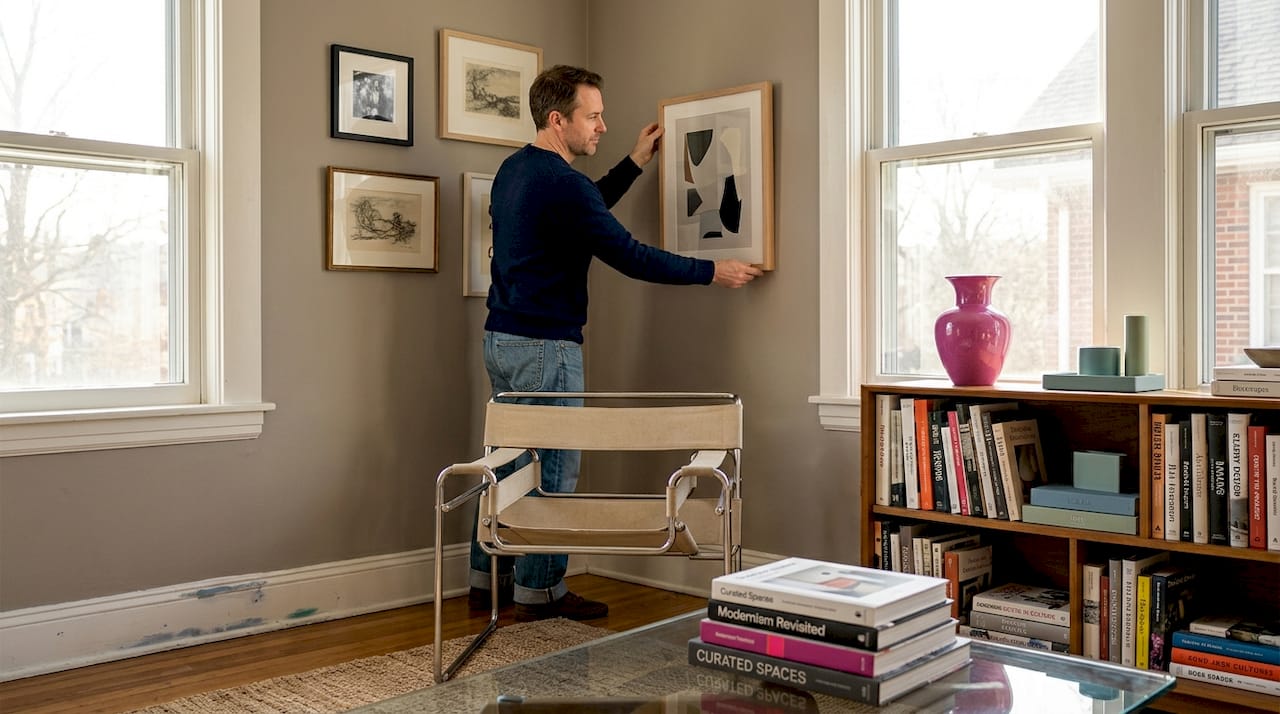
Pro Tip: When styling art prints in a modern interior, placing a single large-format work as a focal point outperforms a crowded gallery wall in spaces with minimal architectural detail. Simplicity amplifies the art rather than competing with it.
Collectors pursuing investment-grade works should research auction histories for each movement. Impressionism and Post-Impressionism consistently attract strong prices at major auction houses, while Suprematism and Fauvism present emerging market opportunities for buyers building long-term collections.
A fresh perspective: Why mixing famous art styles creates more dynamic spaces
The conventional approach to art selection often defaults to stylistic consistency: choose a period, commit to it, and build around it. That approach has practical merit, particularly for formal rooms or professional spaces that require visual coherence. However, the most memorable collections and interiors rarely follow this single-movement logic.
The rooms and galleries that generate lasting interest tend to draw from multiple traditions simultaneously. A Baroque portrait alongside a Suprematist geometric print creates a dialogue between representation and abstraction, between centuries of distance. That tension, when managed through shared scale or color, is what makes a space feel considered rather than assembled.
Mixing movements also reflects a collector’s intellectual range. A space dominated entirely by one style can read as decorative rather than curated. Pairing classicism’s ordered proportions with abstract color fields from Abstract Expressionism, for example, shows an understanding of both traditions and a willingness to let them speak to each other. The result is a collection with depth rather than uniformity.
The art-inspired home decor approach used in contemporary luxury interiors applies this principle consistently. Designers working at the highest level rarely restrict themselves to a single art movement. Instead, they use scale, color, and placement to create relationships between works from different periods and traditions.
The 60-30-10 rule provides a workable framework for this. Anchor the space with a dominant style that accounts for the majority of the visual weight. Introduce a secondary movement that complements or contrasts it in a structured way. Reserve a small percentage for accent pieces that add surprise without disrupting the overall composition. This is not rule-breaking. It is deliberate, informed curation.
Collectors who work exclusively within one style also limit their acquisition options and price exposure. Variety across eras and visual languages distributes risk while building a more intellectually coherent collection over time.
Find your next masterpiece: Curated art styles for collectors and interiors
The movements covered in this guide, from Renaissance precision to bold Suprematist geometry, are all represented in contemporary original and print-format works available for collectors and interior designers worldwide.
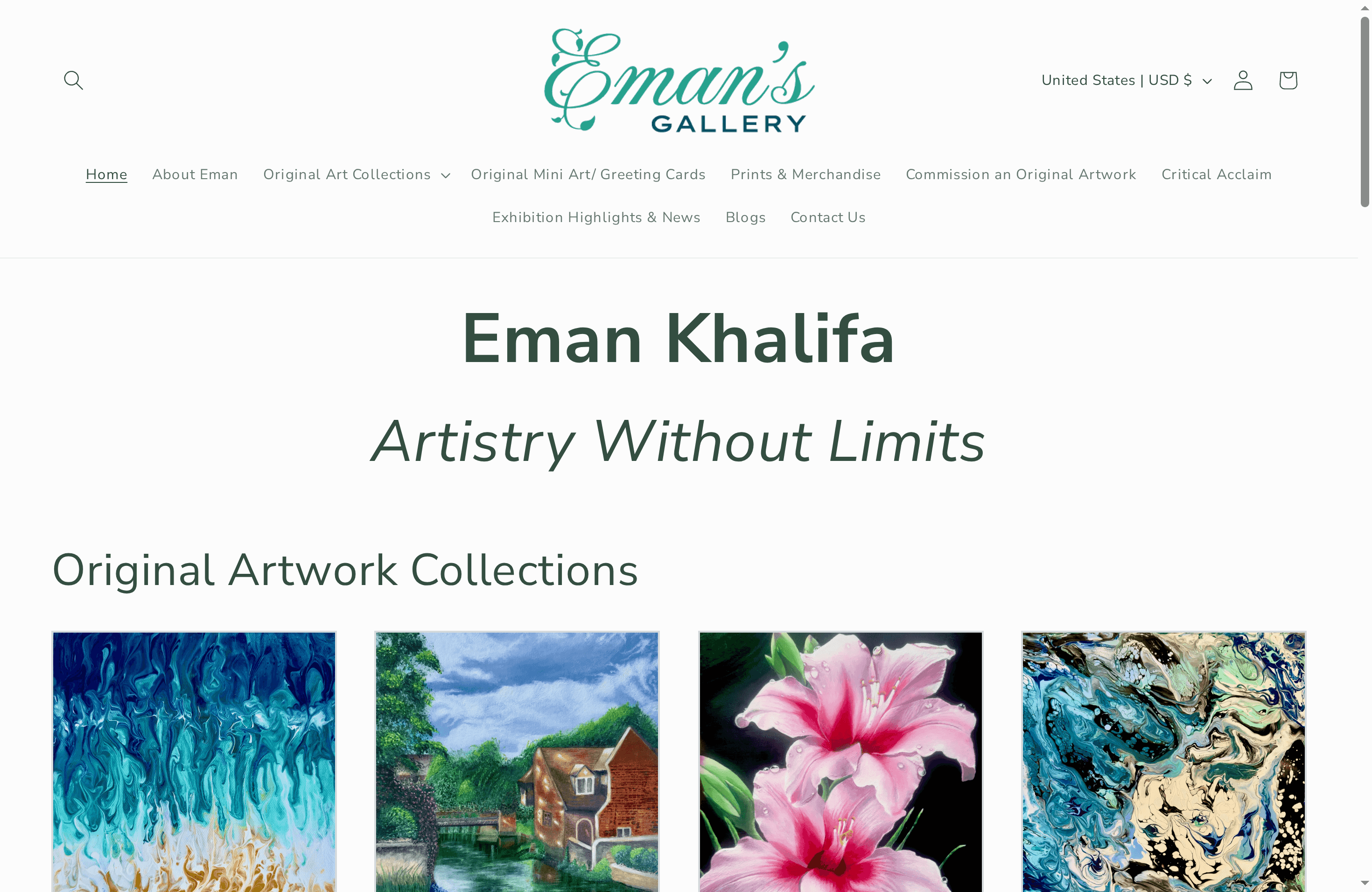
Eman’s Gallery offers original handmade paintings and museum-quality canvas prints across abstract, geometric, floral, landscape, seascape, and still-life categories. Works like the Good Tidings original painting reflect the bold color and expressive energy associated with post-Fauvist and Abstract traditions. Browse by style: Abstract, Geometric, Expressionist, and Still Life. The Fragments of Memory canvas print speaks to collectors drawn to layered, geometric compositions with depth and precision. Browse the full wall art prints catalog to find works suited to your space, whether the goal is a single statement piece or a multi-panel collection. Worldwide shipping available from the UK, USA, Canada, Australia, and more.
Frequently asked questions
Which famous art style suits minimalist interior design?
Abstract styles such as Suprematism and Cubism often suit minimal interiors due to their geometric forms and focused color use. Suprematism employed pure geometrical abstraction with basic shapes and primary colors, which aligns naturally with clean, uncluttered spaces.
What is the defining feature of Impressionism?
Impressionism is defined by its approach to light and atmosphere, capturing fleeting light with visible brushstrokes and outdoor scenes painted on location rather than in a studio setting.
How does Cubism differ from Abstract Expressionism?
Cubism breaks recognizable objects into geometric forms and multiple viewpoints, while Abstract Expressionism moves away from recognizable subjects entirely, using spontaneous emotional brushwork and large-scale gestural marks as the primary content.
Can I mix famous art styles in one room?
Yes, mixing styles creates visual interest and depth when managed through shared color palettes and consistent scale. Matching art styles using the 60-30-10 ratio and color unity is an established interior design approach that supports successful style combinations.
Shop by Art Style
Explore Eman's Gallery collections by movement and style:
- Abstract Art — gestural, expressive works in the Abstract Expressionist tradition
- Geometric Abstraction — structured, bold works echoing Cubist and Suprematist principles
- Expressionist Art — raw, emotional pieces with intense colour and form
- Still Life Art — timeless compositions in the classical tradition
Recommended
- Popular art genres: Find the perfect style for your collection
- History of Art Prints: Legacy and Modern Impact - Eman’s Gallery
- Geometric Art Explained: Styles, History, and Uses - Eman’s Gallery
- Minimalist Art Explained: Principles, History, and Impact
- Tattoo-inspired art: Styles and meaning for mindful design – Memento Vivere Co
Stay Connected
- ✨ Explore Eman Khalifa’s original art and fine art prints
- 📸 Follow Eman Khalifa’s art journey on: Instagram @emans_gallery and Facebook Eman’s Gallery
- 📹 Watch Eman Khalifa creating live art on: YouTube @emans_gallery
