


Art-inspired home decor: Transform your space in 2026
TL;DR:
- Art is now central to luxury and modern interior design, influencing mood and wellness outcomes.
- Oversized, nature-inspired art in earthy palettes creates impactful focal points that enhance emotional well-being.
- Blending maximalist layering with quiet luxury approaches ensures balanced, transformative home aesthetics.
Art is no longer a finishing touch in luxury and modern interiors. It has become a central design decision, one that shapes mood, identity, and even wellness outcomes. For homeowners and designers working in 2026, the pressure to choose well is real. The right piece can anchor an entire room. The wrong one gets ignored. This article walks through the selection criteria and top trends you need to know, from oversized nature-inspired formats to earthy palettes and the maximalism versus quiet luxury debate, so you can make choices that genuinely transform your space.
Table of Contents
- Selection criteria for art-inspired home decor in 2026
- oversized and nature-inspired art: The bold statement
- earthy palettes anchoring emotional resonance
- maximalism vs. quiet luxury: layering for balanced impact
- Why transformative art is the new standard for luxury homes
- Find art-inspired decor that elevates your home
- frequently asked questions
Key Takeaways
| Point | Details |
|---|---|
| Oversized art dominates | Large-scale pieces make bold statements and elevate home wellness in 2026. |
| Earthy palettes anchor mood | Warm tones help ground interiors and promote emotional resonance. |
| Layering styles for impact | Combining maximalist and minimalist approaches achieves both energy and calm. |
| Art improves well-being | Evidence shows biophilic art reduces stress and boosts focus at home. |
Selection criteria for art-inspired home decor in 2026
Before you follow any trend, you need a clear framework for choosing art that fits your space and serves your goals. That means evaluating several factors together, not one at a time.
1. Room size and wall dimensions
Wall scale is the first filter. A piece that works in a gallery loft may disappear on a suburban living room wall, or overpower a narrow hallway. Start by measuring your available wall space. For primary walls in open-plan areas, pieces at 48 inches or wider are appropriate. For smaller accent walls, 24 to 36 inches is typically the right range.
2. Light conditions
Natural and artificial light change how colors read on a wall. A deep ochre canvas looks warm and grounded in afternoon sun but can feel muddy under cool LED lighting. Before committing to a piece, test your lighting at different times of day. For guidance on how oversized biophilic art performs in different light conditions, recent research provides useful context.
3. Art’s impact on mood and focus
Art selection is increasingly tied to behavioral outcomes. Art for well-being is a growing priority for homeowners who want their interiors to do more than look attractive. Color, subject matter, and composition all affect how a room feels to live and work in.
4. The wellness case for biophilic and nature-inspired art
Biophilic art reduces stress by 15 to 30%, improves focus by 20 to 25%, and longitudinal studies show significant reductions in depression and anxiety through attention restoration mechanisms. These are measurable outcomes, not marketing claims. If you are designing a home office, bedroom, or any room where mental clarity matters, this category of art is worth prioritizing.
5. Your existing decor and color story
Art should connect to the existing palette, not fight it. Review your current furniture tones, flooring, and textiles before selecting a piece. If you want a step-by-step approach, this curating art step guide breaks the process down systematically.
Pro tip: Layer art at different heights and supplement with directional lighting. A floor-standing piece paired with a wall-mounted spotlight creates depth that flat hanging alone cannot achieve.
oversized and nature-inspired art: The bold statement
Really big art in 2026 is not a novelty. It is a dominant format. Works at 60 to 72 inches or larger are consistently appearing in high-end residential projects, interior design publications, and trade shows. The subject matter leading this category is nature-inspired: cloud studies, minimalist botanicals, neo-Art deco collages, and landscape abstractions drawn from references like the visual calm of Japanese garden design.
Why does scale matter so much right now? Because larger formats command attention in ways that collections of smaller pieces cannot. A single oversized painting on a primary wall becomes the room’s visual anchor. Everything else, furniture, lighting, textiles, is arranged in relation to it.
Common oversized art formats in 2026:
- Canvas paintings at 60 x 48 inches and above
- Gallery-wrapped prints on museum-quality canvas
- Multi-panel compositions (diptychs and triptychs)
- Large-format photographic prints on metal or acrylic
For nature-inspired options, types of home art for modern spaces includes landscape, seascape, and botanical categories worth exploring.
How to stage oversized art without overwhelming a room:
Leave at least 6 to 8 inches of wall space on each side of the piece. Center it at eye level (roughly 57 to 60 inches from floor to center). In rooms with high ceilings, consider hanging the piece slightly higher to draw the eye upward and make the scale feel intentional rather than crowded.
| Feature | oversized art (60+ inches) | Standard art (under 36 inches) |
|---|---|---|
| Visual impact | High, anchors the room | Lower, accent role only |
| Best wall type | Primary, focal walls | Secondary, accent walls |
| Style fit | Contemporary, luxury | Any style |
| Price range | Higher investment | More accessible |
| Installation | Professional recommended | DIY friendly |
Pro tip: For nature-inspired wall art, pair large canvas pieces with living plants, natural textiles, or stone surfaces nearby. This extends the biophilic effect beyond the canvas itself.
earthy palettes anchoring emotional resonance
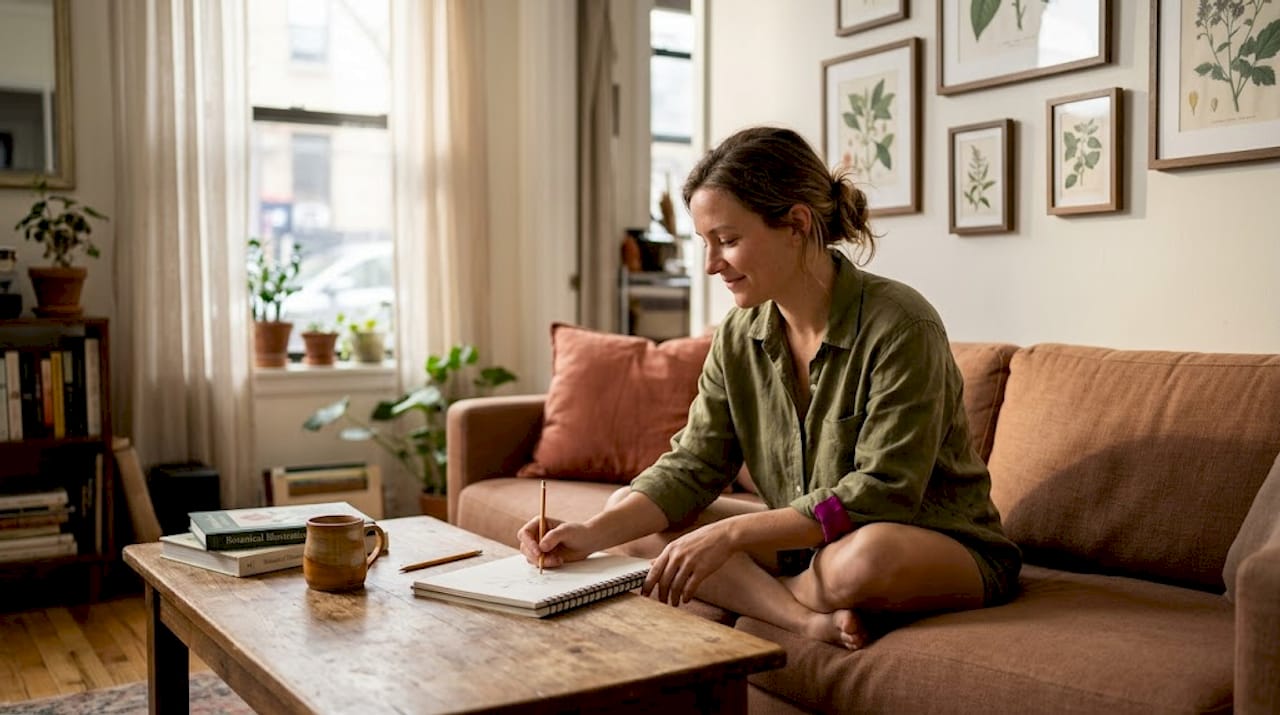
Color is one of the most powerful tools in art-driven interior design, and earthy palettes in 2026 are dominating. Raw sienna, terracotta, burnt ochre, warm taupe, and moss green are appearing in both art and the rooms built around it. These tones create grounded, emotionally resonant spaces where art functions as an anchor rather than decoration.
The psychology behind this is straightforward. Earth tones reference the natural environment. They are familiar and stabilizing at a neurological level. In rooms where people rest, work, or socialize, that stability translates into comfort and reduced cognitive load.
| Color | mood effect | Best room type |
|---|---|---|
| terracotta | warmth, energy | living rooms, dining areas |
| ochre | optimism, brightness | kitchens, home offices |
| moss green | calm, restoration | bedrooms, reading rooms |
| raw sienna | grounding, depth | studies, libraries |
| warm taupe | neutrality, balance | hallways, open-plan spaces |
For practical integration, art color schemes for interior design is a useful reference when coordinating your art purchase with existing room elements.
Quick tips for pairing earthy art with existing decor:
- Pull one dominant color from the artwork into your throw pillows or area rugs
- Use matte paint finishes on adjacent walls to avoid competing shine
- Choose natural-fiber textiles (linen, jute, cotton) to reinforce the earthy register
- Keep metal accents in warm tones: brass, brushed gold, or antique bronze
- Balance a dark earthy canvas with lighter furniture to maintain visual breathing room
Understanding why art matters at home goes beyond aesthetics. When color is chosen deliberately, art earns its place as a functional design element.
maximalism vs. quiet luxury: layering for balanced impact
Once you have decided on scale and palette, style approach is the next decision. Two distinct directions define 2026 luxury interiors: maximalism built on intentional layering and mixed media, and quiet luxury characterized by restrained textures and selective placement. Many high-end homes are blending both.
Maximalism in art-inspired interiors is not about excess. It is about intentional accumulation. You layer textiles, wall art, sculptural objects, and organic materials in a way that feels curated rather than cluttered. The key is a unifying thread: a repeated color, a consistent material, or a clear stylistic theme that ties disparate pieces together.
Quiet luxury takes the opposite approach. One significant piece. Clean walls. Materials that speak through quality rather than quantity. Art in this context is chosen for its restraint: A monochrome abstract, a minimal line drawing, or a single large-scale canvas in a muted palette.
“The most successful luxury interiors in 2026 are not fully maximalist or minimalist. They use oversized statement art as the focal anchor, then layer texture and smaller objects with deliberate restraint around it. The art does the heavy lifting.” Interior design perspective on hybrid layering.
pros and cons of each approach:
- maximalism pros: personality-rich, visually dynamic, flexible for evolving collections
- maximalism cons: higher risk of visual clutter, requires consistent curation
- quiet luxury pros: timeless, easy to update, highlights individual pieces
- quiet luxury cons: less forgiving if the anchor piece is wrong, can feel sparse if underdeveloped
For more context on making this choice, why decorate with art and art styles explained for luxury interiors are both worth reviewing.
Why transformative art is the new standard for luxury homes
Most homeowners approach art as the last step in decorating. That sequence is the problem. When art is chosen after everything else is finalized, it gets treated as an accessory rather than a structural element. The result is rooms that look complete but feel flat.
The data changes this conversation. oversized biophilic pieces lower stress at levels statistically equivalent to real green walls and nature settings. That is not a decorative benefit. That is a wellness investment with measurable returns, particularly relevant for urban homes with limited access to outdoor space.
Real design projects consistently show the same pattern. Art chosen first, with clear intent around scale, subject, and color, shapes the room in ways that no furniture arrangement can replicate.
Key lessons from design projects:
- Choose art before finalizing paint colors, not after
- One oversized piece outperforms three medium pieces in most rooms
- Nature-inspired subject matter performs better for wellness than abstract pattern in primary living spaces
- Art positioned at eye level in high-traffic areas yields the greatest daily mood impact
For detailed guidance on executing this approach, this home gallery curation tips resource covers the full process for luxury interiors.
Find art-inspired decor that elevates your home
Knowing the trends is the starting point. Acting on them is where the real transformation happens. At wall art prints from ** Eman’s Gallery**, you will find original handmade paintings and museum-quality canvas prints that align directly with 2026’s leading interior trends.
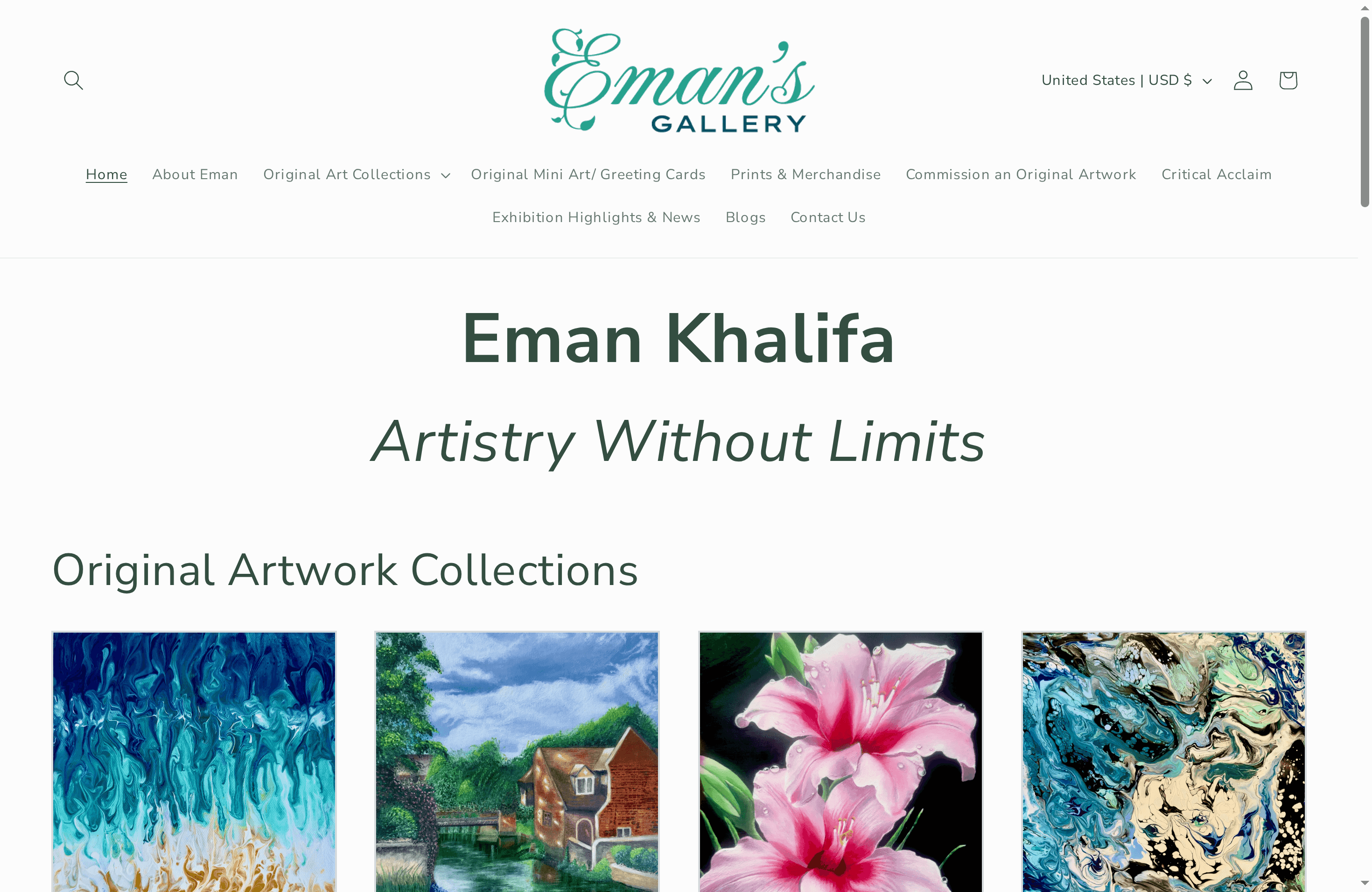
From earthy abstract originals to oversized nature-inspired canvas prints, every piece is created by artist Eman Khalifa and available as a one-of-a-kind original or premium print. Browse options like the monochrome outline print for quiet luxury spaces or the abstract ink splash print for maximalist layering. Each piece ships worldwide from multiple fulfillment locations.
frequently asked questions
What sizes are ideal for oversized art in modern homes?
oversized art in 2026 typically starts at 60 inches wide and works best on primary focal walls with at least 6 to 8 inches of clearance on each side and layered directional lighting.
How do earthy color palettes affect room mood?
Earthy tones like ochre and moss green create grounded, emotionally resonant spaces, anchoring calm and warmth in modern interiors by referencing familiar natural environments at a neurological level.
Can biophilic art actually improve wellness?
Yes. biophilic art reduces stress by 15 to 30% and improves focus by up to 25%, with wellness effects comparable to real nature settings in controlled studies.
How do I avoid chaos with maximalist art layering?
Use a unifying thread such as a repeated color, material, or theme across all pieces, combined with intentional arrangement and consistent palette discipline to keep maximalist spaces feeling curated rather than cluttered.
Shop Art-Inspired Home Decor
Find the piece that transforms your space:
- Canvas Art Prints — oversized statement pieces for bold focal walls
- Landscapes — nature-inspired works for biophilic, wellness-focused interiors
- Abstract Art — earthy, expressive originals for maximalist or quiet luxury spaces
- Framed Archival Prints — ready-to-hang, museum-quality prints in multiple sizes
Recommended
- Discover inspiring types of home decor art for modern spaces
- Why Decorate With Art: Transforming Modern Luxury Spaces
- Why Display Art at Home: Transforming Modern Spaces
- Art and Interior Design Explained: Transforming Modern Spaces - Eman’s Gallery
- Types of Personalized Décor: Creating Meaningful Spaces
Stay Connected
- ✨ Explore Eman Khalifa’s original art and fine art prints
- 📸 Follow Eman Khalifa’s art journey on: Instagram @emans_gallery and Facebook Eman’s Gallery
- 📹 Watch Eman Khalifa creating live art on: YouTube @emans_gallery
