


Geometric Art Explained: Styles, History, and Uses
Geometric Art Explained: Styles, History, and Uses
Over 80 percent of modern american homes now feature some element of geometric art, an approach rooted in mathematical shapes and patterns that shape visual experiences in bold ways. This method brings more than just visual appeal, drawing on centuries of global culture and mathematical discipline to inspire both artists and designers. Whether you’re a curious collector or decorating your home, understanding geometric art unlocks a new level of appreciation and helps you see how these designs add balance, structure, and meaning to american interiors.
Table of Contents
- Defining Geometric Art And Core Concepts
- Historical Evolution And Cultural Impact
- Major Styles And Iconic Patterns
- How Geometric Art Enhances Decor
- Common Misconceptions And Buying Tips
Key Takeaways
| Point | Details |
|---|---|
| Geometric Art Foundations | This art form emphasizes mathematical precision, structured designs, and the transformation of basic shapes into complex compositions. |
| Historical Significance | Geometric art reflects cultural and societal shifts throughout history, serving as a universal visual language. |
| Interior Design Impact | Geometric art enhances decor by creating visual harmony and dynamic spatial relationships within different spaces. |
| Understanding Misconceptions | Buyers should recognize the cultural narratives in geometric art and not equate mathematical precision with a lack of creativity. |
Defining Geometric Art and Core Concepts
Geometric art represents a disciplined artistic approach that centers on mathematical principles, shapes, and precise visual compositions. At its core, this art form transforms fundamental geometric elements like lines, circles, triangles, and squares into complex visual arrangements that challenge traditional artistic representations. Geometric art focuses on creating artwork that emphasizes structured, calculated design over natural or representational imagery.
Research from Universiteit Leiden reveals that geometric principles are not merely aesthetic choices but have a profound cognitive foundation in artistic expression. The university’s Visual Arts and Geometry project highlights how geometric patterns serve as universal decorative techniques that transcend cultural boundaries, demonstrating a fundamental human connection to mathematical symmetry and order.
The defining characteristics of geometric art include:
- Strict adherence to mathematical precision
- Use of clean, crisp lines and defined shapes
- Minimalist color palettes
- Emphasis on spatial relationships
- Reduction of complex forms to essential geometric components
Interestingly, modern technological advancements are expanding our understanding of geometric art. According to arXiv research, artificial intelligence is now being used to analyze and generate geometric features in artistic images, providing unprecedented insights into the mathematical structures underlying visual compositions. This technological integration suggests that geometric art is not a static form but a dynamic, evolving field that continues to push the boundaries of artistic representation and mathematical understanding.
Historical Evolution and Cultural Impact
Geometric art has a rich and complex history that spans multiple civilizations and artistic movements, reflecting humanity’s enduring fascination with mathematical precision and visual order. From ancient architectural designs to modernist paintings, geometric principles have consistently served as a fundamental language of visual expression across diverse cultural contexts.
Research from arXiv analyzing nearly 140,000 paintings over a millennium reveals fascinating insights into art’s temporal evolution. By examining paintings through the lens of entropy and complexity, researchers discovered that artistic representations undergo significant transformations that closely align with major historical periods, demonstrating how geometric art reflects broader societal and cultural shifts.
Key historical milestones in geometric art include:
- Ancient Egyptian and Mesopotamian architectural designs featuring precise mathematical patterns
- Islamic geometric patterns showcasing intricate mathematical symmetries
- Bauhaus movement’s revolutionary integration of geometric principles into design and architecture
- De Stijl movement’s radical reduction of visual elements to fundamental geometric components
- Constructivist art’s emphasis on geometric abstraction and social ideals
According to Atlantis Press, art movements are not merely aesthetic developments but profound cultural innovations that reflect and reshape societal understanding. Geometric art, in particular, represents a powerful form of visual communication that transcends linguistic barriers, offering a universal language of form, proportion, and spatial relationship that resonates across different cultural contexts.
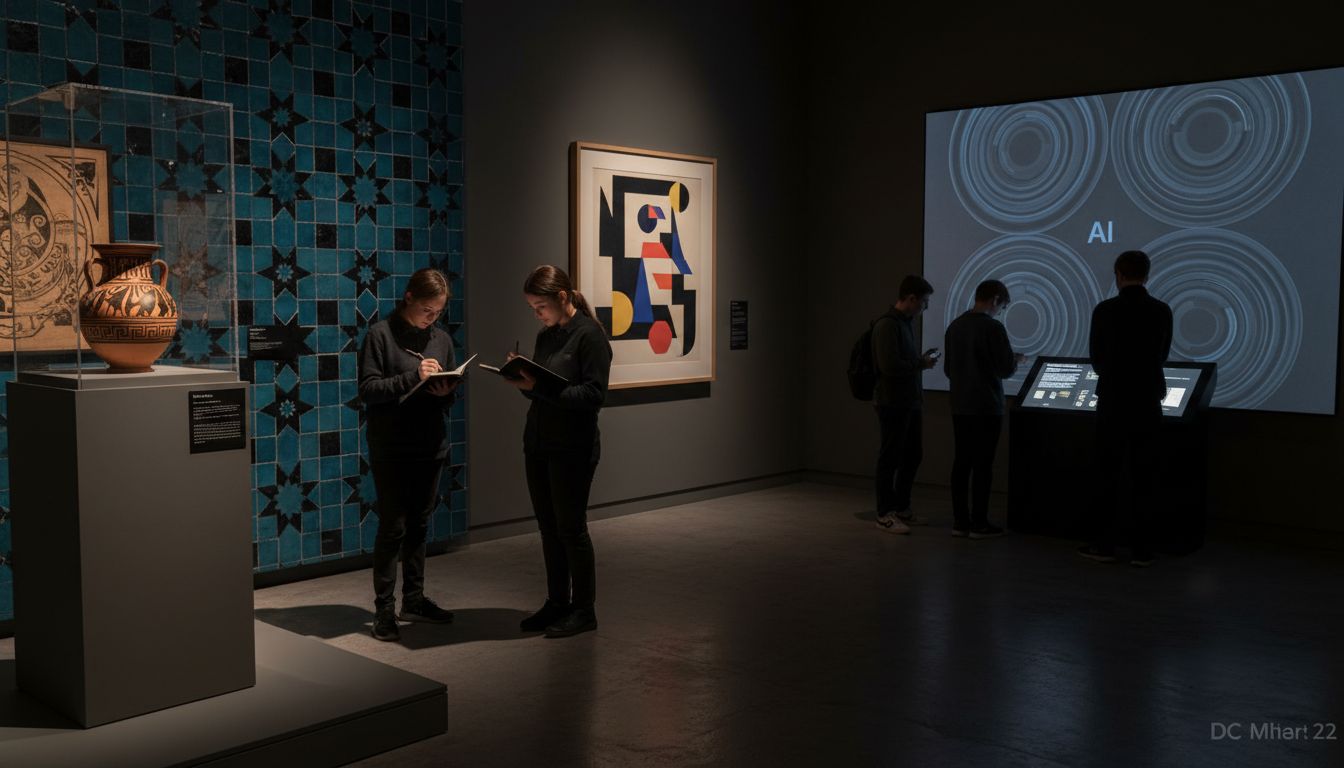
Major Styles and Iconic Patterns
Geometric art encompasses a rich diversity of styles and patterns that reflect complex cultural and artistic traditions. From minimalist abstract compositions to intricate cultural designs, these patterns demonstrate the universal human impulse to create meaning through mathematical structures and visual precision.
According to Wikipedia, Islamic geometric patterns represent one of the most sophisticated and mathematically complex artistic traditions. These designs evolved from simple isolated shapes to incredibly intricate 6- and 8-point star patterns, showcasing a remarkable progression of geometric complexity that reflects centuries of artistic and mathematical innovation.
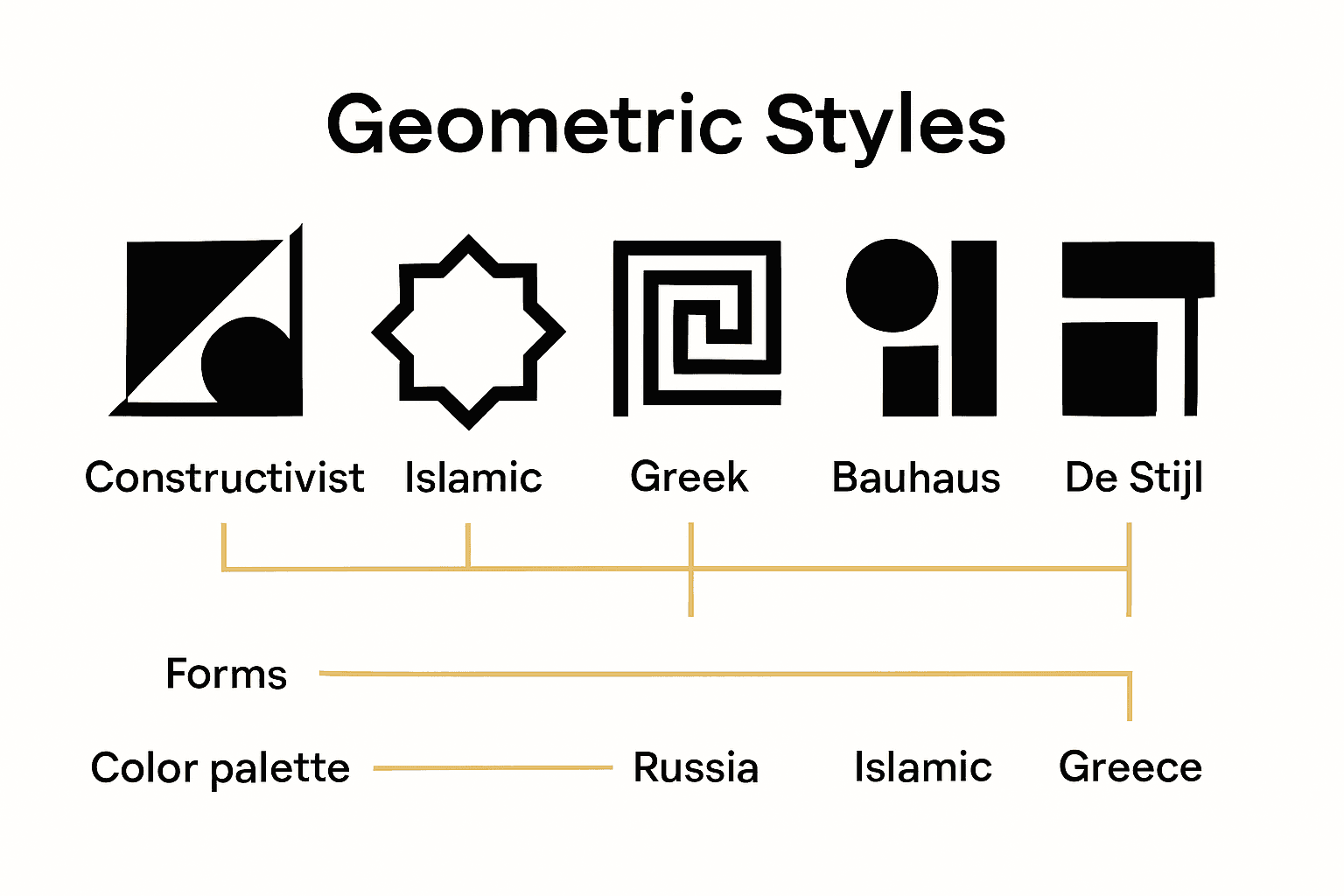
Significant geometric art styles include:
- Constructivist Geometry: Emphasizing social and political ideals through angular, mechanical forms
- Islamic Geometric Patterns: Intricate mathematical symmetries with spiritual significance
- Greek Geometric Style: Characterized by structured linear motifs and symbolic representations
- Bauhaus Geometric Design: Combining functional minimalism with mathematical precision
- De Stijl Movement: Reducing visual elements to fundamental horizontal and vertical lines
Additionally, Wikipedia’s entry on Greek pottery highlights the Geometric style of the 9th and 8th centuries BC, which was particularly notable for its meander patterns and triangular motifs. These designs were not merely decorative but served as complex cultural communication systems, encoding social narratives and symbolic meanings within their mathematical structures.
How Geometric Art Enhances Decor
Geometric art transforms interior spaces by introducing visual harmony, mathematical precision, and sophisticated design elements that elevate ordinary rooms into extraordinary environments. These carefully crafted artistic compositions create visual interest through structured patterns, clean lines, and intentional spatial relationships that draw the eye and create a sense of balanced sophistication.
According to Wikipedia’s exploration of sacred geometry, geometric shapes carry profound symbolic meanings that transcend mere decoration. These patterns create powerful visual narratives that connect aesthetic appeal with deeper psychological and emotional responses, making geometric art a transformative element in interior design.
Key ways geometric art enhances decor include:
- Creating visual focal points in minimalist and contemporary spaces
- Establishing rhythm and movement through repeating patterns
- Balancing complex room layouts with structured visual elements
- Introducing mathematical precision to soften organic design elements
- Providing versatile design solutions across multiple interior styles
The intricate potential of geometric design is further illuminated by Wikipedia’s entry on Girih, which demonstrates how complex geometric patterns can transform architectural spaces. These designs do more than decorate – they create immersive environments that engage viewers through mathematical beauty and cultural sophistication. When selecting geometric art, consider pieces that resonate with your existing decor while introducing subtle complexity and visual intrigue.
For additional inspiration on incorporating art into your home, check out our guide on art display ideas that can help you strategically showcase geometric art pieces.
Common Misconceptions and Buying Tips
Geometric art attracts many enthusiasts, but several misconceptions can lead buyers astray when selecting and appreciating these mathematical masterpieces. Understanding the nuanced world of geometric art requires moving beyond simplistic assumptions about mathematical precision and artistic expression.
Research from arXiv exploring the ‘Geometry of Culture’ reveals that cultural associations profoundly influence how we perceive and interpret artistic representations. This insight suggests that geometric art is not just about mathematical accuracy, but also about complex cultural narratives and symbolic meanings embedded within visual structures.
Common misconceptions about geometric art include:
- Believing all geometric art looks identical or rigid
- Assuming geometric art is only suitable for minimalist spaces
- Thinking mathematical precision eliminates artistic creativity
- Expecting geometric art to be exclusively abstract or modern
- Overlooking the emotional and cultural significance of geometric patterns
When purchasing geometric art, consider these critical buying tips:
- Examine the artwork’s cultural and historical context
- Look for pieces that resonate with your personal aesthetic
- Consider how the artwork’s colors and patterns interact with your existing decor
- Verify the artist’s understanding of mathematical principles
- Evaluate the piece’s emotional and visual complexity
Additionally, arXiv’s study on cultural evolution highlights how artistic trends emerge and transform, suggesting that geometric art is a dynamic field continuously reinterpreting mathematical and cultural expressions. By understanding these deeper layers, buyers can select geometric art that transcends mere decoration and becomes a meaningful visual narrative.
Discover the Power of Geometric Art in Your Space
If you have been inspired by the rich history and captivating styles of geometric art but feel unsure how to bring this blend of mathematical precision and emotional depth into your home or wardrobe, you are not alone. Many struggle with finding artwork that reflects both the cultural significance and visual balance explained in the article. Whether you want to celebrate intricate patterns or minimalist geometric designs, expressing that unique connection through original handart or versatile merchandise can transform your environment and style with meaningful impact.
Explore our collection of original paintings, drawings, and art prints on everything from wall art to wearable pieces at Emans Gallery. Every piece captures the essence of geometric art’s balance of form and feeling, making it easier to find artwork that resonates with your personal taste and complements your decor.
Elevate your space or wardrobe today by visiting Emans Gallery, where you can shop exclusive geometric art that blends cultural tradition with modern creativity. Dive into the world of structured beauty and bring home harmony through art that speaks directly to the meaningful complexity outlined in Geometric Art Explained. Start your journey now to find the perfect piece that balances emotional richness and mathematical elegance beautifully.
Frequently Asked Questions
What is geometric art?
Geometric art is an artistic approach that focuses on mathematical principles, shapes, and structured visual compositions, transforming basic geometric elements into complex visual arrangements that emphasize design over representational imagery.
How has geometric art evolved through history?
Geometric art has a rich history that spans multiple civilizations, reflecting society’s fascination with mathematical precision. Key milestones include its presence in ancient architecture, Islamic patterns, and modern movements like Bauhaus and De Stijl.
What are some common styles of geometric art?
Common styles of geometric art include Constructivist Geometry, Islamic Geometric Patterns, Greek Geometric Style, Bauhaus Geometric Design, and the De Stijl Movement, each showcasing unique approaches to geometric forms and visual language.
How can geometric art enhance home decor?
Geometric art enhances home decor by creating visual harmony, establishing rhythm through repeating patterns, balancing complex layouts, and introducing mathematical precision, making spaces more visually appealing and sophisticated.
Recommended
- What Is Contemporary Art? Complete Guide Explained – Eman’s Gallery
- Contemporary Wall Art Explained: Complete Overview – Eman’s Gallery
- Textured Artwork Explained: Styles, Techniques, and Uses – Eman’s Gallery
- Elemental Abstract Art by Eman Khalifa | Original Mixed Media Paintings for Modern Interiors – Eman’s Gallery
Stay Connected
- ✨ Explore Eman Khalifa’s original art, fine art prints, and art merchandise
- 📸 Follow Eman Khalifa’s art journey on: Instagram @emans_gallery and Facebook Eman’s Gallery
- 📹 Watch Eman Khalifa creating live art on: YouTube @emans_gallery
- Supported by BabyLoveGrowth
