


What is art curation: a complete 2026 guide
Many assume art curation simply means hanging paintings on walls, but this misconception misses the strategic depth behind every exhibition and collection. True art curation combines research, narrative design, spatial planning, and audience engagement to transform how people experience visual culture. Whether you’re an art collector building a personal gallery, an interior designer integrating pieces into luxury spaces, or an enthusiast exploring curatorial principles, understanding what art curation truly involves reveals how thoughtfully arranged artworks create profound emotional and intellectual connections. This guide breaks down the definition, core elements, practical applications across personal and professional contexts, and emerging trends shaping curation in 2026.
Table of Contents
- Defining Art Curation: Purpose, Practices, And Processes
- Core Elements Shaping Successful Art Curation
- Art Curation In Personal And Professional Spaces: Enhancing Collections And Interiors
- Common Challenges And Evolving Trends In Art Curation
- Explore Curated Art Collections At Eman’s Gallery
Key takeaways
| Point | Details |
|---|---|
| Strategic selection | Art curation involves choosing and arranging artworks to build cohesive narratives that engage audiences beyond mere display. |
| Core components | Successful curation requires audience analysis, budgeting, thematic development, spatial design, and interpretive materials working together. |
| Personal and professional | Curation enhances both home galleries reflecting identity and large exhibitions creating cultural experiences. |
| Technology integration | AI models and digital tools now assist classification and collection management while human insight remains essential. |
| Evolving practices | Modern curators balance artistic integrity with inclusivity, accessibility, and diverse perspectives to create meaningful exhibitions. |
Defining art curation: purpose, practices, and processes
Art curation represents far more than selecting beautiful pieces for display. Strategic selection and arrangement create cohesive narratives that guide audiences through intentional experiences, whether in museums, galleries, or private homes. Curators blend artistic insight with evidence-based methodologies, researching historical contexts, artist intentions, and audience expectations to shape exhibitions that resonate intellectually and emotionally.
The practice extends into multiple dimensions. Narrative building forms the backbone, connecting individual artworks into larger stories about movements, cultures, or concepts. Spatial planning determines how visitors physically move through exhibitions, controlling pacing and revelation. Lighting design dramatically affects mood and focus, directing attention while preserving delicate works. Interpretive materials like wall texts, audio guides, and digital interfaces provide context without overwhelming the visual experience.
Curation focuses on engaging audiences through thoughtful presentation rather than passive viewing. This methodology transforms galleries into active learning environments where visitors construct meaning through guided exploration. Community engagement often plays a crucial role, with curators hosting talks, workshops, and interactive programs that deepen connections between art and public.
Common misconceptions paint curators as gatekeepers who simply choose favorites, but professional curation demands rigorous research, logistical coordination, and constant adaptation. Curators manage relationships with artists, lenders, conservators, educators, and administrators while balancing creative vision against practical constraints. Developing home galleries applies similar principles on intimate scales, where personal taste meets strategic arrangement.
Key practices in art curation include:
- Conducting thorough research on artworks, artists, and historical contexts to inform selection
- Profiling target audiences to tailor language, accessibility features, and engagement strategies
- Developing budgets covering venue costs, insurance, shipping, installation, and marketing
- Planning spatial arrangements that control visitor flow and create visual rhythms
- Writing interpretive materials that enhance understanding without dictating responses
- Coordinating installation logistics including lighting, climate control, and security measures
“Art curation involves more than display; it’s about creating experiences where narrative and audience engagement transform how people perceive and connect with visual culture.”
Core elements shaping successful art curation
Several interconnected components determine whether curation succeeds in creating memorable, meaningful exhibitions. Understanding these elements helps both professional curators and private collectors make strategic decisions that elevate their presentations.
- Audience definition establishes who you’re serving and shapes every subsequent choice from artwork selection to interpretive language
- Budget planning allocates resources across competing needs while maintaining quality and vision
- Narrative development creates thematic coherence that guides visitors through intentional journeys
- Spatial design orchestrates physical arrangements that control pacing, create focal points, and encourage discovery
- Interpretation materials provide context through labels, catalogs, and digital content without overwhelming visual experiences
- Technology integration leverages tools for collection management, visitor engagement, and accessibility enhancements
Well-defined audience briefs impact exhibition design fundamentally, influencing language complexity, operating hours, promotional channels, and accessibility accommodations. A children’s exhibition requires interactive elements and simple explanations, while a scholarly show for specialists can embrace nuanced arguments and technical terminology. Flexibility within audience planning allows curators to serve multiple groups without diluting core messages.
Budgets form the spine of every curatorial project, typically distributed across these categories:
| Budget Category | Typical Allocation | Key Considerations |
|---|---|---|
| Venue and facilities | 20-30% | Rent, utilities, climate control, accessibility upgrades |
| Artist fees and acquisitions | 15-25% | Commissions, loans, reproduction rights |
| Shipping and insurance | 15-20% | Transportation, crating, coverage for high-value works |
| Marketing and promotion | 10-15% | Print materials, digital campaigns, opening events |
| Installation and staffing | 15-20% | Technical crew, security, docents, coordinators |
| Contingency reserve | 10-15% | Unexpected costs, damage repair, schedule changes |
Thematic development and spatial arrangement work together to shape visitor experiences beyond individual artworks. Grouping pieces by period, style, concept, or dialogue creates conversations between works that reveal deeper meanings. Spatial rhythm alternates between dense installations and breathing room, preventing fatigue while building anticipation. Lighting design highlights textures and colors while protecting light-sensitive materials, using spotlights for drama and ambient light for contemplation.
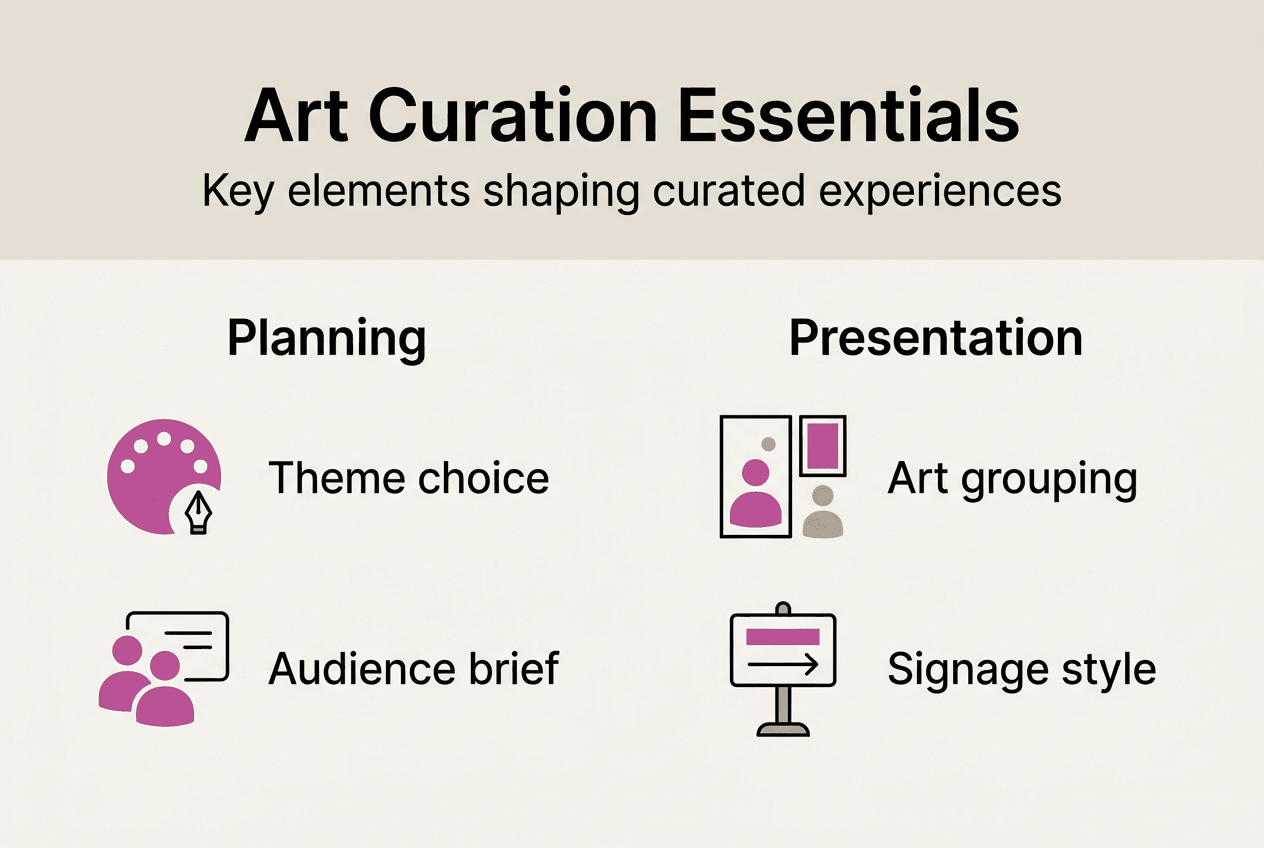
Interpretive signage requires careful calibration. Too little context leaves visitors confused, while excessive text distracts from visual engagement. Effective labels provide essential information, artist name, date, medium, then briefly contextualize significance without prescribing interpretations. Audio guides and mobile apps allow deeper dives for interested visitors without cluttering wall space.
Pro Tip: Create focused audience briefs that identify primary and secondary visitor groups, then test your curatorial statement with non-specialists to ensure clarity without condescension.
Emerging technologies reshape curatorial practices significantly. Automated art classification models now assist large institutions in cataloging and organizing vast collections with impressive accuracy, freeing curators for interpretive work. Virtual reality previews let curators test spatial arrangements before physical installation, saving time and reducing errors. Digital collection management systems track provenance, condition reports, and loan histories with precision impossible in paper archives.
Balancing artistic integrity, accessibility, and inclusivity remains an ongoing challenge. Curators must honor artists’ intentions while making work approachable to diverse audiences. This means providing multiple entry points, offering content in various formats, and acknowledging that different visitors bring different knowledge and perspectives. Showcasing art effectively in any context requires understanding these dynamics, whether in museums or homes. Building collections systematically applies curatorial thinking to personal acquisition strategies.
Art curation in personal and professional spaces: enhancing collections and interiors
Curatorial principles apply powerfully beyond museum walls, transforming both intimate home galleries and large-scale professional exhibitions. Understanding how curation enhances different contexts helps collectors, designers, and enthusiasts create spaces that resonate emotionally while telling coherent visual stories.
Benefits of thoughtful art curation span multiple dimensions:
- Narrative building connects individual pieces into larger stories about taste, values, or cultural heritage
- Identity reflection allows collections to express personal journeys, interests, and aesthetic philosophies
- Ambiance enhancement uses color, scale, and subject matter to shape mood and energy in spaces
- Cultural storytelling preserves and shares traditions, movements, or underrepresented perspectives
- Investment value increases when collections demonstrate curatorial vision rather than random accumulation
Home curation and professional exhibition curation share core principles but differ significantly in execution:
| Aspect | Home Curation | Professional Exhibition Curation |
|---|---|---|
| Primary goal | Personal enjoyment and identity expression | Public education and cultural preservation |
| Scale and scope | Intimate spaces with 5-50 pieces | Large venues with 50-500+ artworks |
| Audience engagement | Family, friends, occasional visitors | Diverse public with varying knowledge levels |
| Budget considerations | Personal funds, incremental acquisition | Institutional funding, grants, sponsorships |
| Key challenges | Spatial constraints, lighting limitations | Loan negotiations, insurance, conservation |
Home galleries serve crucial roles for Black art collectors given historical underrepresentation in museums, creating spaces where cultural heritage receives the prominence and respect often denied in institutional settings. This example illustrates how personal curation carries cultural and political significance beyond decoration, preserving narratives and supporting artists whose work mainstream institutions overlook.
Practical applications in home settings include gallery walls that group smaller works into cohesive compositions, statement pieces that anchor rooms and establish visual hierarchies, and rotating displays that keep spaces dynamic while protecting light-sensitive works. Displaying art at home creates daily encounters with beauty and meaning that enrich lived experience beyond any monetary value.

Thoughtful artwork integration plays crucial roles in successful interior design, creating synergy between collections and environments. Color palettes in artworks can echo or contrast with furnishings, architectural details can frame pieces naturally, and lighting can be designed to serve both functional and aesthetic purposes. Interior designers increasingly act as curators, helping clients build collections that enhance rather than compete with their spaces.
Pro Tip: Select art that resonates personally and emotionally first, then consider how pieces harmonize with your space’s architecture, lighting, and existing design elements to create cohesive narratives.
Starting art collections for luxury homes benefits from curatorial thinking from the outset, establishing themes or focuses that guide future acquisitions. This prevents random accumulation and builds collections with internal logic and growing value. Even small spaces can display art boldly when curatorial principles inform selection and placement, using scale and color strategically to maximize impact.
Professional exhibitions require additional layers of planning, from securing loans and negotiating insurance to coordinating opening events and educational programming. Curators work months or years in advance, researching themes, identifying key works, building arguments through object selection, and crafting interpretive frameworks that guide visitor understanding without dictating responses. The emotional and aesthetic impact of well-curated exhibitions can shift perspectives, challenge assumptions, and create lasting memories that transcend the viewing experience itself.
Common challenges and evolving trends in art curation
Even experienced curators face persistent challenges that complicate their work, while emerging trends reshape practices and open new possibilities. Recognizing these dynamics helps anyone engaged in curation navigate complexities more effectively.
Significant challenges in contemporary art curation include:
- Subjective bias influencing selection in ways that exclude worthy artists or perspectives
- Difficulty balancing complex narratives with accessibility for diverse audiences
- Funding constraints limiting ambition and forcing compromises on quality or scope
- Inclusivity issues when traditional canons and institutional practices favor certain demographics
- Technological adaptation as digital tools require new skills and infrastructure investments
Debates continue around the curator’s fundamental role. Should curators act as objective interpreters presenting neutral information, or as subjective storytellers advancing particular arguments and perspectives? Most contemporary practice embraces the latter, acknowledging that selection itself constitutes interpretation and that transparent curatorial voices help visitors understand the frameworks shaping exhibitions. This shift demands self-awareness about biases and assumptions.
Over-interpretation, curatorial bias, and balancing integrity with accessibility represent persistent pitfalls. Over-interpretation occurs when curators impose meanings that artwork doesn’t support, while under-interpretation leaves visitors adrift without sufficient context. Finding the balance requires understanding both the work itself and the audience’s needs and capabilities.
Artificial intelligence and machine learning now assist curatorial work in surprising ways. Modified CNN models achieve high accuracy in automated art classification, analyzing style, period, and content faster than human researchers. These tools excel at pattern recognition and data processing but lack the contextual understanding, emotional intelligence, and ethical judgment that human curators provide. The most effective approaches combine computational efficiency with human insight.
New curators should recognize that bias affects everyone and develop strategies to counteract it. This includes actively seeking diverse perspectives, questioning assumptions about quality and relevance, researching artists and movements outside mainstream narratives, and inviting community input during planning stages. Transparency about curatorial choices helps visitors understand the constructed nature of exhibitions rather than accepting them as natural or inevitable.
Pro Tip: Regularly update your knowledge through academic research, artist interviews, and community conversations, and actively involve diverse voices in curatorial decisions to create richer, more inclusive exhibitions.
“Creating truly engaging exhibitions requires incorporating diverse perspectives and lived experiences, ensuring that curation serves broad audiences rather than narrow institutional or personal interests.”
Emerging trends reshaping curation in 2026 include increased emphasis on decolonizing collections, acknowledging problematic acquisition histories and working with source communities on repatriation and co-curation. Digital exhibitions expanded dramatically, offering global access while raising questions about the irreplaceable value of physical encounters with original artworks. Participatory curation invites audiences into selection and interpretation processes, democratizing authority while complicating traditional curatorial roles.
Sustainability concerns now influence every aspect of exhibition planning, from reducing shipping distances to using eco-friendly materials in fabrication and considering the carbon footprint of climate-controlled galleries. Social practice art that emphasizes process and participation over objects challenges traditional curatorial frameworks built around discrete artworks. Collecting art prints systematically for luxury homes demonstrates how curatorial thinking applies at every scale and budget level.
Explore curated art collections at Eman’s Gallery
Applying the curatorial principles explored throughout this guide starts with discovering artworks that resonate with your vision and space. Eman’s Gallery offers carefully curated selections of contemporary realism original art and museum-quality wall art prints designed to enhance luxury interiors and personal collections. Each piece by artist Eman Khalifa reflects the narrative coherence and aesthetic intention that define thoughtful curation, whether you’re building a focused collection or seeking a statement work.
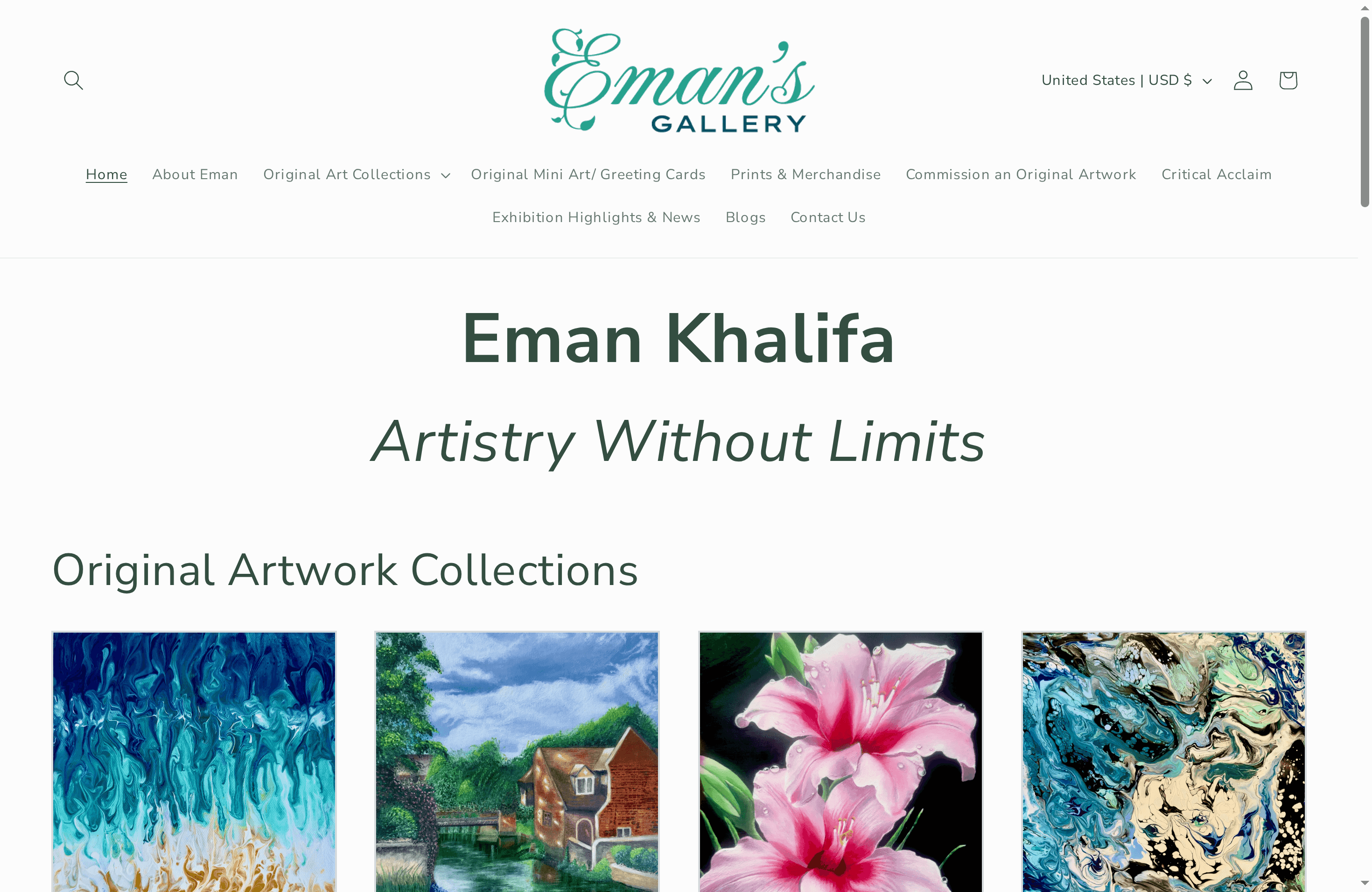
Explore the full range of original paintings, large-scale prints, and art merchandise at Eman’s Gallery to find pieces that align with your curatorial aspirations and transform your spaces into personally meaningful galleries.
What is art curation? Frequently asked questions
What skills are essential for art curators?
Successful curators combine art historical knowledge with research abilities, project management skills, and strong communication talents. They must understand conservation principles, navigate complex logistics, write compelling interpretive content, and build relationships with artists, collectors, and institutions while balancing creative vision with practical constraints.
How does art curation differ between museums and private collections?
Museum curation serves public education missions with institutional resources, professional staff, and conservation facilities, while private collection curation reflects personal taste with intimate scales and flexible approaches. Museums prioritize cultural preservation and broad accessibility, whereas private collectors can take creative risks and display works in lived environments that museum protocols wouldn’t permit.
Can beginners curate their own art collections effectively?
Beginners can absolutely curate personal collections by starting with clear themes or focuses, researching artists and movements that resonate, and applying basic principles of spatial arrangement and narrative coherence. Success comes from thoughtful selection based on genuine connection rather than trends, gradual acquisition that allows collections to evolve, and willingness to learn from mistakes and refine approaches over time.
What role does technology play in modern art curation?
Technology assists curators through digital collection management systems that track provenance and condition, AI models that classify and organize large holdings, virtual reality tools for testing spatial arrangements, and online platforms that expand access beyond physical locations. However, technology complements rather than replaces human judgment in interpretation, ethical decision-making, and creating emotionally resonant experiences.
Why is audience engagement important in art curation?
Audience engagement transforms passive viewing into active meaning-making, creating memorable experiences that deepen understanding and emotional connection. Engaged visitors spend more time with artworks, retain information better, and develop lasting relationships with institutions or collections. Effective engagement respects diverse knowledge levels and learning styles while inviting personal interpretation within curatorial frameworks.
Recommended
- Curating Art for Interiors: A Step-by-Step Guide to Stunning Spaces - Eman’s Gallery
- Curating Home Gallery Guide for Luxury Interiors
- Art Collector Insights & Strategies Guide - Eman’s Gallery
- What Makes Art Original: Complete Guide for 2025 - Eman’s Gallery
Stay Connected
- ✨ Explore Eman Khalifa’s original art and fine art prints
- 📸 Follow Eman Khalifa’s art journey on: Instagram @emans_gallery and Facebook Eman’s Gallery
- 📹 Watch Eman Khalifa creating live art on: YouTube @emans_gallery
