


Curating Art for Interiors: A Step-by-Step Guide to Stunning Spaces
Most American homes lack the kinds of thoughtful art arrangements that can completely transform a room’s vibe. A beautifully curated collection does more than decorate your walls – it shapes your daily mood and sparks meaningful conversation. With research showing that interior design choices strongly influence well-being, learning to select and display artwork with intention creates living spaces that feel uniquely personal, harmonious, and inspiring.
Table of Contents
- Step 1: Define Your Space And Design Goals
- Step 2: Select Artworks That Complement Your Vision
- Step 3: Plan Placement For Maximum Visual Impact
- Step 4: Style And Arrange Artworks For Cohesion
- Step 5: Assess And Refine Your Curated Interior
Quick Summary
| Key Insight | Explanation |
|---|---|
| 1. Assess your space thoughtfully | Evaluate functionality and emotional resonance to create a tailored artistic environment. Consider your personal feelings and needs during the assessment. |
| 2. Choose artworks that enhance vision | Select pieces that harmonize or strategically contrast with your interior color palette for visual balance and emotional impact. |
| 3. Plan strategic artwork placement | Position artworks with attention to visual weight and architectural context to guide the viewer’s eye and tell a cohesive story. |
| 4. Create visual cohesion in arrangement | Develop a unified narrative by grouping artworks with similar styles or color schemes, ensuring an easily digestible arrangement. |
| 5. Regularly refine your collection | Periodically reassess and refresh your art arrangement to keep your space dynamic, evolving with your personal aesthetic preferences. |
Step 1: Define your space and design goals
Transforming your living space into an artistic sanctuary begins with understanding your unique interior landscape. Residential design research demonstrates that creating functional and aesthetically pleasing environments requires intentional planning tailored to your specific needs.
Start by conducting a thoughtful assessment of your space. Walk through each room and consider its current functionality. What works? What feels awkward or uninspired? Take detailed measurements of wall spaces, noting architectural features like windows, doors, and potential focal points. Consider natural light patterns and how they change throughout the day. Your goal is to create a comprehensive snapshot of your interior canvas before introducing art.
Measure not just physical dimensions but emotional resonance. How do you want to feel in this space? Art selection is deeply personal and should reflect your inner world. Some people seek calm through serene landscapes, while others want bold geometric pieces that spark conversation. Research on spatial perception suggests that our design choices profoundly impact our psychological experience of a room.
Pro tip: Create a mood board or digital inspiration folder featuring art styles and room layouts that resonate with you. This visual collection will help clarify your design vision and provide a clear roadmap for art curation.
Step 2: Select artworks that complement your vision
Comprehensive art selection guidelines reveal the intricate art of choosing pieces that truly enhance your interior design. This step transforms your space from merely decorated to thoughtfully curated.
Begin by understanding the visual language of your room. Color plays a pivotal role in artwork selection. Look for pieces that either harmonize with your existing color palette or provide strategic contrast. If your room features neutral tones, a vibrant abstract painting can inject energy and personality. Conversely, in a colorful space, a monochromatic piece might offer visual breathing room.
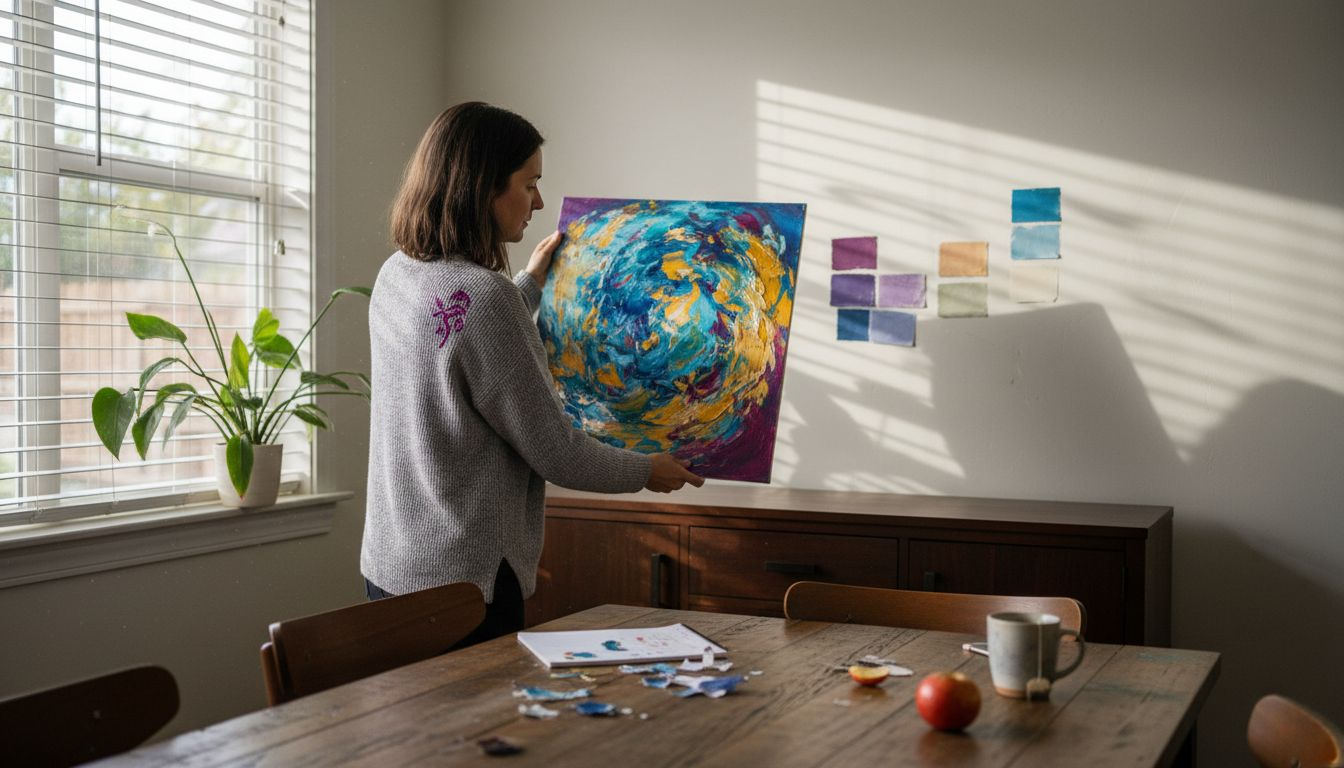
Design principles for artwork integration suggest considering more than just color. Scale matters immensely. A tiny artwork will feel lost on a large wall, while an oversized piece can overwhelm a compact space. Aim for proportional balance that creates visual interest without dominating the room. Consider the viewing distance, architectural elements, and how the artwork will interact with furniture and lighting.
Pro tip: Take high-resolution photos of your space and digitally mock up potential artworks using design apps. This technique allows you to visualize how different pieces will look before making a final purchase.
Step 3: Plan placement for maximum visual impact
Advanced artwork placement strategies reveal the nuanced art of transforming walls from blank canvases to compelling visual narratives. Your goal is to create a deliberate arrangement that guides the viewer’s eye and tells a story through strategic positioning.
Start by understanding visual weight and balance. Large artworks naturally draw attention and work best as focal points in a room. Consider placing a significant piece where it can be viewed from multiple angles perhaps above a sofa or on a prominent wall. Smaller pieces can create visual rhythm when grouped together. Think of your wall as a composition where each artwork contributes to an overall visual dialogue.
Innovative spatial arrangement techniques suggest considering the architectural context of your space. Align artwork with architectural lines architectural lines like windows door frames or furniture edges. This creates a sense of intentional design and prevents artworks from feeling randomly placed. Pay attention to negative space the breathing room around each piece which is just as important as the artwork itself.
Pro tip: Use painter’s tape to create virtual gallery layouts on your wall before hanging. This technique allows you to experiment with different arrangements without making permanent marks and helps you visualize the final composition.
Here is a summary of factors to assess when selecting and placing art for your interior design:
| Factor | Why It Matters | Impact on Space |
|---|---|---|
| Color Harmony | Sets the mood and cohesion | Can energize or calm a room |
| Scale & Proportion | Ensures visual balance | Prevents crowding or emptiness |
| Placement | Guides the viewer’s eye | Creates visual rhythm and focus |
| Lighting Considerations | Influences artwork visibility | Highlights textures and tones |
Step 4: Style and arrange artworks for cohesion
Sophisticated artwork orchestration principles demonstrate how intentional arrangement transforms individual pieces into a unified visual narrative. Your goal is to create a harmonious composition that speaks a coherent design language across your interior spaces.
Consider developing a visual rhythm through strategic placement. This might mean creating gallery walls with consistent spacing between frames or aligning artwork along invisible horizontal or vertical lines. Artworks with similar color palettes or complementary styles can create visual conversations even when placed in different areas of the room. Think of your collection as a curated ensemble where each piece contributes to an overarching aesthetic story.
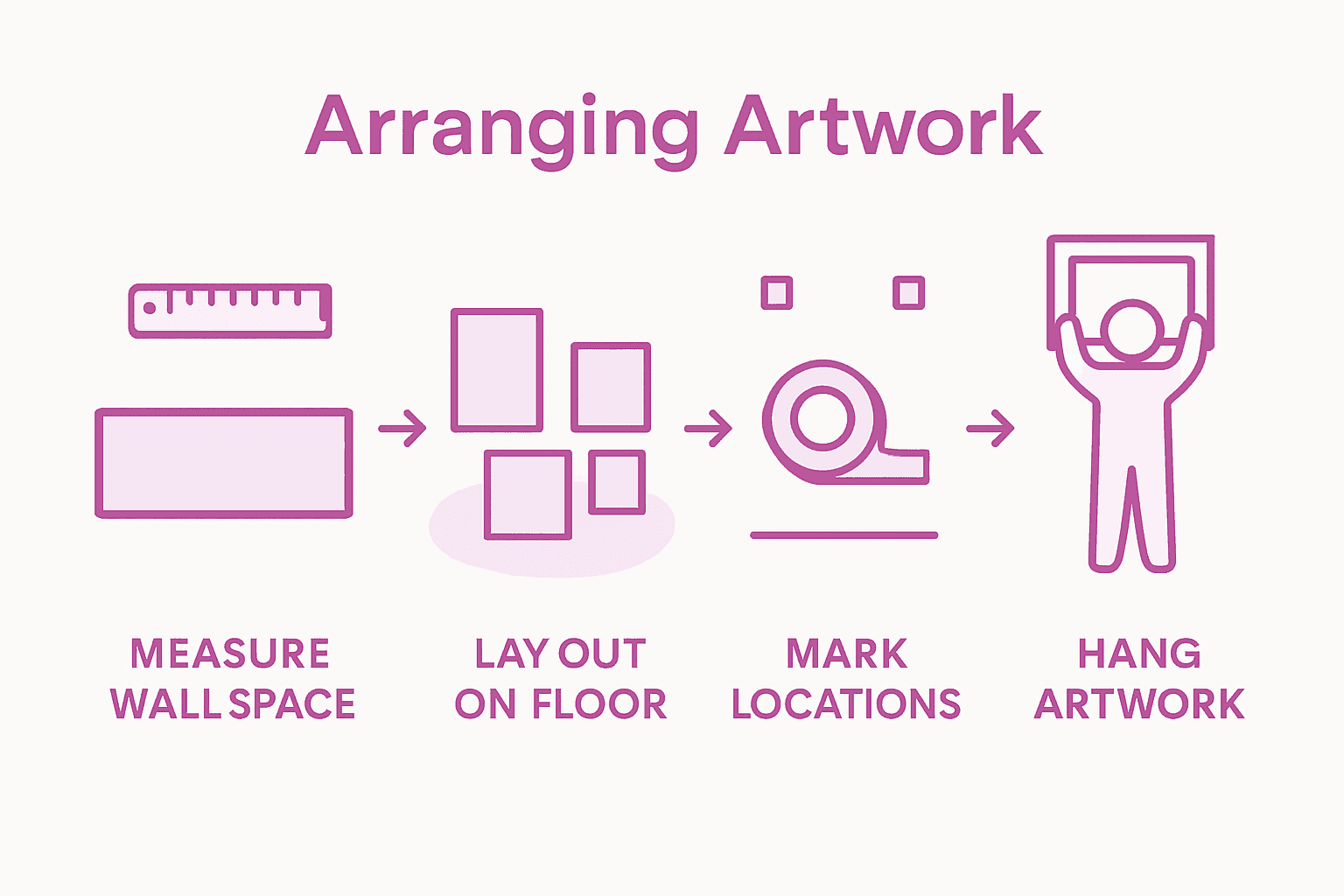
Experiential design principles reveal that artwork arrangement is more than aesthetic it profoundly impacts emotional perception. Grouping pieces with intentional negative space allows each artwork room to breathe while maintaining a sense of deliberate connection. Mix different sizes and orientations to create visual dynamism avoid rigid symmetry that can feel sterile. Allow your arrangement to guide the viewers eye and evoke emotional responses through thoughtful spatial relationships.
Pro tip: Create a consistent visual theme by selecting artworks that share subtle design elements like color undertones geometric patterns or emotional resonance. This approach ensures your art collection feels curated not random.
Step 5: Assess and refine your curated interior
Architectural spatial analysis techniques reveal the nuanced art of critically evaluating interior design compositions. Your final step transforms your art curation from a static arrangement into a living breathing environment that resonates with your personal aesthetic and emotional landscape.
Begin by stepping back and viewing your space objectively. Take photographs from multiple angles to help you see the room with fresh eyes. Examine how artworks interact with furniture lighting and architectural elements. Look for visual balance but do not aim for perfect symmetry. Consider how the collection makes you feel does it energize the space or create a sense of calm? Pay attention to how natural and artificial light play across the artworks throughout different times of day.
Phenomenological perspectives on interior spaces suggest that truly remarkable interiors are more than visual compositions they are emotional landscapes. Be willing to experiment. Rotate artworks periodically swap pieces between rooms or replace items that no longer spark joy. Your art collection should evolve with you reflecting your changing tastes and experiences. Trust your intuition and remember that the most compelling interiors tell a personal story.
Pro tip: Schedule quarterly art refresh moments where you critically assess your collection. Take photos review them and be bold about making changes that keep your space dynamic and personally meaningful.
Comparing strategies for refreshing your art arrangement can help keep your space vibrant:
| Strategy | Frequency | Expected Benefit |
|---|---|---|
| Quarterly Photo Review | Every 3 months | Fresh perspective on arrangement |
| Artwork Rotation | Twice a year | Keeps visual interest high |
| Seasonal Theming | With each season | Reflects changing moods and tastes |
| Swapping Rooms | As inspiration strikes | Encourages experimentation |
Elevate Your Interior with Curated Art from Eman’s Gallery
Struggling to find artwork that perfectly matches your interior’s color harmony, scale, and placement goals Discussing art curation is all about transforming your walls into emotional landscapes that truly speak your personal style. Whether you seek calming still lifes or bold contemporary pieces our Still Life & Interiors collection offers unique options designed to balance visual weight and enhance your living space with museum-quality craftsmanship.
Take control of your art journey today by exploring original handmade paintings that fit your design rhythm. Act now to bring fresh energy and cohesion to your home with artworks that evolve with you. Visit Eman’s Gallery to discover captivating pieces that transform your interiors into stunning, curated environments.
Frequently Asked Questions
How do I start curating art for my living space?
Begin by assessing your space and defining your design goals. Take detailed measurements of your rooms, noting what works and what feels off, and create a mood board to clarify your vision.
What factors should I consider when selecting artwork?
Consider color harmony, scale, and emotional resonance when choosing art for your space. Aim for artworks that either complement your existing decor or provide interesting contrast, ensuring they fit proportionately within the room.
How can I effectively place artwork in my home?
Plan your artwork’s placement by understanding visual weight and balance, ensuring that larger pieces serve as focal points. Use painter’s tape to outline potential arrangements on your walls, allowing you to visualize options before permanently hanging them.
How can I create cohesion among different artworks?
Develop a visual rhythm by grouping artworks that share color palettes or styles. Align them along invisible lines and maintain consistent spacing to form a unified, harmonious arrangement.
What should I do if I want to refine my art arrangement?
Regularly assess your curated space by taking photos from various angles to gain fresh perspectives. Schedule quarterly reviews to rotate pieces or make changes that align with your evolving tastes and emotions.
How can seasonal changes influence my art selection?
Use seasonal themes to refresh your art collection, reflecting changing moods or colors throughout the year. For example, consider swapping out pieces every season to maintain visual interest and relevance in your space.
Recommended
- Complete Guide to Types of Art for Interiors – Eman’s Gallery
- How to Style Art Prints for Interior Display – Eman’s Gallery
- 7 Top Art Print Subjects Every Collector Should Know – Eman’s Gallery
- Contemporary Wall Art Explained: Complete Overview – Eman’s Gallery
Stay Connected
- ✨ Explore Eman Khalifa’s original art and fine art prints
- 📸 Follow Eman Khalifa’s art journey on: Instagram @emans_gallery and Facebook Eman’s Gallery
- 📹 Watch Eman Khalifa creating live art on: YouTube @emans_gallery
