


Art Collector Insights & Strategies Guide
Art Collector Insights & Strategies Guide
Over 90 percent of american collectors agree that the art they choose becomes part of their personal story. Art collecting is more than a hobby, it shapes how culture is remembered and shared. Whether you chase rare originals or find meaning in prints, understanding the world of art collecting helps you make thoughtful decisions and preserve creative legacies that reach far beyond your own home.
Table of Contents
- Defining Art Collecting And Its Significance
- Types Of Art: Originals, Prints, And Merchandise
- Evaluating Art Quality And Authenticity
- Buying Strategies And Provenance Importance
- Caring For, Displaying, And Insuring Art
- Common Pitfalls And Best Practices
Key Takeaways
| Point | Details |
|---|---|
| Art Collecting Importance | Art collecting fosters cultural dialogue, preserves artistic heritage, and supports emerging artists, making collectors custodians of cultural memory. |
| Understanding Art Types | Distinctions between original artworks, prints, and merchandise are crucial for collectors in making informed purchasing decisions. |
| Evaluating Art Quality | Authenticating art involves nuanced assessment techniques, historical context, and expert analysis to verify true significance. |
| Strategic Art Acquisition | Successful collectors research provenance, market trends, and artist reputation to make informed investments and avoid common pitfalls. |
Defining Art Collecting and Its Significance
Art collecting is a nuanced practice that transcends mere acquisition of visual objects, representing a profound cultural dialogue between collectors, artists, and historical moments. According to Britannica, art collecting involves the purposeful accumulation of artworks that serve as a material record of time and locality, reflecting dynamic shifts in cultural attitudes.
At its core, art collecting is about creating a curated narrative that captures the essence of artistic expression across different periods and styles. As Art Gallery of South Australia explains, collections are purposefully acquired for their historic, cultural, social, and political significance, forming the foundation for research, public education, and broader cultural understanding.
The significance of art collecting extends far beyond personal aesthetic pleasure. Collectors play a crucial role in preserving artistic heritage, supporting emerging artists, and creating visual archives that document human creativity. By carefully selecting and preserving artworks, collectors become custodians of cultural memory, ensuring that important artistic expressions are not just experienced momentarily but maintained for future generations to study and appreciate.
While art collecting might seem exclusive, it encompasses a wide range of approaches and motivations. Some collectors focus on specific periods, movements, or regional art, while others build eclectic collections that challenge traditional categorizations. Whether acquiring original paintings, limited edition prints, or supporting contemporary artists through purchases, each collection tells a unique story about the collector’s perspective, interests, and connection to the broader artistic landscape. For those interested in diving deeper into the nuanced world of art collecting, our art collecting terminology guide offers comprehensive insights into this fascinating practice.
Types of Art: Originals, Prints, and Merchandise
The art world offers diverse options for collectors and enthusiasts, ranging from original masterpieces to accessible prints and creative merchandise. Original artworks represent the pinnacle of artistic expression, created directly by the artist’s hand and often carrying significant cultural and monetary value. These unique pieces are typically one-of-a-kind creations that embody the artist’s direct creative process.
Art prints provide an alternative approach to art collecting, offering high-quality reproductions that make artistic expressions more accessible to a broader audience. Unlike original works, prints are typically produced in limited editions, allowing collectors to own professionally reproduced versions of artwork at more affordable price points. For those interested in understanding the nuanced world of art prints, our guide on art prints explores the intricate details of these fascinating reproductions.
Merchandise represents an increasingly popular avenue for art appreciation, transforming artistic designs into functional and wearable items. From t-shirts and tote bags to mugs and pillowcases, art merchandise allows individuals to incorporate artistic expressions into their daily lives. This democratization of art enables people to engage with creative designs in practical and personal ways, extending the reach of artistic narratives beyond traditional canvas and gallery spaces.
Understanding the distinctions between originals, prints, and merchandise is crucial for collectors and art enthusiasts.
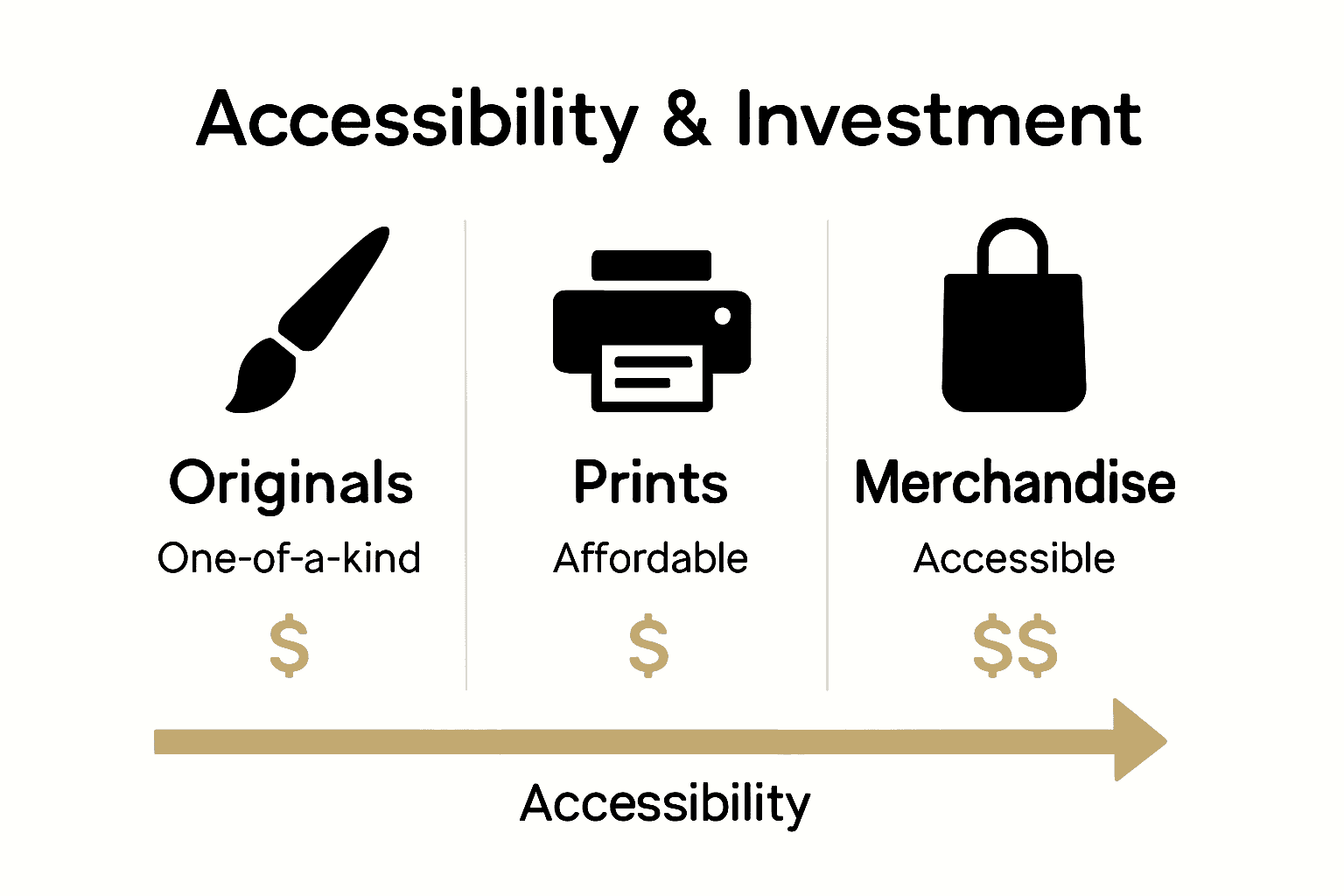 Each category offers unique advantages: original artworks provide investment potential and authentic creative experience, prints offer affordability and accessibility, while merchandise allows personal artistic expression in everyday objects. By exploring the key differences between original art and prints, collectors can make informed decisions that align with their artistic preferences, budget, and personal style.

Evaluating Art Quality and Authenticity
Evaluating art quality and authenticity is a complex process that requires a nuanced understanding of artistic techniques, historical context, and expert assessment. According to Arts Australia, assessing the significance of artworks involves carefully examining their historic, cultural, social, and aesthetic values to determine their true importance and authenticity.
Art authentication is a sophisticated discipline that combines multiple analytical approaches. Smithsonian Repository highlights that art museums employ specialized expertise in connoisseurship, identification, and scholarly research to evaluate art’s genuine quality and origins. This process typically involves several key components: provenance research, material analysis, stylistic examination, and comparative studies with known works by the same artist.
Collectors and art enthusiasts must develop a critical eye and understand several fundamental evaluation techniques. Key factors include examining the artwork’s physical condition, verifying its historical documentation, analyzing the artist’s signature and unique stylistic elements, and understanding the artwork’s preservation history. Technical investigations like infrared reflectography, X-ray analysis, and pigment testing can provide deeper insights into an artwork’s authenticity and origin.
For those looking to refine their art evaluation skills, understanding what makes art truly original is crucial. While professional authentication often requires expert intervention, informed collectors can learn to recognize subtle indicators of an artwork’s genuine quality. Developing expertise involves continuous learning, attending gallery exhibitions, consulting art historians, and staying updated on emerging authentication technologies and research methodologies.
Buying Strategies and Provenance Importance
Art acquisition is a sophisticated process that extends far beyond simple purchasing decisions. According to UBS, acquiring high-quality artworks requires understanding artistic quality, historical significance, and relevance to cultural conversations, with provenance playing a crucial role in determining authenticity and value.
The concept of provenance represents the comprehensive documentation of an artwork’s historical journey, tracing its ownership, exhibition history, and authentication. As Art Gallery of South Australia explains, collecting art is a rigorous process involving extensive research into the artistic significance and background of potential acquisitions. A robust provenance can significantly enhance an artwork’s value, providing collectors with confidence in their investment and establishing the piece’s historical legitimacy.
Successful art buying strategies require a multifaceted approach. Collectors should develop a nuanced understanding of market trends, artist reputation, and potential appreciation value. This involves conducting thorough research, attending art fairs, consulting with experts, and maintaining a diverse collection that balances personal aesthetic preferences with potential investment potential. Networking with gallery owners, artists, and other collectors can provide invaluable insights and access to exceptional pieces.
For those looking to navigate the complex world of art collecting, understanding the nuances of limited edition prints can be an excellent starting point. Developing a strategic approach means balancing emotional connection with analytical assessment, understanding that each artwork represents not just a visual object, but a potential historical artifact with unique cultural significance.
Caring for, Displaying, and Insuring Art
Preserving art requires a comprehensive approach that combines expert knowledge and meticulous care. According to Arts Australia, proper art collection maintenance involves specialized preservation techniques, including maintaining precise material and climatic conditions and occasionally consulting professional conservators to ensure artwork longevity.
The display strategy is equally critical in art preservation and appreciation. Smithsonian Repository emphasizes that art conservation encompasses not just ownership, but strategic preservation, storage, and thoughtful public presentation. This means selecting display locations with controlled lighting, consistent temperature, and minimal exposure to direct sunlight or humidity that could potentially damage delicate artworks.
Insuring art represents a crucial aspect of responsible collecting that protects significant financial and cultural investments. Collectors should seek specialized art insurance that covers unique risks such as transportation damage, accidental destruction, and potential value fluctuations. Comprehensive documentation, including professional appraisals, provenance records, and detailed condition reports, becomes essential for securing appropriate insurance coverage and protecting the artwork’s value.
For art enthusiasts looking to elevate their display techniques, exploring inspiring art display ideas can transform living spaces and protect valuable collections. Successful art care combines scientific preservation methods, aesthetic sensibility, and strategic risk management, ensuring that each piece remains a vibrant testament to artistic expression for generations to come.
Common Pitfalls and Best Practices
Art collecting is a nuanced journey fraught with potential missteps that can significantly impact a collector’s success. According to Arts Australia, one of the most critical pitfalls is inadequate research into an artwork’s significance and provenance, which can lead to costly misattributions or undervaluation of potential acquisitions.
Strategic collecting demands a comprehensive approach that goes beyond aesthetic appeal. UBS recommends acquiring the highest quality works within one’s budget, emphasizing that quality artworks tend to maintain their value over time. This approach requires developing a discerning eye and understanding the nuanced factors that distinguish exceptional pieces from merely decorative works.
Common pitfalls for new collectors include impulse purchasing, neglecting proper documentation, and failing to diversify their collection. Successful art collectors develop a methodical approach that involves extensive research, consulting experts, attending gallery exhibitions, and building relationships within the art community. This means carefully tracking an artwork’s provenance, understanding market trends, and making informed decisions based on more than just initial visual appeal.
For those looking to refine their collecting strategy, understanding what makes art truly original can be a critical first step. The most successful collectors approach art acquisition as a combination of passion and strategic investment, balancing emotional connection with analytical assessment, and continuously educating themselves about artistic trends, historical contexts, and emerging talents.
Discover Your Perfect Art Collection with Expert Guidance
Navigating the world of art collecting can feel overwhelming when balancing authenticity, quality, and personal expression. This guide highlights the importance of strategic buying, understanding provenance, and selecting pieces that speak to your unique taste and cultural interests. Whether you are attracted to original creations or affordable prints, making informed decisions is key to building a collection that resonates deeply over time.
Elevate your collecting experience by exploring our diverse Contemporary and Abstract collections. Each piece at Eman’s Gallery is carefully curated to help you craft a meaningful narrative within your space.
Start your journey now by visiting our website to find original works and quality prints that match your vision. Take control of your art story today by exploring authentic and inspiring pieces designed to enrich your collection and daily life.
Frequently Asked Questions
What is art collecting and why is it significant?
Art collecting is the purposeful accumulation of artworks that reflects cultural dialogue and historical moments. It plays a vital role in preserving artistic heritage, supporting artists, and providing a visual archive for future generations.
What are the differences between original artworks, prints, and merchandise?
Original artworks are unique pieces created directly by the artist, while prints are limited reproductions that offer more accessible options. Merchandise features artistic designs on functional items, making art part of everyday life.
How can I evaluate the quality and authenticity of an artwork?
Evaluate art quality by examining its physical condition, verifying provenance, and analyzing the artist’s signature. Professional authentication methods, such as material analysis and stylistic examination, can provide deeper insights.
What strategies should I consider when buying art?
Develop a comprehensive understanding of market trends, artist reputation, and artwork provenance. Research potential acquisitions, consult experts, and network within the art community to make informed decisions.
Recommended
- Art Collecting Terminology: Complete Guide for Enthusiasts – Eman’s Gallery
- What Is Contemporary Art? Complete Guide Explained – Eman’s Gallery
- 7 Expert Tips for Collecting Limited Edition Prints Wisely – Eman’s Gallery
- Why Invest in Artist Prints: Complete Guide – Eman’s Gallery
- Warum Zeitgenössische Kunst Kaufen: Der Komplette Guide
- 7 Inspiring Examples of Abstract Painting for Art Lovers
- Explore underwater scenes
- Explore tranquil river scenes
Stay Connected
- ✨ Explore Eman Khalifa’s original art, fine art prints, and art merchandise
- 📸 Follow Eman Khalifa’s art journey on: Instagram @emans_gallery and Facebook Eman’s Gallery
- 📹 Watch Eman Khalifa creating live art on: YouTube @emans_gallery
- Supported by BabyLoveGrowth
