


What is art licensing? A practical guide for artists
TL;DR:
- Art licensing allows artists to retain copyright while generating recurring income through commercial use.
- Licensing contracts specify terms, territory, exclusivity, and payment models like royalties or flat fees.
- Not all art benefits from licensing; strategic selectivity protects an artist’s brand and long-term value.
Art licensing is often misunderstood. Many artists assume that earning money from their work means selling the original, the copyright, or both. That assumption costs them real income. Art licensing lets artists retain copyright while permitting commercial use of their work, turning a single painting into a repeatable revenue source without giving up creative ownership. This guide covers exactly how art licensing works, what contracts look like, where the market is growing, and what both artists and collectors need to watch out for. Whether you create, collect, or source art professionally, this is what you need to know.
Table of Contents
- The basics of art licensing: Definitions and key concepts
- How art licensing agreements work: Terms, payments, and protection
- Benefits and risks: What artists and collectors need to know
- Art licensing in the contemporary market: Trends and practical strategies
- The uncomfortable truth: Why not all art should be licensed
- Explore original art and exclusive prints
- Frequently asked questions
Key Takeaways
| Point | Details |
|---|---|
| Licensing expands art reach | Art licensing lets creators earn passive income while keeping ownership of their work. |
| Read contracts carefully | Successful licensing depends on clear agreements about copyright, products, and payment terms. |
| Balance exposure with integrity | Not every piece should be licensed; choose deals that fit your brand and creative goals. |
| Market trends shape opportunity | Growth in home decor, digital prints, and themed collections means new ways to profit from art licensing. |
The basics of art licensing: Definitions and key concepts
Licensing is a legal arrangement, not a sale. When an artist licenses their work, they grant permission to another party to use it in a specific way, for a specific time, on specific products. The artwork stays in the artist’s hands. The copyright stays too.
Art licensing is the process where an artist (the licensor) grants a company or brand (the licensee) permission to use their artwork for commercial purposes, while the artist retains copyright ownership. That distinction matters. Selling a painting transfers ownership of the object. Licensing transfers only the right to use the image.
Artwork gets licensed across a wide range of product categories:
- Greeting cards and stationery
- Home decor items (cushions, throws, ceramics)
- Apparel and accessories
- Wallpapers and surface patterns
- Packaging and brand materials
- Digital products and screen-based displays
This is precisely why licensing is considered scalable. An artist can license the same piece to a card manufacturer, a textile brand, and a home goods retailer simultaneously, provided the license terms allow it. Each deal generates income. The original artwork remains with the artist or collector.
For collectors and interior designers, understanding licensing matters too. When you see a painting reproduced on a product line, that artwork has a provenance trail. Knowing whether a licensed exclusive art prints arrangement is in place affects how you assess value, exclusivity, and authenticity.
“Licensing is not a compromise. It is a structure that lets artists control how their work enters the world commercially, without surrendering what they created.”
Pro Tip: Before approaching any company about licensing, organize your portfolio into themed collections. Licensees prefer cohesive bodies of work over individual pieces because they can build product lines more easily around a visual theme.
How art licensing agreements work: Terms, payments, and protection
Knowing what a licensing contract actually contains is where many artists are underprepared. A standard agreement covers several distinct elements, each of which directly affects how much you earn and how well your work is protected.
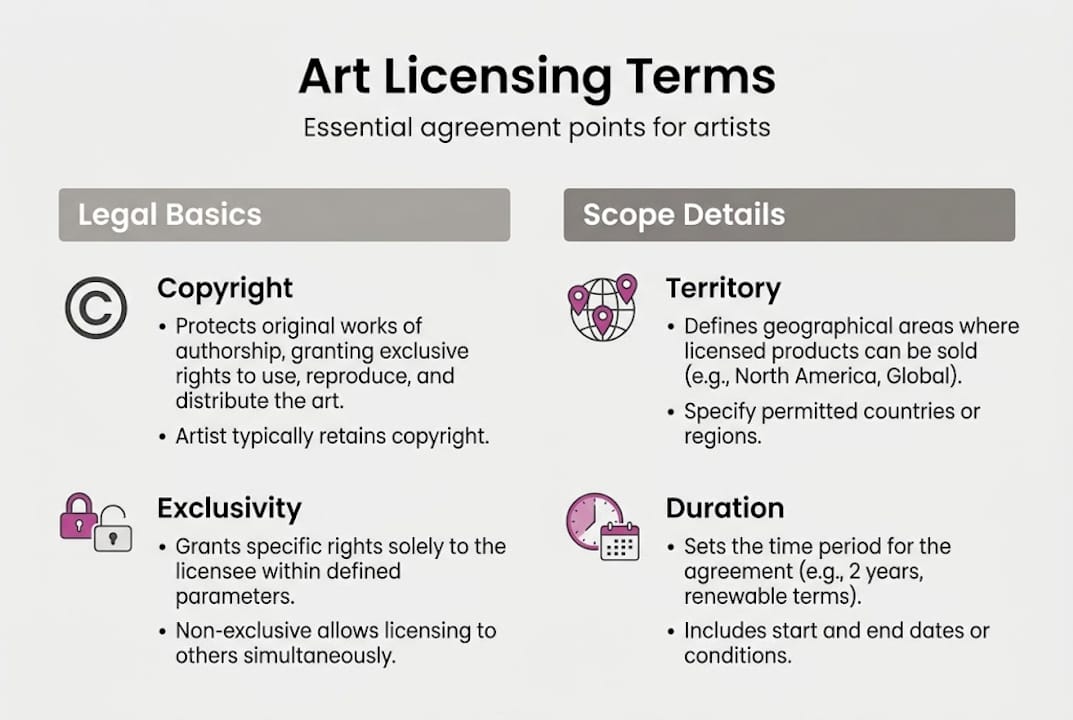
Key mechanics include negotiating terms in a licensing agreement covering: copyright retention, product types, exclusivity, territory, duration, payment structure (flat fees, royalties of 3% to 12%, and advances), and termination or sell-off periods.
Here is a comparison of the two most common license structures:
| Feature | Exclusive license | Non-exclusive license |
|---|---|---|
| Who can use the art | One licensee only | Multiple licensees |
| Typical fee | Higher | Lower |
| Artist’s flexibility | Limited during term | Retained fully |
| Best for | Major product launches | Broad market reach |
Beyond exclusivity, territory and duration define the deal’s scope. Territory specifies which countries or regions the license covers. Duration sets the time limit, typically one to three years, after which rights revert to the artist or must be renegotiated.
Payment models vary. Flat fees offer predictable income but no upside if the product sells well. Royalties, usually 3% to 12% of net sales, reward success but require reliable reporting from the licensee. Some deals combine an advance payment against future royalties, which provides early cash flow while tying earnings to performance.
Here is how a typical deal comes together:
- Artist submits portfolio or is approached by a brand
- Both parties agree on product scope, territory, and duration
- Exclusivity and payment model are negotiated
- A written agreement is signed before any artwork is delivered
- Artwork files are transferred under agreed usage terms
- Royalty reporting begins on an agreed schedule
- Contract renews, renegotiates, or terminates at the end of the term
Pro Tip: Always retain approval rights over how your artwork is reproduced. This clause gives you the right to reject product samples that misrepresent your work, protecting both your reputation and your brand alignment. When comparing exclusive vs non-exclusive licenses, weigh the fee premium against the flexibility you give up.
Benefits and risks: What artists and collectors need to know
Licensing offers genuine upside, but it is not without real risk. Understanding both sides clearly is what separates strategic artists from those who sign bad deals.
Benefits:
- Passive income from existing artwork without creating new pieces
- Wider audience reach across product categories and retail channels
- Reputation building through association with established brands
- Revenue from multiple licensees simultaneously on non-exclusive terms
- Financial stability that supports continued studio work
Risks and drawbacks:
- Overexposure: a painting on every product can dilute its perceived value
- Brand misalignment: association with a licensee that contradicts your artistic identity
- Loss of exclusivity appeal for collectors who paid a premium for rarity
- Weak contracts that leave approval rights or credit requirements undefined
The numbers behind the market are worth noting. Global licensing retail sales reached $356 billion in 2023, with art-related licensing contributing approximately $2.4 billion. Surface patterns have seen fees rise 18% over the past three years, making them one of the faster-growing segments.
“The best licensing outcomes come not from saying yes to every offer, but from knowing exactly which deals fit your work and which ones do not.”
For collectors and designers, licensed provenance matters. An artist who licenses work to carefully chosen, quality brands signals professionalism. An artist whose work appears on every discount item in every market signals something different. Tracking where and how an artist licenses their work is part of assessing long-term value.
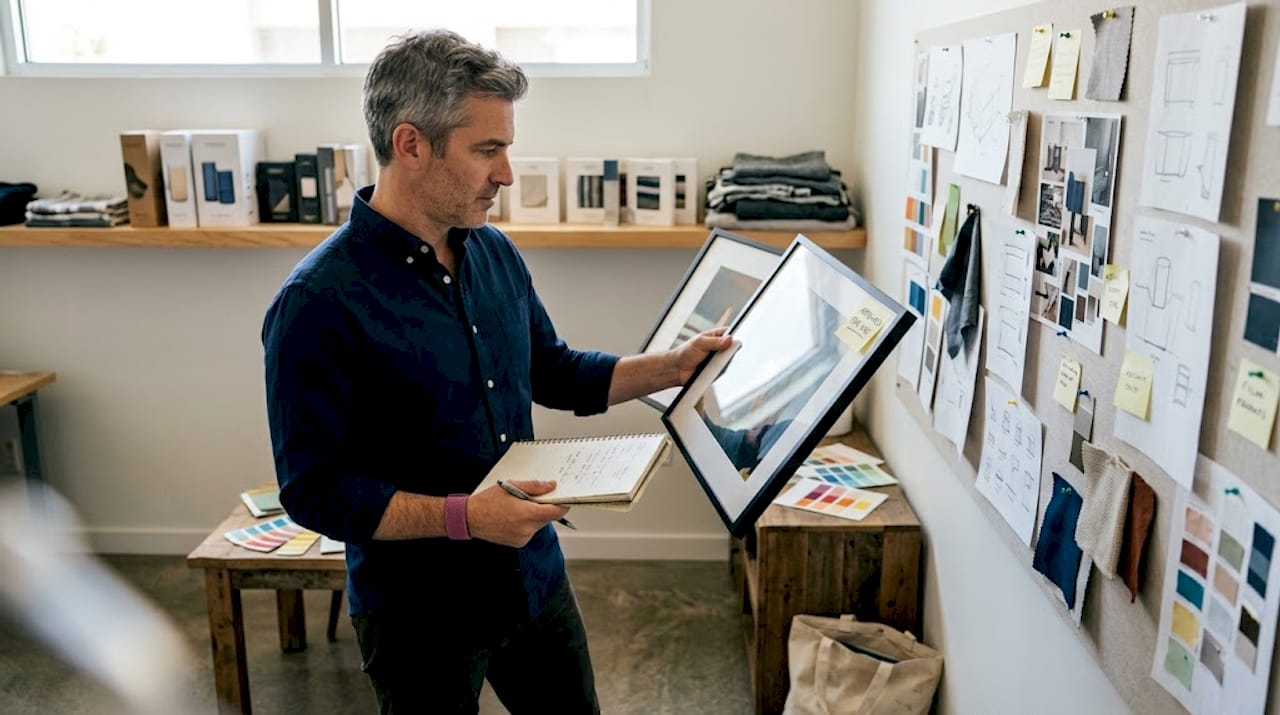
Risk mitigation strategies used by experienced artists include developing themed collections for licensing (reducing the chance of piecemeal deals), setting non-negotiables around credit and approval rights, and exploring creative art merch ideas that align with their artistic identity. Interior designers sourcing art merchandise for designers can also use this knowledge to verify that products carry proper licensing and artist credit.
Art licensing in the contemporary market: Trends and practical strategies
The art licensing market is not uniform. Some categories are growing fast; others are stable. Knowing where to focus is a practical advantage.
Greeting cards and paper goods are growing at a stable 2.1% CAGR, while surface patterns have seen fees climb 18% over the last three years. Home decor and apparel licensing continue to attract significant investment from retailers looking to differentiate product lines with original artwork.
Here is a snapshot of key product segments and their licensing potential:
| Product category | Growth trend | Royalty range | Artist opportunity |
|---|---|---|---|
| Surface patterns | High (18% fee increase) | 8% to 12% | Strong |
| Home decor | Steady | 6% to 10% | Strong |
| Greeting cards | Stable (2.1% CAGR) | 3% to 6% | Moderate |
| Apparel | Growing | 5% to 10% | Moderate to high |
| Digital prints | Expanding rapidly | Variable | Emerging |
For artists entering the licensing market, here are practical strategies that work:
- Pitch themed collections, not individual pieces. Brands build product lines around visual stories.
- Research the licensee before negotiating. Their track record, reputation, and product quality reflect on your work.
- Use digital art prints as a low-risk entry point. They require minimal production investment while testing market demand.
- Stay informed about category trends. Demand for home decor art trends shifts seasonally and by region.
- Protect your core originals. Not every piece needs to enter the licensing market.
For designers and retailers, sourcing licensed artwork from established artists adds credibility and storytelling to a product range. Verifying the license terms and ensuring proper credit is standard professional practice.
Pro Tip: Build a simple licensing one-sheet for your portfolio. Include your collection themes, available formats, preferred product categories, and contact information. This makes it easier for brands to say yes quickly.
The uncomfortable truth: Why not all art should be licensed
Licensing has real commercial appeal. But the pressure to monetize every piece can work against an artist’s long-term interests and a collector’s confidence in value.
Not all art benefits from mass exposure. Certain works carry value precisely because they are rare, site-specific, or deeply personal in execution. Put them on mass-produced items and that value erodes. The aura of the original diminishes. Collectors who paid for exclusivity feel that diminishment directly.
Licensing can also undermine an artist’s long-term brand if deals are accepted without strategic alignment. An artist known for refined, contemplative work who licenses to a budget novelty brand sends a conflicting message to the market.
The hard-won insight is this: the best licensing outcomes come from turning down deals that do not fit. Self-restraint is not lost income; it is brand protection. Artists who are selective about licensing tend to command higher fees and better contract terms over time. Collectors and designers evaluating an artist’s licensing history should treat selectivity as a positive signal. Understanding art’s deeper value means recognizing that not every beautiful work needs to become a product.
Explore original art and exclusive prints
If this guide helped clarify how art licensing works, the next step is seeing what original and carefully curated work actually looks like in practice. Eman’s Gallery offers one-of-a-kind original paintings and museum-quality canvas prints that represent exactly the kind of art worth understanding from a licensing and collecting perspective.
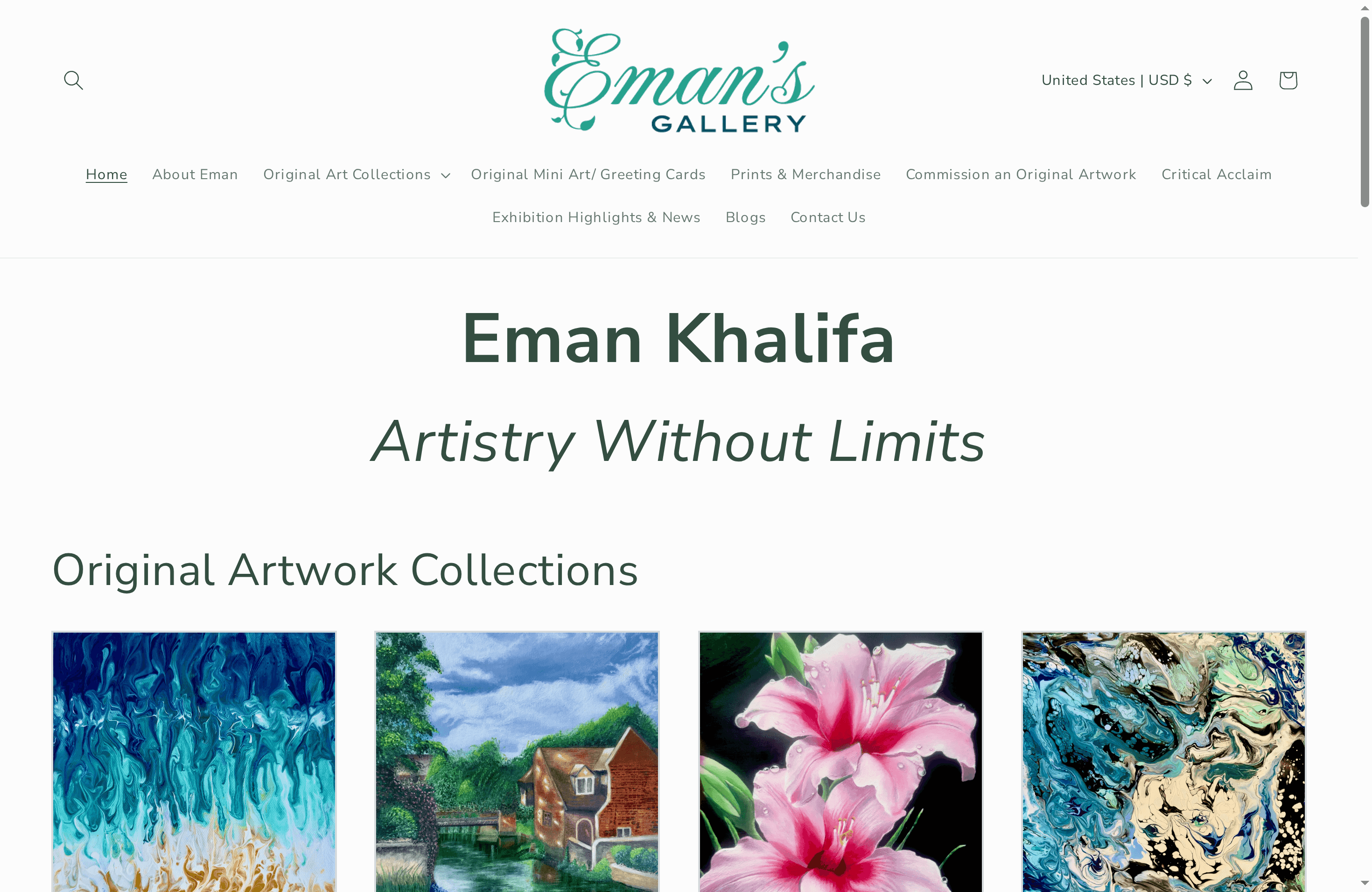
Browse contemporary realism originals to see the range of work available, or explore original artworks for home decor for pieces suited to residential and commercial interiors. The Private Eye canvas print is one example of a high-quality reproduction that brings original art into a home at an accessible price point. Shipping is available worldwide from the UK, USA, Canada, Australia, and beyond.
Frequently asked questions
What products can artwork be licensed for?
Artwork can be licensed for products such as greeting cards, home decor items, apparel, stationery, wallpapers, and a wide range of other consumer goods across multiple retail categories.
Do artists lose ownership when they license their art?
No. Artists retain copyright ownership when licensing their work. Licensing grants usage rights only, unless a separate agreement explicitly transfers copyright.
How much money can an artist make from licensing?
Royalties typically range from 3% to 12% of net sales, and some agreements also include upfront flat fees or advance payments against future earned royalties.
What is the difference between exclusive and non-exclusive art licenses?
An exclusive license allows only one licensee to use the artwork within the agreed terms, while a non-exclusive license permits multiple parties to use the same work simultaneously.
Why should collectors and interior designers care about licensing?
Licensed art ensures that the artist is properly credited and compensated, and it gives collectors and designers confidence in the authenticity and provenance of the work they source or display.
Recommended
- Art Collector Insights & Strategies Guide - Eman’s Gallery
- What is illustration art: A 2026 guide for enthusiasts
- Complete Guide to Valuing Art Prints - Eman’s Gallery
- What Is an Art Print? Complete Guide for 2025 - Eman’s Gallery
Stay Connected
- ✨ Explore Eman Khalifa’s original art and fine art prints
- 📸 Follow Eman Khalifa’s art journey on: Instagram @emans_gallery and Facebook Eman’s Gallery
- 📹 Watch Eman Khalifa creating live art on: YouTube @emans_gallery
