


What is upcycled art? Meaning, methods, and sustainability impact
TL;DR:
- Upcycled art transforms discarded materials into meaningful, environmentally conscious artworks that challenge traditional reuse. It involves creative techniques like assemblage and reconstruction to add value and commentary on consumption and waste. Its significance lies in promoting sustainability, cultural reflection, and market value, making it a compelling choice for collectors and viewers.
Most people look at a pile of broken tiles, tangled wire, or worn fabric scraps and see waste. Upcycled art asks you to look again. Upcycled art is artwork made by transforming unwanted, discarded, or by-product materials into new works with artistic and often environmental value. It is one of the most significant movements in contemporary art today, sitting at the intersection of creativity, sustainability, and cultural commentary. This guide covers what upcycled art is, how it is made, why it matters, and how to interpret and appreciate it with a more informed eye.
Table of Contents
- Defining upcycled art: More than recycled creativity
- How is upcycled art created? Key methods and techniques
- Beyond waste: The environmental and cultural value of upcycled art
- Interpreting upcycled art: Value, criticism, and curatorial insight
- Why upcycled art challenges our assumptions—and what collectors should ask next
- Explore unique, sustainable, and inspiring art for your space
- Frequently asked questions
Key Takeaways
| Point | Details |
|---|---|
| Upcycled art definition | It means transforming discarded objects into valuable, thought-provoking works. |
| Value vs. recycling | Upcycled art adds new worth to materials without fully breaking them down, unlike recycling. |
| Sustainability impact | Upcycled art highlights eco-awareness and reduces waste through creative means. |
| Interpretation matters | Context and presentation greatly affect how upcycled art is valued and understood. |
| Collector insight | Look for transformation stories and intentional design when exploring or collecting upcycled pieces. |
Defining upcycled art: More than recycled creativity
With the basics introduced, let us dig into what truly defines upcycled art and how it stands apart from recycling and simple reuse.
Upcycled art involves transforming discarded or by-product materials into works with new artistic and environmental value. The key word here is transforming. An artist does not simply display an old chair and call it art. The object must be reimagined, restructured, or placed in a new context that adds creative and often conceptual value.
“Upcycled art is closely related to but distinct from recycling; upcycling adds value by preserving or transforming the item rather than breaking it down into raw materials.”
This distinction matters. Conventional recycling breaks an object down so its raw components can be reformed into something new. A plastic bottle becomes plastic pellets, which become a new container. Upcycled art does the opposite. It keeps the original object or material largely intact and builds creative meaning around it, through it, or because of it. A plastic bottle becomes part of a sculptural installation that comments on ocean pollution.
Not every reuse qualifies as upcycling. Storing pens in an old mug is practical reuse. Cutting that mug into mosaic pieces and assembling them into a wall-mounted portrait is upcycled art. Transformation and added value are the essential criteria.
Key benefits of upcycled art:
- Environmental: Reduces landfill volume and resource consumption by diverting materials from the waste stream
- Creative: Encourages problem-solving, unconventional thinking, and material innovation
- Cultural: Provides commentary on consumption habits, industrial waste, and societal values
- Economic: Produces unique, collectible works at varying price points without requiring expensive raw materials
Exploring sustainable art practices gives collectors and enthusiasts a broader foundation for understanding where upcycled art fits within the larger eco-conscious art world.
How is upcycled art created? Key methods and techniques
Now that you know what upcycled art is, it is time to see how artists actually create it, step by step.
Upcycled art typically involves creative transformation approaches such as assemblage, modification, deconstruction, and reconstruction of found materials. Each approach serves a different artistic purpose and produces distinctly different outcomes.
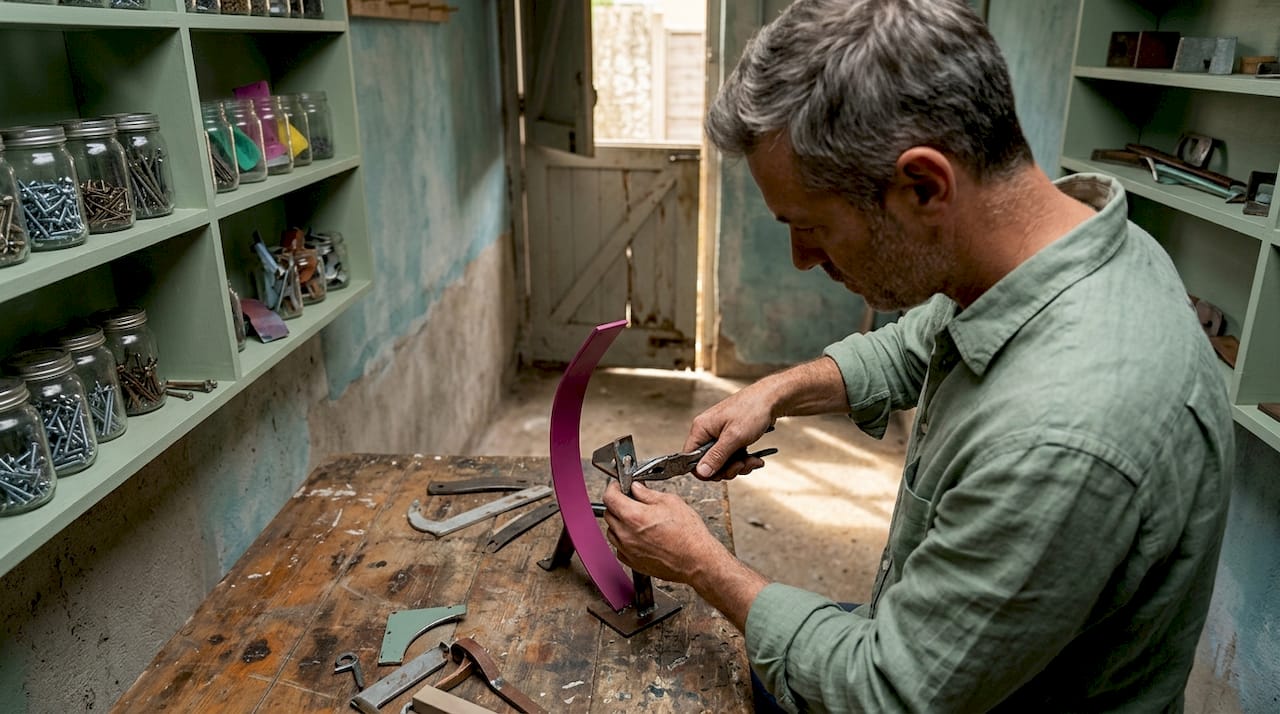
Common upcycled art techniques:
| Technique | Description | Example |
|---|---|---|
| Assemblage | Combining unrelated objects into a unified composition | Bottle caps, wire, and wood scraps arranged as a portrait |
| Collage | Layering flat materials onto a surface | Magazine fragments, old maps, and torn packaging on canvas |
| Material fusion | Merging different waste materials through heat, binding, or weaving | Fused plastic bags pressed into rigid panels |
| Deconstruction/Reconstruction | Taking objects apart and rebuilding them into new forms | Old chairs disassembled and reassembled into wall sculpture |
| Modification | Altering the surface or form of an object while keeping it recognizable | Spray-painted industrial pipes shaped into abstract figures |
| Found object display | Presenting a found object with minimal alteration but clear artistic intent | A rusted gear framed and mounted with contextual labeling |
The process of creating upcycled art follows a recognizable sequence, even if individual artists adapt it freely:
- Source materials with intention. Many artists visit salvage yards, thrift stores, construction sites, or collect community discards. The history of the material matters to the final work.
- Conceptualize the transformation. What story does the material carry? What new meaning do you want it to hold? This step determines whether the result is art or just clutter.
- Transform the material using one or more of the techniques above. This stage often involves the most trial and error.
- Assemble and refine the final composition, considering visual balance, context, and the narrative the viewer will encounter.
- Contextualize the work through a title, artist statement, or display format that communicates intent.
Pro Tip: Choosing materials with interesting histories can elevate an upcycled piece’s story significantly. A rusted door hinge from a demolished building carries more narrative weight than a generic piece of scrap metal.
How you display finished upcycled works also affects their reception. Thoughtful artistic display methods and a clear understanding of display ideas for contemporary art help viewers engage with the transformation rather than simply seeing the raw material.
Beyond waste: The environmental and cultural value of upcycled art
Understanding artistic methods is important, but why does upcycled art matter in today’s world? Let us explore its larger impact.
Upcycled art is often motivated by sustainability goals and is used to raise awareness about consumption and waste. Artists using discarded textiles or plastics prompt viewers to confront environmental degradation directly. The artwork becomes a mirror, reflecting what society produces and throws away.
Areas where upcycled art drives impact:
- Mass consumption critique: Works built from fast-fashion fabric scraps or discarded packaging highlight the volume of goods produced and discarded annually
- Environmental degradation: Sculptures made from beach plastic or e-waste make pollution visible in a gallery or public space setting
- Industrial waste commentary: Artists working with factory by-products bring attention to manufacturing’s hidden footprint
- Emotional and historical memory: Objects from specific eras or communities carry cultural weight that transforms the artwork into social documentation
“The transformation of discarded materials is not only an artistic act. It is a statement about what society chooses to discard and what deserves to be seen.”
Consider the work of artists who build large-scale installations from collected ocean plastic. The material itself tells a story before a single creative decision is made. The artist’s role is to shape that story into something a viewer cannot look away from. Similarly, textile-based upcycled works using industrial offcuts comment on the fashion industry’s waste problem in a way that a written report cannot replicate.
A notable example: The use of discarded electronics in upcycled sculpture draws direct attention to the global e-waste crisis, which produces tens of millions of metric tons of discarded devices annually. When those circuit boards and tangled cables become a human figure or a landscape, the connection becomes impossible to ignore.
The reach of upcycled art also extends into the craft world. Handmade upcycled jewelry, for example, demonstrates how the same principles apply at a smaller, wearable scale. Reclaimed metals and repurposed stones become pieces with layered histories.
For collectors interested in building a collection that reflects their values, eco-conscious collecting provides a practical framework for acquiring work that is both aesthetically meaningful and ethically considered.
Interpreting upcycled art: Value, criticism, and curatorial insight
Now that we see the importance of upcycled art’s message, it is vital to understand how interpretation and curation affect its perception and value.
Upcycled art’s value can be misread when its transformation is not visually clear or when the backstory is not communicated to the viewer. Not every use of used materials is automatically upcycling in the strict sense. A work must demonstrate deliberate artistic transformation and an added layer of meaning or value.
Comparison: Upcycling vs. recycling vs. simple reuse in art
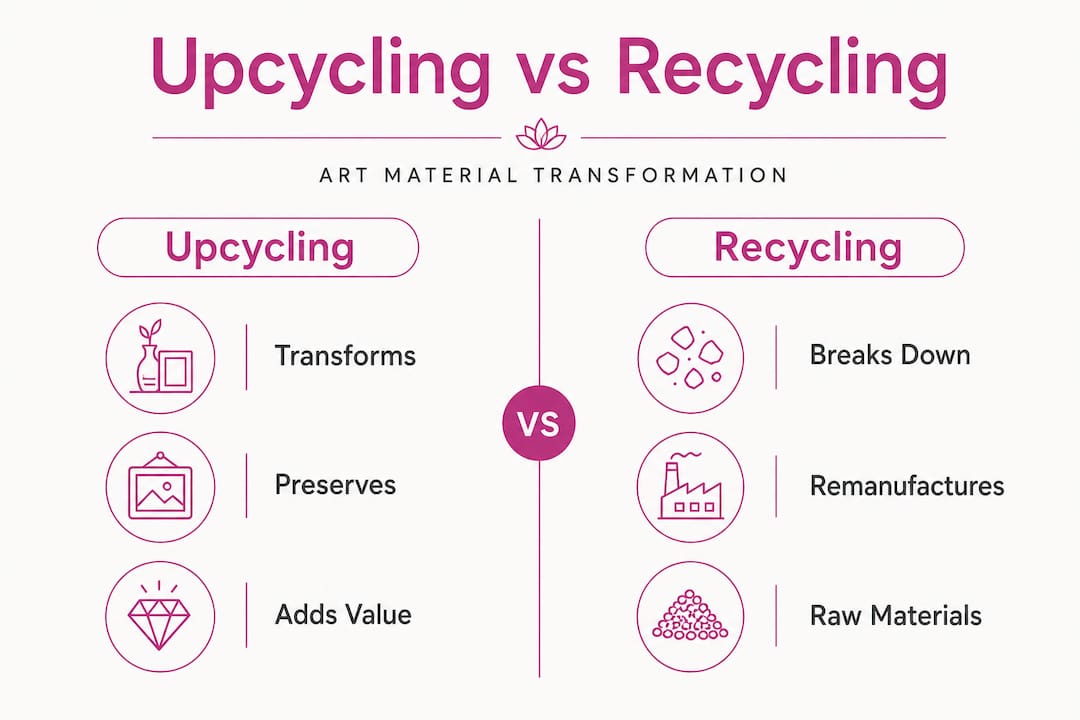
| Approach | What happens to the material | Value added | Art category |
|---|---|---|---|
| Upcycling | Preserved, transformed, elevated | Artistic, conceptual, cultural | Fine art, installation, sculpture |
| Recycling | Broken down into raw form, reformed | Functional, material efficiency | Applied design, craft |
| Simple reuse | Used again without transformation | Practical, economical | Not typically art |
One significant curatorial challenge is what some critics call the “concept dependency” problem. Some curatorial criticism suggests that upcycled works can become concept-dependent, meaning the meaning can be obscured if the piece looks like discarded material without sufficient context. A viewer walking past a pile of compressed clothing may not recognize it as a serious artwork without a title, placement strategy, and artist statement.
This is where curatorial skill becomes essential. The way a work is lit, mounted, labeled, and positioned within a gallery or home setting determines whether viewers engage with its transformation or dismiss it as clutter.
Key elements that help viewers interpret upcycled art accurately:
- Clear titles that hint at the material’s origin or the artist’s intent
- Artist statements that explain the sourcing and transformation process
- Strategic placement that signals “this is art” rather than “this is storage”
- Lighting and framing that draw attention to the transformed qualities of the material
Pro Tip: Contextualization and display can elevate or clarify meaning to viewers. A single framed label that explains where the material came from can shift a viewer’s entire interpretation of a piece.
For practical guidance, reviewing art curation tips provides actionable steps for displaying works effectively in interior settings. A broader look at art curation overview covers the principles that curators use to build coherent, communicative collections.
Why upcycled art challenges our assumptions—and what collectors should ask next
Having explored the critical elements of upcycled art’s creation and reception, it is worth reflecting on its deeper meaning and what it asks from us as viewers and collectors.
Most people approach art by asking: “Do I like how this looks?” Upcycled art adds a second, equally important question: “Do I understand what this was and what it became?” That shift in framing changes the entire viewing experience. It requires the viewer to hold two realities at once: the object’s former life and its current artistic existence.
This is where many enthusiasts stop short. They appreciate the visual result without investigating the transformation. That is a legitimate response, but it limits how much the work can offer. An upcycled sculpture made from discarded military uniforms carries a completely different weight once you know its material origin. The aesthetic and the story are inseparable.
For collectors, this means asking better questions before acquiring upcycled work. Where did the materials come from? What process did the artist use? What does the transformation represent? These are not trivial details. They are part of the artwork itself.
There is also a tendency to place too much emphasis on the medium. People sometimes become so focused on the fact that a piece is made from bottle caps or scrap metal that they evaluate it primarily as a feat of ingenuity rather than as art with meaning. Medium is a vehicle, not the destination. The best upcycled art uses its materials as a language, not a gimmick.
Another common oversight: assuming upcycled art is inherently informal or lower in market value than work made with traditional materials. That assumption has been steadily proven wrong. Upcycled works appear in major international galleries, command serious auction results, and attract serious collectors. The combination of uniqueness, social relevance, and creative skill produces work that stands alongside any contemporary piece.
For those building a curated home collection, home gallery curation provides a useful guide to displaying works that carry conceptual weight alongside visual appeal.
Explore unique, sustainable, and inspiring art for your space
If this look at upcycled art has sparked interest in collecting work that carries both visual strength and intentional meaning, Eman’s Gallery offers a curated selection of original and print-based works that align with that ethos.
The gallery’s collection includes original handmade paintings and museum-quality canvas prints by artist Eman Khalifa, each produced with attention to creative intent and lasting visual impact. The Fragments of Memory canvas print is one example of work that layers visual texture with a sense of memory and material history. For those exploring a wider range of options, the wall art prints collection offers abstract, geometric, and landscape works available for worldwide shipping from the UK, USA, Canada, Australia, Germany, France, Italy, Spain, Portugal, Greece, UAE, and the Netherlands.
Frequently asked questions
Is upcycled art the same as recycled art?
No. Upcycled art adds value by preserving and transforming objects, while recycled art may break materials down into raw components before reforming them into something new.
What materials are most commonly used in upcycled art?
Artists frequently work with textiles, plastics, metals, glass, and found objects. Discarded textiles and plastics are particularly common because they carry strong visual associations with consumer culture and waste.
How can I tell if a piece is truly upcycled art?
Look for deliberate creative transformation and a documented story behind the materials. Not every use of used materials qualifies as upcycling. The material must be elevated, not just reused.
Is upcycled art valuable in the art market?
Yes. Upcycled art is increasingly valued for its uniqueness, the skill required to transform materials, and the social and environmental commentary it delivers. It appears in major galleries and private collections worldwide.
Does upcycled art really help the environment?
It does. Upcycled art diverts materials from landfills and, more significantly, raises awareness about consumption and waste in ways that can shift public attitudes toward sustainability.
Recommended
- What Is Custom Artwork and Why It Matters - Eman’s Gallery
- Exploring wearable art: meaning, history, and frontiers
- Why Art Matters – Impact on Culture and Wellbeing - Eman’s Gallery
- What is textile art? Techniques, history, and creative potential
Stay Connected
- ✨ Explore Eman Khalifa’s original art and fine art prints
- 📸 Follow Eman Khalifa’s art journey on: Instagram @emans_gallery and Facebook Eman’s Gallery
- 📹 Watch Eman Khalifa creating live art on: YouTube @emans_gallery
