


What is sustainable art: A guide for eco-conscious collectors
Most people think sustainable art is just about using recycled materials. That narrow view misses the bigger picture. True sustainable art considers environmental, social, economic, and cultural impacts throughout its entire lifecycle. This guide breaks down what sustainable art actually means, explores the practices artists use to minimize harm, examines how art drives environmental behavior change, and shows you how to build a collection that reflects your values without compromising on beauty or quality.
Table of Contents
- Key takeaways
- Understanding sustainable art: definition and core principles
- Key methodologies and materials used in sustainable art
- How sustainable art contributes to environmental and social change
- Nuances, challenges, and contrasting viewpoints in sustainable art
- Explore sustainable art collections at Eman’s Gallery
- Frequently asked questions about sustainable art
Key Takeaways
| Point | Details |
|---|---|
| Broad sustainability scope | Sustainable art considers environmental, social, economic, and cultural impacts from concept to disposal, not only the materials used. |
| Lifecycle thinking | Artists apply lifecycle thinking to map extraction, production, transport, exhibition, and disposal to reduce harm while maintaining artistic vision. |
| Beyond recycled content | Collectors should recognize verifiable sustainable practices such as responsibly sourced materials, low footprint production, and non toxic locally sourced supplies, not only recycled content. |
| Avoid greenwashing | Authentic sustainable art balances concept and craft so aesthetics match ethics, preventing misleading green claims. |
Understanding sustainable art: definition and core principles
Sustainable art is art produced with consideration for its wider environmental, social, economic, and cultural impacts, often using eco-friendly materials, minimizing waste, and addressing sustainability conceptually. This definition reveals that sustainability in art extends far beyond simply choosing recycled materials. It encompasses every decision an artist makes, from initial concept through final disposal.
The core principles of sustainable art include multiple interconnected dimensions. Environmental considerations involve selecting materials with lower carbon footprints, reducing waste during production, and designing works that minimize energy consumption. Social responsibility means ensuring fair labor practices, supporting local communities, and creating art that educates or inspires positive change. Economic sustainability requires building viable business models that don’t exploit resources or people. Cultural relevance connects the work to meaningful conversations about our relationship with the natural world.
Lifecycle thinking distinguishes genuine sustainable practice from superficial gestures. Artists must consider extraction, production, transportation, exhibition, and eventual disposal of their materials. This approach introduces the concept of sustainability handprints versus footprints. While footprints measure negative environmental impact, handprints represent positive contributions like inspiring behavioral change or supporting regenerative practices.
Many collectors mistakenly believe sustainable art means only works made from recycled content. This misconception limits appreciation for artists who use sustainably harvested natural materials, create digital works with minimal physical footprint, or produce traditional paintings with non-toxic, locally sourced supplies. Understanding qualities of collectible art for savvy buyers includes recognizing these broader sustainability markers.
Authentic sustainable art balances concept and practice. An artist might create a powerful commentary on climate change using traditional oil paints sourced responsibly, or craft sculptures from ocean plastic that spark conversations about consumption. Both approaches have merit when executed with genuine commitment to reducing harm and promoting awareness.
“Sustainable art challenges us to reconsider our relationship with materials, questioning not just what we make, but how and why we make it.”
Key methodologies and materials used in sustainable art
Artists employ lifecycle assessment to evaluate environmental impact from creation through disposal. This systematic approach examines energy consumption, water usage, chemical emissions, and waste generation at every stage. By mapping these factors, artists identify opportunities to reduce harm without compromising artistic vision.
Common eco-friendly materials demonstrate remarkable creativity and innovation:
- Recycled bottle caps transformed into colorful mosaics
- Mycelium grown into sculptural forms that biodegrade naturally
- Algae-based inks that eliminate petroleum derivatives
- Reclaimed wood sourced from demolished buildings
- Natural pigments extracted from plants, minerals, and earth
- Biodegradable resins replacing traditional epoxies
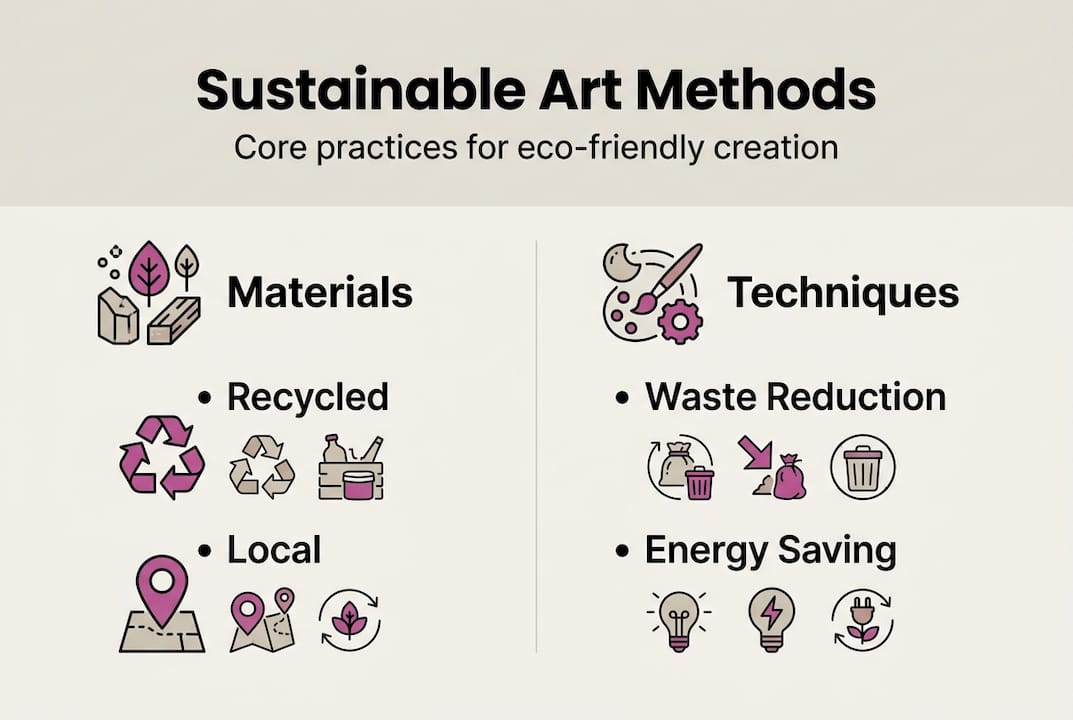
Local sourcing reduces carbon footprint significantly. When artists purchase materials within their region, they eliminate long-distance transportation emissions while supporting local economies. A painter in California using pigments from regional clay deposits makes a fundamentally different environmental choice than one importing supplies from overseas.
Waste reduction techniques vary by medium but share common principles. Sculptors design modular pieces that minimize offcuts. Painters mix only needed quantities of medium. Installation artists plan for component reuse in future works. These practices require careful planning but yield substantial environmental benefits.

| Material Type | Environmental Benefit | Common Applications |
|---|---|---|
| Recycled Plastics | Diverts waste from landfills, reduces new plastic production | Sculpture, mixed media, installation |
| Natural Fibers | Biodegradable, renewable, low processing impact | Textiles, paper-based works, weaving |
| Non-toxic Paints | Eliminates harmful VOCs, safer for artists and viewers | Canvas paintings, murals, decorative art |
| Salvaged Materials | Prevents disposal, gives new life to discarded items | Assemblage, collage, furniture art |
Energy-efficient production methods include working with natural light, using hand tools over power equipment when feasible, and choosing low-temperature processes. Digital artists select energy-efficient hardware and offset server emissions for online exhibitions.
Sustainable exhibition design employs modular, reusable components rather than single-use installations. Gallery walls built from reclaimed materials, lighting systems with LED bulbs, and packing materials made from biodegradable substances all contribute to reduced environmental impact. Understanding art collector tips for valuable collections helps you recognize these practices when visiting galleries or purchasing work.
Pro Tip: Before purchasing art marketed as sustainable, request specific information about material sourcing, production methods, and lifecycle planning. Artists committed to genuine sustainability readily share this data. Vague claims about being “eco-friendly” without supporting details often signal greenwashing. Learning to spot authentic art includes verifying sustainability credentials.
How sustainable art contributes to environmental and social change
Research demonstrates that waste-material paintings improved viewers’ pro-environmental intentions, while ecological public art boosts pro-environmental behavior via psychological ownership and awareness. These findings reveal that sustainable art does more than minimize harm during production. It actively shapes how audiences think about and interact with their environment.
Psychological ownership occurs when viewers develop emotional connections to public artworks addressing environmental themes. This connection translates into protective behaviors toward the natural systems the art represents. A sculpture made from ocean plastic doesn’t just remove waste from ecosystems. It creates lasting awareness that influences purchasing decisions, waste management habits, and advocacy efforts.
Sustainable art challenges anthropocentrism by repositioning humans as participants within ecosystems rather than separate observers or controllers. Works that incorporate living elements like moss, bacteria, or plants blur boundaries between art object and natural process. This shift in perspective encourages viewers to reconsider their relationship with non-human life.
The concept of regeneration versus reduction offers contrasting approaches to sustainability. Reduction focuses on minimizing negative impact through careful material selection and waste management. Regeneration goes further by creating positive environmental outcomes. An artist planting native species as part of a land art project or designing works that filter air pollution exemplifies regenerative practice.
Behavioral impact handprints measure the positive influence art has on viewer actions. When a gallery exhibition inspires 1,000 visitors to reduce single-use plastics, the cumulative environmental benefit far exceeds the exhibition’s production footprint. This multiplier effect makes sustainable art a powerful tool for cultural change.
Collectors amplify these impacts by supporting and promoting artists whose work demonstrates measurable positive influence. Purchasing sustainable art signals market demand for environmentally conscious practice. Displaying such work in homes and offices extends its reach, exposing new audiences to sustainability concepts. The benefits of collecting contemporary art include participating in this cultural shift toward environmental awareness.
“Art doesn’t just reflect culture; it shapes it. Sustainable art practices today become the standards tomorrow, influencing how future generations create and consume.”
Documented case studies show measurable behavior change following exposure to sustainable art installations. Museum visitors who interacted with climate-focused exhibitions reported increased recycling rates, reduced energy consumption, and greater willingness to support environmental policies. These outcomes validate sustainable art as a legitimate tool for social change, not merely aesthetic expression.
Nuances, challenges, and contrasting viewpoints in sustainable art
The material paradox complicates straightforward sustainability claims. Even natural materials carry environmental extraction costs that many artists overlook. Harvesting clay for ceramics disturbs ecosystems. Mining pigments requires energy-intensive processes. Logging wood for frames affects forest carbon storage. No material choice is entirely neutral, making transparency about tradeoffs essential.
Artist-scientist communication gaps create significant challenges for accurate lifecycle assessment. Artists often lack training in environmental science, while scientists may not understand artistic processes. This disconnect leads to incomplete or inaccurate sustainability claims. An artist might believe their practice is sustainable without recognizing hidden impacts in their supply chain.
Timescale mismatches between artistic vision and environmental impact present another complication. A sculpture designed to last centuries might use materials with immediate environmental costs. Conversely, ephemeral works using sustainable materials might require frequent replacement, potentially increasing overall impact. These temporal considerations require careful analysis.
Greenwashing risks emerge when aesthetics override ethics. Galleries and artists sometimes emphasize visual appeal of recycled materials while ignoring larger sustainability questions. A beautiful sculpture made from ocean plastic loses credibility if the artist flew internationally for exhibitions, generating carbon emissions that dwarf the environmental benefit of waste diversion.
| Approach | Focus | Strengths | Limitations |
|---|---|---|---|
| Reduction Model | Minimize harm through careful material selection | Measurable, achievable, widely understood | May not address systemic issues or create positive impact |
| Regeneration Model | Create net positive environmental outcomes | Ambitious, transformative, addresses root causes | Difficult to measure, requires extensive resources |
| Hybrid Approach | Combine harm reduction with positive contributions | Balanced, pragmatic, accessible to more artists | Complexity may dilute message or confuse audiences |
Curatorial contradictions appear in large exhibitions like biennials that claim sustainability while flying artists globally and constructing elaborate temporary installations. These events generate substantial carbon footprints despite featuring environmentally themed work. Critics argue such contradictions undermine the sustainable art movement’s credibility.
Contrasting viewpoints exist on whether sustainability should be art’s primary consideration. Some argue that prioritizing environmental impact over artistic merit produces didactic work that preaches rather than inspires. Others contend that art divorced from environmental consequences perpetuates the mindset that created our ecological crisis. This tension shapes ongoing debates within the art world.
Pro Tip: When evaluating sustainable art for your collection, look for works accompanied by detailed lifecycle documentation. Artists serious about sustainability can explain material sourcing, production energy use, transportation impact, and end-of-life plans. This transparency distinguishes genuine commitment from marketing rhetoric. Apply these same standards when curating home gallery guide to ensure your collection reflects authentic values.
The debate between process and product sustainability raises important questions. Should we prioritize how art is made or what it communicates? An artist using traditional materials to create powerful environmental messaging faces different evaluation criteria than one using recycled materials for purely aesthetic purposes. Both approaches have value, but collectors must decide which aligns with their priorities.
Explore sustainable art collections at Eman’s Gallery
Building an art collection that reflects environmental values doesn’t mean sacrificing beauty or quality. Eman’s Gallery offers original contemporary artworks created with attention to sustainable practices and materials. Each piece demonstrates how artistic excellence and environmental consciousness can coexist.

Discover works like Warm Embrace original artwork, which combines vibrant abstract expression with thoughtful material choices. The Good Tidings original showcases how traditional painting techniques can align with contemporary sustainability values through careful sourcing and waste reduction.
Our wall art prints provide museum-quality reproductions using eco-conscious printing methods and materials. These options make collecting accessible while maintaining environmental standards. Whether you’re starting your first collection or expanding an established gallery, you’ll find pieces that speak to both aesthetic sensibility and ethical commitment.
Frequently asked questions about sustainable art
What materials are considered sustainable in art?
Sustainable materials include recycled content, salvaged items, sustainably harvested natural fibers, non-toxic paints and mediums, biodegradable substances, and locally sourced supplies. The key factor is verifiable low environmental impact throughout the material’s lifecycle, from extraction through disposal.
How can collectors verify an artwork’s sustainability?
Request detailed information about material sourcing, production methods, transportation, and end-of-life planning. Genuine sustainable artists provide transparent documentation including supplier information, energy use data, and waste management practices. Be skeptical of vague claims without supporting evidence.
Does sustainable art charge higher prices?
Pricing varies based on artist reputation, technical skill, and market demand rather than sustainability alone. Some sustainable materials cost more due to ethical sourcing or specialized processing, while others like salvaged materials reduce costs. Value sustainable art for its combined artistic merit and environmental integrity.
Can sustainable art be aesthetically pleasing?
Absolutely. Sustainable art encompasses every style from abstract to representational, minimalist to maximalist. Environmental consciousness influences material choices and processes but doesn’t dictate aesthetic outcomes. Many collectors find that sustainability adds meaningful depth to visual appeal.
How does sustainable art influence environmental behavior?
Research shows sustainable art increases pro-environmental intentions through psychological ownership and heightened awareness. Viewers who connect emotionally with environmentally themed work often modify consumption habits, support conservation policies, and make more sustainable choices in daily life. This behavioral impact extends the artwork’s positive influence far beyond its physical footprint.
Recommended
- Art Collector Insights & Strategies Guide - Eman’s Gallery
- Benefits of collecting contemporary art: investment 2026
- What is urban art? Complete guide for collectors
- Step by Step Art Collection for Modern Luxury Homes
Stay Connected
-
✨ Explore Eman Khalifa’s original art, fine art prints & art merchandise
-
📸 Follow Eman Khalifa’s art journey on: Instagram @emans_gallery and Facebook Eman’s Gallery
-
📹 Watch Eman Khalifa creating live art on: YouTube @emans_gallery
