


What is textile art? Techniques, history, and creative potential
TL;DR:
- Textile art encompasses diverse works from intimate pieces to large-scale installations challenging cultural ideas.
- Historically undervalued, textile art now holds a prominent place in major museums and contemporary discourse.
- It integrates craft techniques with conceptual themes, emphasizing expression, sustainability, and cultural identity.
Textile art is widely misunderstood as a category reserved for hobbyist crafts, quilting circles, and decorative needlework. That picture is incomplete. Today, textile artists command gallery walls, create large-scale public installations, and use fiber, thread, and fabric to challenge ideas about identity, labor, and culture. Textile art is the creation of artworks using textiles and fibers, and its scope runs from intimate hand-stitched pieces to room-filling conceptual works. Whether you are an art student, a crafter, or someone drawn to contemporary art, this guide covers the history, techniques, and possibilities of this medium.
Table of Contents
- Defining textile art: Beyond craft and into creative expression
- A timeline of textile art: From ancient fiberwork to fine art
- Techniques and materials: The art toolbox
- Contemporary textile art: Innovations, identities, and social impact
- How to experience and start with textile art
- Our take: Why textile art belongs at the center of creative evolution
- Explore unique textile-inspired art for your space
- Frequently asked questions
Key Takeaways
| Point | Details |
|---|---|
| Textile art’s scope | It spans traditional craft and avant-garde fine art, using fabric and fibers as core materials. |
| Innovative techniques | Modern artists use digital, recycled, and 3D methods to expand textile boundaries. |
| Cultural impact | Textile art now addresses identity, sustainability, and social issues in new and meaningful ways. |
| Accessible entry points | You can engage with textile art as a viewer, maker, or collector—no expertise required. |
Defining textile art: Beyond craft and into creative expression
Textile art is a broad field. It covers any artwork where fiber, fabric, or thread is the primary material or method. That includes wall hangings, woven tapestries, embroidered panels, fiber sculptures, and mixed-media installations. The distinction between textile art and general craft is not always sharp, but the key difference is intent. Craft prioritizes function or decoration. Textile art prioritizes expression, concept, and meaning.
The main materials used in textile art include:
- Natural fibers: Cotton, wool, silk, linen, and jute
- Synthetic fibers: Nylon, polyester, acrylic, and metallic threads
- Dyes and pigments: Natural plant-based dyes, acid dyes, and fabric paints
- Embellishments: Beads, sequins, mirrors, and found objects
- Recycled and upcycled materials: Old garments, plastic bags, wire, and paper
The techniques are equally varied. Artists work with weaving, embroidery, knitting, crochet, felting, dyeing, appliqué, and quilting. Some combine several methods in one piece. Others push into textured art techniques that blur the boundary between painting and fiber work.
What makes textile art particularly compelling is how it bridges the handmade and the conceptual. A woven grid can reference minimalist painting. An embroidered portrait can carry political weight. The tactile quality of fiber adds a sensory dimension that paint on canvas cannot replicate.
“Textile art has moved from the domestic sphere into museums, galleries, and public spaces, redefining what materials and methods are considered valid for serious artistic expression.”
This shift matters for anyone engaging with contemporary art. Recognizing textile art as a legitimate fine art practice opens up a wider view of what art can be and who gets to make it.
A timeline of textile art: From ancient fiberwork to fine art
Understanding the roots and timeline of textile art is essential to appreciate its impact and diversity. The history is longer than most people expect.
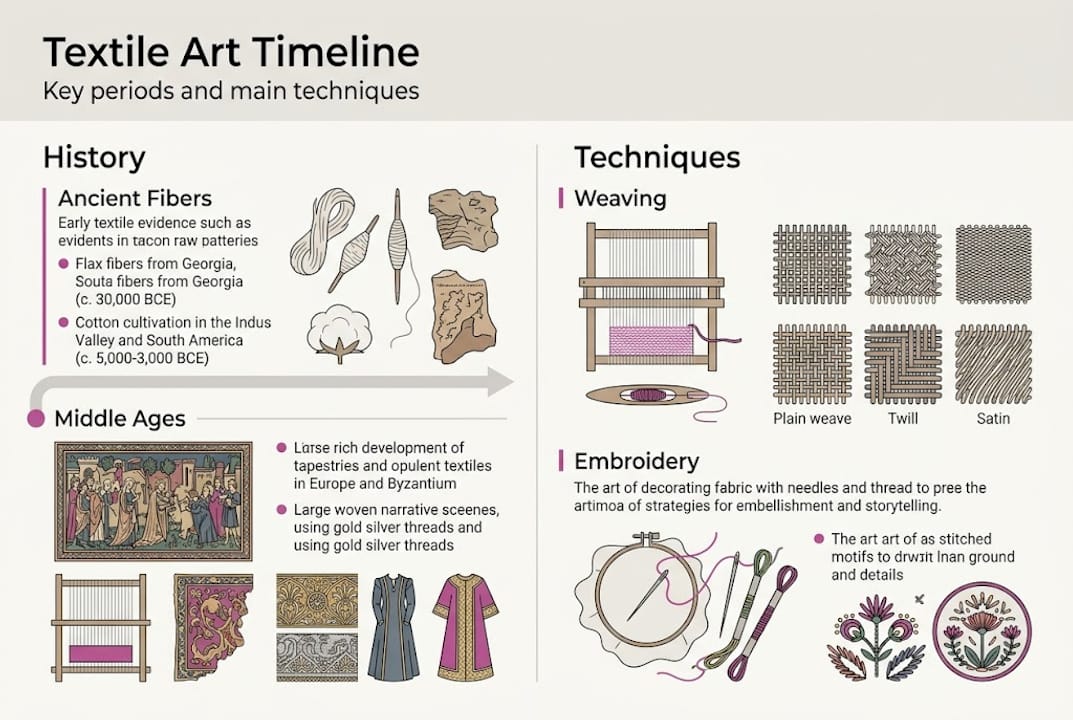
Textile art has a 5,000-year history, with evidence dating to 27,000 BC, including clay impressions of woven fibers found at archaeological sites. Ancient Egypt, China, and Peru all developed sophisticated textile traditions. These were not just practical objects. They were records of status, belief, and identity.
| Period | Key development | Significance |
|---|---|---|
| 27,000 BC | Clay impressions of woven fiber | Earliest evidence of textile making |
| Middle Ages | European tapestries (e.g., Bayeux Tapestry) | Narrative storytelling through weaving |
| Renaissance | Lace-making in Italy and Belgium | Textile as luxury and status symbol |
| 18th to 19th century | Industrial revolution and mechanized looms | Mass production shifts textile from art to commodity |
| Post-WWII | Artists reclaim fiber as fine art medium | Textile enters gallery and museum spaces |
| 1960s to 1970s | Fiber Art Movement in the USA and Europe | Formal recognition of textile as contemporary art |
| 2000s to present | Digital embroidery, installations, sustainability | Textile art integrates technology and social themes |
For centuries, textile work was labeled as “women’s work” and excluded from serious art discourse. That art-craft hierarchy kept fiber-based work out of museums and critical conversation. The Fiber Art Movement of the 1960s and 1970s directly challenged that bias, with artists like Anni Albers and Lenore Tawney arguing that weaving and fiber work deserved the same critical attention as painting or sculpture.
Exploring wearable art’s history reveals how textile traditions across non-Western cultures were often overlooked in this narrative, even though they were technically and conceptually advanced.
Pro Tip: When looking for creative inspiration, study textile traditions from cultures that are less covered in mainstream art history, such as Andean weaving, Japanese shibori dyeing, or West African kente cloth. These traditions offer rich visual languages and technical approaches that are genuinely distinct.
Techniques and materials: The art toolbox
The influence of history is visible in the diversity of modern textile methods. Core techniques include weaving, knitting, embroidery, quilting, felting, dyeing, and more, each with its own visual character and learning curve.
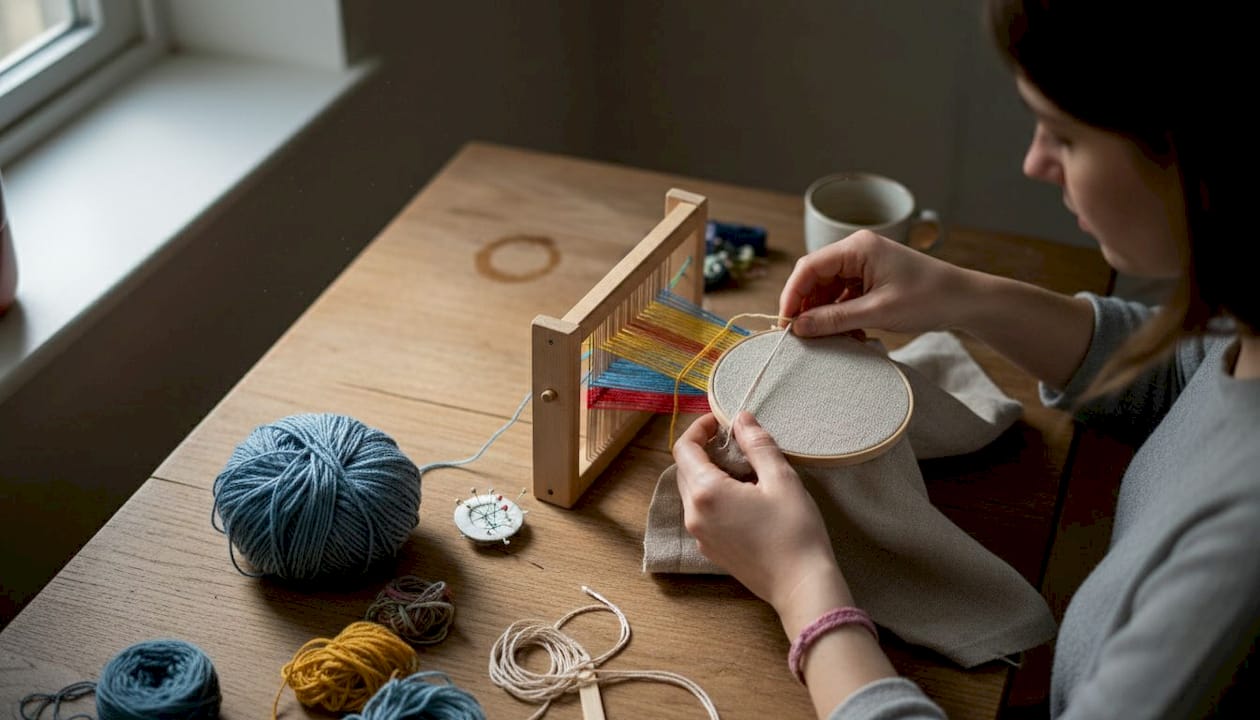
| Technique | Accessibility | Visual style | Best for |
|---|---|---|---|
| Embroidery | Beginner-friendly | Detailed, painterly | Portraiture, pattern, mixed media |
| Weaving | Moderate | Structured, geometric | Wall hangings, abstract compositions |
| Felting | Easy to start | Textured, organic | Sculptural forms, abstract work |
| Quilting | Moderate | Graphic, layered | Large-scale pattern, narrative work |
| Dyeing (shibori, batik) | Moderate | Fluid, unpredictable | Surface design, abstract color work |
| Digital embroidery | Requires equipment | Precise, repeatable | Commercial and conceptual hybrid work |
Materials encompass both naturals like cotton, wool, and silk, and synthetics like nylon and polyester. Each material behaves differently. Wool felts easily and holds shape. Silk takes dye with exceptional vibrancy. Cotton is forgiving and widely available. Synthetic fibers offer durability and can be heat-formed into sculptural structures.
To choose a starting point, follow this sequence:
- Identify your goal. Are you making a wall piece, a wearable, or a sculptural form?
- Choose a base material. Natural fibers are easier to work with by hand. Synthetics suit machine or mixed-media work.
- Select a technique. Match the technique to your skill level and the visual effect you want.
- Test on a small scale. Work a sample before committing to a large piece.
- Layer and combine. Many strong textile artworks combine two or more techniques.
Current trends worth noting include fabric sculpting, where artists build three-dimensional forms from stiffened or layered textiles, and sustainability-driven practice, where artists use only reclaimed or natural materials. See examples of textile art prints for visual reference on how these techniques translate into finished works. Understanding the role of texture in textile art also helps when evaluating which technique will produce the surface quality you are after.
Contemporary textile art: Innovations, identities, and social impact
With tools and techniques in mind, it is essential to see how today’s artists are breaking new ground and connecting textile art with larger cultural conversations.
Contemporary innovations include installations, thread paintings, digital embroidery, and recycled materials. Artists like Sheila Hicks create room-scale fiber installations that transform architectural space. Her work uses color, scale, and material density to produce an almost overwhelming sensory experience. That is not craft. That is sculpture.
Contemporary textile artists are also addressing urgent themes:
- Sustainability: Artists use organic, reclaimed, and biodegradable materials to comment on environmental consumption. Exploring sustainable textile art shows how this practice connects to broader eco-conscious art movements.
- Gender and labor: Fiber work’s historical association with domestic labor is reframed as a subject of critique and reclamation.
- Heritage and identity: Artists from diaspora communities use traditional textile methods to preserve and reinterpret cultural memory.
- Social change: Collective textile projects, like protest banners or community quilts, use the medium as a form of public voice.
Textile art is now regularly shown in major institutions. The Tate Modern, the Metropolitan Museum of Art, and the Smithsonian all hold significant textile collections. This institutional recognition signals that the medium has fully arrived in the fine art world.
Pro Tip: Join local fiber arts guilds or follow textile art hashtags on social platforms. Online communities share techniques, critique work, and announce exhibitions. Engaging with these groups accelerates learning and connects you to a global network of practitioners.
How to experience and start with textile art
Understanding textile art is most rewarding when you put knowledge into action. Textile art is accessible both as craft and as fine or conceptual art, which means there are multiple entry points depending on your interest.
Here are practical ways to get involved:
- Visit exhibitions. Look for textile art in museum permanent collections and temporary shows. Many galleries now dedicate space to fiber-based work.
- Start a small project. Buy an embroidery kit or gather fabric scraps and experiment with simple stitching or collage.
- Take a workshop. Local craft centers, art schools, and community colleges often run short courses in weaving, dyeing, or embroidery.
- Explore online resources. Video tutorials, artist interviews, and technique guides are widely available at no cost.
- Start collecting. Acquiring even one small textile artwork connects you to the tradition as a patron and supporter.
When starting as a maker, focus on:
- A basic embroidery hoop, needle, and thread for immediate results
- Fabric scraps or an old garment for collage and appliqué experiments
- Natural dye materials like onion skins or turmeric for surface design
- Sketchbooks for planning compositions before working in fiber
For gift ideas that connect to textile art culture, browse art gift ideas for options that suit collectors and creative practitioners alike. If you are ready to bring textile-inspired art into your space, wall art print options offer an accessible starting point for building a collection.
Our take: Why textile art belongs at the center of creative evolution
Textile art has spent centuries being dismissed. It was called domestic, decorative, minor. That dismissal was never about the work itself. It was about who made it and where it was made. Fiber work done by women in homes was systematically excluded from the same critical frameworks applied to oil painting done by men in studios.
That history matters because it reveals something important: the boundaries of “fine art” are not neutral. They reflect power. Recognizing textile art’s potential means recognizing that the most innovative creative work often comes from traditions that were overlooked.
Textile art also does something unique. It is tactile, labor-intensive, and deeply human. Every stitch records time and intention. That quality makes it one of the most honest art forms available. For anyone serious about creative practice, ignoring textile art means ignoring a significant part of art history and a genuinely powerful set of tools.
Explore unique textile-inspired art for your space
If this guide has sparked your interest in textile art, there are immediate ways to bring that energy into your environment. Eman’s Gallery offers original handmade paintings and museum-quality canvas prints that echo the textures, layering, and color relationships found in fine textile work.
Browse the full range of wall art prints to find pieces that reflect the visual language of contemporary textile art. For a specific example of layered, tactile-inspired work, the Fragments of Memory canvas print captures that quality directly. Worldwide shipping is available from multiple locations including the UK, USA, and UAE.
Frequently asked questions
Is textile art considered fine art or craft?
Textile art bridges craft and fine art, combining traditional skills with conceptual expression. It is increasingly shown in major museums and galleries alongside painting and sculpture.
What are some examples of famous textile artworks?
Notable works include the Bayeux Tapestry, Sheila Hicks’s fiber installations, and Renaissance lace. These span functional, decorative, and conceptual categories across different historical periods.
How do I start creating textile art as a beginner?
Begin with an embroidery kit, yarn, or fabric scraps. Core techniques like embroidery and simple weaving are approachable starting points that require minimal equipment.
Why is textile art important in contemporary culture?
Textile art addresses themes including identity, sustainability, and social change. Its contemporary innovations and social themes place it at the center of current artistic and cultural conversations.
Where can I view inspiring textile art today?
Museums and galleries now regularly showcase textile art, and online exhibitions and specialized art websites offer accessible ways to explore the medium from anywhere in the world.
Recommended
- 7 Inspiring Examples of Textile Art Prints for Designers - Eman’s Gallery
- Exploring wearable art: meaning, history, and frontiers
- Printmaking Techniques: Elevating Artistic Expression
- Textured Artwork: Styles, Techniques & Uses - Eman’s Gallery
Stay Connected
- Explore Eman's Gallery Original Mini-Art Cards, hand-painted by Eman Khalifa
- ✨ Explore Eman Khalifa’s original art, fine art prints & art merchandise
- 📸 Follow Eman Khalifa’s art journey on: Instagram @emans_gallery and Facebook Eman’s Gallery
- 📹 Watch Eman Khalifa creating live art on: YouTube @emans_gallery
