


Exploring wearable art: meaning, history, and frontiers
TL;DR:
- Wearable art is unique, concept-driven, and sculpture-like, made to express ideas on the body.
- Artists use unconventional materials and technologies like LEDs, 3D printing, and bio-sensors.
- It evolved from 1960s counterculture and now includes competitions, museum shows, and digital innovations.
Most people think of art as something framed and fixed to a wall. Wearable art breaks that assumption completely. It is artwork made to be worn on the body, combining sculptural form, conceptual depth, and materials that range from recycled plastic to embedded LEDs. Over the past decade, wearable art has moved from niche gallery events into mainstream cultural conversation, appearing at major museums, international competitions, and on the bodies of artists who treat clothing as a canvas. This article covers the definition, techniques, historical roots, current controversies, and future directions of wearable art.
Table of Contents
- What is wearable art? Definition and core characteristics
- Techniques and materials: Tradition meets innovation
- The evolution of wearable art: History and key movements
- Controversies, boundaries, and the future of wearable art
- Why wearable art matters more than ever
- Discover and support unique art with Eman’s Gallery
- Frequently asked questions
Key Takeaways
| Point | Details |
|---|---|
| Wearable art redefines boundaries | It turns artistic expression into something you can actually wear, blending art and fashion. |
| Materials span tradition to tech | Creators use everything from fabric and metal to LEDs and 3D printing in wearable art. |
| History rooted in rebellion | Wearable art emerged as a reaction to mass production and now thrives internationally. |
| Debate drives innovation | Ongoing discussions about art vs. function create space for new forms and technologies. |
| Experience it through exhibitions | Museum showcases and global competitions offer direct encounters with wearable masterpieces. |
What is wearable art? Definition and core characteristics
The term sounds simple, but the concept is layered. As World of WearableArt defines it, wearable art is “artwork created to be worn on the body rather than hung on a wall.” That single distinction carries enormous implications for how a piece is designed, experienced, and judged.
Wearable art is not fashion. It is not costume. It occupies its own category entirely. Where mainstream fashion prioritizes function, trend cycles, and scalable production, wearable art prioritizes expression and one-of-a-kind creation. Each piece is typically made for a single wearer or a single moment. It is not reproduced. It is not sold in department stores.
Core characteristics that define wearable art include:
- One-of-a-kind construction: No two pieces are identical. The work is handmade and singular.
- Concept-driven design: The piece communicates an idea, emotion, or narrative. The concept comes first; wearability is secondary.
- Sculptural quality: Wearable art often extends beyond the body, uses unexpected structure, or transforms the silhouette in dramatic ways.
- Material experimentation: Artists use unconventional materials that would never appear in standard garment production.
- Body interaction: The piece responds to or comments on the human form, movement, or identity.
“Wearable art is not about what you wear. It is about what you say when you wear it.” World of WearableArt
This is what separates a hand-painted jacket from a true wearable art piece. The jacket may be beautiful, but if it follows fashion logic, it is not wearable art. A wearable art piece challenges the viewer, provokes a reaction, and often could not function as everyday clothing at all.
For collectors and art enthusiasts, this distinction matters. Brands like Eman’s Gallery bridge the gap with signature art merchandise that brings original artwork directly onto wearable surfaces. Pieces like the Fragments of Memory sweatshirt and the Fragmented Soul T-shirt show how fine art imagery translates into wearable form without losing its conceptual identity.
Techniques and materials: Tradition meets innovation
Now that you know what wearable art is, let’s explore how artists construct these pieces and what makes the process so innovative.
The range of materials used in wearable art is one of its most striking features. Key methodologies include unconventional materials, textile manipulation, and technology integration. Artists regularly work with:
- Metal and wire for structural armatures and sculptural extensions
- Natural fibers including wool, silk, and plant-based textiles for hand-weaving and embroidery
- Found objects such as bottle caps, circuit boards, and discarded industrial parts
- Plastics and resins molded into rigid forms that interact with the body
- E-textiles and LEDs that respond to movement, sound, or temperature
- 3D-printed components allowing precise geometric forms impossible by hand
- Smart fabrics and biosensors that change color or pattern based on biometric data
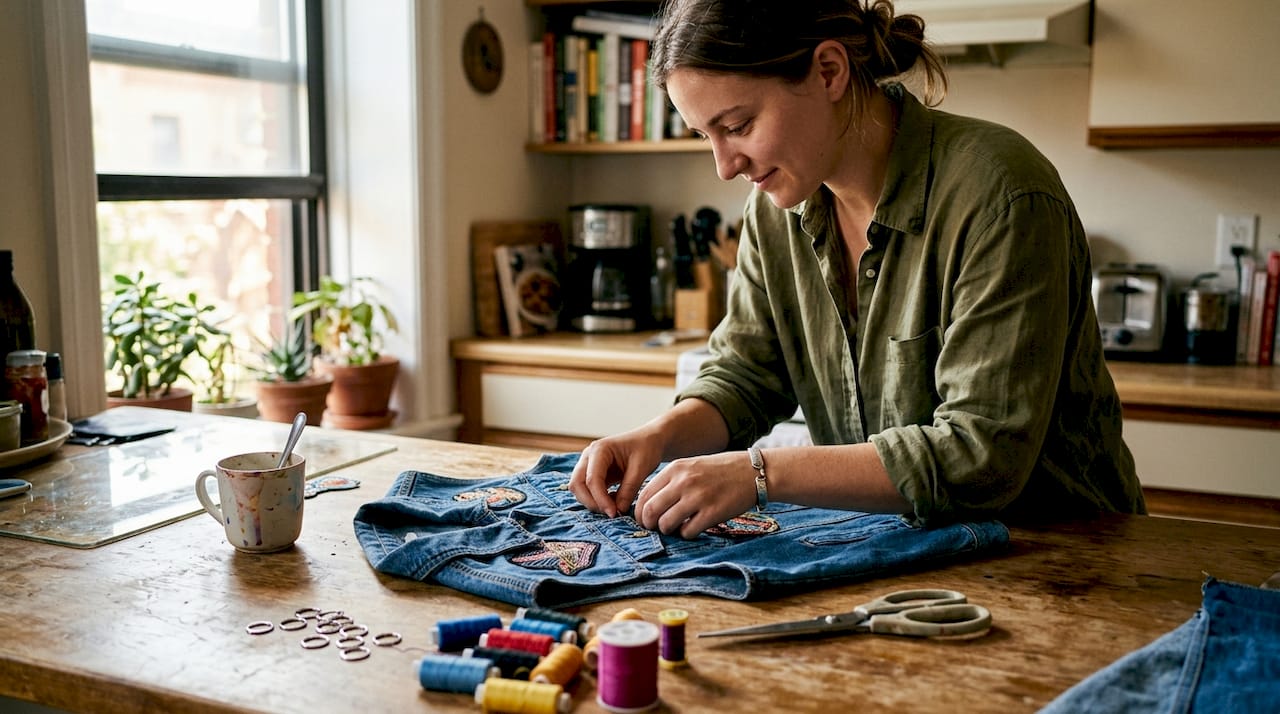
Traditional crafts like embroidery, knitting, and weaving are not abandoned in this field. They are reimagined. An artist might hand-embroider a piece with 400 hours of labor, then embed a microcontroller that makes it pulse with light. The craft becomes the foundation; the technology becomes the statement.
| Technique | Classic application | Innovative application |
|---|---|---|
| Embroidery | Decorative textile patterns | Data visualization stitched into fabric |
| Knitting | Functional garments | Structural 3D forms worn as sculpture |
| Metalwork | Jewelry and accessories | Full-body armatures and kinetic wearables |
| Dyeing | Color application to fabric | Thermochromic dyes that shift with body heat |
| Printing | Surface pattern on fabric | AI-generated imagery on smart textiles |
Pro Tip: If you are an artist integrating technology into wearable pieces, always prototype the structural load first. A battery pack or LED array adds unexpected weight and changes how a piece moves on the body. Construction quality is as important as the concept.
For those interested in how sustainability intersects with creative materials, the sustainable art guide offers practical context on eco-conscious material choices.
The evolution of wearable art: History and key movements
Understanding the creative process is richer when we consider where wearable art came from and how it has been celebrated worldwide.
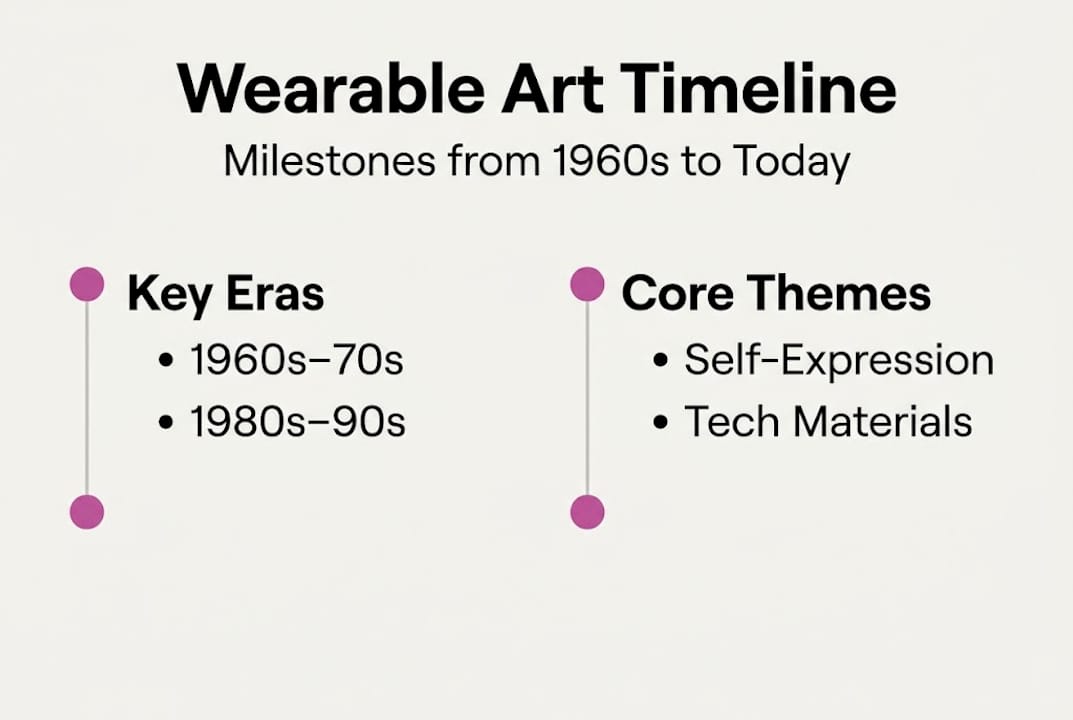
Wearable art did not emerge from fashion schools or luxury ateliers. Its origins trace to 1960s and 1970s counterculture, when artists and activists rejected mass-produced clothing as a symbol of conformity. They began making garments as protest, as identity, and as fine art. The body became a moving gallery.
Key milestones in wearable art history include:
- 1960s: Yayoi Kusama and others use clothing and body paint as artistic performance
- 1970s: Feminist artists reclaim textile crafts as serious fine art, not domestic labor
- 1987: World of WearableArt (WOW) founded in New Zealand by Suzie Moncrieff, formalizing wearable art as a competitive discipline
- 1990s: Wearable art enters museum collections and academic art programs globally
- 2000s: Technology integration accelerates; Hussein Chalayan pioneers tech-embedded garments on international runways
- 2010s: 3D printing and open-source electronics make wearable tech accessible to independent artists
- 2020s: AI-generated designs, NFT-linked wearables, and upcycled materials define the current wave
| Decade | Dominant materials | Core themes |
|---|---|---|
| 1960s-1970s | Natural fibers, paint, found objects | Protest, identity, anti-consumerism |
| 1980s-1990s | Mixed media, metals, plastics | Formalization, museum entry, competition |
| 2000s-2010s | Tech fabrics, electronics, 3D print | Innovation, performance, spectacle |
| 2020s | Upcycled, AI, biosensors | Sustainability, digital fusion, activism |
The WOW show is now a global benchmark. It draws over 60,000 attendees and 100+ finalists annually, making it the largest wearable art event in the world. Museum exhibitions have followed. The Colorwear exhibition at Phoenix Art Museum is one example of how institutions now treat wearable art with the same seriousness as painting or sculpture.
For those tracking the gallery side of this movement, wearable art exhibitions and recent exhibition highlights document how contemporary artists are presenting work in this space.
Controversies, boundaries, and the future of wearable art
With a strong history and technical backbone, the field itself is still evolving, as are the debates about its definition and boundaries.
The most persistent debate in wearable art is definitional. Some view it as pure sculpture, others as a technology and fashion fusion. Both positions are defensible. A piece that cannot be worn without a structural team assisting the wearer is arguably closer to installation art. A smart jacket that changes color based on your mood is arguably closer to product design.
Current controversies and trends shaping the field:
- Jewelry as sculpture: Artists like Eleanor Moty and Thomas Gentille create jewelry viewed as wearable sculpture, raising questions about scale and intent
- Tech wearables: Smartwatches and biometric clothing blur the line between wearable art and consumer electronics
- NFT-linked pieces: Digital ownership of wearable art designs creates new collector categories with no physical object
- AI-generated designs: Innovations including AI and upcycling are pushing what counts as original authorship
- Fast fashion appropriation: Mass retailers copying wearable art aesthetics without crediting artists
- Performance dependency: Some pieces only exist as art during the performance or show; outside that context, they are inert objects
Pro Tip: If you are a collector navigating these gray areas, focus on the artist’s stated intent and the piece’s exhibition history. A work shown in a gallery context with a concept statement carries different weight than a decorative garment, regardless of how visually similar they appear.
For those interested in how these trends connect to broader collecting practices, modern abstract art trends and art-inspired gift ideas offer useful context on navigating contemporary art markets.
Why wearable art matters more than ever
Wearable art is not a niche interest. It is a direct response to some of the most pressing cultural conditions of our time.
Fast fashion produces over 100 billion garments annually. Most are worn fewer than five times. Wearable art is the structural opposite of this system. Each piece is singular, labor-intensive, and made to outlast trends. It forces the question: what is clothing actually for?
Beyond sustainability, wearable art operates in public space in a way that gallery paintings cannot. A person wearing a sculptural piece on a street corner reaches an audience that would never enter a museum. The body becomes a moving exhibition, accessible and immediate.
Creators in this field are not simply artists. They are researchers, engineers, and activists working at the intersection of craft, technology, and social commentary. The field rewards collecting trends in art that prioritize meaning over decoration.
For anyone curious about this space, the entry point does not have to be a competition piece or a museum acquisition. Supporting artists who bring genuine concept and craft to wearable surfaces is a meaningful starting point.
Discover and support unique art with Eman’s Gallery
If the ideas behind wearable art have sparked your interest in owning art that goes beyond the wall, Eman’s Gallery offers a direct path to explore that.

Eman’s Gallery features original handmade paintings by artist Eman Khalifa alongside art-printed merchandise that carries the same conceptual integrity as the original works. The signature art merchandise collection includes t-shirts, hoodies, tote bags, and more, each printed with artwork that holds its own as a visual statement. For those who want to display and wear the same artistic vision, the Fragments of Memory canvas print pairs naturally with wearable pieces from the same series. Worldwide shipping is available from the UK, USA, Canada, Australia, and more.
Frequently asked questions
What makes wearable art different from regular fashion?
Wearable art prioritizes expression and one-of-a-kind design, while fashion focuses on function, trend cycles, and mass production. The two fields share materials but operate under entirely different values.
Where can I experience wearable art in person?
Major venues include the World of WearableArt show in New Zealand and museums such as the Phoenix Art Museum, the Seoul Museum of Craft Art, and the Metropolitan Museum of Art in New York.
Can wearable art be made from recycled materials?
Yes. Upcycling and unconventional materials are among the most active areas of innovation in wearable art, with artists using everything from discarded electronics to reclaimed textiles.
Is jewelry considered wearable art?
Some jewelry qualifies, particularly pieces viewed as wearable sculpture by artists like Eleanor Moty and Thomas Gentille, where the intent is sculptural and conceptual rather than decorative.
How is wearable art judged at competitions?
At events like the WOW show, judges evaluate construction quality and sculptural form alongside originality, material creativity, and the piece’s ability to hold up through live performance conditions.
Recommended
- What is urban art? Complete guide for collectors
- What is sustainable art: A guide for eco-conscious collectors
- What Makes Art Valuable: Key Factors Explained - Eman’s Gallery
- Geometric Art Explained: Styles, History, and Uses - Eman’s Gallery
Stay Connected
- Explore Eman's Gallery Original Mini-Art Cards, hand-painted by Eman Khalifa
- ✨ Explore Eman Khalifa’s original art, fine art prints & art merchandise
- 📸 Follow Eman Khalifa’s art journey on: Instagram @emans_gallery and Facebook Eman’s Gallery
- 📹 Watch Eman Khalifa creating live art on: YouTube @emans_gallery
