


How to display tote bags for artistic home decor in 2026
Tote bags often end up crumpled on hooks or hidden in closets, yet they can serve as dynamic decor elements that complement contemporary art. When displayed thoughtfully, these functional accessories become sculptural accents that enhance your home’s aesthetic while keeping essentials organized. This guide reveals creative methods to transform tote bags into artful displays that harmonize with original paintings, prints, and curated interiors, turning everyday items into intentional design features.
Table of Contents
- What You Need To Prepare For Displaying Tote Bags As Art
- Step-By-Step Methods To Display Tote Bags That Complement Contemporary Art
- Common Challenges And Tips To Keep Your Tote Bag Display Stylish And Lasting
- How To Integrate Tote Bags Seamlessly With Your Contemporary Art Collection
- Discover Original Art And Accessories To Complement Your Tote Bag Displays
- Frequently Asked Questions
Key takeaways
| Point | Details |
|---|---|
| Wall hooks and peg racks | Staggered heights create visual interest and flexible displays |
| Color and theme grouping | Arrange bags by palette or pattern to harmonize with existing art |
| Decorative filling | Maintain bag shape and add layered interest with greenery or ornaments |
| Vintage display items | Repurposed ladders or rustic racks provide unique, sculptural presentations |
| Space considerations | Match display method to room size and wall strength limitations |
What you need to prepare for displaying tote bags as art
Before mounting your first bag, assess your wall structure and available space. Drywall requires anchors for heavier bags, while plaster walls may need specialized hardware. Measure your display area to determine how many bags you can showcase without overwhelming the space. Consider sight lines from doorways and seating areas to ensure your display enhances rather than clutters your room’s flow.
Gather essential materials based on your chosen display method. Wall-mounted hooks and peg racks serve as primary display tools, letting you stagger heights for dynamic visual impact. Purchase hooks rated for at least twice your heaviest bag’s weight to prevent wall damage. For renters, adhesive hooks offer damage-free alternatives, though weight capacity remains crucial. Floating shelves, vintage ladders, or DIY wooden racks provide additional options that suit different aesthetic preferences.
Select decorative filler items that maintain bag structure while adding visual interest. Faux greenery, seasonal ornaments, rolled textiles, or lightweight books work well. Choose fillers that echo colors in your designer tote bags or nearby artwork. Avoid overstuffing, which creates bulky silhouettes, or leaving bags empty, which results in collapsed, unappealing shapes.
Pro Tip: Group bags by color family or pattern style before installation. Lay them on the floor in potential arrangements to preview how they’ll interact with your wall art and furniture. Odd numbers (three or five bags) typically create more balanced, gallery-worthy compositions than even groupings.
Essential preparation checklist:
- Wall anchors or adhesive hooks appropriate for your surface type
- Measuring tape and level for precise placement
- Decorative filler items matching your room’s color scheme
- Lighting plan to highlight your display after dark
- Photo of your space to test virtual arrangements
| Display Method | Best For | Weight Capacity | Installation Difficulty |
|---|---|---|---|
| Adhesive hooks | Renters, lightweight bags | Up to 3 lbs per hook | Easy |
| Screw-in hooks | Permanent displays, heavier bags | 10+ lbs per hook | Moderate |
| Peg racks | Multiple bags, flexible arrangements | Varies by model | Moderate |
| Floating shelves | Folded displays, mixed decor | 15-30 lbs | Moderate to difficult |
| Vintage ladders | Statement pieces, rustic themes | Depends on structure | Easy |
Plan lighting to enhance your display’s impact. Natural light showcases colors beautifully but risks fading over time. Position displays perpendicular to windows rather than directly opposite them. Add picture lights or track lighting to create evening focal points that unify bags with nearby paintings or prints.
Step-by-step methods to display tote bags that complement contemporary art
Start with the foundational hook method that works in virtually any space. Install hooks at varying heights along a wall section, spacing them 12 to 18 inches apart horizontally. Hang bags so straps drape naturally, creating rhythm through repetition. Stagger vertical placement by 4 to 6 inches between adjacent hooks to avoid monotonous horizontal lines. This layered approach mimics gallery wall techniques used for framed art.
DIY wooden racks with custom hooks offer personalized solutions that match your room’s aesthetic perfectly. Cut a wood plank to desired length, sand smooth, and finish with paint or stain that complements your wall color and nearby furniture. Attach decorative hooks at regular intervals, then mount the rack securely. This unified approach creates intentional design rather than random hook placement, elevating tote bags to curated decor status.
Repurpose vintage items for unexpected sculptural displays. Ladders or vintage items like planter hangers create rustic focal points without overwhelming your space. Lean a wooden ladder against the wall, draping bags over rungs at different levels. Old coat racks, wall-mounted bicycle racks, or salvaged window frames with added hooks provide similar effects. These pieces function as art themselves while showcasing your bag collection.
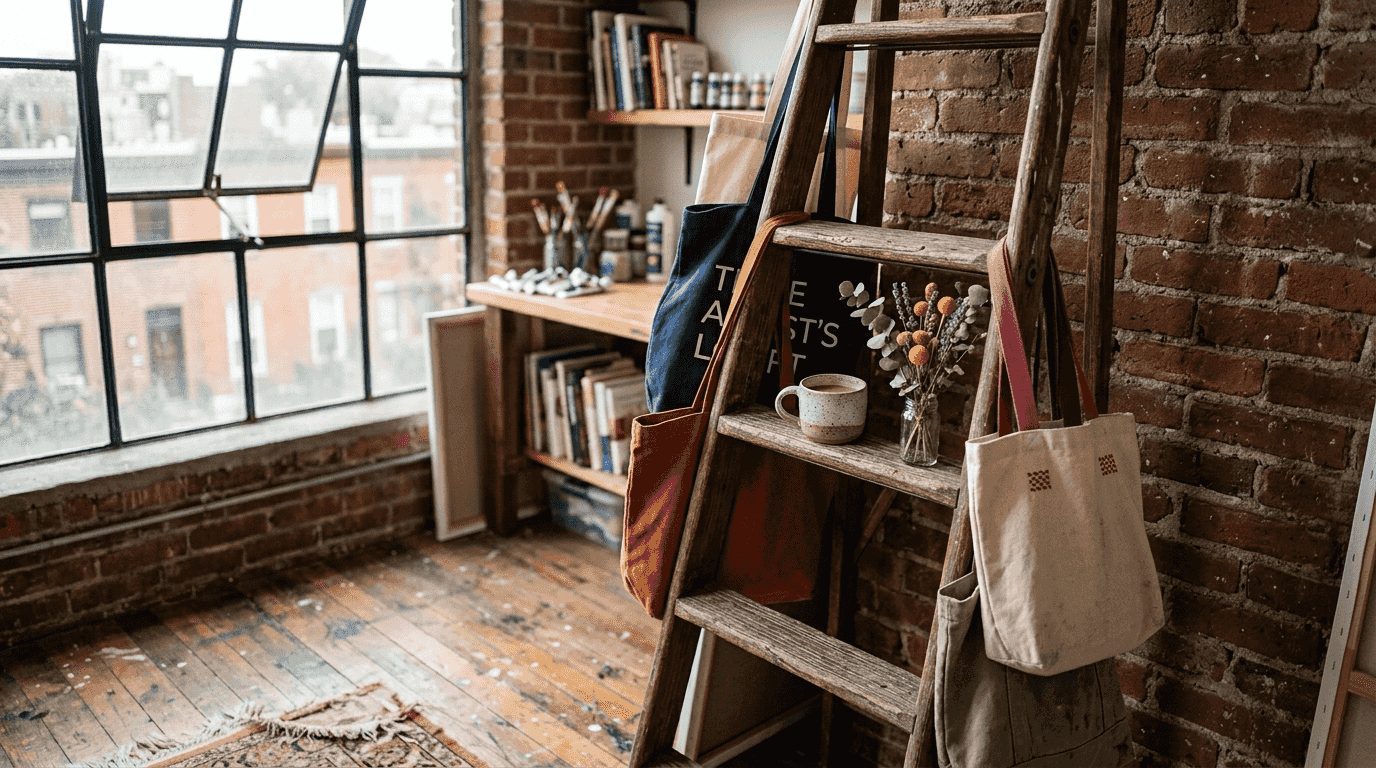
Pro Tip: Apply the rule of three when grouping bags by color or pattern. Select bags in analogous colors (neighbors on the color wheel) or complementary pairs for maximum visual harmony. For example, display three bags in varying shades of blue near a gallery wall style arrangement featuring cool-toned paintings.
Thematic grouping techniques:
- Monochromatic displays using bags in different shades of one color
- Pattern mixing with varying scales (large florals with small geometrics)
- Seasonal rotations featuring holiday or weather-appropriate designs
- Artist collaborations showcasing bags like the organic life tote near related paintings
- Texture contrasts pairing canvas, leather, and woven materials
Fill bags strategically to maintain appealing shapes and add dimensional interest. Stuff faux eucalyptus stems into tall bags for organic movement. Tuck wrapped packages or decorative boxes into wider totes during holidays. Roll coordinating throw blankets and nestle them inside bags displayed on shelves. These fillers prevent sagging while introducing additional textures and colors that bridge bags with surrounding decor.
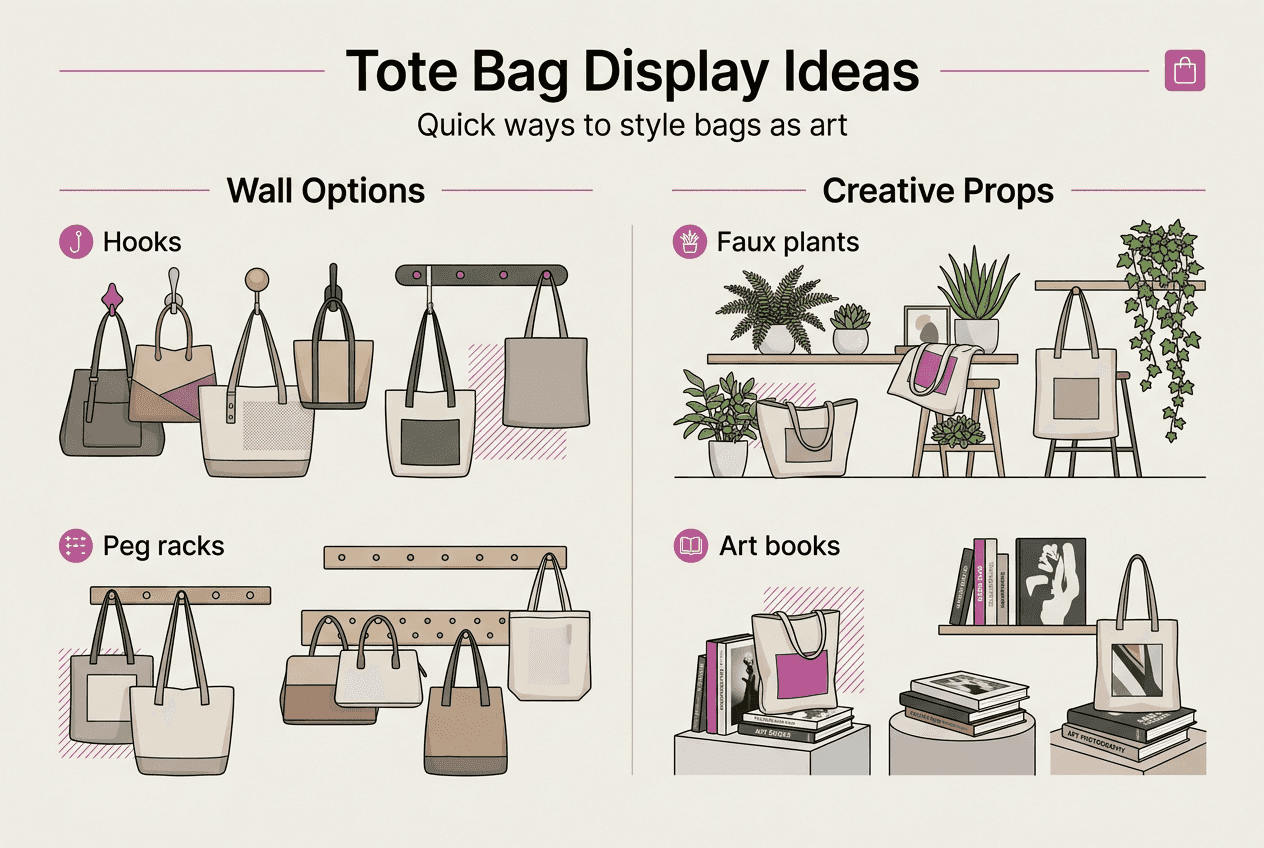
Create dynamic vignettes by combining bags with other decorative objects. Place a filled tote on a floating shelf alongside small sculptures, framed photos, or potted plants. Hang bags near but not touching framed art, using the negative space between them to create visual breathing room. Consider displaying a vibrant solar burst tote adjacent to abstract paintings that share similar color palettes or energy.
| Display Technique | Visual Effect | Best Room Type | Maintenance Level |
|---|---|---|---|
| Staggered wall hooks | Dynamic, gallery-like | Entryways, bedrooms | Low |
| DIY wooden rack | Unified, intentional | Living rooms, studios | Low |
| Vintage ladder lean | Rustic, sculptural | Bohemian spaces | Medium |
| Floating shelf arrangement | Curated, museum-style | Modern interiors | Medium |
| Peg rack grid | Organized, flexible | Closets, mudrooms | Low |
Integrate lighting to unify your bag display with nearby artwork. Install battery-operated picture lights above key bags or position track lighting to wash the entire display wall. Warm white bulbs (2700-3000K) create cozy ambiance, while daylight bulbs (5000K+) showcase true colors. Dimmer switches let you adjust intensity based on time of day or mood.
Common challenges and tips to keep your tote bag display stylish and lasting
Sunlight exposure poses the primary threat to displayed tote bags, causing colors to fade and fabrics to weaken. Position displays on walls perpendicular to windows rather than opposite them. If south-facing walls are unavoidable, install sheer curtains or UV-filtering window film to diffuse harsh rays. Fill bags with decorative items and avoid direct sunlight to maintain vibrant colors and structural integrity over time.
Wall damage from inadequate hardware ruins both your display and your space. Calculate total weight before installation, accounting for bag fabric, straps, and any filler items. Heavier bags need sturdy hooks anchored into wall studs or secured with appropriate drywall anchors. Test each hook with weight slightly exceeding your heaviest bag before hanging your collection. For plaster walls, use specialized anchors designed for that material’s unique properties.
Small spaces demand creative solutions that maximize vertical real estate without cluttering sightlines. Over-door hooks utilize otherwise wasted space, perfect for studio apartments or compact entryways. Floating shelves mounted above eye level display folded bags alongside books or plants, drawing the gaze upward and making rooms feel larger. Corner-mounted peg racks transform awkward angles into functional display zones.
Pro Tip: Rotate displayed bags seasonally to prevent permanent fading and keep your decor fresh. Store off-season bags in breathable cotton dust covers inside closets, bringing them out when colors and themes suit changing weather or holidays. This rotation extends each bag’s display life while giving you regular opportunities to refresh your interior aesthetic.
Maintenance best practices:
- Dust bags monthly with a soft brush or lint roller
- Spot clean stains immediately with appropriate fabric cleaner
- Inspect hooks quarterly for loosening or wall damage
- Refresh filler items when they become dusty or faded
- Reposition bags annually to prevent strap creases
“Display only your absolute favorites. Treating tote bags like curated art rather than utilitarian storage transforms them from clutter into intentional design elements that enhance your home’s sophisticated aesthetic.”
Address strap creasing by alternating how bags hang. Fold straps over hooks differently each time you rehang bags, distributing stress across various points. For bags displayed long-term, stuff rolled tissue paper into straps to maintain their shape and prevent permanent fold lines that detract from the display’s polished appearance.
Balance your bag display with surrounding decor to avoid overwhelming your space. If walls feature bold, colorful paintings, choose neutral or monochromatic bags that provide visual rest. Conversely, if your art leans minimal or monochrome, vibrant patterned bags inject energy and personality. This push-pull relationship creates sophisticated interiors where every element serves a purpose.
How to integrate tote bags seamlessly with your contemporary art collection
Curate your displayed bags with the same discernment you apply to selecting artwork. Edit ruthlessly and layer with heights and textures to create gallery-worthy presentations. Display only bags that spark joy, feature exceptional design, or hold sentimental value. This selective approach prevents your display from reading as mere storage, elevating it to intentional decor that reflects your aesthetic sensibility.
Integrate bag displays directly into gallery walls for maximum cohesion. Hang bags within the same visual field as framed paintings, treating them as three-dimensional elements in your overall composition. Space bags to maintain consistent margins between artwork, typically 2 to 4 inches. This integration signals that bags belong in your curated collection rather than existing as afterthoughts.
Gallery integration techniques:
- Anchor corners of gallery walls with statement bags in bold colors
- Create visual triangles by positioning three bags at varying heights
- Use bags to bridge disparate artwork styles or color families
- Position bags at eye level (57-60 inches from floor) like museum art
- Maintain consistent spacing ratios between bags and framed pieces
Select mounting hardware that complements rather than competes with your art. Neutral mounts like wood or metal hooks provide understated support that lets bags and paintings shine. Brass hooks suit warm-toned interiors with gold-framed art, while matte black hardware enhances modern spaces featuring stark contemporary pieces. Avoid ornate or brightly colored hooks that draw attention away from your actual collection.
Layer textures and materials to add depth to your display. Pair canvas tote bags with oil paintings on linen, or position leather bags near mixed-media pieces incorporating similar materials. This material conversation creates subtle connections that sophisticated viewers notice and appreciate. Consider how bag straps drape and interact with wall texture, using these details to enhance your overall composition.
Pro Tip: Photograph your display from multiple angles and distances. Review images to identify awkward spacing, color clashes, or areas lacking visual weight. Adjust placement based on photographic evidence rather than in-person impressions, as cameras often reveal compositional issues invisible to the naked eye.
Incorporate directional lighting to create focal emphasis and unify disparate elements. Position adjustable track lights to highlight both key artworks and featured bags, using similar light intensity for each. This equal treatment signals that bags deserve the same attention as paintings. Alternatively, use picture lights on select bags to create dramatic shadows that add sculptural dimension.
Align your bag display with the visual rhythm established by your art collection. If paintings follow a symmetrical arrangement, mirror that structure with evenly spaced bags. For asymmetrical gallery walls embracing gallery walls popularity and organic layouts, let bags flow naturally across the wall. Consistency in approach prevents visual chaos while allowing individual pieces to maintain distinct identities.
Color coordination strategies:
- Match bag hues to accent colors in nearby paintings
- Use neutral bags as palate cleansers between vibrant artworks
- Create ombre effects by arranging bags from light to dark
- Echo geometric patterns from abstract art in bag designs
- Introduce complementary colors for dynamic tension
Consider scale relationships between bags and artwork. Oversized totes can overwhelm small prints, while tiny pouches disappear beside large-scale paintings. Aim for proportional balance where bag sizes relate logically to surrounding art dimensions. Group smaller bags together to create visual weight equivalent to larger individual pieces.
Discover original art and accessories to complement your tote bag displays
Once you’ve mastered displaying tote bags as artistic home decor, consider how original paintings and art merchandise can further elevate your space. Pieces like good tidings original offer vibrant focal points that harmonize with thoughtfully arranged bag displays, creating cohesive interiors where every element contributes to your aesthetic vision.
Explore signature art merchandise that bridges functional accessories with fine art sensibilities. From museum-quality prints to artist-designed home goods, these pieces extend your creative vision throughout your living spaces. Discover wall art prints in various sizes that anchor gallery walls while complementing your curated tote bag arrangements, transforming everyday spaces into personal art galleries.
Frequently asked questions
What is the best way to hang tote bags without damaging walls?
Use hooks specifically rated for your bag’s weight, installing them into wall studs whenever possible for maximum support. For drywall, choose anchors appropriate to the load, and for renters, adhesive hooks rated for the bag’s weight offer damage-free alternatives. Space multiple hooks at least 12 inches apart to distribute weight and prevent concentrated stress that cracks plaster or tears drywall.
How can I prevent my tote bags from fading when displayed?
Position displays away from direct sunlight, choosing walls perpendicular to windows rather than opposite them. Rotate bags seasonally between display and storage to limit cumulative sun exposure. Install UV-filtering window film or sheer curtains on south-facing windows to diffuse harsh rays while maintaining natural light in your space.
What are creative fillers to keep tote bags shaped and visually interesting?
Faux greenery like eucalyptus or ferns adds organic movement and maintains bag structure beautifully. Rolled throw blankets, wrapped decorative boxes, or lightweight books provide substance while introducing complementary colors and textures. Choose fillers that echo your room’s palette and the bag’s design aesthetic, avoiding overstuffing that creates bulky, unappealing silhouettes.
Can I display tote bags in small spaces effectively?
Over-door hooks and narrow floating shelves maximize vertical space without consuming valuable floor area in compact rooms. Choose smaller bags or limit displays to three carefully curated pieces that make intentional statements rather than cluttering limited wall space. Corner-mounted peg racks transform awkward angles into functional displays, and leaning vintage ladders provide vertical storage with minimal footprint.
Recommended
- 7 Innovative Interior Art Display Ideas for Modern Homes - Eman’s Gallery
- Tote Bag - Solar Burst - Colourful Geometric Abstract - Eman’s Gallery
- Tote Bag - Organic Life - Abstract Colorful Geometric - Eman’s Gallery
- Art Tote Bag - In The Wine Glass - Geometric Abstract - Eman’s Gallery
Stay Connected
- ✨ Explore Eman Khalifa’s original art and fine art prints
- 📸 Follow Eman Khalifa’s art journey on: Instagram @emans_gallery and Facebook Eman’s Gallery
- 📹 Watch Eman Khalifa creating live art on: YouTube @emans_gallery
