


Explore major modern art styles: Complete guide for collectors
TL;DR:
- Modern art spans diverse movements like Cubism and Surrealism, each offering unique visual languages and investment potential. When collecting, evaluate styles based on originality, visual impact, historical importance, personal resonance, and provenance to make informed decisions. Building a cohesive collection reflects genuine curiosity and personal taste more than market rankings or stylistic labels.
Modern art encompasses a wide range of movements and styles that developed from the late 19th century through the mid-20th century. For collectors and art enthusiasts, navigating this landscape can feel disorienting without a clear framework. According to Britannica’s authoritative overview, major modernist movements include Post-Impressionism, Fauvism, Cubism, Futurism, Vorticism, Constructivism, Suprematism, De Stijl, and Surrealism. This guide presents each style clearly, with practical comparison tools and actionable collecting strategies.
Table of Contents
- How to evaluate modern art styles for your collection
- Key modern art styles and their defining features
- Side-by-side comparison: Which modern art style fits your goals?
- Expert tips: How to start building a versatile modern art collection
- A collector’s perspective: Why your art journey matters more than the style
- Curate your own modern art collection with Eman’s Gallery
- Frequently asked questions
Key Takeaways
| Point | Details |
|---|---|
| Modern art diversity | Modern art includes a wide range of styles, each with unique features and histories. |
| Selection criteria matter | Choosing the right style depends on your taste, purpose, and investment interests. |
| Comparison aids decisions | Side-by-side comparisons make it easier to match art styles with collecting goals. |
| Expert strategy helps | Using expert tips makes it simpler and more enjoyable to build a modern art collection. |
How to evaluate modern art styles for your collection
Selecting art for a collection requires more than personal preference. A structured evaluation process helps collectors make informed decisions, whether the goal is personal enjoyment, interior design, or long-term investment.
Use the following criteria when assessing any modern art style:
- Originality. Does the style represent a significant departure from what came before? Original movements like Cubism and Suprematism broke entirely from traditional representation, giving them lasting historical weight.
- Visual impact. How does the work function in a physical space? Bold color fields in Fauvism read well at large scales. Geometric precision in De Stijl suits minimalist settings.
- Historical importance. Movements with documented influence on subsequent art history carry both cultural and investment value. The depth of scholarly attention to a style often correlates with market stability.
- Investment potential. Some movements consistently attract institutional buyers and auction interest. Understanding contemporary art investment benefits helps frame how modern art fits within a broader financial strategy.
- Personal resonance. A collector who genuinely connects with a work tends to make better long-term decisions. Reading about popular art genres across different movements can help clarify individual taste.
These five criteria function as a filter. Apply them consistently when viewing works, whether at galleries, online platforms, or art fairs.
Pro Tip: New collectors frequently make the mistake of buying based on color alone. While visual appeal matters, pairing it with historical context and provenance research prevents costly regrets later.
The 10 major modernist art movements identified by leading art historians form a reliable reference point for building this evaluative foundation. Knowing what each movement stood for makes comparison far more effective.
Key modern art styles and their defining features
With evaluation criteria established, the following table and breakdowns cover the core movements that shaped modern art history.
| Style | Years Active | Key Characteristics | Notable Artists |
|---|---|---|---|
| Post-Impressionism | 1886 to 1910 | Symbolic color, personal expression, structure | Paul Cézanne, Vincent van Gogh, Paul Gauguin |
| Fauvism | 1905 to 1910 | Wild color, simplified forms, emotional intensity | Henri Matisse, André Derain |
| Cubism | 1907 to 1922 | Fragmented forms, multiple viewpoints, geometric abstraction | Pablo Picasso, Georges Braque |
| Futurism | 1909 to 1944 | Movement, speed, technology, dynamic energy | Umberto Boccioni, Giacomo Balla |
| Vorticism | 1914 to 1920 | Angular abstraction, industrial themes, bold geometry | Wyndham Lewis, David Bomberg |
| Constructivism | 1915 to 1934 | Abstract geometric forms, industrial materials, social function | Alexander Rodchenko, El Lissitzky |
| Suprematism | 1915 to 1925 | Pure geometric abstraction, basic shapes, minimal color | Kazimir Malevich |
| De Stijl | 1917 to 1931 | Primary colors, horizontal and vertical lines, total abstraction | Piet Mondrian, Theo van Doesburg |
| Surrealism | 1917 to 1950s | Dream imagery, unconscious thought, irrational juxtaposition | Salvador Dalí, René Magritte |
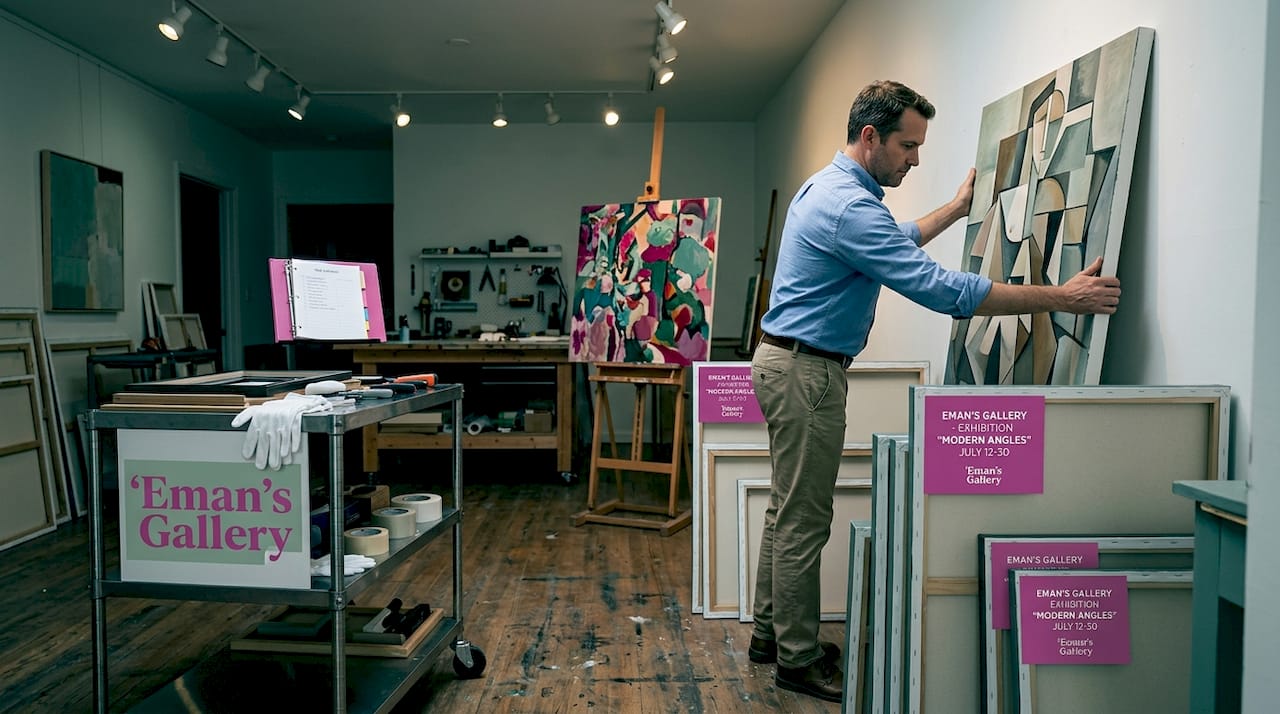
Each of these movements, as cataloged in key modernist movements, contributed distinct visual languages that collectors and designers still reference today.
Post-Impressionism
- Rejected Impressionism’s focus on pure light in favor of emotional and symbolic intent
- Artists used color and structure to convey meaning rather than describe reality
- Van Gogh’s The Starry Night remains one of the most recognized works in Western art
Cubism
- Broke objects into geometric planes viewed simultaneously from multiple angles
- Transformed how artists, architects, and designers approached space and form
- Braque and Picasso developed the style collaboratively between 1907 and 1914
Cubism fundamentally changed the trajectory of 20th-century art. By rejecting single-point perspective, it opened the door to abstraction and conceptual art in every medium that followed.
Surrealism
- Drew heavily from Freudian psychology and the logic of dreams
- Created imagery that was deliberately irrational and emotionally confrontational
- Dalí’s The Persistence of Memory is among the most reproduced artworks globally
For a broader context on how these movements connect to current practices, the guide to contemporary art traces this lineage clearly. Collectors interested in how these historical styles continue to influence today’s market will also find value in reviewing modern abstract art trends.
Side-by-side comparison: Which modern art style fits your goals?
Knowing each style individually is useful. Comparing them across practical dimensions makes selection actionable.
| Style | Best Fit | Investment Potential | Buyer Appeal |
|---|---|---|---|
| Post-Impressionism | Residential, collector’s study | High, stable | Broad, across demographics |
| Fauvism | Living rooms, hospitality spaces | Moderate to high | Color-forward decorators |
| Cubism | Galleries, modern offices | Very high | Serious collectors, institutions |
| Futurism | Commercial, tech spaces | Moderate | Design-focused buyers |
| Vorticism | Gallery settings | Moderate | Specialist collectors |
| Constructivism | Offices, design studios | Moderate to high | Minimalist and design buyers |
| Suprematism | Minimalist interiors | Moderate to high | Geometric art enthusiasts |
| De Stijl | Modern homes, offices | High | Interior designers, minimalists |
| Surrealism | Home galleries, statement walls | Very high | Eclectic, conceptual collectors |
The following situations illustrate when one style may be preferable over another:
- Bold color for modern interiors. Fauvism’s high-saturation palette integrates well with contemporary furniture and open-plan living spaces. It creates immediate visual energy without the complexity of figurative narrative.
- Geometric precision for minimalist collectors. De Stijl and Constructivism suit settings where simplicity is intentional. Their use of primary colors and strict geometry pairs naturally with Scandinavian and modernist interiors.
- Statement pieces for eclectic collections. Surrealism offers visual storytelling that sparks conversation. It works especially well as a focal point in otherwise neutral spaces.
- Institutional and high-value acquisitions. Cubism and Surrealism attract institutional buyers and hold consistent value at major auction houses. Collectors with long investment horizons often prioritize these movements.
Selecting art styles for home decor requires balancing visual compatibility with the room alongside the collector’s broader goals. A piece that functions beautifully in a space and carries historical weight is an optimal outcome.
It is also worth noting that collecting patterns shift over time. Many collectors begin with one or two movements and expand as their understanding deepens. Reviewing a contemporary wall art overview can help bridge historical preferences with current market availability.
Expert tips: How to start building a versatile modern art collection
Practical strategy separates collectors who build lasting collections from those who accumulate art reactively. The following steps apply to collectors at every level.
-
Define your primary goal. Clarify whether you are collecting for personal enjoyment, interior design, or financial investment. Each goal prioritizes different criteria. Investment-focused collectors lean toward movements with documented auction histories, while design-focused collectors prioritize scale and palette.
-
Research movements before purchasing. Spend time reading about each style, visiting museum collections online, and reviewing secondary market data. Understanding what makes a Surrealist work distinct from a Post-Impressionist one gives you a reliable framework for evaluating individual pieces.
-
Set a realistic budget. Original works from historically significant movements carry significant price tags. However, high-quality prints and works by emerging artists who work within established style traditions can offer comparable aesthetic value at accessible price points. Exploring where to buy original art provides a useful starting framework.
-
Prioritize authenticity and provenance. Documentation matters. For any original work, request certificates of authenticity and provenance records. This applies whether you are buying from a gallery, auction house, or online platform.
-
Consider how art integrates with your space. Scale, color temperature, and framing all affect how a work reads in a specific environment. Review guidance on best art for modern interiors to understand how different movements function across room types.
-
Rotate and display thoughtfully. Displaying works well extends their visual life and allows you to engage with the collection over time. Practical guidance on displaying art at home covers lighting, placement, and rotation strategies that preserve both the work and your engagement with it.
-
Document your collection. Keep records of purchases, certificates, insurance valuations, and display history. This documentation becomes critical if you sell, loan, or pass the collection on.
Pro Tip: Mixing movements intentionally creates a more distinctive and personally expressive collection than focusing on a single style. For example, pairing a geometric De Stijl print with a Surrealist work creates productive visual tension that signals genuine curatorial intelligence.
The 10 modernist movements outlined in authoritative art history sources offer a stable reference set to work from. Building familiarity with even three or four of these movements gives collectors a substantial foundation for confident acquisition decisions.
A collector’s perspective: Why your art journey matters more than the style
There is a common assumption among new collectors that selecting the “right” style, the one with the strongest investment track record or the highest critical prestige, is the central challenge of building a collection. This framing is useful up to a point. But it misses something more fundamental.
The most distinctive collections are rarely the result of following a prescribed formula. They reflect a collector’s curiosity, the way certain works commanded attention at specific moments in a person’s life, and the willingness to revisit initial reactions over time.
Modern art’s diversity is not a problem to be solved. It is the point. Post-Impressionism, Suprematism, and Surrealism are not interchangeable options competing for the same slot in a collection. Each movement asks a different question of the viewer, and those questions matter more than market rankings.
Collectors who treat art primarily as a financial instrument often find that their collections lack coherence. The works do not speak to each other. The collection reads as an index of trends rather than a reflection of genuine engagement. That coherence, the thread connecting individual acquisitions, is what gives a collection lasting personal and cultural value.
It is also worth acknowledging that taste changes. A collector who begins with the clarity of De Stijl may find themselves drawn to the psychological complexity of Surrealism five years later. That evolution is not inconsistency. It is evidence that the collection is working, that engagement with art is genuinely expanding the collector’s perspective.
Exploring original art for modern spaces can illustrate how this curiosity-driven approach plays out in practice, connecting historical style awareness with the availability of original works that continue these traditions today.
The single most reliable collecting principle: acquire what you want to live with, at a quality level you can document, within a budget that does not require the work to perform financially. Everything else is secondary.
Curate your own modern art collection with Eman’s Gallery
Eman’s Gallery offers original handmade paintings and museum-quality canvas prints spanning abstract, geometric, floral, landscape, seascape, and still-life styles. Each work is created by artist Eman Khalifa and reflects the traditions and techniques explored throughout this guide.
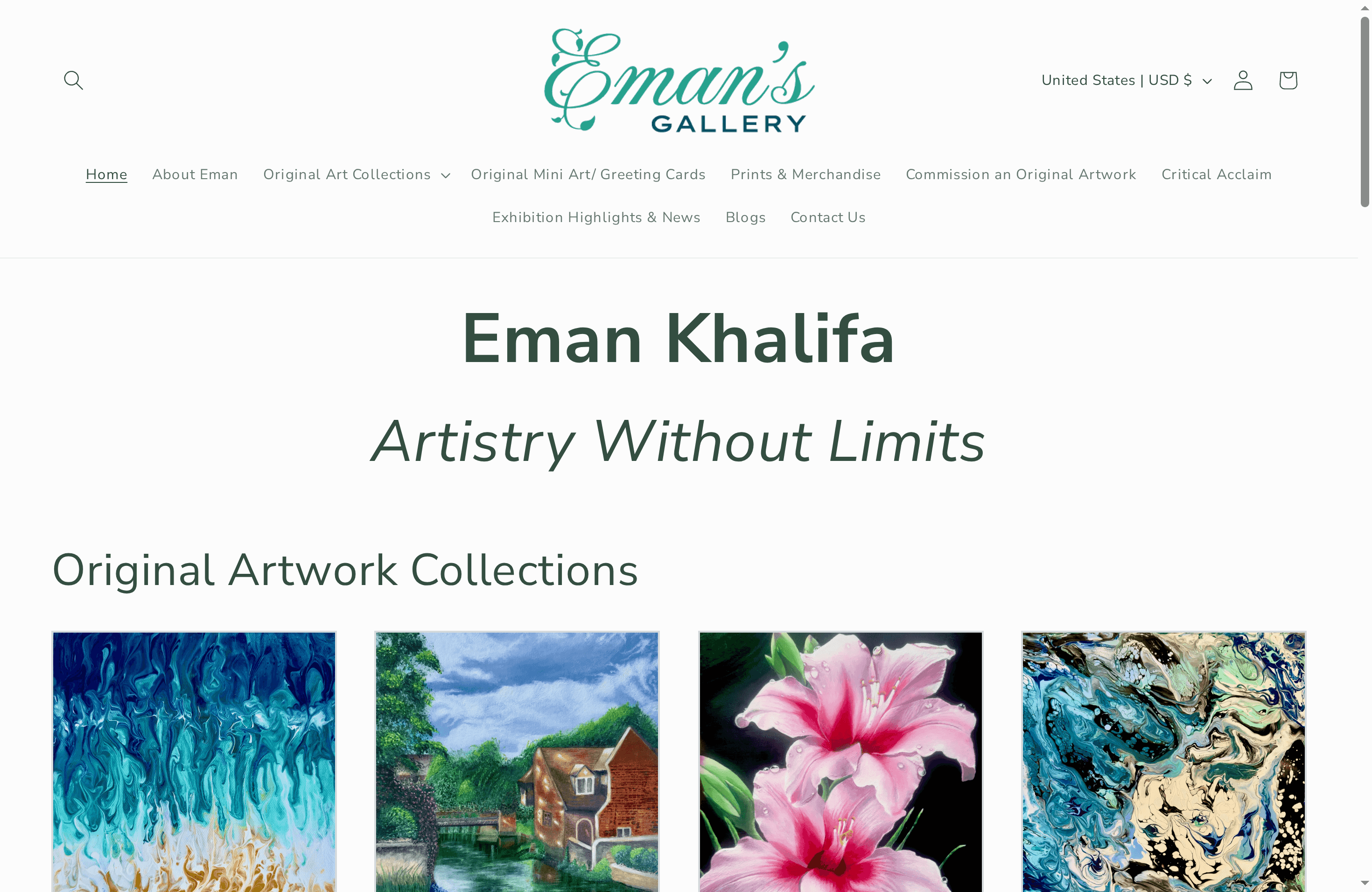
Whether you are drawn to the bold color fields of Fauvist-influenced abstraction or the geometric clarity of De Stijl-inspired composition, the gallery’s collection provides accessible entry points for collectors at every level. The Fragments of Memory canvas print is one example of how historical movement sensibilities translate into contemporary original work. Browse the full range of wall art prints for every space to find works that align with your style preferences and space requirements. Worldwide shipping is available from the UK, USA, Canada, Australia, Germany, and across Europe and the UAE.
Frequently asked questions
What are the main styles of modern art?
The main modern art styles include Post-Impressionism, Fauvism, Cubism, Futurism, Vorticism, Constructivism, Suprematism, De Stijl, and Surrealism, each representing a distinct visual language and historical period.
How do I choose which modern art style to collect?
Start by considering your personal taste, how each style fits your space, and your investment goals, then review notable works within each movement to identify what genuinely resonates with you.
Are some modern art styles better investments?
Cubism and Surrealism tend to hold or increase in value over time due to sustained institutional interest and auction history, but all art investment involves risk and requires individual due diligence before purchasing.
How can I tell the difference between modern and contemporary art?
Modern art refers to movements from the late 19th to mid-20th century, while contemporary art encompasses work created today and reflects current cultural and conceptual concerns.
Where can I view or purchase modern art styles?
Original works and high-quality prints aligned with modern art traditions are available through reputable online galleries, specialist auction platforms, and museum gift shops worldwide.
Recommended
- Popular art genres: Find the perfect style for your collection
- 7 Essential Modern Abstract Art Trends for Collectors - Eman’s Gallery
- What Is Contemporary Art? Complete Guide Explained - Eman’s Gallery
- Famous art styles: History, key features, and influence
Stay Connected
- ✨ Explore Eman Khalifa’s original art and fine art prints
- 📸 Follow Eman Khalifa’s art journey on: Instagram @emans_gallery and Facebook Eman’s Gallery
- 📹 Watch Eman Khalifa creating live art on: YouTube @emans_gallery
