


7 Essential Modern Abstract Art Trends for Collectors
Over half of American art collectors now seek out bold abstract pieces that break from tradition and ignite conversation. This shift reflects a growing appreciation for how color, shape, scale, and even digital innovation can transform simple walls into immersive experiences. Whether you are curious about emerging trends or want to understand why eco-friendly practices and global influences matter in contemporary collections, exploring these themes offers fresh perspective on what makes modern abstract art truly captivating.
Table of Contents
- 1. Embracing Bold Color Palettes In Abstract Art
- 2. Geometric Forms And Minimalist Influences
- 3. The Rise Of Large-Scale Statement Pieces
- 4. Mixed Media And Textured Canvas Techniques
- 5. Digital And Nft Abstract Art Innovations
- 6. Sustainability And Eco-Friendly Art Practices
- 7. Global Cultural Influences In Modern Abstract Art
Quick Summary
| Key Message | Explanation |
|---|---|
| 1. Understand emotional color associations | Selecting colors intentionally can enhance an artwork’s emotional impact, influencing viewers’ feelings and perceptions. |
| 2. Evaluate the interaction with architectural space | Large-scale artworks should engage with their surroundings, creating a dialogue within the existing design elements of a room. |
| 3. Assess material sourcing for sustainability | Eco-friendly art pieces should have transparent supply chains, utilizing sustainable materials to minimize environmental impact. |
| 4. Recognize cultural authenticity in artworks | Artworks should reflect genuine cultural heritage rather than superficial appropriations, enriching the viewer’s experience and understanding. |
| 5. Explore the technological sophistication of digital art | Evaluating digital artworks involves recognizing innovative techniques like generative algorithms and interactive design that redefine traditional boundaries. |
1. Embracing Bold Color Palettes in Abstract Art
Abstract art thrives on color as its most powerful storytelling element. Modern collectors are increasingly drawn to artworks that feature vibrant, unexpected color combinations that challenge traditional visual expectations.
Research reveals fascinating insights into how colors communicate emotions and create visual harmony. A groundbreaking study using a fuzzy color model demonstrates that color relationships are deeply universal, transcending cultural boundaries. The study highlights how specific hue relationships, saturation levels, and color intensity profoundly impact visual perception.
When selecting bold color palettes for abstract art, focus on three key strategies. First, understand emotional color associations. Intentional color selection can dramatically transform a piece’s emotional resonance. For instance, green, brown, and orange might evoke feelings of gratitude, while intense browns could signal complex emotional states.
Second, experiment with high contrast color combinations. Think complementary colors like deep blues paired with vibrant oranges or rich purples contrasted against bright yellows. These unexpected pairings create visual tension that captures viewer attention and energizes the artwork.
Third, consider the psychological impact of your color choices. Saturated colors communicate confidence and passion, while muted tones suggest sophistication and introspection. Professional collectors appreciate artworks where color becomes a narrative device, telling stories beyond traditional representational boundaries.
Ultimately, bold color palettes in abstract art are about creating emotional landscapes that invite viewers into unique visual experiences. Your color choices transform canvas into a dynamic dialogue between pigment, emotion, and perception.
2. Geometric Forms and Minimalist Influences
Geometric abstract art represents a powerful intersection of mathematics, design, and emotional expression. Modern art collectors are increasingly drawn to geometric art styles that distill complex visual experiences into elegant, simplified forms.
Research reveals the profound philosophical underpinnings of geometric minimalism. A comprehensive study investigating geometric form language demonstrates how artists like Piet Mondrian, Kazimir Malevich, and Mark Rothko transformed visual representation through fundamental design principles. These artists pioneered approaches that reduce visual complexity to its most essential elements.
Geometric forms communicate through precise visual language. Triangles suggest dynamic energy and progression. Circles represent wholeness and unity. Squares symbolize stability and rationality. By strategically selecting and arranging these fundamental shapes, artists create powerful narratives without representational imagery.
For collectors interested in geometric minimalist art, consider three key evaluation criteria. First, assess the artwork’s compositional balance. Look for pieces where negative space is as important as the geometric elements themselves. Effective minimalist compositions create visual tension through carefully calculated spatial relationships.
Second, examine color interaction within geometric compositions. Minimalist geometric art often uses limited color palettes to enhance structural clarity. Monochromatic schemes or complementary color pairs can dramatically amplify the artwork’s visual impact.
Finally, appreciate the intellectual rigor behind geometric abstraction. These artworks are not merely decorative objects but sophisticated visual statements that challenge viewers’ perceptual expectations. Each geometric form represents a deliberate choice, transforming mathematical precision into emotional expression.
The beauty of geometric minimalist art lies in its ability to communicate complex ideas through radical visual simplification. By reducing visual information to its purest geometric essence, artists invite viewers into a meditative, intellectually engaging aesthetic experience.
3. The Rise of Large-Scale Statement Pieces
Large-scale abstract art has transformed from a niche aesthetic to a powerful statement in contemporary interior design. Modern collectors are increasingly drawn to monumental artworks that command attention and reshape spatial experiences.
Research highlights the profound impact of large-scale abstract art through remarkable artists like Bridget Riley, whose work demonstrates how massive geometric compositions can create complex sensory experiences. Spatial transformation becomes the primary language of these immersive artworks.
When considering large-scale statement pieces, collectors should focus on three critical evaluation strategies. First, assess the artwork’s ability to interact with architectural space. A truly exceptional large-scale piece does not merely occupy a wall but engages in a dynamic dialogue with the room’s existing design elements.
Second, examine the artwork’s visual complexity. Successful large-scale pieces maintain visual intrigue across multiple viewing distances. From a distance, they should present a cohesive visual narrative. Up close, they should reveal intricate details that reward careful observation.
Third, consider the technical mastery required to create such monumental works. Artists like German sculptor Julia Mangold demonstrate how large-scale art demands extraordinary precision. Her minimalist sculptures using industrial materials showcase how geometric principles can transform massive canvases into intellectual statements.
Practical collector tips include measuring your space carefully and considering lighting conditions. Large-scale art requires strategic placement. Natural light, artificial illumination, and surrounding architectural elements can dramatically enhance or diminish an artwork’s impact.
Ultimately, large-scale statement pieces represent more than decorative objects. They are spatial interventions that challenge viewers’ perceptual boundaries, transforming rooms from mere living spaces into immersive visual experiences. When selected thoughtfully, these artworks become powerful expressions of personal aesthetic vision.
4. Mixed Media and Textured Canvas Techniques
Mixed media and textured canvas techniques represent a revolutionary approach to contemporary abstract art, transforming traditional two-dimensional surfaces into complex sensory experiences. Modern art collectors are discovering how layered materials and unconventional techniques can elevate artistic expression.
Research highlights remarkable artists who push the boundaries of mixed media art. Richard Loving exemplifies this approach through paintings that blur representation and abstraction, incorporating innovative techniques like dotted line patterns and illuminated imagery.
Textural complexity becomes the primary language of these groundbreaking artworks. By integrating multiple materials such as acrylic, sand, fabric, metallic pigments, and found objects, artists create multidimensional narratives that engage viewers beyond visual perception.
When evaluating mixed media artworks, collectors should consider three critical aspects. First, assess the conceptual coherence of material integration. Successful pieces demonstrate intentional material selection where each element contributes to the overall artistic narrative.
Second, examine the artwork’s tactile and visual depth. Exceptional mixed media pieces invite viewers to explore intricate layers, revealing new details with each observation. Texture becomes a storytelling mechanism that transcends traditional painting techniques.
Third, appreciate the cultural and personal narratives embedded in mixed media art. Artists like Abdul Qader Al Rais demonstrate how mixed media can incorporate cultural symbolism through techniques like integrating Arabic calligraphy with abstract geometric forms.
Practical collector tips include understanding material durability, preservation requirements, and potential environmental interactions. Some mixed media artworks require specialized handling and display conditions to maintain their structural and visual integrity.
Mixed media and textured canvas techniques represent more than aesthetic innovation. They are powerful expressions of artistic versatility, inviting viewers to experience art as a multisensory, transformative encounter that challenges traditional perceptual boundaries.
5. Digital and NFT Abstract Art Innovations
Digital technologies are radically transforming abstract art creation and collection, introducing unprecedented possibilities for artistic expression and ownership. Modern collectors are witnessing a revolutionary intersection of technology and creativity.
Research demonstrates the profound potential of digital tools in artistic innovation. A fascinating study introduces interactive digital platforms like ‘Mondrian’ that enable non linear exploration of color palettes and creative workflows, fundamentally reshaping how artists conceptualize and develop abstract art.
Technological disruption is reshaping artistic practices through several key innovations. Digital tools now allow artists to experiment with color styles, generate complex compositions, and explore creative processes that were previously impossible with traditional media.
When evaluating digital and NFT abstract art, collectors should consider three critical aspects. First, assess the artwork’s technological sophistication. Exceptional digital pieces demonstrate not just visual complexity but also innovative use of generative algorithms, machine learning, and interactive design principles.
Second, understand the unique ownership model provided by blockchain technologies. NFTs offer verifiable digital provenance, allowing collectors to own unique digital artworks with transparent ownership records. This represents a fundamental shift in art collecting paradigms.
Third, recognize the emerging aesthetic language of digital abstraction. These artworks often blend algorithmic precision with human creativity, creating visual experiences that challenge traditional artistic boundaries. Statistical color analysis and generative design tools enable artists to create intricate, dynamically evolving visual narratives.
Practical collector tips include understanding digital art preservation, platform diversity, and emerging blockchain art marketplaces. Collectors should develop technological literacy to navigate this rapidly evolving artistic landscape.
Digital and NFT abstract art represents more than a technological trend. It is a profound reimagining of artistic creation, challenging traditional notions of originality, ownership, and creative expression in the digital age.
6. Sustainability and Eco-Friendly Art Practices
Sustainability has emerged as a critical consideration in contemporary abstract art, transforming how artists conceptualize materials, production processes, and environmental impact. Modern art collectors are increasingly prioritizing works that demonstrate ecological consciousness and responsible creative practices.
Research highlights innovative artists who integrate sustainability into their creative processes. Julia Mangold exemplifies this approach through minimalist sculptures utilizing industrial materials like steel and lead, emphasizing material efficiency and environmental mindfulness.
Ecological artmaking represents a profound shift in artistic philosophy. Artists are reimagining creative processes by selecting materials with lower environmental footprints, exploring recyclable resources, and developing techniques that minimize waste and carbon emissions.
When evaluating eco-friendly art practices, collectors should consider three critical dimensions. First, assess the artwork’s material sourcing. Exceptional sustainable pieces demonstrate transparent supply chains, utilizing reclaimed materials, organic pigments, or locally sourced resources that reduce transportation emissions.
Second, examine the artist’s commitment to environmental storytelling. Artists like Abdul Qader Al Rais demonstrate how art can serve as a powerful medium for ecological awareness, drawing inspiration from natural landscapes and cultural environmental contexts.
Third, consider the artwork’s long-term environmental impact. This includes evaluating material durability, potential for restoration, and the carbon footprint associated with the artwork’s creation and preservation.
Practical collector tips include researching artists’ sustainability practices, understanding material lifecycles, and supporting creators who prioritize ecological responsibility. Sustainable art collecting is not just about aesthetics but about supporting a broader environmental ethos.
Sustainability in abstract art represents more than a trend. It is a fundamental reimagining of artistic practice as a dialogue with environmental stewardship, challenging creators and collectors to consider the broader ecological implications of artistic production.
7. Global Cultural Influences in Modern Abstract Art
Modern abstract art transcends geographical boundaries, serving as a powerful medium for cultural dialogue and global artistic exchange. Contemporary collectors are increasingly recognizing artworks that reflect rich cultural narratives and transnational creative perspectives.
Research illuminates how diverse cultural traditions shape abstract artistic expression. Neoplasticism, a groundbreaking movement initiated by Dutch artists Piet Mondrian and Theo van Doesburg, exemplifies how global cultural influences transform artistic paradigms through geometric abstraction and primary color theory.
Cultural translation becomes a fundamental artistic strategy in contemporary abstract art. Artists worldwide are reimagining traditional visual languages, incorporating indigenous symbolism, calligraphic traditions, and regional aesthetic principles into abstract compositions.
When evaluating global cultural influences in abstract art, collectors should consider three critical dimensions. First, assess the artwork’s cultural authenticity. Exceptional pieces demonstrate deep engagement with cultural heritage rather than superficial appropriation.
Second, recognize how artists like Abdul Qader Al Rais integrate cultural symbolism into abstract forms. His work combining geometric shapes with Arabic calligraphy illustrates how contemporary abstract art can simultaneously honor traditional visual languages and create innovative aesthetic experiences.
Third, understand the artwork’s dialogic potential. Global abstract art serves as a visual language that transcends linguistic barriers, facilitating cross cultural communication and mutual understanding.
Practical collector tips include researching artists’ cultural backgrounds, understanding the historical context of artistic movements, and appreciating the nuanced ways cultural heritage manifests in abstract visual expression.
Global cultural influences in modern abstract art represent more than aesthetic diversity. They embody a profound mechanism for cultural exchange, challenging viewers to explore complex narratives of identity, tradition, and human interconnectedness.
Below is a comprehensive table summarizing the key points and strategies discussed throughout the article on contemporary abstract art influences.
| Topic | Description | Key Considerations |
|---|---|---|
| Bold Color Palettes | Focus on vibrant, unexpected combinations and their emotional impact. | Emotional associations, contrast, psychological effects. |
| Geometric Forms | Utilizes simplified forms to express complex ideas. | Compositional balance, color interaction, intellectual rigor. |
| Large-Scale Art | Transforms spaces through monumental artworks. | Architectural interaction, visual complexity, technical mastery. |
| Mixed Media | Incorporates diverse materials for multidimensional effects. | Material integration, depth, cultural narratives. |
| Digital and NFT Innovations | Combines technology with art for novel expressions and ownership models. | Technological sophistication, ownership via NFTs, aesthetic language. |
| Sustainable Practices | Emphasizes eco-conscious artmaking processes. | Material sourcing, environmental storytelling, long-term impact. |
| Global Cultural Influences | Reflects diverse cultural narratives in abstract expression. | Cultural authenticity, integration of symbols, dialogic potential. |
Discover Modern Abstract Art That Speaks to Your Vision
Navigating the evolving landscape of modern abstract art can feel overwhelming with so many trends emerging. Whether you are drawn to bold color palettes, geometric minimalism, or large-scale statement pieces, finding original works that align with your aesthetic and emotional goals is key. Eman Khalifa’s collection offers unique handmade paintings and museum-quality prints that embody these essential trends with sophistication and integrity.
Experience the power of abstract art to transform your space and reflect your personal story. Explore the captivating diversity of styles in our Wall Art Prints, or dive into the tactile richness of our Canvas Art Prints by Eman Khalifa that bring texture and depth right to your walls.
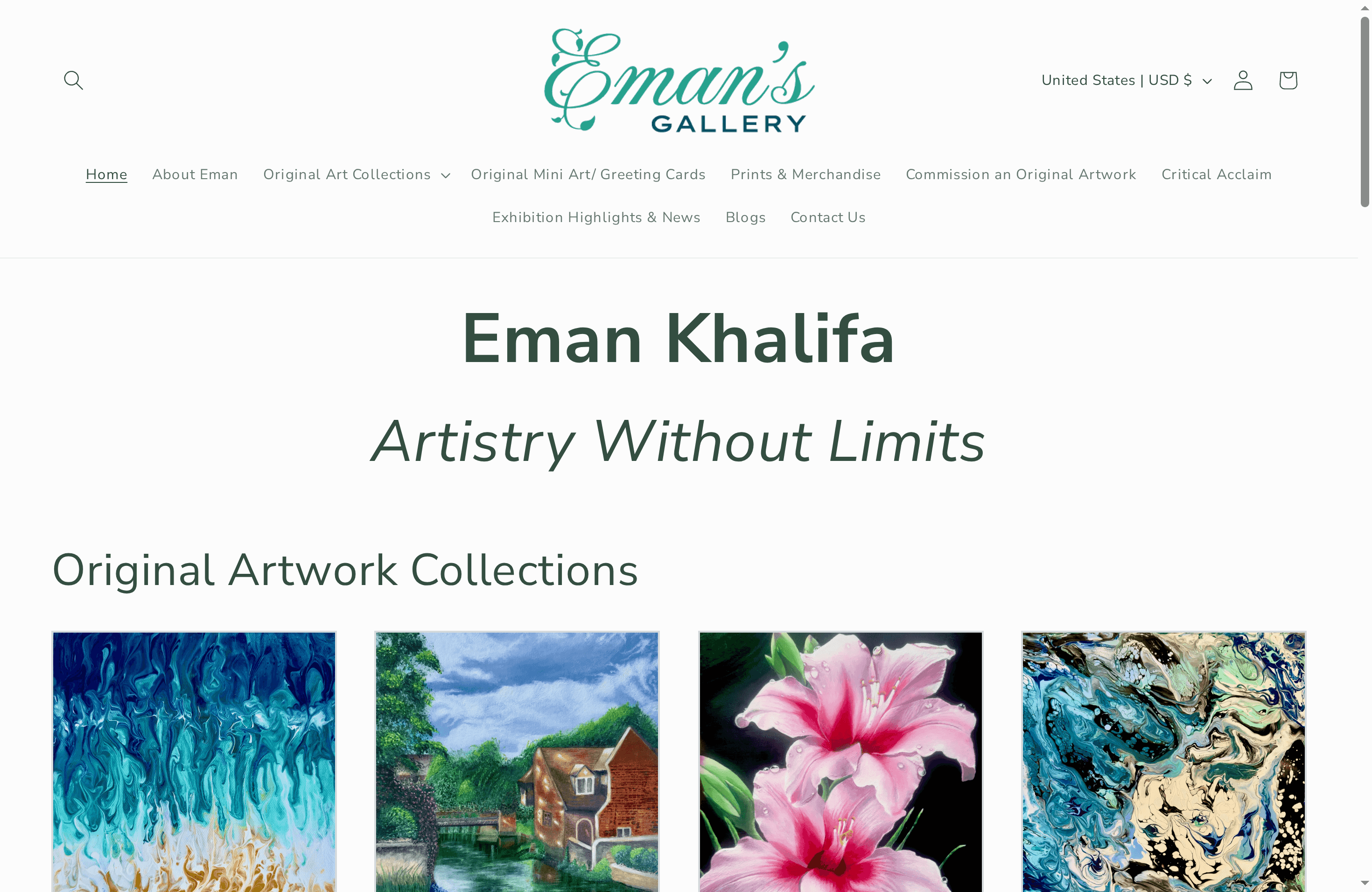
Elevate your collection today at Eman’s Gallery with compelling abstract art designed to engage your emotions and enrich your environment. Don’t wait—find the perfect statement piece that challenges boundaries and invites a new dialogue in your home or office.
Frequently Asked Questions
What are the key strategies for selecting bold color palettes in abstract art?
To select bold color palettes, focus on understanding emotional color associations, experimenting with high contrast combinations, and considering the psychological impact of your choices. For example, using deep blues with vibrant oranges can create energy in your artwork.
How can I evaluate geometric minimalist art for my collection?
When evaluating geometric minimalist art, assess the compositional balance, examine color interaction, and appreciate the intellectual rigor behind the artwork. Look for pieces where negative space enhances the geometric forms, creating a captivating visual impact.
What should I consider when choosing large-scale statement pieces for my space?
Consider how the artwork interacts with your architectural space, its visual complexity from different distances, and the technical mastery required for creation. For instance, choose pieces that initiate dialogue with existing design elements in the room, ensuring they are well-placed to maximize their impact.
What are the critical factors to assess in mixed media and textured canvas artworks?
Evaluate the conceptual coherence of material integration, the tactile and visual depth of the piece, and the underlying cultural narratives. Prioritize artworks that invite exploration and reveal intricate layers, providing new details upon closer examination.
How can digital and NFT abstract art differ from traditional medium artworks?
Digital and NFT abstract art offers innovative ownership models through blockchain technology, allowing for verifiable provenance. When assessing these artworks, focus on their technological sophistication and how they blend algorithmic precision with creativity to challenge traditional artistic boundaries.
What makes sustainability an important factor in modern abstract art practices?
Sustainability in abstract art involves selecting materials with lower environmental footprints and employing techniques that minimize waste. Look for artists who transparently source their materials and embed ecological awareness into their narratives for a deeper connection to the artwork.
Recommended
- What Is Contemporary Art? Complete Guide Explained – Eman’s Gallery
- Contemporary Wall Art Explained: Complete Overview – Eman’s Gallery
- Art for Collectors Guide: Expert Insights and Strategies – Eman’s Gallery
- 7 Art Collector Tips for Valuable Collections – Eman’s Gallery
- Cozee Bay - Top Interior Design Trends To Follow
- The blackest black in the world: Musou Black and the interior design trends of 2025 – Dekoja.net
- Creative Wall Art Gift Ideas
Stay Connected
- ✨ Explore Eman Khalifa’s original art and fine art prints
- 📸 Follow Eman Khalifa’s art journey on: Instagram @emans_gallery and Facebook Eman’s Gallery
- 📹 Watch Eman Khalifa creating live art on: YouTube @emans_gallerye
