


Drawing vs. painting: techniques, tools, and artistic impact
TL;DR:
- Drawing emphasizes line, form, and shading using dry media, serving as a complete art form on its own. Painting involves applying colored pigments to create depth, texture, and light, requiring more setup and variable techniques. Both practices develop complementary skills, with drawing as foundational and painting expanding on color and material manipulation.
Many artists and art lovers treat drawing and painting as two sides of the same coin. They are not. Each practice has its own tools, methods, visual logic, and learning curve. Understanding the actual differences between them gives you a clearer path to developing your skills, choosing the right medium for your ideas, and appreciating what makes each approach powerful on its own terms. This guide covers definitions, tools, techniques, visual impact, and how the two practices connect to shape a stronger artistic vision.
Table of Contents
- What is drawing? Key characteristics and processes
- What is painting? Exploring materials and techniques
- Drawing vs. painting: a side-by-side comparison
- How drawing and painting shape artistic vision
- Why the ‘drawing vs. painting’ debate often misses the point
- Explore original artwork and prints inspired by both drawing and painting
- Frequently asked questions
Key Takeaways
| Point | Details |
|---|---|
| Core differences | Drawing uses marks and shading for form, while painting uses color and texture for visual depth. |
| Skill development | Both require unique practices, but drawing often provides foundational skills valuable for painting. |
| Creative overlap | Artists frequently blend drawing and painting for richer artistic expression and mixed media works. |
| No ‘better’ medium | Neither drawing nor painting is inherently easier; mastery in each leads to new insights and growth. |
What is drawing? Key characteristics and processes
Drawing is one of the oldest and most direct forms of visual expression. It involves making marks on a surface, typically using dry media, to communicate form, line, and structure. According to Britannica, drawing is the art or technique of producing images on a surface by means of marks, usually using dry media like graphite, charcoal, ink, or pastels, emphasizing line, form, shape, contour, shading, and techniques such as hatching, cross-hatching, and stippling.
Drawing focuses on how lines define space and form. A skilled draftsman can describe a three-dimensional object using nothing but marks and shading. That is the core power of the medium.
Primary drawing media include:
- Graphite pencils (ranging from hard 9H to soft 9B grades)
- Charcoal (vine, compressed, and powdered forms)
- Ink (used with quills, dip pens, brush pens, or technical pens)
- Pastels (soft pastels, oil pastels, and pastel pencils)
- Colored pencils and conté crayons
Shading techniques are central to drawing. Hatching uses parallel lines to build value. Cross-hatching layers those lines at angles to deepen shadow. Stippling creates tone through clusters of dots. These three methods give the artist precise control over light and dark without using any color at all. You can learn more about how these principles apply in detail through line drawing techniques.
“Drawing is not just a preliminary step. It is a complete art form capable of carrying as much emotional and compositional weight as any painting.”
One persistent misconception is that drawing is only a preparatory stage for painting or illustration. Many people think of sketches as rough notes. In reality, finished drawings stand on their own as complete works. Artists like Leonardo da Vinci, Michelangelo, and Egon Schiele produced drawings that are treated as major masterworks, not preliminary drafts.
Drawing is also one of the most accessible art forms. The barriers to entry are low. A pencil and paper are enough to start. Portability is another advantage. Sketchbooks go everywhere a canvas cannot.
Pro Tip: If you are new to drawing, practice contour drawing first. Trace the outline of objects without looking at your paper. This trains your hand-eye coordination and builds the observational skills all strong draughtsmen rely on.
What is painting? Exploring materials and techniques
Painting introduces a fundamentally different set of concerns. Where drawing focuses on line and form, painting adds color, texture, and the physical behavior of wet pigment on a surface. As Britannica describes it, painting involves the application of colored pigments to a surface using brushes, knives, or other tools, focusing on color, texture, depth, light, shadow, and techniques like layering, blending, glazing, and brushstrokes.

The range of paint types available to modern artists is wide, and each has unique handling characteristics.
Common painting media include:
- Oil paint: Slow-drying, rich in pigment, ideal for layering and glazing; it has been the dominant fine art medium for over 500 years
- Acrylic paint: Fast-drying, water-soluble when wet, versatile for both transparent washes and opaque impasto effects
- Watercolor: Transparent, water-based, suited for luminous washes and soft gradients
- Gouache: Opaque watercolor, producing flat, matte color areas popular in illustration
- Tempera: Fast-drying egg-based paint historically used for panel paintings and icons
The techniques used in painting techniques differ significantly from drawing methods. Layering builds depth by applying paint in successive coats. Glazing uses thin transparent layers of color over dried paint to shift hues and add luminosity. Impasto applies thick paint directly to the canvas for physical texture you can see and feel. Wet-on-wet blending mixes colors directly on the surface before they dry.
Color relationships are a core concern in painting. Painters must understand how warm and cool colors interact, how complementary colors create visual vibration, and how light sources affect the entire tonal range of a composition.
Statistic callout: The global art market was valued at approximately $65 billion in 2023, with original paintings consistently ranking among the highest-value categories across all sales channels.
Painting also requires more preparation. You need a primed surface, the right brushes, mediums, solvents (for oils), and often a dedicated setup or studio space. The physical act of painting involves more variables than drawing, which is part of why many teachers recommend drawing skills as a foundation before taking on paint.
Pro Tip: When starting with acrylic paint, keep a small spray bottle of water nearby. Acrylics dry quickly, and a light mist keeps your palette workable and your brush strokes more fluid.
Drawing vs. painting: a side-by-side comparison
To solidify your understanding, let’s directly compare the defining features of both practices.
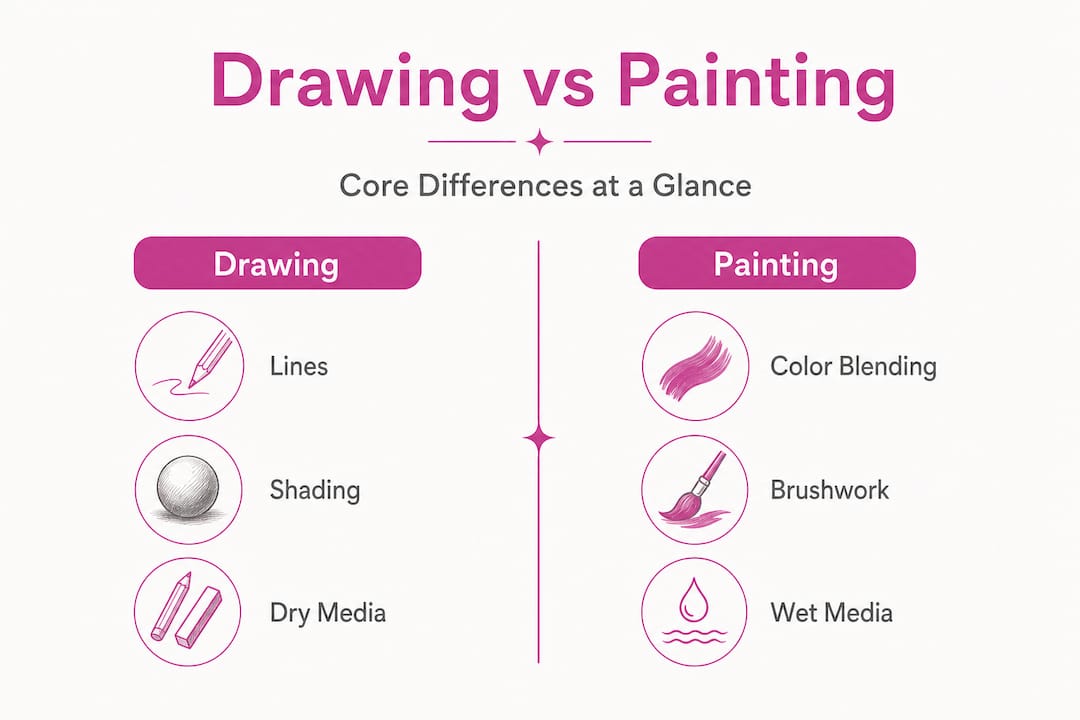
As grammar.com notes, key mechanical differences exist: drawing prioritizes linear marks and value through shading for form, while painting uses fluid pigment application for color interplay, tonal variations, and physical texture.
| Feature | Drawing | Painting |
|---|---|---|
| Primary media | Graphite, charcoal, ink, pastel | Oil, acrylic, watercolor, gouache |
| Surface | Paper, sketchbook, bristol board | Canvas, wood panel, paper, fabric |
| Main focus | Line, contour, form, value | Color, texture, depth, light |
| Techniques | Hatching, stippling, cross-hatching | Layering, glazing, impasto, blending |
| Setup required | Minimal | Moderate to high |
| Drying time | None (dry media) | Minutes to days depending on medium |
| Portability | High | Low to moderate |
| Correction method | Erasing, blending | Overpainting |
| Learning curve | Line control, shading | Color theory, medium handling |
Key practical differences at a glance:
- Drawing uses dry media almost exclusively. Painting relies on wet, fluid pigment.
- A drawing can be started and finished in minutes. A painting may take hours just to reach the first dry layer.
- Mistakes in drawing are removed by erasing. Mistakes in painting are usually resolved by painting over them, which can build interesting texture or require careful correction.
- Drawing emphasizes negative and positive space through line. Painting fills space through mass and color field.
“Neither drawing nor painting is inherently harder. Each demands a distinct type of visual thinking and hand skill. Treating one as a stepping stone to the other misrepresents what both can do.”
Understanding these distinctions matters for collectors as well as creators. If you are building an art collection and want to understand how original works differ from reproductions, the guide on art print vs painting differences covers that clearly. Artists curious about expanding their practice should also explore different art mediums to find what fits their creative goals.
How drawing and painting shape artistic vision
Having distinguished the nuts and bolts, let’s look at how each medium shapes the broader creative journey and vision of an artist.
According to difbetween.com, drawing often serves as foundational or preparatory work for painting, building skills in composition, perspective, and observation. However, both can function as independent, finished arts in their own right.
The relationship between the two practices runs deeper than preparation and outcome. Skills developed in one medium genuinely transfer to the other. A painter with strong draftsmanship draws more confidently when planning compositions. A draughtsman who studies painting learns to see tonal values as color relationships rather than simple light and dark.
Steps for developing your style using both practices:
- Master line control in drawing first. Contour drawing, gesture drawing, and value studies in pencil or charcoal build observation skills that carry into all other mediums.
- Introduce color through watercolor or gouache. These water-based paints are easier to control than oils or acrylics and teach transparency, color mixing, and wash techniques.
- Work on tonal value in both mediums simultaneously. Painting a grayscale acrylic study alongside charcoal drawing reinforces how light describes form.
- Experiment with mixed media. Combining ink drawing with watercolor washes, or using graphite under acrylic paint, exposes you to how the two disciplines interact and where their boundaries blur.
- Study works that blend both. Many contemporary artists integrate drawing and painting in ways that make the boundary between them meaningless.
| Skill developed in drawing | How it benefits painting |
|---|---|
| Contour and edge control | Cleaner composition placement |
| Value shading | Stronger tonal range in color |
| Observational accuracy | Realistic rendering of light and form |
| Spatial perspective | Depth and layering decisions |
As Britannica notes, while drawing and painting are distinct, strong drawing underpins painting, and painting techniques can enrich drawing. Artists often integrate both for versatile expression.
Mixed media art is one of the clearest examples of how the two disciplines feed each other. Artists working in mixed media deliberately break the rules of each practice and use the strengths of both to create something neither could produce alone.
Pro Tip: Keep a daily sketchbook dedicated to drawing, even if your primary practice is painting. Sketching trains your eye continuously and keeps your observational skills sharp between painting sessions.
Why the ‘drawing vs. painting’ debate often misses the point
The technical breakdowns tell part of the story, but there is a deeper insight many discussions miss. Framing drawing and painting as competing disciplines or ranked skills creates a false hierarchy that limits how artists think about their own development.
As study.com points out, contrasting viewpoints exist: some see drawing as the more accessible initial skill and painting as the advanced practice. But experts note that both demand unique mastery, and modern artists are increasingly blending them through digital tools and hybrid approaches.
Rigid definitions serve beginners and educators well. They give new artists a framework for understanding what tools to pick up and why. But those same definitions become restrictions for anyone who stays loyal to them past the point of usefulness.
The most interesting work happening in contemporary art today does not fit neatly into either category. Artists work with art print mediums explained that bridge traditional and digital approaches, layering drawing techniques over painted grounds or using digital brushes to simulate the feel of graphite on canvas.
The practical takeaway is straightforward. Learn the rules of both practices clearly. Understand why hatching works differently from blending. Know why a glaze behaves differently from a charcoal smudge. Then use that knowledge to make deliberate decisions rather than accidental ones.
Experienced artists do not usually think in terms of drawing or painting. They think in terms of marks, surfaces, light, color, and intention. The medium follows the idea. That shift in thinking, from category to purpose, is where real artistic growth begins.
Explore original artwork and prints inspired by both drawing and painting
If you are inspired to see these techniques in action or add unique, original art to your own space, explore what is possible beyond the studio.
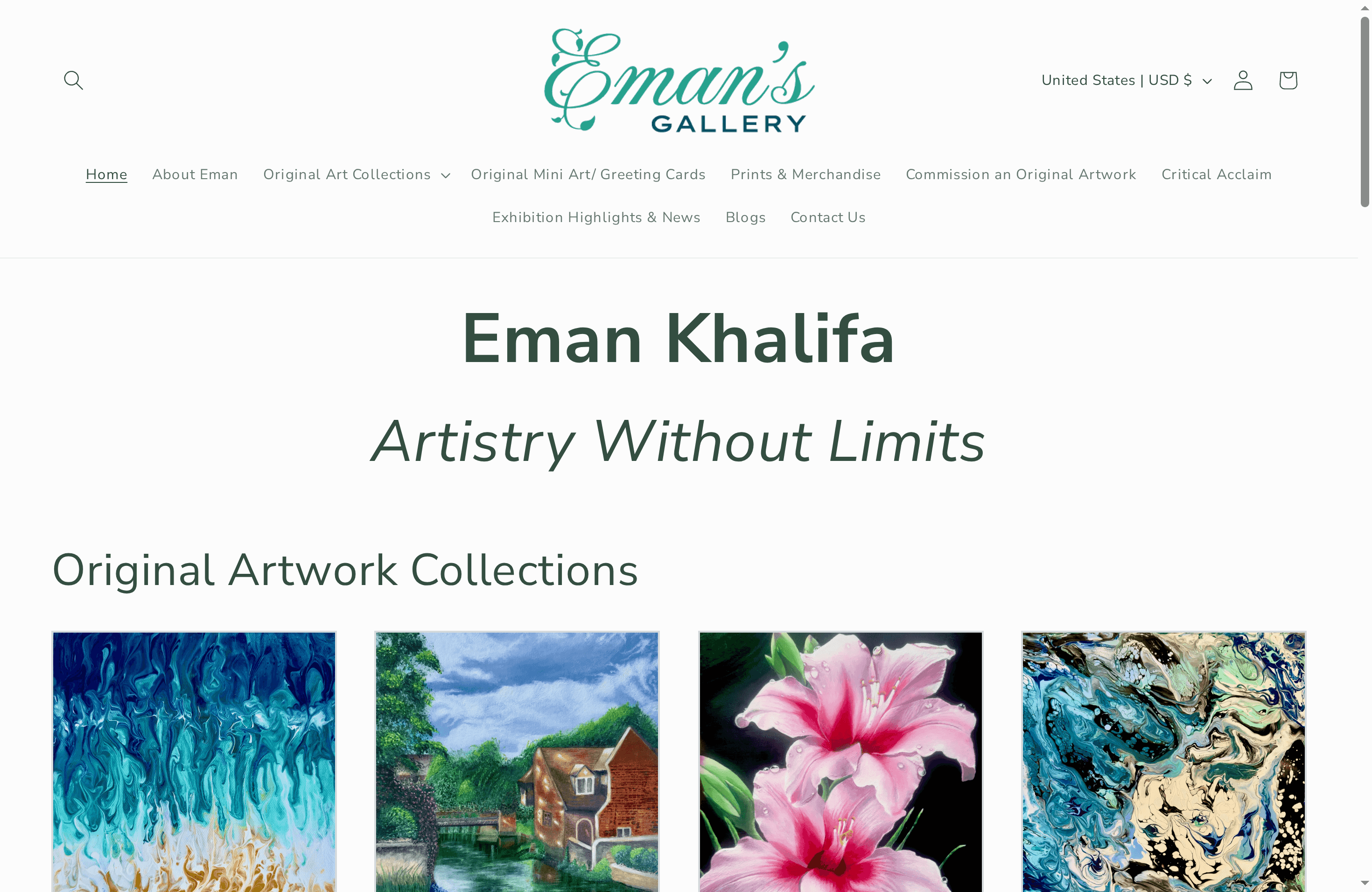
Eman’s Gallery offers original handmade artworks and museum-quality canvas prints that reflect the connection between precise structural thinking and expressive color work. The contemporary realism art collection shows how detailed observation, a core drawing skill, translates into fully realized painted compositions. The Fragmented Soul original painting demonstrates how painterly layering and drawn line work can coexist in a single piece. For those interested in how contour and structure drive a composition, the Contours of Orient canvas print is a strong example of drawing-informed design rendered in rich painted form. Original works ship worldwide from the UK, USA, Canada, Australia, Germany, France, Italy, Spain, the UAE, and beyond.
Frequently asked questions
Can an artwork be both a drawing and a painting?
Yes, artists frequently combine drawing and painting techniques, especially in mixed media and digital art. As Britannica confirms, artists often integrate both for versatile expression.
Is drawing easier than painting for beginners?
While drawing is often seen as more accessible, both drawing and painting require unique skills and practice to master. Experts note that each discipline demands its own form of mastery regardless of where a beginner starts.
Why do some artists start with drawing before painting?
Drawing helps build essential skills like composition, perspective, and observation that directly benefit painting. Drawing often serves as foundational work that prepares artists for the added complexity of working with color and wet media.
Can painting techniques improve your drawing?
Yes. Practicing with paint expands your understanding of color, layering, and depth. Painting techniques can enrich drawing by training the eye to see tonal relationships in more nuanced ways, which then informs how you handle shading and value in pencil or charcoal work.
Recommended
- Master 7 types of painting techniques to elevate your art
- Master line drawing: techniques, styles, and expert tips
- What is illustration art: A 2026 guide for enthusiasts
- Famous art styles: History, key features, and influence
Stay Connected
- ✨ Explore Eman Khalifa’s original art and fine art prints
- 📸 Follow Eman Khalifa’s art journey on: Instagram @emans_gallery and Facebook Eman’s Gallery
- 📹 Watch Eman Khalifa creating live art on: YouTube @emans_gallery
