


Master 7 types of painting techniques to elevate your art
Painting is not a single skill but a universe of distinct techniques, each with unique effects and expressive potential. From thick textured strokes to delicate translucent layers, the method you choose fundamentally shapes your artwork’s character and emotional impact. Understanding these diverse approaches empowers you to make intentional creative decisions, whether you are starting your artistic journey or refining advanced skills. This guide clarifies seven essential painting techniques, explaining their mechanics, historical roots, and practical applications to help you paint with confidence and purpose.
Table of Contents
- Key takeaways
- Foundations of traditional painting techniques
- Experiential and texture-focused techniques: dry brush and sgraffito
- Historical and contemporary innovations in painting techniques
- Discover original artworks featuring diverse painting techniques
- Frequently asked questions about painting techniques
Key Takeaways
| Point | Details |
|---|---|
| Impasto texture | Thick paint builds heavy texture that stands off the surface and enhances light and shadow. |
| Glazing luminosity | Thin translucent coats create depth and luminosity as light passes through layers. |
| Wet on wet blending | Paint is applied into wet layers for seamless blending and often completed in a single session. |
| Dry brush texture | A nearly dry brush deposits pigment on raised surfaces to create gritty, weathered texture. |
| Sgraffito design | Sgraffito scratches wet paint to reveal underlying layers for intricate designs. |
Foundations of traditional painting techniques
Three classical techniques form the backbone of oil painting tradition and continue to influence contemporary practice. Impasto involves thick paint layers creating 3D texture, famously used by Van Gogh to capture movement and emotion through visible brushstrokes. The paint stands away from the canvas surface, catching light and casting shadows that add physical dimension. To prevent cracking as thick layers dry, mix a medium like linseed oil into your paint, maintaining flexibility while preserving body.
Glazing uses thin translucent coats over dried paint, following the fat over lean rule in oils. Each layer must contain more oil than the one beneath, ensuring proper adhesion and preventing future cracking. Renaissance masters perfected this method to achieve luminous skin tones and atmospheric depth impossible with opaque paint alone. The technique demands patience, as each glaze must dry completely before applying the next, sometimes requiring days between sessions. When done correctly, light penetrates multiple translucent layers, bouncing back through them to create an inner glow that seems to emanate from within the painting.
Wet-on-wet applies paint directly into wet layers for seamless blending, ideal for impressionistic effects. This alla prima approach allows you to complete paintings in a single session, capturing spontaneous energy and atmospheric conditions before they change. Impressionists revolutionized landscape painting by working wet-on-wet outdoors, blending sky and water directly on canvas to capture fleeting light. The technique requires confidence and quick decision making, as you cannot easily correct mistakes without disturbing wet paint beneath.
Each method offers distinct advantages balanced by specific challenges. Impasto delivers dramatic texture but uses substantial paint and requires careful drying. Glazing produces unmatched luminosity but demands extended timelines and meticulous planning. Wet-on-wet enables spontaneous expression but limits correction opportunities once paint touches canvas. Choosing the right technique depends on your artistic goals, working style, and subject matter.
Pro Tip: Test paint consistency on scrap canvas before committing to your artwork. Impasto needs stiff paint that holds peaks, glazing requires fluid transparency, and wet-on-wet works best with creamy medium body paint. When exploring different art mediums, understanding how texture in handart affects visual impact helps you select techniques that align with your creative vision. For comprehensive guidance, review this impasto painting technique guide and oil painting techniques guide.
Experiential and texture-focused techniques: dry brush and sgraffito
Beyond foundational methods, texture-focused techniques offer powerful tools for adding surface interest and expressive detail. Dry brush uses minimal paint on dry brush for gritty textures, effective in acrylics and oils. The technique creates weathered, aged appearances perfect for depicting rough bark, weathered wood, or aged stone. By dragging a nearly dry brush across textured canvas or previous paint layers, you deposit pigment only on raised surfaces, leaving valleys untouched to create broken, irregular marks that suggest wear and age.
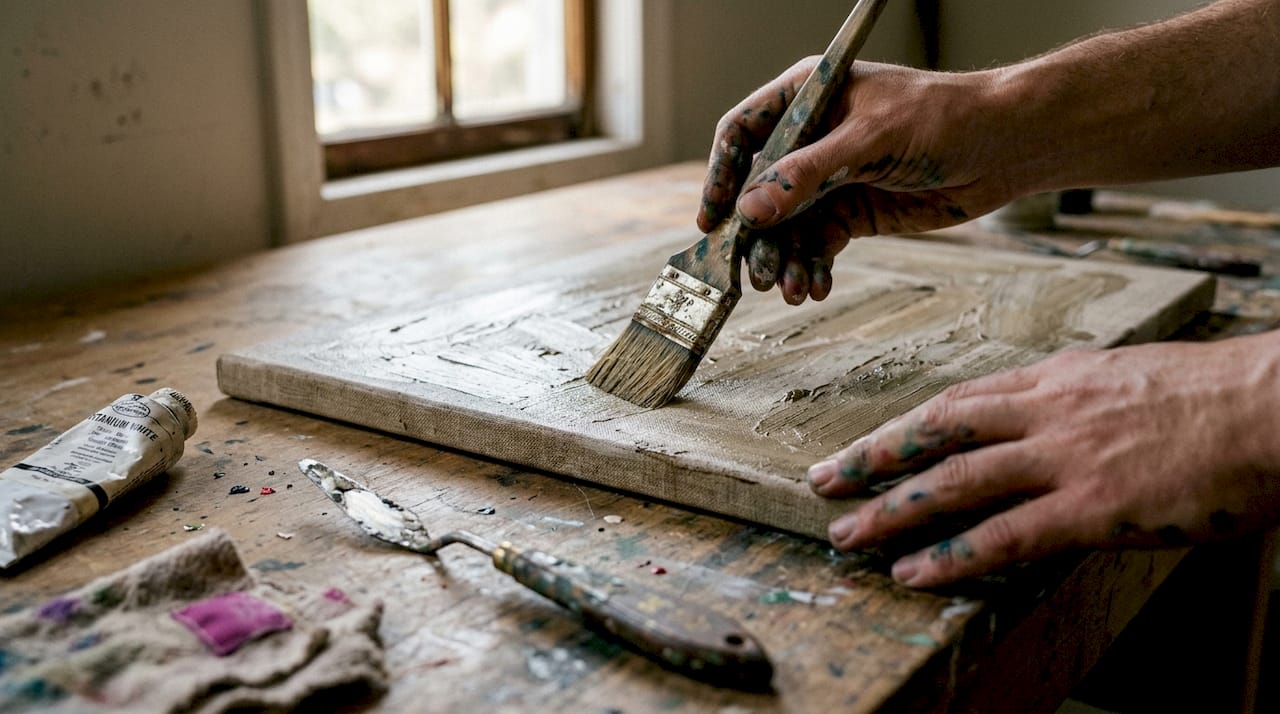
Sgraffito scratches wet paint to reveal layers beneath for intricate line work. This subtractive technique allows you to draw into paint rather than on top of it, creating sharp linear details impossible with brushwork alone. Artists use palette knives, wooden styluses, or even fingernails to carve through top layers, exposing contrasting colors underneath. The method works exceptionally well for adding fine details like hair strands, grass blades, or architectural elements after blocking in broader color areas.
Executing dry brush properly requires specific steps:
- Load your brush with a small amount of paint, then wipe most of it onto a paper towel until the brush appears nearly dry.
- Hold the brush at a low angle to the canvas surface, almost parallel rather than perpendicular.
- Drag the brush lightly across the surface using quick, confident strokes without pressing hard.
- Allow the canvas texture or underlying paint texture to catch pigment irregularly, creating broken color effects.
- Build up multiple passes gradually rather than trying to achieve full coverage in one stroke.
Paint consistency and brush choice dramatically affect texture control outcomes. Dry brush demands stiff paint straight from the tube with minimal medium added. Soft brushes collapse under pressure, failing to create the desired broken texture, so choose firm bristle brushes that maintain their shape. For sgraffito, paint must remain wet and workable, requiring quick execution before the top layer begins to set.
Pro Tip: Use a sharp palette knife point for best sgraffito results, cleaning it frequently to maintain crisp lines. Dull tools push paint around rather than cutting through it cleanly. When exploring different art mediums, understanding the role of texture in handart helps you leverage these techniques for maximum visual impact. Study brush strokes techniques and palette knife techniques to expand your technical repertoire.
Historical and contemporary innovations in painting techniques
Ancient methods and modern innovations demonstrate how painting techniques continue to evolve while honoring tradition. Fresco paints pigments into wet lime plaster, perfected in Renaissance Italy. Buon fresco, or true fresco, bonds pigment chemically with plaster as it cures, creating paintings that become part of the wall itself rather than sitting on its surface. Artists must work in sections called giornate, completing each area before the plaster dries, as corrections become impossible once curing begins. Secco fresco applies paint to dried plaster, offering more flexibility but less durability since pigments sit on the surface rather than bonding chemically.
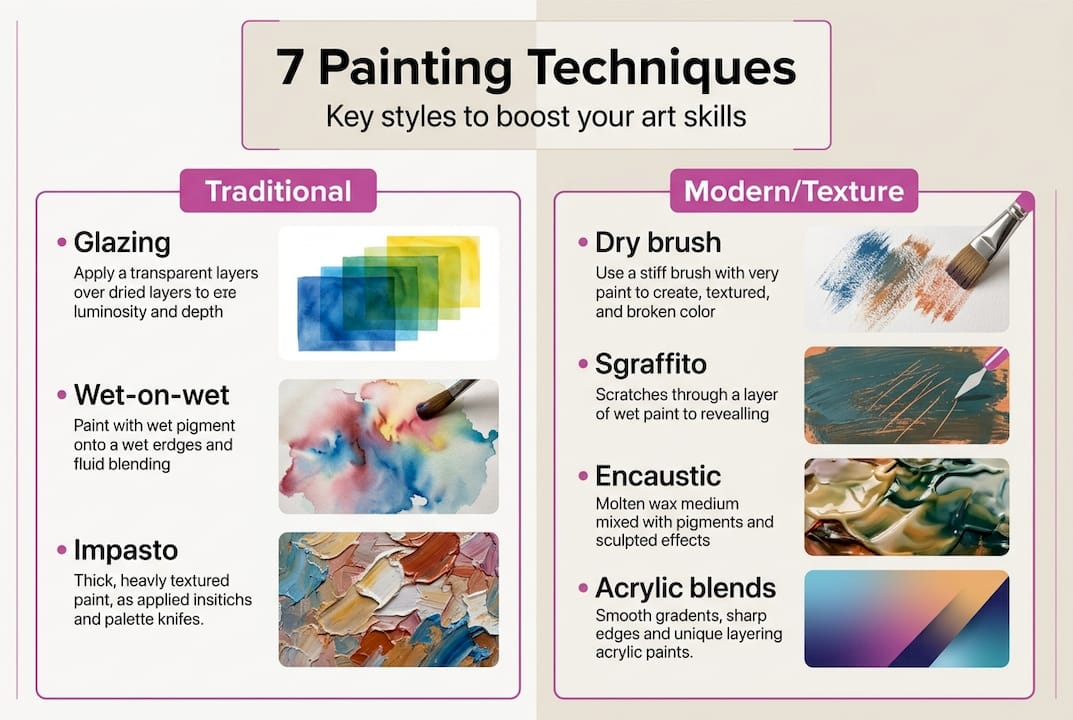
Encaustic mixes pigments with heated beeswax for durable luminous paintings. Ancient Greeks and Romans used this technique for funeral portraits that remain vibrant after two millennia. The process involves melting beeswax, adding dry pigments, and applying the mixture hot to a rigid surface, then fusing layers with gentle heat. The wax protects pigments from environmental damage while creating a unique translucent quality different from oil or acrylic. Modern encaustic artists use electric heating tools and specialized wax mediums to control temperature precisely.
| Technique | Texture quality | Durability | Complexity |
|---|---|---|---|
| Fresco | Matte, integrated with wall | Centuries when protected | High, requires plaster expertise |
| Encaustic | Luminous, slightly dimensional | Extremely durable | Moderate, needs heat management |
| Acrylic innovations | Varies widely with additives | Decades, less tested long-term | Low to moderate, very flexible |
Contemporary artists use tools like Jack Whitten’s Developer and acrylic tesserae mosaics for unique textures. Modern materials expand creative possibilities beyond traditional methods:
- Acrylic pouring creates fluid organic patterns through gravity and medium manipulation
- Texture gels and modeling pastes build sculptural surfaces before painting
- Interference and iridescent pigments shift color based on viewing angle
- Spray paint and airbrush enable smooth gradations impossible with brushes
- Digital projection mapping combines painting with technology for interactive installations
These innovations do not replace traditional techniques but expand the vocabulary available to contemporary artists. Many painters combine historical and modern methods within single artworks, using encaustic for base layers with acrylic details, or applying traditional glazing over digitally printed foundations. The key lies in understanding each technique’s properties to make informed creative choices. When considering luxury interior painting display, technique choice affects how artworks interact with lighting and viewing distance. The benefits of collecting contemporary art include experiencing how artists push technical boundaries while honoring painting’s rich history.
Discover original artworks featuring diverse painting techniques
After exploring these varied approaches, you can appreciate how technique shapes artistic expression in real artworks. Eman’s Gallery offers original paintings and museum-quality prints that showcase diverse methods, from textured impasto to smooth glazed surfaces. Each piece demonstrates how technical choices create distinct visual and emotional experiences. The Good Tidings original painting exemplifies layered color application, while Nocturned original demonstrates atmospheric depth through careful technique selection.
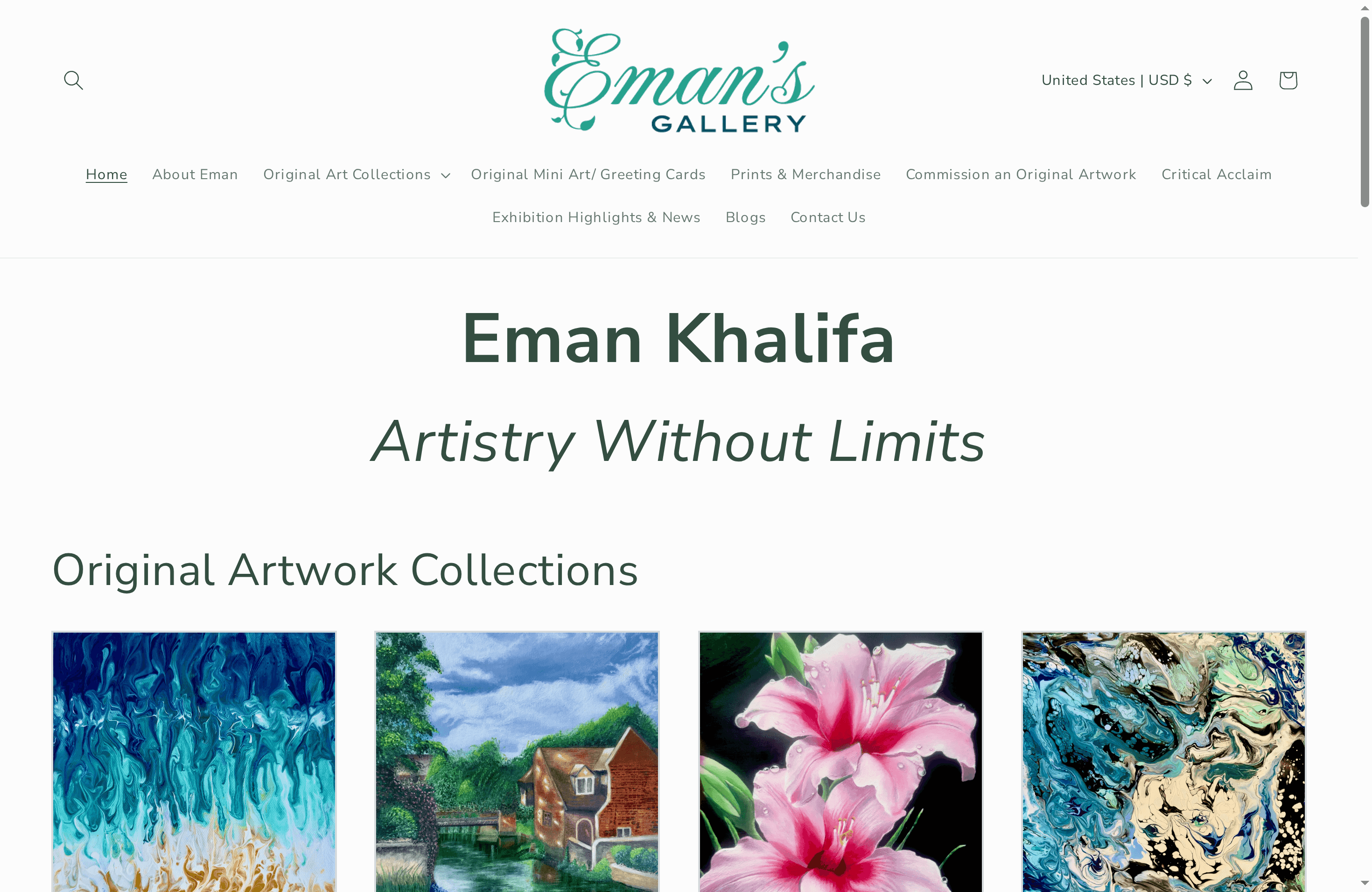
Explore the wall art prints collection to discover how different painting techniques translate into contemporary abstract, geometric, floral, landscape, and seascape compositions. Whether you are seeking inspiration for your own practice or looking to acquire artwork that resonates with your newfound technical understanding, the gallery provides pieces that celebrate painting’s technical diversity and expressive potential.
Frequently asked questions about painting techniques
Can beginners use impasto or glazing techniques successfully?
Absolutely, though each requires different approaches for beginners. Impasto is more forgiving since you can scrape off and reapply thick paint while it remains wet, making it ideal for learning through experimentation. Glazing demands more patience and planning but teaches essential skills like color mixing and layering logic that benefit all future painting. Start with small practice pieces to build confidence before attempting large finished works.
How do acrylics compare to oils for these painting methods?
Acrylics dry much faster, making wet-on-wet blending more challenging but glazing quicker since you wait hours instead of days between layers. Oil paints offer longer working time for blending and remain the traditional choice for classical techniques, but acrylics work excellently for impasto, dry brush, and sgraffito. Modern acrylic mediums can slow drying time or increase transparency, making them increasingly versatile for all techniques. When exploring different art mediums, test both to discover which suits your working pace and creative goals.
What tools are recommended for sgraffito and dry brush work?
For sgraffito, use palette knives with pointed tips, wooden clay tools, or specialized sgraffito combs that create multiple parallel lines simultaneously. Keep paper towels handy to wipe tools clean between strokes for crisp results. Dry brush requires firm bristle brushes, either natural hog hair or synthetic equivalents that maintain stiffness when loaded minimally with paint. Avoid soft sable or synthetic blends designed for smooth blending, as they lack the necessary backbone for effective dry brush texture.
How long does glazing take to complete a painting?
Glazing timelines vary dramatically based on medium and layer count. Oil glazes require three to seven days drying between layers, meaning a painting with five glaze layers might take a month or more. Acrylic glazes dry in hours, allowing multiple layers in a single day, though some artists prefer waiting overnight for complete curing. Traditional masters applied dozens of thin glazes over months, but contemporary artists often use fewer layers for efficiency. Plan your timeline based on your medium choice and desired luminosity depth.
Are fresco and encaustic techniques still used by modern artists?
Yes, though less commonly than oil or acrylic methods. Fresco remains popular for architectural commissions and public murals where permanence matters, with artists using both traditional and modern materials. Encaustic has experienced a significant revival since the 1990s, with contemporary artists attracted to its unique visual qualities and archival stability. Specialized workshops and suppliers now support encaustic painters with refined materials and tools unavailable to ancient practitioners, making the technique more accessible than ever before.
Recommended
- 7 Essential Tips for Exploring Different Art Mediums
- 7 Top Art Print Subjects Every Collector Should Know - Eman’s Gallery
- Printmaking Techniques: Elevating Artistic Expression
- 7 Key Differences: Art Print vs Painting for Collectors - Eman’s Gallery
Stay Connected
- ✨ Explore Eman Khalifa’s original art and fine art prints
- 📸 Follow Eman Khalifa’s art journey on: Instagram @emans_gallery and Facebook Eman’s Gallery
- 📹 Watch Eman Khalifa creating live art on: YouTube @emans_gallery
