


Explore mixed media art: techniques, types, and impact
TL;DR:
- Mixed media art combines deliberate use of multiple materials for complex, textured visual storytelling.
- It is a versatile method that differs from traditional single-medium art by integrating various techniques and surfaces.
- Contemporary spaces value mixed media for its originality, tactile presence, and emotional depth.
Mixed media art gets dismissed as random layering or happy accidents. In reality, it is one of the most intentional and technically demanding approaches in contemporary art. Artists who work in mixed media make deliberate decisions about every material, every layer, and every surface. This article covers what mixed media art actually is, where it came from, which techniques define it, how it compares to traditional art forms, and how it fits into modern spaces. Whether you collect art, decorate your home, or want to start creating, this guide gives you the full picture.
Table of Contents
- Defining mixed media art and its origins
- Common mixed media techniques and materials
- Mixed media vs. other art forms: Key differences and similarities
- Mixed media art in contemporary spaces: Trends and inspirations
- The overlooked power of mixed media in personal creativity
- Discover and collect mixed media art at Eman’s Gallery
- Frequently asked questions
Key Takeaways
| Point | Details |
|---|---|
| Mixed media defined | Combines multiple artistic materials and techniques in one artwork. |
| Technique diversity | Artists use paint, collage, fabric, and even digital tools for innovative effects. |
| Comparison clarity | Mixed media stands out for its versatility compared to traditional art forms. |
| Modern applications | Mixed media art is widely used in contemporary spaces for dynamic visual impact. |
| Start simple | Experiment with two mediums first to unlock creative possibilities without overwhelm. |
Defining mixed media art and its origins
Mixed media art is not a style. It is a method. According to the Tate mixed media definition, mixed media art involves combining different artistic materials and techniques within a single work. That could mean oil paint layered over collaged newspaper, or sculpture combined with photography, or fabric stitched onto a painted canvas.
The roots of mixed media go back to the early 20th century. The Dadaists and Surrealists were among the first to deliberately break the rules of single-medium art. They introduced found objects, printed text, and unconventional materials into their work as a direct challenge to traditional fine art. Kurt Schwitters built entire compositions from discarded scraps. Hannah Höch used photomontage to create sharp political commentary. These artists were not being careless. They were making a point.
By the mid-20th century, artists like Robert Rauschenberg pushed the concept further with his “Combines,” works that merged painting and sculpture into one object. The movement grew from a fringe experiment into a recognized and respected category. Today, mixed media is central to the contemporary art guide landscape, featured in major museums and private collections worldwide.
Why do artists choose mixed media? Several reasons stand out:
- Creative freedom: No single medium limits the final outcome.
- Visual complexity: Layering materials creates depth and texture that flat paint cannot replicate.
- Conceptual range: Different materials carry different meanings, allowing richer storytelling.
- Experimental process: The work evolves as materials interact in unexpected ways.
“The medium is the message” takes on a literal meaning in mixed media art. Every material choice communicates something beyond the image itself.
This intentional approach is what separates mixed media from simply making a mess. The decisions are purposeful, even when the outcome feels spontaneous.
Common mixed media techniques and materials
Now that we know what mixed media art is and where it began, let’s explore the ways artists combine materials and techniques.
According to ArtNews, artists use found objects, collage, paint, ink, and textiles in mixed media projects. The range of materials is genuinely wide. Here are the most commonly used:
- Paint: Acrylic, oil, watercolor, gouache
- Ink and graphite: Drawing elements that add line and detail
- Collage materials: Torn paper, magazine clippings, printed text, maps
- Fabric and fiber: Stitching, weaving, layered textiles
- Found objects: Buttons, wire, wood, metal fragments
- Digital elements: Printed photographs, digital transfers, inkjet layers
Techniques vary just as much as materials. Collage involves cutting and adhering flat materials. Assemblage takes collage into three dimensions. Layering builds up surfaces over time, often with translucent washes between layers. Texturing uses materials like sand, gel medium, or modeling paste to create physical surface relief.
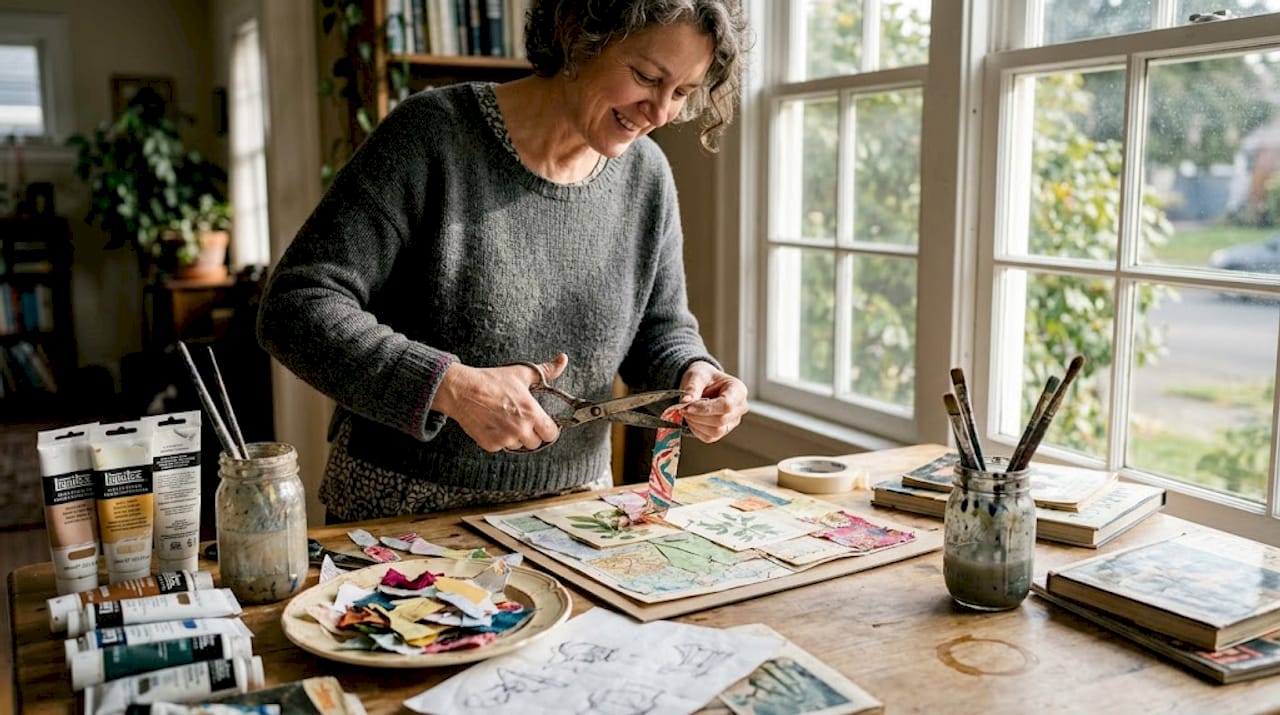
How do artists decide what to combine? Most start with a concept or emotional intention, then ask which materials best express that idea. A piece about memory might combine old photographs with translucent paint layers. A piece about nature might use pressed botanicals with ink washes.
| Technique | Materials used | Visual effect |
|---|---|---|
| Collage | Paper, fabric, photos | Flat, layered, fragmented |
| Assemblage | Found objects, wood, metal | Three-dimensional, textural |
| Layering | Paint, ink, gel medium | Depth, translucency |
| Texturing | Sand, paste, fiber | Physical surface relief |
| Digital integration | Printed graphics, transfers | Crisp contrast with handmade elements |
If you want to buy original contemporary paintings that use these techniques, look for works where you can see distinct material layers up close. That physical complexity is part of what makes mixed media valuable as a collectible. You can also mix originals vs prints in a display to create visual variety on a wall.
Pro Tip: Start with just two mediums, such as acrylic paint and collage paper. Master the interaction between those two before adding more materials. Complexity works best when it is built gradually.
Mixed media vs. other art forms: Key differences and similarities
Understanding techniques is only part of the story. Let’s see how mixed media compares to traditional art forms.
As the MoMA mixed media context explains, mixed media differentiates itself by integrating multiple mediums for enhanced expression. That integration is the key distinction.
| Art form | Mediums used | Surface | Dimensionality |
|---|---|---|---|
| Painting | Single medium (oil, acrylic) | Canvas, board | Flat |
| Sculpture | Single material (clay, bronze) | Freestanding | Three-dimensional |
| Digital art | Software, pixels | Screen or print | Flat or simulated 3D |
| Mixed media | Multiple, combined | Varied | Flat to three-dimensional |
Here is how the comparison breaks down practically:
- Versus painting: Traditional painting relies on one medium to carry all visual weight. Mixed media distributes that across multiple materials, allowing more textural and conceptual range.
- Versus sculpture: Sculpture occupies space physically. Mixed media can do the same through assemblage, but it often remains wall-mounted, bridging painting and sculpture.
- Versus digital art: Digital art is precise and reproducible. Mixed media is inherently unique. No two layered works are identical because the physical materials interact differently each time.
- Versus printmaking: Printmaking involves repeated impressions from a single matrix. Mixed media can incorporate printed elements, but the work itself is always one of a kind.
Strengths of mixed media include versatility, the ability to tell layered stories, and the physical presence that comes from real materials. Limitations include complexity in execution, challenges in framing and preservation, and higher production costs.
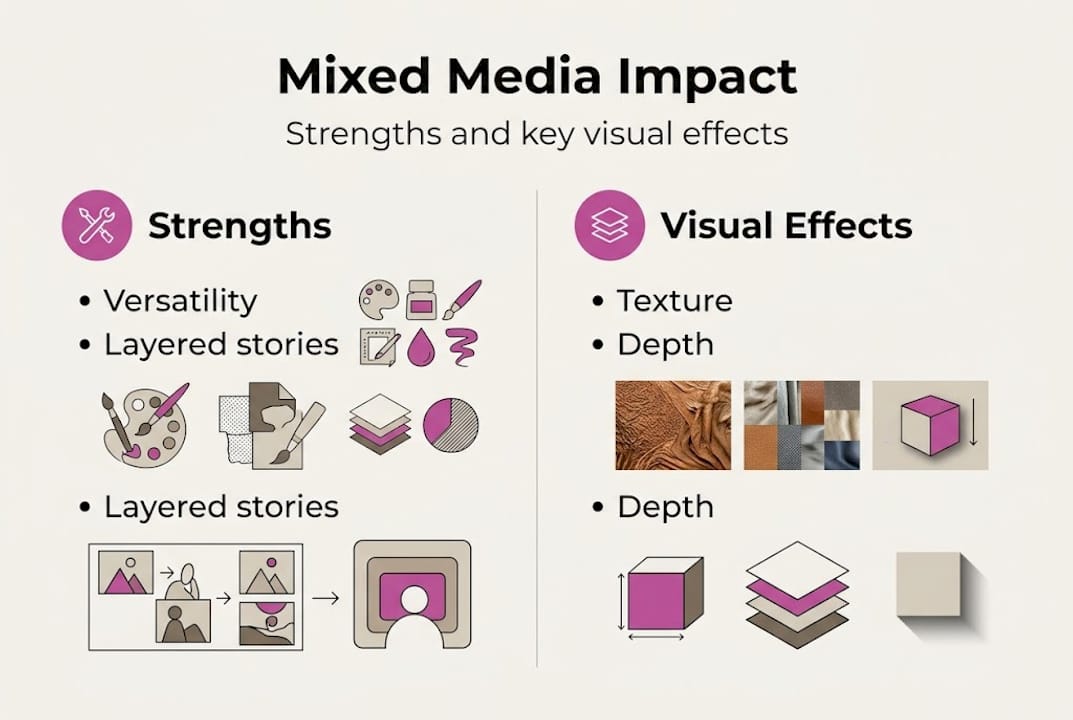
For types of home decor art, mixed media pieces often stand out precisely because they do not look like standard prints. The texture and material variety create a focal point that single-medium works sometimes cannot match.
Mixed media art in contemporary spaces: Trends and inspirations
With practical comparisons done, let’s discover how mixed media art thrives in the contemporary world.
Contemporary art spaces are actively embracing mixed media. As Artsy mixed media gallery data shows, contemporary art spaces increasingly showcase mixed media for its dynamic textures and visual interest. Collectors and interior designers are following the same trend.
Current directions in mixed media include:
- Abstract and fluid compositions: Works that combine poured paint with collage or ink for organic, unpredictable results
- Eco-conscious materials: Artists using recycled paper, natural pigments, and reclaimed objects to align with sustainability values
- Textile integration: Fabric, thread, and fiber woven into painted surfaces for warmth and tactile appeal
- Mixed media on large-scale formats: Oversized works that use scale to amplify the impact of layered materials
For home environments, mixed media works particularly well in living rooms, entryways, and home offices. A large abstract piece with visible texture adds depth to a plain wall. A smaller assemblage piece works as a conversation starter on a shelf or console table.
Galleries and collectors value mixed media for its originality. Because the physical materials cannot be digitally replicated, each work retains a uniqueness that prints cannot match. This makes mixed media pieces strong long-term investments for serious collectors.
For practical interior art display ideas, consider pairing a mixed media original with framed prints in complementary colors. The contrast between the textured original and the flat print creates visual rhythm. There are also compelling reasons to display art at home beyond aesthetics, including documented effects on mood and perceived space.
Pro Tip: Layer art prints with an original mixed media piece on the same wall. Place the original at eye level as the anchor, then surround it with prints. The textural contrast makes both pieces more interesting.
The overlooked power of mixed media in personal creativity
Having explored mixed media’s place in contemporary settings, let’s consider a deeper perspective on its creative power.
Most conversations about mixed media focus on technique. Which materials to use. How to layer. What tools help. That is useful, but it misses something more important. Mixed media is a mindset, not just a method.
The Tate mixed media definition notes that mixed media art allows artists to break rules and invent new visual languages. That freedom is the real value. Most artists, especially beginners, self-censor. They stay within the boundaries of one medium because it feels safer. Mixed media removes that safety net in the best possible way.
The artists who get the most from mixed media are not necessarily the most technically skilled. They are the ones willing to use non-traditional materials without apology. A piece of rusted metal. A torn receipt. A strip of fabric from a worn-out garment. These materials carry history and meaning that manufactured art supplies simply do not.
If you are creating mixed media works and want to protect them long-term, reviewing art print care instructions is a practical starting point, especially for works that combine delicate materials with more durable ones.
The real creative breakthrough in mixed media comes when you stop asking “Is this allowed?” and start asking “Does this work?”
Discover and collect mixed media art at Eman’s Gallery
If this article has given you a clearer picture of mixed media art, the next step is seeing it in person, or as close to it as possible.
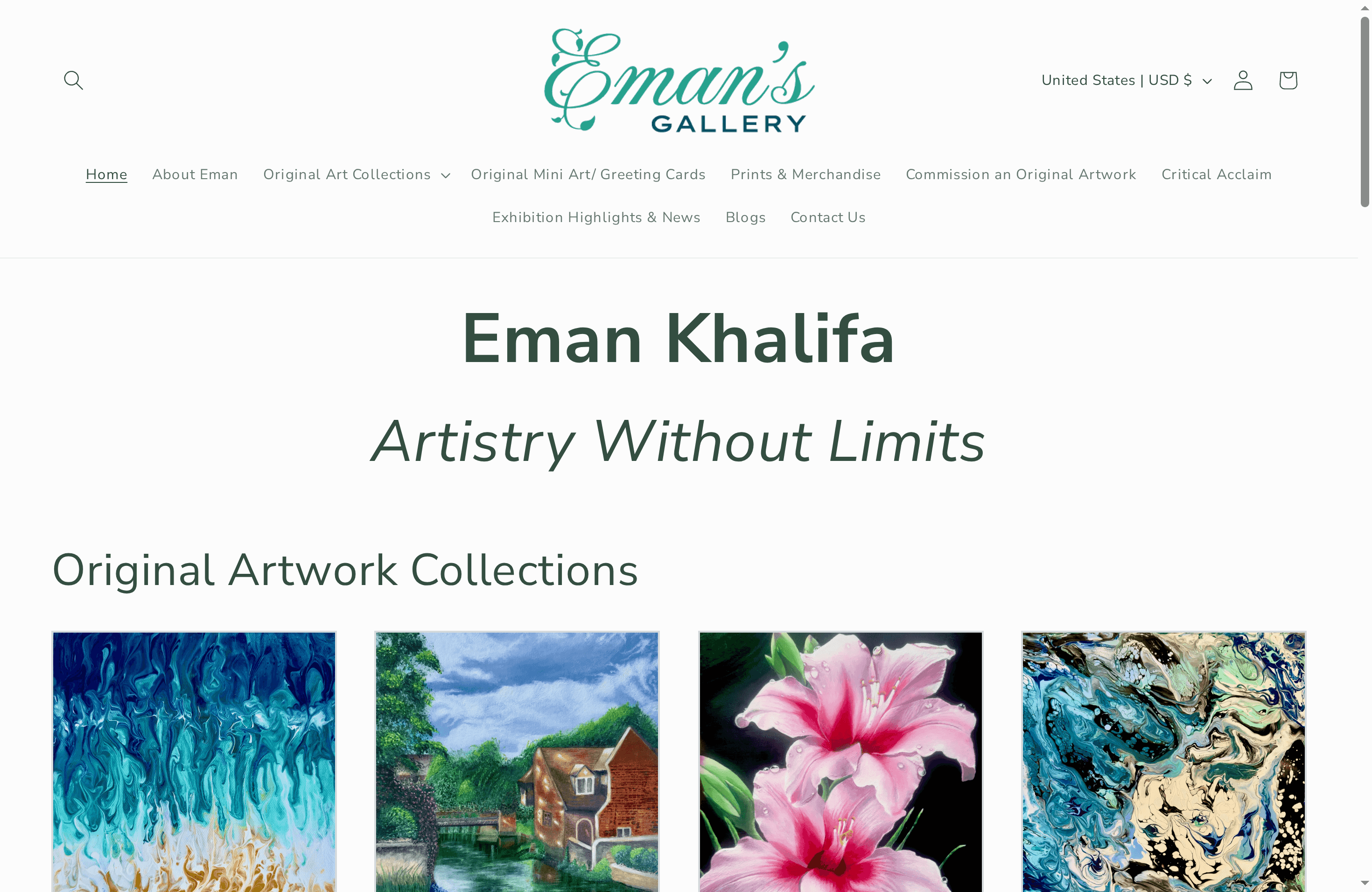
Eman’s Gallery features original handmade works and museum-quality canvas prints that reflect the layered, textural qualities that define contemporary mixed media. The fragments of memory canvas print is a strong example of how depth and material complexity translate into a collectible format. For a broader selection, the contemporary realism art collection includes original pieces and high-quality prints shipped worldwide. Whether you are an art collector, an interior designer sourcing statement pieces, or a first-time buyer, there is a work here that fits your space.
Frequently asked questions
What makes mixed media art different from collage?
Mixed media involves various materials across multiple mediums including paint, sculpture, and digital elements, while collage focuses mainly on assembling paper and other flat materials onto a surface.
Can digital elements be included in mixed media art?
Yes. Mixed media can integrate digital components such as printed graphics, inkjet transfers, or manipulated photographs alongside traditional handmade elements.
How do I start creating mixed media art as a beginner?
Begin with basic mediums like acrylic paint and collage paper, then expand gradually to more materials as you build confidence and understand how different surfaces interact.
Is mixed media art suitable for home or office décor?
Absolutely. Mixed media art is featured in modern spaces specifically for its dynamic textures and visual depth, making it a strong choice for living rooms, offices, and entryways.
How is mixed media art preserved or maintained?
Proper care depends on the specific materials used. Managing light and moisture exposure is the most reliable baseline for preserving most mixed media artworks long-term.
Recommended
- Master 7 types of painting techniques to elevate your art
- Art Print Mediums Explained: Key Types and Uses - Eman’s Gallery
- Printmaking Techniques: Elevating Artistic Expression
- Textured Artwork: Styles, Techniques & Uses - Eman’s Gallery
Stay Connected
- Explore Eman's Gallery Original Mini-Art Cards, hand-painted by Eman Khalifa
- ✨ Explore Eman Khalifa’s original art, fine art prints & art merchandise
- 📸 Follow Eman Khalifa’s art journey on: Instagram @emans_gallery and Facebook Eman’s Gallery
- 📹 Watch Eman Khalifa creating live art on: YouTube @emans_gallery
