


7 Key Differences: Art Print vs Painting for Collectors
Over 40 percent of American collectors say authenticity is their top concern when choosing art for their homes. Distinguishing between original paintings and art prints matters because each option offers unique qualities that can impact value, experience, and long term appeal. By understanding the essential differences, you can confidently select artwork that matches your personal style while making smart decisions about investment and care.
Table of Contents
- 1. Understanding What Makes A Painting Unique
- 2. Exploring The Process Behind Art Prints
- 3. Comparing Value And Investment Potential
- 4. Spotting Visual And Textural Differences
- 5. Assessing Longevity And Maintenance Needs
- 6. Personalization And Customization Options
- 7. Choosing The Best Fit For Your Space Or Project
Quick Summary
| Takeaway | Explanation |
|---|---|
| 1. Original Paintings Are Unique | Each original painting reflects an artist’s singular vision and emotional expression, making them irreplaceable. |
| 2. Art Prints Offer Accessibility | Reproductions allow broader access to art, yet their value hinges on factors like edition size and artist reputation. |
| 3. Texture Reveals Authenticity | Original works possess tactile qualities and textural nuances that distinguish them from prints, which appear flat. |
| 4. Proper Care Extends Longevity | Both original paintings and art prints need careful maintenance to preserve their artistic and financial value over time. |
| 5. Personalization Enhances Collecting | Engaging with artists for original pieces or choosing limited edition prints allows collectors to express individual taste and style. |
1. Understanding What Makes a Painting Unique
Every painting represents a distinct artistic journey, shaped by an artist’s unique vision, technical skill, and emotional expression. Unlike mass produced art prints, original paintings embody an irreplaceable creative essence that goes far beyond mere visual representation.
Paintings are profoundly unique due to their intrinsic formalistic artistic elements, which emphasize the fundamental visual language created by the artist. These elements include complex interactions of color, texture, line, and shape that transform a blank canvas into a singular artistic statement. Medium specificity plays a critical role in defining a painting’s uniqueness, highlighting how artists manipulate the inherent qualities of their chosen medium.
When collectors examine an original painting, they are not just viewing an image but experiencing a direct manifestation of the artist’s creative process. Each brushstroke carries intentionality, revealing the artist’s technical mastery and emotional depth. Textural variations, subtle color gradients, and microscopic imperfections become signatures of authenticity that no reproduction can fully capture.
To truly appreciate a painting’s uniqueness, collectors should observe:
- The artist’s distinctive technique and style
- Visible brushwork and textural nuances
- Material choices like canvas type and paint composition
- Emotional resonance and storytelling within the artwork
- Subtle variations impossible to replicate in prints
By understanding these intrinsic qualities, art enthusiasts can develop a deeper appreciation for the profound individuality embedded in every original painting.
2. Exploring the Process Behind Art Prints
Art prints represent a fascinating world of reproduction techniques that transform original artworks into accessible pieces for art enthusiasts and collectors. Art print production involves sophisticated methods that allow artists to create multiple high quality reproductions of their original work.
Printing Techniques play a crucial role in determining an art print’s quality and value. Artists employ diverse methods including lithography, screen printing, etching, and photo mechanical processes. Each technique offers unique characteristics that influence the final artistic representation.
The most common printing techniques include:
- Lithography: Involves drawing on a smooth limestone or metal plate
- Screen Printing: Uses mesh screens to transfer ink onto surfaces
- Etching: Creates intricate designs by cutting images into metal plates
- Woodblock Printing: Uses carved wooden surfaces to produce prints
Serigraphy stands out as a particularly meticulous printing method. This screen printing technique allows artists to create intricate multicolored prints with exceptional precision and depth. Professional artists carefully layer different colors and materials to produce visually stunning reproductions that capture the essence of their original artwork.
Collectors should understand that while art prints are reproductions, their value depends on factors like edition size, printing technique, artist signature, and overall print quality. A limited edition print signed by the artist can be a valuable addition to an art collection, offering accessibility to remarkable artistic expressions.
3. Comparing Value and Investment Potential
The world of art collecting involves nuanced decisions about value, particularly when comparing original paintings and art prints. Investment potential in art depends on multiple factors that go beyond simple visual appeal.
Original Paintings represent the pinnacle of artistic investment. These unique creations are inherently more valuable because they are one of a kind, directly produced by the artist’s hand. Each original painting carries intrinsic value through its singularity and the artist’s direct creative energy.
Art prints, while reproductions, can also hold significant investment potential. Key factors determining print value include:
- Limited edition status
- Artist’s signature and numbering
- Print quality and technique
- Artist’s reputation and market demand
- Condition of the print
Collectors should understand that not all prints are equal. A signed and numbered limited edition print from a renowned artist can appreciate substantially over time. Professional collectors often seek prints with:
- Minimal edition sizes (typically under 100)
- Certificates of authenticity
- Prints from established or emerging notable artists
- High quality production techniques
While original paintings typically command higher prices, strategic print collecting can yield impressive returns. The key is understanding the nuanced art market and making informed, research driven acquisition decisions.
4. Spotting Visual and Textural Differences
Discerning between an original painting and an art print requires a keen eye and understanding of subtle visual and textural characteristics. The physical details reveal profound differences that distinguish these artistic expressions.
Texture Tells a Story in art reproduction. Original paintings showcase rich tactile qualities impossible to fully replicate in prints. When examining an artwork, run your hand gently near the surface observing how light interacts with the paint layers. Original paintings will reveal three dimensional brush strokes, paint thickness, and nuanced surface variations.
Key Visual Identification Techniques:
- Brush Stroke Analysis: Original paintings display unique stroke patterns
- Surface Texture: Feel for raised paint layers and dimensional qualities
- Light Reflection: Observe how light reflects off different artistic surfaces
- Material Depth: Note variations in paint application and material buildup
Microscopic Examination provides ultimate verification. Professional collectors often use magnifying tools to inspect:
- Paint layering techniques
- Pigment distribution
- Canvas weave interaction with paint
- Minute imperfections unique to hand created works
Prints typically appear uniform and flat, while original paintings demonstrate complex visual landscapes that change with viewing angle and lighting. Learning to recognize these subtle differences transforms art appreciation from passive observation to informed connoisseurship.
5. Assessing Longevity and Maintenance Needs
Preserving art requires strategic understanding of the unique preservation requirements for original paintings and art prints. Artwork maintenance is a critical consideration for collectors seeking to protect their valuable artistic investments.
Original Paintings demand sophisticated conservation strategies. These unique artworks are more vulnerable to environmental factors and require specialized care. Factors affecting painting longevity include:
- Humidity levels
- Direct sunlight exposure
- Temperature fluctuations
- Handling techniques
- Storage conditions
Art Prints typically require less intensive maintenance but still need careful handling. Professional collectors recommend:
- Framing with archival quality materials
- Using UV protective glass
- Avoiding direct sunlight
- Maintaining consistent room temperature
- Minimizing physical contact
Conservation experts suggest professional assessment every few years for both original paintings and high value prints. Preventative Care involves creating stable environmental conditions and minimizing potential damage sources.
Collectors should invest in professional framing, use acid free materials, and store artworks away from direct light and extreme temperature changes. Professional conservation can significantly extend the lifespan of both original paintings and fine art prints, preserving their aesthetic and financial value for future generations.
6. Personalization and Customization Options
The world of art collecting offers unique avenues for personalization, with original paintings and art prints presenting distinct opportunities for individual expression. Limited edition prints provide collectors with exclusive options to curate their personal art experience.
Original Paintings represent the pinnacle of artistic personalization. Each artwork is a singular creation reflecting the artist’s direct creative vision. Collectors can engage directly with artists to commission custom pieces tailored to specific aesthetic preferences, color schemes, or spatial requirements.
Customization Possibilities for art prints include:
- Limited edition numbering
- Artist signature verification
- Custom framing options
- Size and format variations
- Color palette adjustments
Personalization Strategies for collectors:
- Request custom sizing for specific wall spaces
- Select prints matching interior design themes
- Choose specific color variants
- Acquire numbered limited edition prints
- Collaborate with artists on unique interpretations
Art prints offer more flexible personalization through strategic selection. While not as unique as original paintings, limited edition prints allow collectors to own a piece of artistic creativity with a sense of exclusivity and personal connection. The key is understanding the nuanced options available in art reproduction and collecting.
7. Choosing the Best Fit for Your Space or Project
Selecting the perfect artwork involves balancing aesthetic desires, budget considerations, and spatial requirements. Art selection strategies require careful evaluation of your specific needs and creative vision.
Budget Considerations play a crucial role in artwork selection. Original paintings represent significant investment pieces, while art prints offer more accessible options for diverse collector budgets. Professional interior designers recommend evaluating your financial parameters before making a selection.
Decision Making Factors:
- Available wall space
- Budget limitations
- Design aesthetic
- Long term investment potential
- Maintenance requirements
- Personal emotional connection
Practical Selection Guidelines:
- For luxury spaces: Original paintings create unique focal points
- For flexible design: Limited edition prints provide versatility
- For budget conscious collectors: High quality prints offer aesthetic value
- For investment purposes: Research artist reputation and print edition size
Professional collectors understand that the right artwork transcends mere decoration. It represents a personal statement reflecting individual taste, design vision, and artistic appreciation. Whether choosing an original painting or a carefully selected print, the key is finding an artwork that resonates with your personal aesthetic and functional requirements.
Below is a comprehensive table summarizing the main concepts and considerations related to understanding paintings and art prints discussed throughout the article.
| Topic | Description | Key Considerations |
|---|---|---|
| Unique Qualities of Paintings | Original paintings embody an artist’s vision with unique elements like texture and color. | Observe brushwork, technique, and emotional depth. |
| Art Print Production | Art prints use techniques such as lithography and screen printing to reproduce artworks. | Consider edition size, printing technique, and the artist’s signature. |
| Value and Investment | Original paintings are prized for uniqueness, while prints offer investment potential. | Evaluate factors like edition size and artist reputation. |
| Visual and Textural Differences | Original paintings feature complex textures and light interactions. | Examine surface texture and light reflection. |
| Longevity and Maintenance | Both paintings and prints require specific conservation strategies. | Manage environmental factors and use archival materials for preservation. |
| Personalization Options | Paintings offer unique personalization, while prints provide customization possibilities. | Consider custom sizing and artist collaboration. |
| Choosing the Best Fit | Select artworks based on space, budget, and personal taste. | Balance design aesthetic with functional requirements. |
Discover Your Perfect Art Match with Eman’s Gallery
Choosing between original paintings and art prints can be daunting for collectors who want to balance uniqueness, investment value, and personal expression. This article highlights the critical differences in texture, longevity, personalization, and market potential, helping you make an informed choice that suits your space and taste. At Eman’s Gallery, we understand these nuances and offer a curated selection to meet diverse collector needs.
Explore our exquisite range of Canvas Art Prints by Eman Khalifa | Premium Giclée Wall Art that capture rich textures and vibrant colors with museum-quality precision. For collectors seeking unique original creations, our online gallery features one-of-a-kind handmade paintings spanning abstract to landscape styles, all available for immediate worldwide shipping.
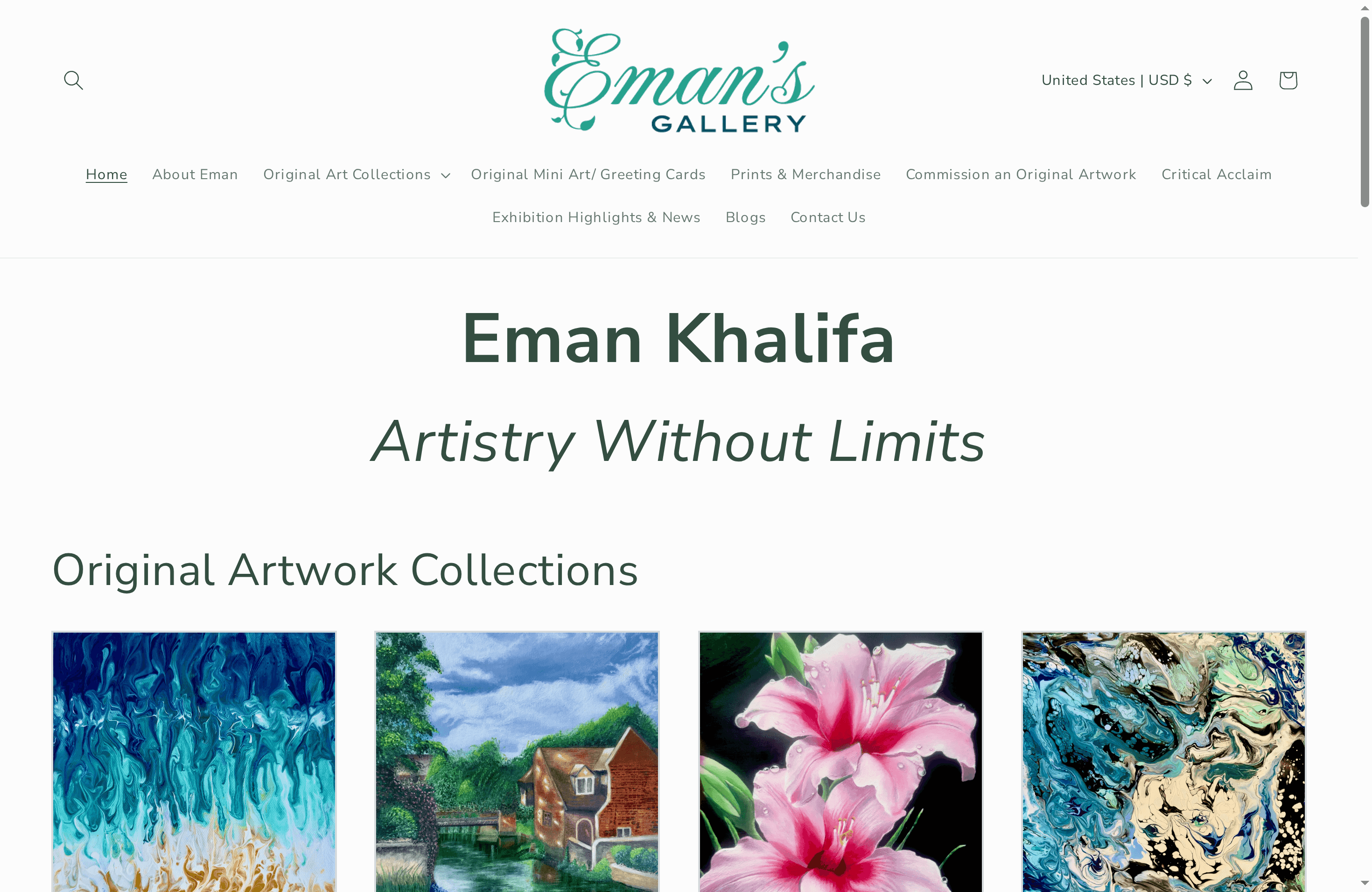
Elevate your art collection today by visiting Eman’s Gallery and discover versatile Wall Art Prints | Canvas & Framed Art Prints by Eman Khalifa perfect for every design vision. Don’t wait to bring genuine artistry into your living or working space. Start your journey with artworks that speak directly to your soul and stand the test of time.
Frequently Asked Questions
What are the main differences between art prints and original paintings?
Art prints are reproductions of original artworks, while original paintings are unique creations by an artist. To make an informed decision, consider attributes like pricing, uniqueness, emotional connection, and maintenance requirements for each option.
How can I evaluate the investment potential of an art print versus an original painting?
The investment potential of original paintings is generally higher due to their singularity and the artist’s direct input. Assess factors such as artist reputation, limited edition status, and print quality to evaluate an art print’s value.
What should I look for when assessing the quality of an art print?
When assessing an art print, check for the printing technique, paper quality, and whether it is a signed and numbered limited edition. Aim for prints that have minimal edition sizes and come with certificates of authenticity to enhance their value.
How do I maintain original paintings compared to art prints?
Original paintings require more careful maintenance due to their sensitivity to environmental factors, so ensure they are stored and displayed with controlled humidity and temperature. For prints, use UV protective glass and avoid direct sunlight, taking these steps to extend the lifespan of both types of artwork.
Can I personalize an art print like I can with an original painting?
Yes, art prints, especially limited editions, often offer customization options such as size, color palette, and framing choices. Consider collaborating with artists for unique interpretations or selecting specific prints that suit your personal style.
How do I determine which artwork is the best fit for my space?
To find the best artwork for your space, evaluate factors like budget, wall size, and your desired aesthetic. Measure your available space and list your preferences to ensure the artwork complements your overall design vision.
Recommended
- What Is an Art Print? Complete Guide for 2025 – Eman’s Gallery
- Complete Guide to Valuing Art Prints – Eman’s Gallery
- Art Print Terminologies: Complete Reference Guide – Eman’s Gallery
- Why Invest in Artist Prints: Complete Guide – Eman’s Gallery
- Why Print Catalogs: Complete Guide for Businesses - www.printcafeusa.com
Stay Connected
- ✨ Explore Eman Khalifa’s original art and fine art prints
- 📸 Follow Eman Khalifa’s art journey on: Instagram @emans_gallery and Facebook Eman’s Gallery
- 📹 Watch Eman Khalifa creating live art on: YouTube @emans_gallerye
