


How to Spot Authentic Art: A Step-by-Step Guide
How to Spot Authentic Art: Step-by-Step Guide
Nearly half of all american art collectors say verifying authenticity is the hardest part of acquiring artwork. The stakes are high since even a small mistake can mean significant financial loss or legal headaches. Each step in the authentication process matters, from researching the artist’s history to seeking expert analysis. Knowing how to navigate these challenges could be the difference between uncovering a genuine treasure and falling for a convincing fake.
Table of Contents
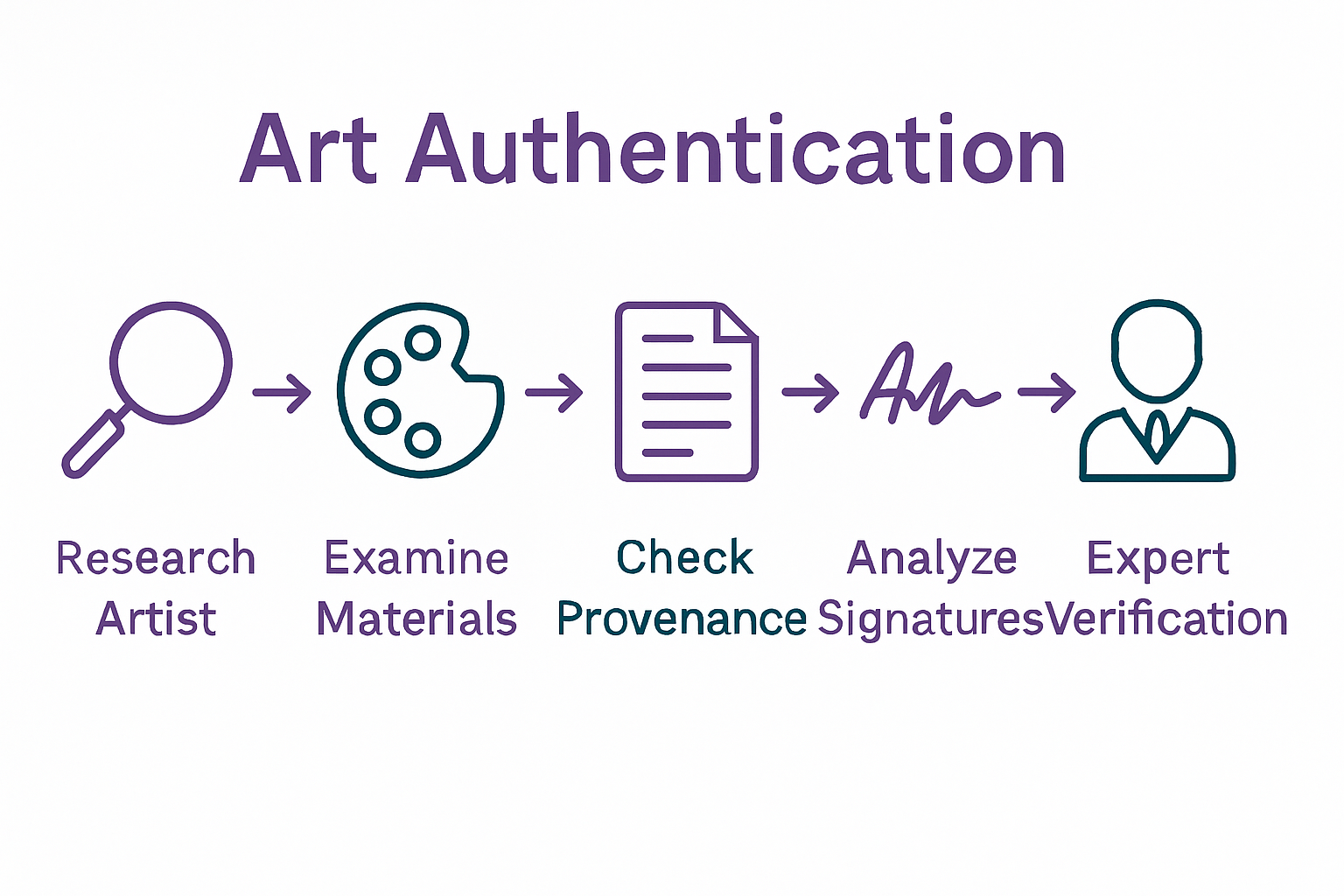
- Step 1: Research The Artist’s Background
- Step 2: Examine Materials And Techniques
- Step 3: Check Provenance And Documentation
- Step 4: Analyze Signatures And Markings
- Step 5: Verify Authenticity With Experts
Quick Summary
| Key Point | Explanation |
|---|---|
| 1. Research Artist’s Background | Understand the artist’s history through reliable sources to establish context for their work and techniques. |
| 2. Examine Materials and Techniques | Investigate artwork composition using advanced techniques to uncover genuine characteristics and potential forgeries. |
| 3. Check Provenance and Documentation | Collect and verify ownership records to trace the artwork’s historical journey and authentic origins. |
| 4. Analyze Signatures and Markings | Carefully scrutinize signatures for consistency and detail to confirm the artwork’s legitimacy. |
| 5. Verify Authenticity with Experts | Consult qualified professionals for thorough evaluation to achieve definitive insights regarding the artwork’s authenticity. |
Step 1: Research the Artist’s Background
Understanding an artist’s background is like assembling a complex puzzle that reveals the story behind their creative process. When authenticating art, researching the artist’s history provides critical context about their artistic journey, techniques, and potential value.
Start by diving into comprehensive research about the artist using multiple reliable sources. Check museum archives, gallery catalogs, professional art databases, and authoritative art history websites. Look for verified biographical information such as birthplace, formal training, significant exhibitions, artistic movements they belonged to, and notable career milestones. Professional art platforms like ArtNet and Artsy offer extensive artist profiles that can help you build a detailed understanding.
Pay special attention to documentation that can substantiate the artwork’s provenance. Academic publications, exhibition catalogs, and professional artist monographs can provide authenticated details about an artist’s specific creative periods, signature styles, and unique techniques. Professional art historians and curators often publish comprehensive research that can help you cross-reference an artwork’s authenticity.
Warning: Be cautious of information from unverified online sources or personal blogs. Stick to academic, museum, and professionally curated platforms that have a reputation for accuracy and thoroughness. Websites ending in .edu, .museum, or managed by recognized art institutions carry more credibility than random internet sources.
Once you have compiled a comprehensive artist profile, you will be better equipped to assess whether the artwork in question matches the artist’s known style, technique, and creative period. This research sets the foundation for the next critical steps in art authentication.
Step 2: Examine Materials and Techniques
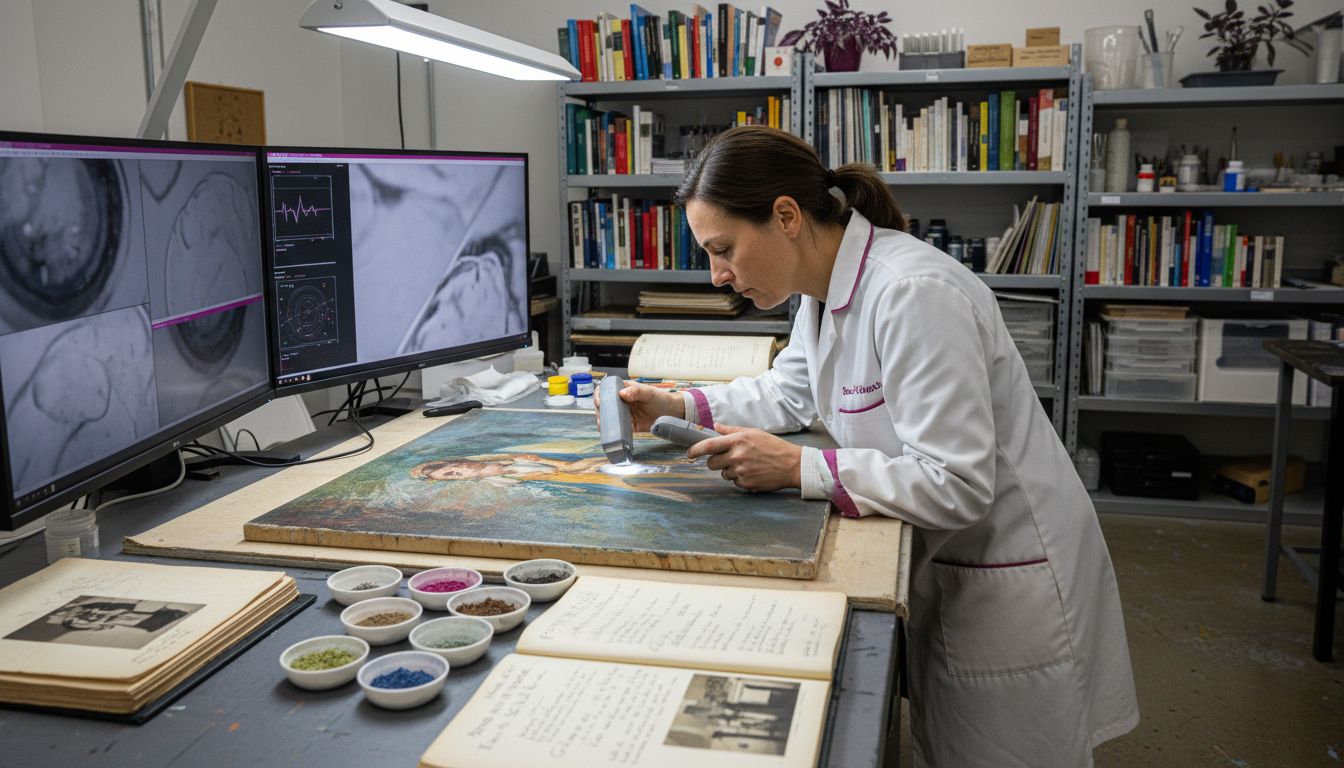
Examining an artwork’s materials and techniques is like being a forensic investigator in the world of art authentication. This crucial step helps you uncover the genuine characteristics of an artwork by understanding its fundamental composition and creation method.
Advanced technological approaches have revolutionized material analysis in art authentication. ArXiv research demonstrates the power of high resolution non invasive X ray diffraction analysis for identifying precise pigment compositions and crystallographic properties of artists’ materials. Start by closely inspecting the artwork’s physical characteristics such as paint layers, brush techniques, canvas weave, and substrate materials. Look for consistent application techniques that match the artist’s known style and period.
Professional art authentication often involves specialized scientific techniques. ArXiv studies highlight how multimodal imaging and spectroscopic techniques can provide comprehensive insights into painting materials and drawing techniques. Consider consulting professional art conservation laboratories that use advanced technological tools like spectral imaging, infrared reflectography, and microscopic analysis to reveal hidden details about an artwork’s materials.
Warning: Amateur material assessments can be misleading. Always seek expert verification when possible. Subtle variations in pigment composition, brush stroke patterns, and material quality can reveal critical information about an artwork’s authenticity.
Once you have thoroughly examined the materials and techniques, you will be ready to compare your findings with established documentation about the artist’s known work. This meticulous investigation provides substantial evidence toward determining the artwork’s genuine provenance.
Step 3: Check Provenance and Documentation
Authenticity in art hinges on a comprehensive understanding of an artwork’s historical journey. Checking provenance and documentation is your critical detective work in tracing the artwork’s legitimate lineage and establishing its genuine origins.
Research from MDPI highlights a comprehensive authentication scheme that emphasizes the paramount importance of verifying ownership documents. Begin by collecting and systematically examining all available documentation such as sales receipts, exhibition catalogs, gallery records, auction histories, and previous ownership certificates. Each document serves as a puzzle piece in reconstructing the artwork’s complete historical narrative.
Methodological approaches to authentication, as outlined in research from Springer, underscore the necessity of meticulous documentation verification. Track the artwork’s complete ownership chain, looking for consistent documentation that can be cross referenced and verified through multiple independent sources.
Professional art historians and authentication experts can help validate these historical records and identify potential inconsistencies.
Warning: Be extremely cautious of documentation that appears incomplete, suspiciously recent, or lacks verifiable details. Authentic provenance documentation should demonstrate a clear, unbroken chain of ownership with credible and traceable sources.
Once you have compiled and verified the artwork’s documentation, you will have established a solid foundation for understanding its authentic origins. This comprehensive documentation review prepares you for the subsequent steps in art authentication.
Step 4: Analyze Signatures and Markings
Signatures and markings are the fingerprints of an artwork revealing its unique identity and potential authenticity. This critical step involves carefully examining the distinctive signs that can confirm or challenge an artwork’s legitimate origins.
Cutting edge research from ArXiv proposes innovative computational approaches for analyzing artistic strokes and line characteristics. Develop a systematic approach to examining signatures by studying their consistency, placement, and execution. Look closely at the signature’s positioning typical of the artist during specific periods. Pay attention to subtle details such as stroke depth, angle, pressure, and the specific tools used. Compare the artwork’s signature against authenticated examples from museum archives, gallery catalogs, and verified reference materials.
Advanced analytical techniques highlighted by ArXiv demonstrate how information based measures can uncover hidden patterns that distinguish authentic artworks from potential forgeries. Consider using magnification tools or consulting forensic art experts who can perform detailed microscopic analysis of signatures and markings. Focus on understanding the unique characteristics of the artist’s signature evolution throughout their career.
Warning: Amateur signature analysis can be misleading. Artists often modify their signatures over time, and forgeries can be incredibly sophisticated. Always seek professional verification when you encounter signatures that seem unusual or inconsistent.
Once you have thoroughly examined the signatures and markings, you will have gathered crucial evidence about the artwork’s potential authenticity. This meticulous analysis prepares you for the final stages of art authentication.
Step 5: Verify Authenticity with Experts
Authenticity verification is the ultimate checkpoint in determining an artwork’s genuine status. This final step involves consulting professional experts who can provide definitive insights into the artwork’s legitimacy.
Britannica highlights the complementary roles of art historians and scientific experts in detecting artistic forgeries. Seek out specialized professionals such as art historians, forensic art analysts, museum curators, and authentication specialists who have deep expertise in the specific artist or artistic period. These experts employ sophisticated techniques that combine stylistic analysis with advanced technical examinations to validate an artwork’s origins.
Scientific examination techniques outlined by Woodshed Gallery demonstrate the complexity of art authentication. Professional experts utilize non invasive testing methods including pigment identification, material dating, specific wavelength imaging, and comprehensive material analysis. These scientific approaches can reveal microscopic details about an artwork’s composition, age, and potential authenticity that are invisible to the untrained eye.
Warning: Authentic expert verification can be expensive and time consuming. Always choose experts with verifiable credentials, extensive experience in the specific artistic genre, and a reputation for rigorous scientific analysis.
Once you receive expert verification, you will have the most definitive assessment of the artwork’s authenticity. This comprehensive expert analysis provides the final seal of confirmation in your art authentication journey.
Discover Authentic Contemporary Art You Can Trust
Authenticating art can feel overwhelming when you face challenges like verifying signatures, materials, and provenance. This step-by-step guide highlights key hurdles collectors experience while seeking genuine pieces. If you are looking for exclusive, verifiable artworks crafted with authentic techniques and original vision, exploring a trusted source is essential — browse our framed archival prints or original paintings, each created and signed by Eman Khalifa.
Experience the confidence of owning truly original art by exploring the Contemporary collection at Eman's Gallery where each piece is handmade by artist Eman Khalifa using authentic materials and thoughtful craftsmanship.
Don’t settle for uncertainty when adding art to your collection. Visit Eman’s Gallery today to find museum-quality contemporary paintings that come with integrity and distinctive style. Take the next step toward owning genuine art by browsing our unique Abstract and Geometric original artworks and enjoy worldwide shipping to bring authentic creativity to your space.
Frequently Asked Questions
How do I start researching an artist’s background for art authentication?
To start researching an artist’s background, gather information from reliable sources like museum archives and professional art databases. Compile biographical details, significant exhibitions, and artistic movements associated with the artist to form a comprehensive profile.
What materials and techniques should I examine when authenticating art?
When authenticating art, examine the physical characteristics such as paint layers, canvas weave, and brush techniques. Look for consistency with the artist’s known style and methods, and consider consulting experts for advanced material analysis.
How do I verify the provenance and documentation of an artwork?
To verify the provenance of an artwork, meticulously gather and review ownership documents, such as sales receipts and exhibition catalogs. Ensure you have a clear, unbroken chain of ownership with credible sources to substantiate the artwork’s history.
What should I look for when analyzing signatures and markings on a piece of art?
When analyzing signatures, focus on consistency, placement, and execution. Compare the signature to authenticated examples, paying attention to details like stroke depth and angle, to assess authenticity.
How can I find professional experts to verify an artwork’s authenticity?
To find professional experts, search for art historians, forensic art analysts, or museum curators specializing in the artist or art period in question. Aim to choose experts with verifiable credentials and extensive experience in art authentication.
What steps can I take if I suspect an artwork might be a forgery?
If you suspect an artwork is a forgery, conduct thorough research on the artist’s background and examine the materials used. Follow this with a detailed signature analysis and seek verification from recognized experts in art authentication.
Buy Authentic Art with Confidence
Every piece at Eman's Gallery is handmade, signed, and created by artist Eman Khalifa:
- Original Paintings — one-of-a-kind works with full provenance
- Framed Archival Prints — signed, limited edition giclée prints
- Abstract Art — expressive originals and prints
- Geometric Art — structured, bold originals and prints
Recommended
- What Makes Art Original: Complete Guide for 2025 – Eman’s Gallery
- Art for Collectors Guide: Expert Insights and Strategies – Eman’s Gallery
- Art Collecting Terminology: Complete Guide for Enthusiasts – Eman’s Gallery
- What Is an Art Print? Complete Guide for 2025 – Eman’s Gallery
Stay Connected
-
✨ Explore Eman Khalifa’s original art, fine art prints & art merchandise
-
📸 Follow Eman Khalifa’s art journey on: Instagram @emans_gallery and Facebook Eman’s Gallery
-
📹 Watch Eman Khalifa creating live art on: YouTube @emans_gallery
-
Supported by BabyLoveGrowth
