


Statement Art Piece: Transforming Interior Spaces
Every luxury space deserves more than routine decoration. For discerning collectors and interior designers across the United Kingdom and United States, the right statement art piece can redefine a residence, functioning as a bold visual anchor and storytelling platform. By embracing pieces crafted with intentional conceptual depth and strong aesthetic resonance, interiors become immersive environments that reflect individuality, culture, and sophistication. Discover how integrating a statement art piece creates not only striking focal points but also layers of meaning and lasting emotional impact.
Table of Contents
- Defining Statement Art Piece And Its Role
- Types Of Statement Art In Contemporary Design
- Essential Characteristics Of Statement Artworks
- Integrating Statement Pieces Into Luxury Interiors
- Common Pitfalls When Selecting Statement Art
Key Takeaways
| Point | Details |
|---|---|
| Importance of Statement Art | Statement art pieces serve as focal points that reflect personal aesthetics, evoke emotions, and provoke intellectual engagement within living spaces. |
| Types of Statement Art | Various types, including Abstract Expressionism and Conceptual Installations, each play a unique role in transforming interior environments. |
| Integration Considerations | Successful incorporation of statement art into luxury interiors requires attention to scale, color harmony, and spatial positioning for cohesive storytelling. |
| Common Selection Mistakes | Avoid pitfalls such as disproportionate scaling and thematic disconnection by considering artwork’s impact on the entire interior context. |
Defining Statement Art Piece and Its Role
A statement art piece transforms interior spaces from ordinary environments into extraordinary visual narratives. Conceptual artistic expressions go beyond mere decorative elements, serving as powerful focal points that communicate complex aesthetic and cultural messages within a room.
Understanding the role of statement art involves recognizing its multifaceted purpose in interior design. These pieces are not simply decorations but deliberate artistic choices that:
- Communicate the homeowner’s personal aesthetic vision
- Create visual anchors within a space
- Provoke emotional and intellectual engagement
- Challenge traditional design conventions
- Reflect cultural or personal narratives
Statement art pieces function as more than visual elements. Artists intentionally craft these works to convey profound conceptual meanings, transforming walls from passive backgrounds into dynamic storytelling platforms. Each piece becomes a conversation starter, inviting viewers to explore deeper layers of artistic interpretation.
Contemporary interior designers recognize statement art as a strategic design tool. These artworks can define spatial character, introduce unexpected color palettes, and create dramatic visual tension within architectural environments. By selecting pieces that resonate with personal or professional narratives, individuals can curate spaces that are both aesthetically compelling and deeply meaningful.
Pro tip: When selecting a statement art piece, prioritize works that spark emotional resonance and align with your personal aesthetic vision rather than choosing based on trends or market popularity.
Types of Statement Art in Contemporary Design
Contemporary design offers a rich landscape of statement art types that transform interior spaces into compelling visual narratives. Art styles for luxury interiors demonstrate the incredible diversity and expressive potential of artistic statements within architectural environments.
The primary categories of statement art in modern design include:
- Abstract Expressionist Pieces: Large-scale canvases with bold colors and dynamic brushwork
- Geometric Compositions: Precise, structured artworks featuring mathematical and architectural elements
- Conceptual Installations: Three-dimensional pieces that challenge traditional design boundaries
- Mixed Media Sculptures: Innovative works combining multiple materials and textures
- Digital and New Media Art: Technology-driven pieces that incorporate projection, digital screens, or interactive elements
Each statement art type serves a unique purpose in interior design. Contemporary art for home spaces can dramatically alter a room’s atmosphere, creating visual drama, emotional resonance, and intellectual engagement. Abstract pieces might introduce unexpected color palettes, while geometric compositions can establish architectural harmony and structural balance.
Conceptual statement art goes beyond aesthetic appeal, functioning as a narrative device that communicates personal stories, cultural perspectives, or philosophical concepts. These artworks transform walls from passive backgrounds into dynamic canvases that provoke conversation, challenge perceptions, and reflect the homeowner’s sophisticated artistic sensibilities.
Here is a comparison of the most popular statement art types and their primary visual effects:
| Art Type | Typical Medium | Visual Impact | Ideal Placement |
|---|---|---|---|
| Abstract Expressionism | Large canvas, paint | Bold color, energy | Main living rooms or hallways |
| Geometric Composition | Canvas, mixed materials | Order, balance | Offices or modern bedrooms |
| Conceptual Installation | 3D materials, objects | Thought-provoking | Entryways or feature walls |
| Digital/New Media | Screens, projections | Dynamic, interactive | Entertainment spaces |
| Mixed Media Sculpture | Metal, wood, fabric | Textural intrigue | Corners or open floor plans |
Pro tip: When selecting statement art, consider the emotional impact and conceptual depth of the piece rather than focusing solely on its visual compatibility with existing decor.
Essential Characteristics of Statement Artworks
Statement artworks transcend traditional decorative elements by embodying profound conceptual and aesthetic qualities. Powerful artist statement characteristics reveal the nuanced elements that transform an artwork from mere visual representation to a compelling narrative experience.
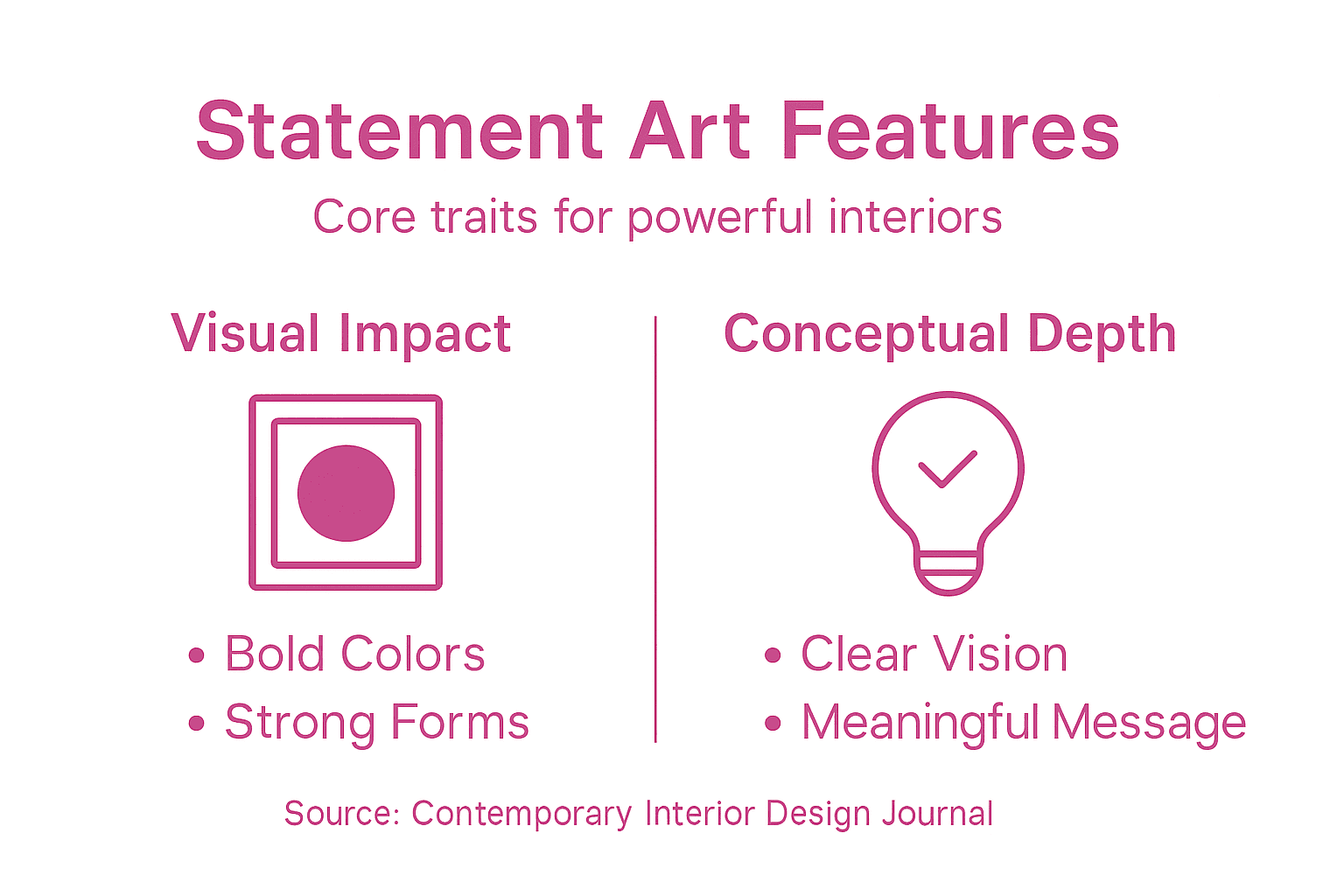
The key characteristics of impactful statement artworks include:
- Conceptual Depth: Communicating complex ideas or emotions
- Technical Mastery: Demonstrating exceptional skill and craftsmanship
- Emotional Resonance: Provoking visceral viewer responses
- Visual Complexity: Creating multi-layered visual experiences
- Contextual Significance: Reflecting broader cultural or personal narratives
Contemporary art exploration underscores that statement artworks are distinguished by their ability to challenge perceptions and engage viewers intellectually. These pieces function as more than aesthetic objects, serving as dynamic conversational interfaces that invite interpretation, reflection, and emotional connection.
Conceptual integrity remains paramount in statement artworks. Such pieces demonstrate a clear artistic vision, meticulously balancing technical execution with philosophical or emotional depth. They transform interior spaces by introducing narrative complexity, challenging design conventions, and creating focal points that transcend traditional decorative boundaries.
Pro tip: Evaluate statement artworks not just by their visual appeal, but by their capacity to spark conversation, challenge perspectives, and resonate with your personal aesthetic sensibilities.
Integrating Statement Pieces Into Luxury Interiors
Luxury interior design transforms spaces through strategic placement of statement art pieces that communicate sophisticated aesthetic narratives. Designing for luxury spaces requires a nuanced approach that balances artistic boldness with architectural harmony.
Successful integration of statement pieces demands careful consideration of several critical factors:
- Scale and Proportion: Ensuring the artwork complements room dimensions
- Color Harmony: Selecting pieces that enhance existing color palettes
- Spatial Positioning: Creating visual flow and focal points
- Thematic Coherence: Aligning artwork with interior design narrative
- Lighting Considerations: Highlighting artwork’s unique characteristics
Art showcasing techniques reveal that statement pieces are more than decorative elements - they are narrative anchors that transform interiors into curated personal experiences. Successful integration requires understanding how each artwork communicates its unique visual language within the broader design context.
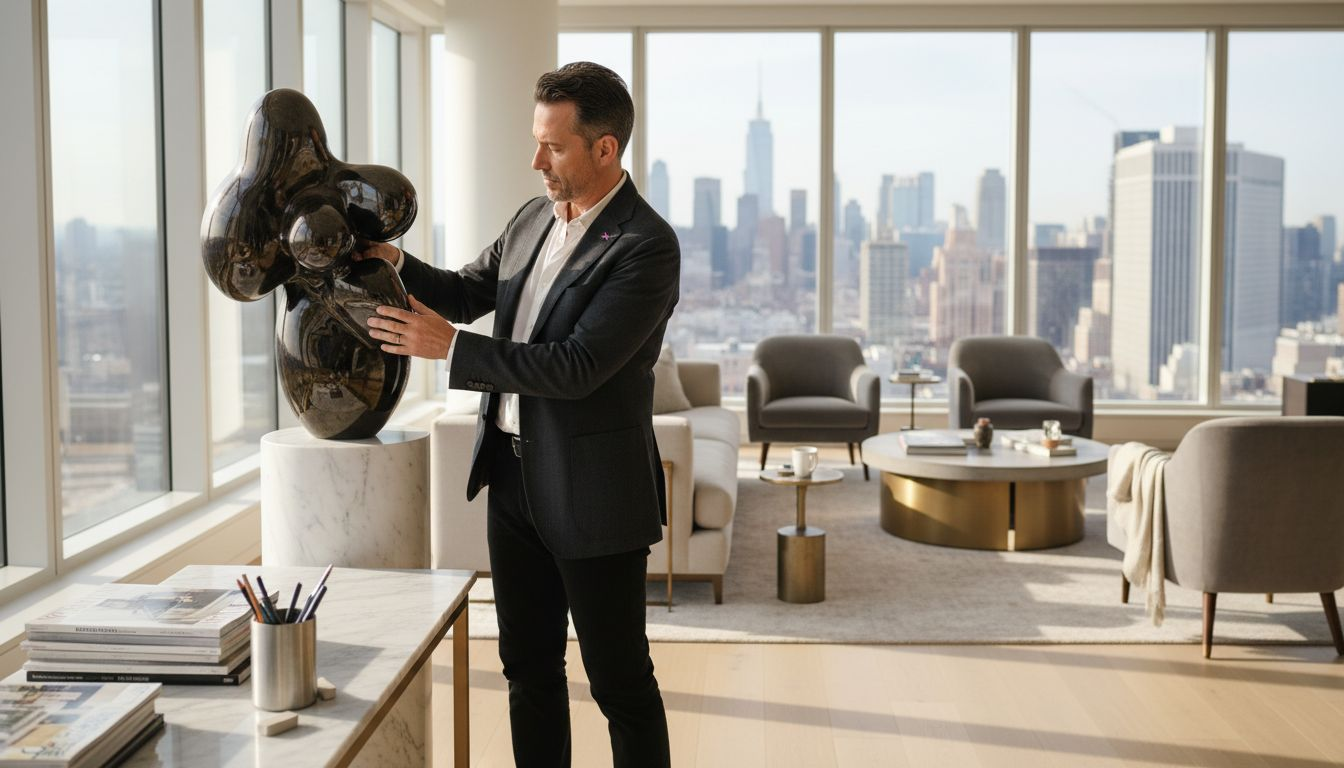
Architectural dialogue becomes paramount when positioning statement art. These pieces should not merely occupy space but engage in a dynamic conversation with the surrounding environment, creating visual tension, emotional resonance, and intellectual intrigue. By thoughtfully selecting and positioning statement artworks, designers can elevate luxury interiors from mere living spaces to sophisticated personal galleries.
This summary table highlights critical integration factors for statement art in luxury interiors:
| Consideration | Description | Influence on Space |
|---|---|---|
| Scale & Proportion | Fit artwork size to room dimensions | Maintains spatial harmony |
| Color Harmony | Match or complement palette | Enhances overall cohesion |
| Lighting | Use accent or natural lighting | Highlights artwork features |
| Thematic Coherence | Align with design narrative | Deepens room’s storytelling |
| Spatial Positioning | Place for optimal visibility and dialogue | Focuses attention and movement |
Pro tip: Consider the emotional journey of your space, selecting statement pieces that not only complement your interior design but also tell a compelling personal story.
Common Pitfalls When Selecting Statement Art
Selecting statement art requires sophisticated understanding beyond mere aesthetic appreciation. Artist statement selection mistakes often emerge from overlooking critical design principles that transform artwork from decorative object to meaningful interior element.
The most prevalent pitfalls in statement art selection include:
- Disproportionate Scaling: Choosing pieces that overwhelm or underwhelm room dimensions
- Color Misalignment: Selecting artworks that clash with existing color schemes
- Thematic Disconnection: Introducing pieces that contradict interior design narrative
- Emotional Dissonance: Picking art that fails to resonate with space’s intended mood
- Improper Lighting: Neglecting how illumination impacts artwork perception
Context matters significantly when integrating statement art. Many collectors make the mistake of selecting pieces based solely on personal taste without considering how the artwork interacts with architectural elements, furniture design, and overall spatial energy.
Visual communication becomes compromised when statement art is chosen without strategic intent. These pieces should function as sophisticated dialogue partners within interior environments, creating visual tension, emotional depth, and intellectual engagement. Thoughtful selection requires understanding not just aesthetic qualities, but the artwork’s potential to transform and elevate a space.
Pro tip: Always view potential statement art pieces within the context of your entire interior, using digital visualization tools or temporarily placing the artwork to assess its true impact.
Elevate Your Space with Statement Art from Eman’s Gallery
Transforming an interior space into a captivating personal narrative starts with choosing the right statement art piece. The article highlights the challenge many face when trying to find artwork that not only complements but also emotionally resonates and intellectually engages within a luxury environment. Whether you seek bold energy or visual harmony, understanding characteristics like conceptual depth and spatial dialogue is essential.
Discover original, handmade artworks that fulfill these exact goals and more at Eman’s Gallery. Explore curated collections such as our Abstract Art Collection for vibrant, emotionally charged pieces or the Geometric Original Art Collection for designs that bring architectural balance and order to any room.
Ready to turn your interior into an extraordinary visual narrative that speaks your story? Visit Eman’s Gallery today and select statement art that sparks conversation, enhances your luxury space, and makes a powerful aesthetic impact. Explore now at https://emansgallery.com and find the perfect piece to transform your space with intent and emotion.
Frequently Asked Questions
What is a statement art piece?
A statement art piece is an impactful artwork that transforms a room, serving as a focal point that communicates complex aesthetic and cultural messages. It goes beyond mere decoration by provoking emotional and intellectual engagement.
How can I choose the right statement art for my space?
When selecting a statement art piece, prioritize works that resonate emotionally with you and align with your personal aesthetic vision. Consider factors such as scale, color harmony, and thematic coherence with your interior design.
What are some common types of statement art?
Common types of statement art include abstract expressionism, geometric compositions, conceptual installations, mixed media sculptures, and digital or new media art. Each type serves a unique purpose and impacts the visual atmosphere of the space differently.
How do I integrate statement art into luxury interiors?
To integrate statement art into luxury interiors, focus on scale, color harmony, spatial positioning, thematic coherence, and lighting considerations. Thoughtful placement can enhance the visual dialogue between the artwork and the surrounding environment.
Recommended
- Why Art Matters in Interiors: Transforming Spaces
- Why Display Art at Home: Transforming Modern Spaces
- Complete Guide to Types of Art for Interiors – Eman’s Gallery
- Art and Interior Design Explained: Transforming Modern Spaces
- Benefits of Art in Family Life: Nurturing Bonds and Growth – The Family Portrait Companys
Stay Connected
- ✨ Explore Eman Khalifa’s original art and fine art prints
- 📸 Follow Eman Khalifa’s art journey on: Instagram @emans_gallery and Facebook Eman’s Gallery
- 📹 Watch Eman Khalifa creating live art on: YouTube @emans_gallery
