


7 Key Art Investment Benefits for Collectors and Homeowners
Building wealth and creating a striking home environment can feel out of reach if you stick to the same financial and decorating habits. Traditional stocks and bonds may not offer the balance or personal satisfaction you crave. What if you could protect your assets, support cultural innovation, and showcase your unique personality all at the same time?
Art and collectible investments offer a different path, with tangible advantages. These physical assets have shown resilience, low correlation with volatile markets, and the rare ability to enhance both your portfolio and your living space. You are about to discover actionable ways art can serve your financial goals, provide long-term value, and enrich your life beyond what stocks or cash alone can offer.
Table of Contents
- 1. Enhances Interior Decor And Personal Style
- 2. Offers Portfolio Diversification Potential
- 3. Provides Long-Term Value Appreciation
- 4. Serves As A Tangible Asset For Wealth Preservation
- 5. Creates Opportunities For Generational Legacy
- 6. Supports Contemporary Artistic Innovation
- 7. Allows For Personalized And Unique Collections
Quick Summary
| Takeaway | Explanation |
|---|---|
| 1. Art Enhances Home Aesthetics | Thoughtfully chosen art adds depth and reflects personal style in living spaces. |
| 2. Art Investments Diversify Portfolios | Investing in art can provide unique financial growth opportunities and protect against market fluctuations. |
| 3. Collecting Art Supports Generational Legacy | Art collections preserve family heritage and create emotional connections across generations. |
| 4. Artwork Maintains Long-Term Value | Selected art can appreciate significantly over time, serving as a solid investment. |
| 5. Personalized Collections Reflect Identity | Customized art collections tell unique personal stories, enhancing individual expression in spaces. |
1. Enhances Interior Decor and Personal Style
Art serves as a powerful transformative element that can dramatically elevate the aesthetic and emotional landscape of any living space. When thoughtfully selected and strategically placed, art becomes more than mere decoration - it becomes a personal statement that reflects individual style and sophisticated design sensibilities.
Interior designers consistently emphasize art’s unique ability to anchor a room’s visual narrative. By introducing carefully curated artwork, homeowners can achieve several key design objectives:
- Add visual depth and complexity to minimalist spaces
- Create focal points that draw the eye and spark conversation
- Introduce color palettes that complement existing furniture and architectural elements
- Communicate personal taste and intellectual sophistication
Art and interior design represents a nuanced interplay between personal expression and spatial aesthetics. Each artwork serves as a visual autobiography communicating the inhabitant’s personality through color, texture, subject matter, and stylistic choices.
Professional art collectors understand that selecting artwork is not just about filling wall space. It is a deliberate process of finding pieces that resonate with personal experiences, emotions, and design aspirations. A well-chosen piece can transform an ordinary room into an extraordinary environment that tells a unique story.
Art is the silent narrator of personal style - speaking volumes without uttering a word.
Pro tip: When selecting art for your space, choose pieces that not only complement your existing decor but also challenge and expand your current aesthetic boundaries.
2. Offers Portfolio Diversification Potential
Investing in art represents a sophisticated strategy for investors seeking to build robust and resilient financial portfolios. Unlike traditional investment vehicles, artwork provides a unique opportunity to diversify assets while potentially generating significant long-term returns.
Art and collectible investments offer several critical advantages for portfolio management:
- Low correlation with stock market performance
- Potential hedge against economic inflation
- Tangible asset with intrinsic cultural value
- Opportunity for appreciation independent of financial market trends
- Enhanced portfolio complexity and investment sophistication
Financial experts recognize that art investments function differently from conventional securities. While stocks and bonds fluctuate with market conditions, fine art maintains a more stable valuation trajectory. Sophisticated collectors understand that strategic art acquisition involves more than aesthetic appreciation - it represents a nuanced form of wealth preservation.
Art investments transform financial portfolios from mere monetary instruments into dynamic cultural assets.
Unlike liquid assets, artwork provides investors with a dual-purpose investment: potential financial appreciation and personal enjoyment. High-net-worth individuals increasingly view art as a strategic component of comprehensive wealth management.
Pro tip: Research emerging artists and established market trends before making significant art investment decisions to maximize potential returns and minimize financial risks.
3. Provides Long-Term Value Appreciation
Art investments represent a sophisticated approach to wealth building that extends far beyond traditional financial instruments. Unlike stocks or bonds, carefully selected artworks can appreciate significantly over time, offering investors a unique path to long-term financial growth.
Long-term art investment strategies reveal several critical factors that drive artwork value appreciation:
- Authenticity and provenance of the piece
- Artist’s reputation and career trajectory
- Historical significance and cultural relevance
- Condition and preservation of the artwork
- Rarity and uniqueness of the piece
Successful art investors understand that value appreciation is not instantaneous. It requires patience, strategic selection, and deep market understanding. Some artworks can increase in value exponentially, with certain pieces growing from modest initial investments to substantial financial assets over decades.
The most valuable art investments are those that tell a compelling story beyond mere aesthetic appeal.
Collectors who approach art as a long-term investment strategy often research emerging artists, track market trends, and build diverse collections that balance aesthetic appreciation with potential financial returns. The art market offers opportunities for both emotional and monetary satisfaction.
Pro tip: Maintain comprehensive documentation of your artwork’s history, including certificates of authenticity, provenance records, and professional appraisals to maximize potential future value.
4. Serves as a Tangible Asset for Wealth Preservation
Unlike volatile digital investments art provides a robust physical wealth preservation strategy that transcends traditional financial instruments. Physical artwork represents a unique form of asset ownership that maintains intrinsic value even during economic uncertainties.
Fine art investment strategies highlight several key advantages of tangible art assets:
- Resistance to currency fluctuations
- Physical ownership with inherent cultural value
- Less susceptibility to market volatility
- Potential for generational wealth transfer
- Global trading and liquidity potential
Tangible art investments differ fundamentally from digital or paper assets. While stocks and cryptocurrencies can vanish with market shifts, a physical artwork remains a concrete representation of value. Sophisticated investors understand that art serves as a financial instrument that can be seen touched and appreciated beyond mere monetary metrics.
True wealth preservation transcends numbers and embraces cultural and aesthetic significance.
Collectors who view art as a wealth preservation strategy carefully select pieces with enduring cultural relevance provenance and potential appreciation. The physical nature of art provides a sense of security that digital investments cannot match.
Pro tip: Invest in artwork from established artists with consistent market performance and maintain professional documentation to maximize your asset’s long-term preservation value.
5. Creates Opportunities for Generational Legacy
Art collecting transcends mere financial investment and becomes a powerful mechanism for preserving family heritage and cultural memory. By carefully selecting and maintaining art collections families can create a lasting narrative that connects generations through shared aesthetic and emotional experiences.
Generational art inheritance involves several important considerations for families:
- Establishing a meaningful family narrative
- Transferring cultural and historical knowledge
- Creating emotional connections across generations
- Preserving personal and collective memories
- Building a tangible family historical archive
Successful art legacy planning requires thoughtful curation and documentation. Each artwork becomes more than an asset - it transforms into a storytelling medium that communicates family values personal journeys and cultural perspectives. Collectors who approach art with a generational mindset understand that their collection represents a profound form of intergenerational communication.
Art is the silent storyteller that whispers family narratives through visual language.
By intentionally selecting artworks with historical significance cultural relevance and personal meaning families can create a living archive that speaks to both current and future generations. These collections become cherished family heirlooms that carry emotional and historical weight far beyond their monetary value.
Pro tip: Document the provenance and personal stories behind each artwork to ensure future generations understand the deeper significance of your art collection.
6. Supports Contemporary Artistic Innovation
Art collectors play a critical role in nurturing creative expression and cultural advancement by supporting emerging artists and groundbreaking contemporary works. Through strategic investments art enthusiasts become active participants in the evolution of artistic discourse.
Contemporary art trends demonstrate how collector investments drive artistic innovation:
- Providing financial resources for experimental techniques
- Encouraging risk-taking and creative exploration
- Supporting artists from diverse backgrounds
- Funding unconventional artistic approaches
- Preserving culturally significant creative movements
Investors who understand art as more than a financial asset recognize their potential to shape cultural narratives. By acquiring works from emerging talents collectors create economic pathways that enable artists to continue pushing creative boundaries and challenging established artistic paradigms.
Every art purchase is a vote for the future of creative expression.
Contemporary art represents a dynamic conversation about current social cultural and technological experiences. Collectors who invest in these works become integral participants in documenting and interpreting the complex narratives of our time.
Pro tip: Research emerging artists through gallery exhibitions museum programs and curated online platforms to identify innovative talents before they become mainstream.
7. Allows for Personalized and Unique Collections
Art collecting transcends standard investment strategies by offering profound opportunities for personal expression. Each artwork becomes a reflection of individual taste narrative and emotional landscape transforming collections into deeply meaningful personal archives.
Custom artwork strategies enable collectors to curate collections that are truly one of a kind:
- Reflect individual cultural backgrounds
- Communicate personal life experiences
- Showcase unique aesthetic preferences
- Create emotional connections with living spaces
- Tell complex personal stories through visual mediums
Personalized art collections serve as visual autobiographies that go beyond decorative purposes. They represent intentional narratives crafted through careful selection of pieces that resonate with individual experiences memories and aspirations.
A truly unique collection speaks volumes about the collector without uttering a single word.
The beauty of personalized art collecting lies in its ability to transform spaces from generic environments into intimate sanctuaries that authentically represent the inhabitant’s inner world.
Pro tip: Develop a consistent yet dynamic collection theme that allows for personal growth and evolving artistic tastes while maintaining a cohesive visual narrative.
Below is a comprehensive table summarizing the benefits of art as presented in the article.
| Benefit | Description |
|---|---|
| Enhances Interior Decor | Art transforms living spaces by adding visual depth, creating focal points, introducing complementary color schemes, and expressing personal style. |
| Offers Portfolio Diversification | Investing in art diversifies assets, hedges against inflation, provides stability compared to stocks, and enhances financial portfolio complexity. |
| Provides Long-Term Value Appreciation | Certain artworks can appreciate significantly over time through factors such as authenticity, artist reputation, historical significance, and rarity. |
| Serves as Tangible Asset for Wealth Preservation | Physical artwork provides stable asset ownership resistant to economic volatility and conducive to generational wealth transfer. |
| Creates Opportunities for Generational Legacy | Art collections foster emotional connections, preserve cultural heritage, and document family narratives across generations. |
| Supports Contemporary Artistic Innovation | Acquiring contemporary art helps fund experimental techniques, supports diverse artists, and advances creative expression. |
| Allows for Personalized and Unique Collections | Personalized art reflects individual taste and life experiences while building aesthetic and emotional resonance within living spaces. |
Transform Your Space and Investment Portfolio with Original Contemporary Art
Are you ready to enhance your home with meaningful artwork that not only elevates your interior decor but also offers long-term financial value? The article highlights key benefits like portfolio diversification, wealth preservation, and generational legacy through art investments. At Eman’s Gallery, we understand the challenges collectors and homeowners face in selecting unique pieces that resonate personally and hold potential for appreciation.
Discover our exclusive collection of Contemporary art featuring original handmade paintings and museum-quality prints by artist Eman Khalifa. Each piece is designed to become a focal point that reflects your style while serving as a tangible asset for wealth preservation. 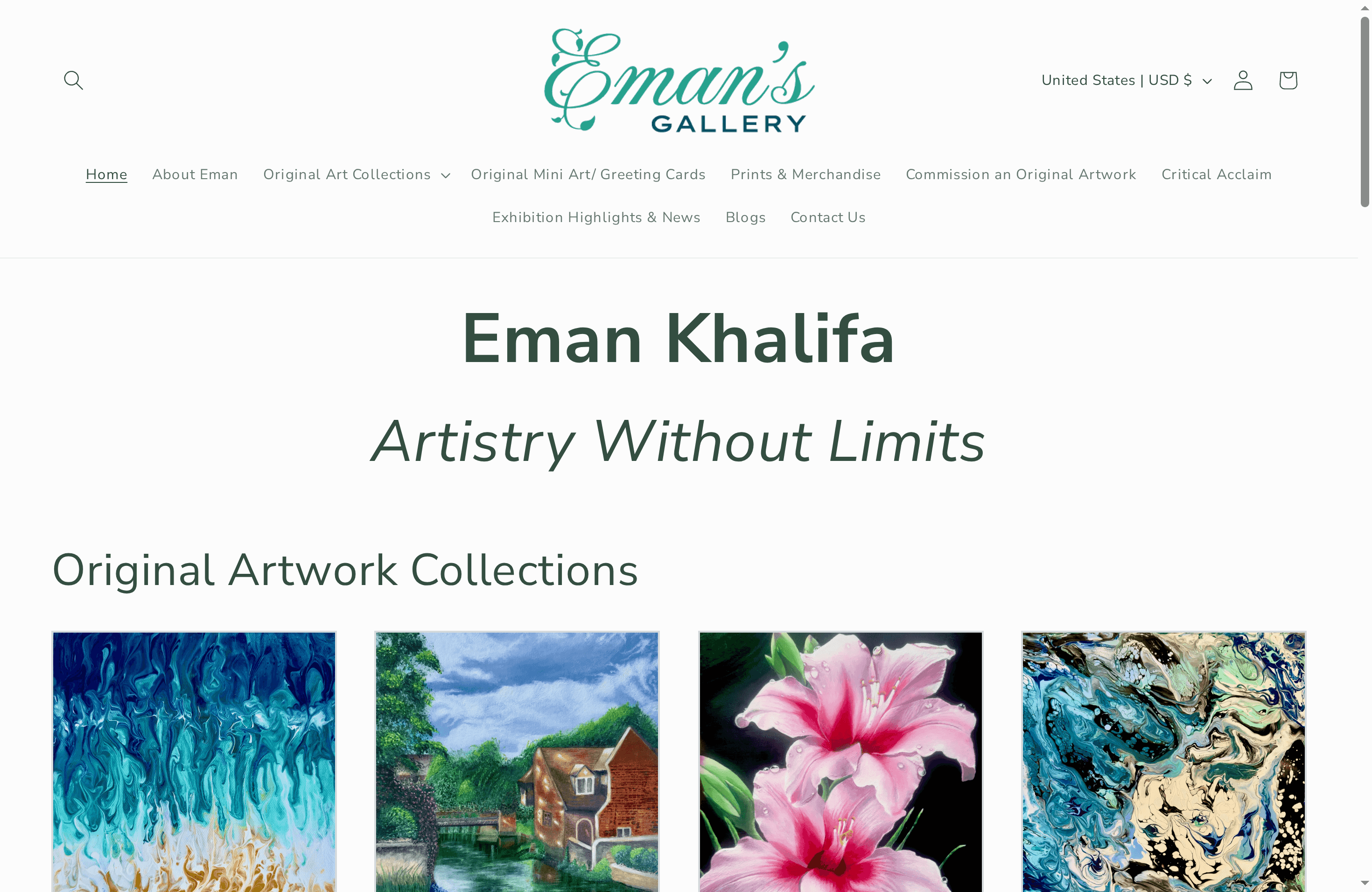
Take the next step toward building a personalized and valuable art collection today. Visit Eman’s Gallery to explore one-of-a-kind artworks that support creative innovation and create a lasting legacy. Unlock the potential of your living space and financial portfolio now.
Frequently Asked Questions
What are the benefits of investing in art for homeowners?
Investing in art enhances interior decor and personal style, creating unique focal points in living spaces. To get started, select artwork that reflects your personal taste and complements your existing decor, transforming your environment into a statement space.
How can I diversify my investment portfolio with art?
Art investments offer a low correlation with traditional securities, helping to hedge against market volatility. Begin by researching various art styles and market trends to include a range of pieces that could appreciate over time, enhancing your overall portfolio.
What contributes to the long-term value appreciation of art?
Factors like authenticity, artist reputation, and rarity drive art’s value appreciation over time. Focus on acquiring pieces with strong provenance and thorough documentation to support their potential future value.
How can art serve as a wealth preservation strategy?
Investing in tangible art provides a robust means of preserving wealth, especially during economic uncertainties. Consider artworks from established artists to ensure a greater likelihood of market stability and sustained value for future generations.
What steps should I take to create a generational art legacy?
To create a generational legacy, select and document artworks that embody family values and historical significance. Start by creating a catalog detailing the provenance and personal stories behind each piece, ensuring future generations understand their importance.
How can I support contemporary artists through my art investments?
Supporting contemporary artists promotes creativity and cultural advancement, helping shape the future of artistic expression. Actively seek out emerging talents through gallery exhibitions and online platforms to invest in innovative works that resonate with you.
Recommended
- Step by Step Art Collection for Modern Luxury Homes
- Art Collection Basics: Elevating Luxury Home Interiors
- Why Display Art at Home: Transforming Modern Spaces
- 7 Art Collector Tips for Valuable Collections – Eman’s Gallery
Stay Connected
- ✨ Explore Eman Khalifa’s original art and fine art prints
- 📸 Follow Eman Khalifa’s art journey on: Instagram @emans_gallery and Facebook Eman’s Gallery
- 📹 Watch Eman Khalifa creating live art on: YouTube @emans_gallery
