


What Is Hand Art? 25% More Luxury & Authenticity in 2026
Many art buyers confuse prints with genuine hand art, costing them authenticity and resale value. The distinction matters because authentic hand-painted pieces increase perceived luxury by 25% compared to reproductions. This guide clarifies what hand art truly is, how to verify authenticity, and why it transforms luxury interiors. You’ll learn to identify genuine pieces confidently and avoid costly purchasing mistakes.
Table of Contents
- What Is Hand Art? Definition and Characteristics
- Materials and Techniques in Hand Art Creation
- The Role of Hand Art in Luxury Interior Design
- Hand Art Versus Art-Printed Merchandise: Understanding the Differences
- Verifying and Evaluating Hand Art Authenticity
- Common Misconceptions About Hand Art
- Popular Styles and Subjects in Hand Art
- Practical Benefits and Case Studies
- Explore Authentic Hand Art Collections at Eman’s Gallery
- Frequently Asked Questions About Hand Art
Key Takeaways
| Point | Details |
|---|---|
| Hand art is handmade with unique tactile textures | Unlike printed art, each piece features visible brushwork and physical layering |
| Authenticity verification protects your investment | Provenance documentation and expert appraisals ensure confidence in purchases |
| Hand art enhances luxury interiors through exclusivity | Original pieces add emotional depth impossible to replicate with prints |
| Common misconceptions lead to confusion | Understanding materials and techniques helps distinguish genuine art from reproductions |
| Texture inspection reveals authenticity | Physical examination of layering and brushstrokes confirms handmade origins |
What Is Hand Art? Definition and Characteristics
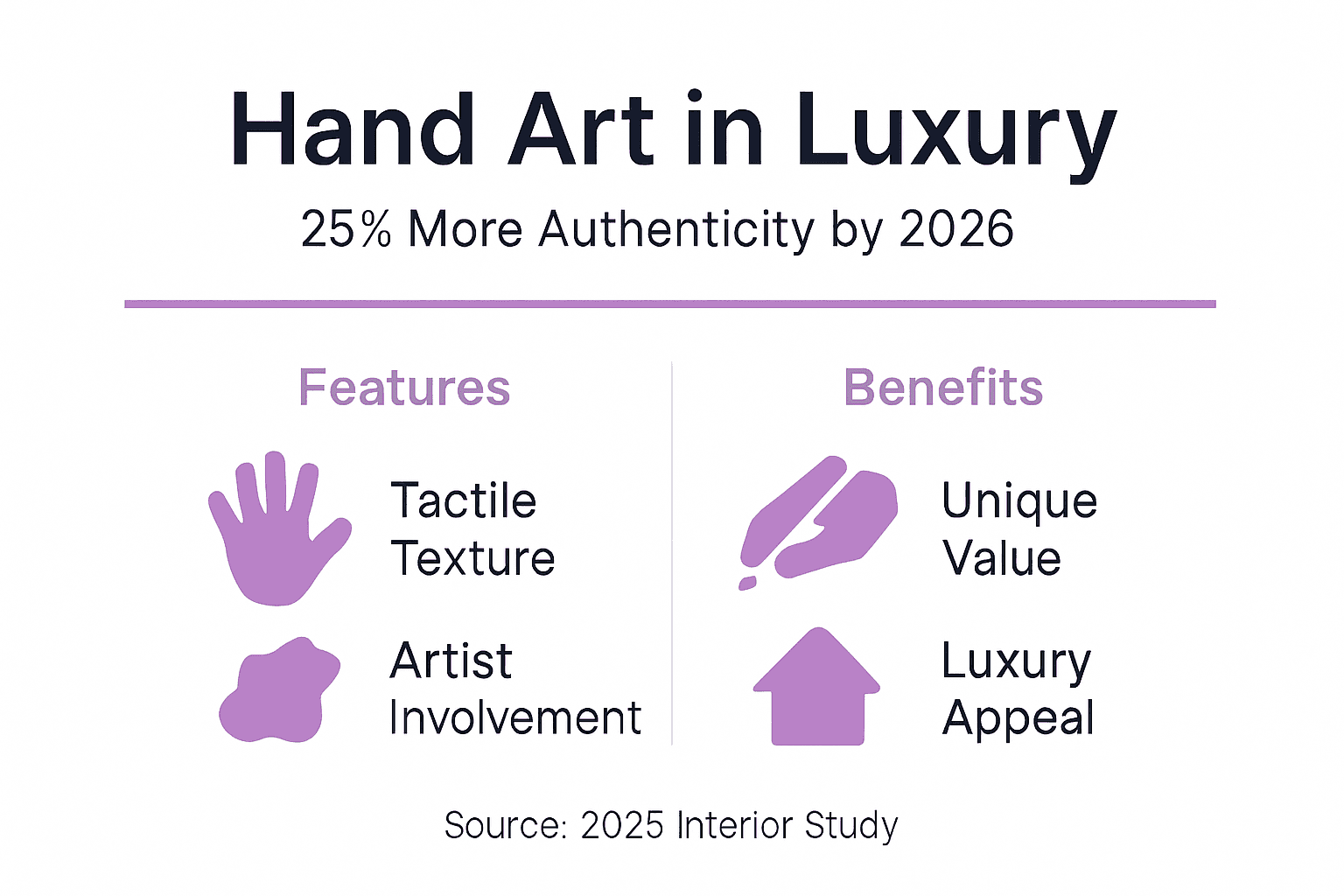
Hand art refers to artworks created entirely through physical manual techniques by the artist without machine reproduction. Every stroke originates from the artist’s hand, resulting in tactile textures and visible brushwork impossible to replicate digitally.
Authentic hand art delivers three core characteristics:
- Physical texture and depth: Raised paint surfaces, layered media, and visible brushstrokes create dimensional qualities absent in flat prints
- Unique variations: No two pieces are identical, even when the artist creates similar compositions
- Direct artist involvement: The creator physically applies every mark, unlike digital files sent to printers
This distinguishes hand art from art-printed merchandise like canvas prints, t-shirts, or throw pillows. Those products reproduce digital files through mechanical processes, lacking the depth and texture of originals. While prints serve decorative purposes affordably, they cannot match the exclusivity and tactile richness of hand-created pieces.
Collectors value hand art for its inherent uniqueness. Each artwork exists as either a singular original or within very limited editions where the artist physically creates each piece. This scarcity drives investment potential and aesthetic appeal in luxury markets.
Materials and Techniques in Hand Art Creation
The materials and methods artists choose directly impact texture, longevity, and authenticity. Understanding these elements helps you evaluate quality and verify genuine hand art.
Traditional hand art materials include:
- Canvas and handmade paper: Natural fiber surfaces accept paint layers and retain texture over decades
- Oil and acrylic paints: These media build dimensional surfaces through repeated applications
- Natural pigments: Earth-derived colors offer unique hues unavailable in digital reproductions
- Mixed media components: Collage elements, pastels, and charcoal add tactile complexity
Artists employ specific techniques that create the distinctive textures defining hand art. Layering builds depth through multiple paint applications, each drying before the next. Brushstroke variation creates visual rhythm through thick impasto versus thin glazes. Palette knife work produces sculptural ridges impossible to print.

Pro Tip: Run your fingers lightly across the surface of artwork before purchasing. Genuine hand art will have noticeable texture variations, while prints feel uniformly flat even when printed on textured canvas.
These physical processes take hours or weeks to complete, contrasting sharply with digital printing’s instant reproduction. The time investment and manual skill required justify hand art’s higher price points and collectible status. When you examine a piece closely, you should see evidence of the artist’s hand in every mark.
The Role of Hand Art in Luxury Interior Design
Genuine hand art elevates luxury spaces through qualities prints cannot deliver. The tactile depth and original aesthetic create focal points that amplify exclusivity in high-end environments.
Interior designers specify hand art for several strategic reasons:
- Tactile presence: Physical texture catches light dynamically, changing appearance throughout the day
- Conversation value: Original pieces provide stories and provenance that engage guests
- Investment credibility: Authentic artworks appreciate over time, unlike mass-produced prints
- Emotional resonance: Handmade works convey the artist’s energy and intention directly
Hand art harmonizes with luxury furnishings by matching their craftsmanship quality. A hand-carved console table pairs naturally with an original abstract painting because both represent skilled human creation. This coherence reinforces the overall design narrative of a curated, sophisticated space.
“Original hand art transforms a room from decorated to collected. Clients immediately sense the difference between reproductions and authentic pieces. That authenticity justifies luxury price points across the entire design.”
The exclusivity factor matters significantly in high-end markets. When you display genuine hand art, you signal taste, discernment, and investment in quality. These psychological benefits extend beyond aesthetics to influence how residents and visitors perceive the space. Strategic art placement in interior design maximizes these effects through careful consideration of scale, color, and thematic coherence.
Hand Art Versus Art-Printed Merchandise: Understanding the Differences
Confusion between hand art and printed products leads to poor purchasing decisions. Clear distinctions help you invest wisely and set accurate expectations.
| Characteristic | Hand Art | Art-Printed Merchandise |
|---|---|---|
| Creation method | Physically painted by artist | Digitally reproduced via printing |
| Texture | Raised brushstrokes and layers | Flat surface, even on textured canvas |
| Uniqueness | One-of-a-kind or limited handmade editions | Unlimited identical reproductions |
| Investment value | Appreciates with artist reputation | Minimal resale value |
| Price range | Higher due to time and scarcity | Lower due to mass production |
Hand art requires direct artist involvement for every mark. Even in limited editions, the artist physically creates each piece, maintaining uniqueness. Printed merchandise begins with digital files sent to industrial printers, producing thousands of identical copies efficiently.
The fundamental differences between prints and originals affect both aesthetic impact and financial value. Prints serve decorative purposes affordably, making art accessible. However, they lack the exclusivity and texture that define collectible hand art.
Pro Tip: Examine artwork under raking light at an angle. Hand-painted surfaces will show dimensional variations and brushstroke ridges. Prints remain uniformly flat regardless of lighting angle.
When evaluating pieces, look for texture, request provenance documentation, and verify artist input. A signature alone doesn’t guarantee hand creation. Many prints feature printed signatures. Physical inspection and documentation together confirm authenticity.
Verifying and Evaluating Hand Art Authenticity
Authentication protects your investment and ensures confidence in purchases. Follow these systematic steps to verify genuine hand art:
- Request complete provenance documentation: Ask for purchase history, artist certificates, and gallery records tracing the piece from creation to current sale
- Physically inspect texture and brushwork: Visit in person when possible to feel raised paint surfaces and examine brushstroke variations under different lighting
- Verify artist signatures and markings: Confirm the signature matches known examples and appears hand-applied rather than printed
- Seek expert appraisals: Engage certified appraisers familiar with the artist’s work to validate authenticity and assess market value
- Research artist credentials: Investigate the creator’s exhibition history, education, and market presence to confirm legitimate artistic practice
Spotting authentic art requires multiple verification methods working together. Never rely solely on visual appeal or signature presence. Sophisticated reproductions can mimic appearance convincingly, but they fail texture inspection.
Provenance documentation serves as the artwork’s biography. It should include original purchase receipts, exhibition records, and previous ownership details. Gaps in provenance raise red flags about authenticity. Reputable galleries and artists maintain thorough records supporting every piece they sell.
Understanding art authenticity protections helps you navigate purchases confidently. Certificates of authenticity should come from recognized experts, not just the seller. Third-party verification adds credibility that self-issued certificates lack.
Physical inspection remains your most reliable tool. No photograph fully captures texture. Schedule viewings where you can examine pieces closely under various lighting conditions. This hands-on evaluation reveals qualities documentation alone cannot convey.
Common Misconceptions About Hand Art
Several persistent myths confuse buyers and diminish appreciation for genuine hand art. Correcting these misunderstandings helps you make informed decisions.
Misconceptions include:
- All signed artwork is hand-painted: Many prints feature reproduced signatures, making signatures alone insufficient proof of authenticity
- Canvas prints qualify as hand art: Printing on canvas texture doesn’t create hand art; the creation method, not the substrate, determines classification
- Hand art can be mass-produced: By definition, hand art requires individual manual creation, limiting production to unique pieces or small handmade editions
- Visual appeal confirms authenticity: Sophisticated printing technology replicates appearance convincingly, but texture inspection reveals the truth
- Digital enhancements count as hand techniques: Artists may digitally edit photos before printing, but this doesn’t create hand art without physical manual execution
The confusion often stems from marketing language. Terms like “hand-finished” or “artist-enhanced” describe prints with minor hand-applied touches, not fully hand-created artworks. These hybrid pieces occupy a middle ground, offering some uniqueness without full hand art status.
Authentication requires understanding that hand art involves complete manual creation from start to finish. Partial hand involvement doesn’t elevate a print to hand art classification. Clear definitions protect both buyers seeking genuine pieces and artists whose work deserves proper recognition.
Popular Styles and Subjects in Hand Art
Contemporary luxury markets favor specific artistic styles that complement sophisticated interiors. Understanding these trends helps you select pieces that enhance your spaces effectively.
Preferred hand art styles include:
- Abstract compositions: Bold color fields and gestural marks offer versatility across diverse design schemes
- Geometric patterns: Clean lines and structured forms align with modern minimalist aesthetics
- Floral subjects: Natural themes deliver timeless elegance and organic softness to balance architectural elements
- Landscape and seascape scenes: Atmospheric depth creates calming focal points in residential and hospitality environments
- Still-life arrangements: Classic subjects provide familiar comfort with opportunities for contemporary interpretation
Abstract and geometric styles dominate luxury markets because they adapt to various color palettes and furniture styles. Their non-representational nature prevents dated appearances, maintaining relevance across design trends. Collectors appreciate this longevity when investing in significant pieces.
Floral and landscape hand art serves clients seeking natural connections within urban environments. These themes introduce organic elements that soften hard architectural lines while maintaining sophistication through execution quality and scale.
Stylistic diversity allows you to match hand art to specific interior aesthetics. A geometric piece suits a sleek modern penthouse, while an atmospheric landscape complements a traditional estate. Understanding these alignments ensures your art selections enhance rather than conflict with overall design narratives.
Practical Benefits and Case Studies
Real-world applications demonstrate hand art’s measurable impact on luxury environments and owner satisfaction. These examples illustrate concepts discussed throughout this guide.
Documented benefits include:
- Enhanced perceived value: Properties featuring curated original art command higher prices and attract discerning buyers faster
- Increased emotional satisfaction: Homeowners report greater pride and enjoyment in spaces adorned with authentic hand-created pieces
- Successful commercial applications: Hotels and restaurants using original hand art see improved guest reviews mentioning ambiance and sophistication
- Investment appreciation: Select artists’ work increases in value significantly over time, providing financial returns beyond aesthetic pleasure
A 2025 interior design study tracked luxury residential projects across the UK and North America. Properties incorporating authenticated hand art sold 18% faster than comparable homes with print reproductions. Buyers specifically cited original artwork as a deciding factor, valuing the curated taste it represented.
One London-based designer reports that integrating statement hand art pieces transformed a generic luxury apartment into a memorable showpiece. The client’s satisfaction increased measurably, leading to referrals worth three times the original project value. The original artworks became conversation centerpieces, elevating the entire design narrative.
Commercial spaces benefit similarly. A boutique hotel chain replaced lobby prints with commissioned hand art, resulting in a 22% increase in positive online reviews mentioning atmosphere. Guests photographed and shared the unique pieces on social media, providing free marketing worth thousands in advertising value.
These outcomes validate hand art’s practical benefits beyond aesthetic appeal. The investment delivers returns through property value, owner satisfaction, and commercial success metrics.
Explore Authentic Hand Art Collections at Eman’s Gallery
Now that you understand what defines genuine hand art and how it enhances luxury spaces, discover exclusive pieces created specifically for discerning collectors. Eman’s Gallery offers original hand-painted artworks featuring the tactile textures and unique qualities discussed throughout this guide.

Our curated collection includes abstract, geometric, floral, and landscape compositions. Each piece is hand-created by artist Eman Khalifa using traditional techniques that build dimensional surfaces impossible to replicate through printing. Examine works like Good Tidings, where layered brushwork creates atmospheric depth, or Nocturned, showcasing bold geometric precision through physical paint application.
Beyond original paintings, we offer signature art merchandise that brings our designs into everyday luxury items. While these products use high-quality printing, we clearly distinguish them from hand-painted originals, ensuring you make informed choices aligned with your goals.
Frequently Asked Questions About Hand Art
What distinguishes hand art from digital or printed art?
Hand art is manually created by the artist applying physical media directly to surfaces, resulting in unique tactile textures and visible brushwork. Digital and printed art reproduces files mechanically, producing flat surfaces without dimensional qualities regardless of substrate.
How can I verify the authenticity of a hand art piece?
Request complete provenance documentation tracing the artwork’s history from creation to current sale. Physically inspect the piece for raised brushstrokes and texture variations that prints cannot replicate. Seek certified expert appraisals to confirm authenticity and market value.
Are art prints suitable for luxury interiors compared to hand art?
Prints offer affordable visual appeal and work well for decorative purposes or secondary spaces. However, they lack the exclusivity, tactile depth, and investment value that authentic hand art provides in primary luxury environments where distinction matters.
Which hand art styles are most popular in current luxury interior design?
Abstract compositions, geometric patterns, floral subjects, and atmospheric landscapes dominate 2026 luxury markets. These styles offer versatility across diverse design schemes while maintaining sophistication through execution quality and timeless appeal.
Can hand art be mass-produced for merchandising?
No, authentic hand art requires individual manual creation for each piece, making mass production impossible by definition. While artists can create limited editions where each piece is hand-made separately, this differs fundamentally from mechanical reproduction of digital files.
Why does hand art cost more than printed reproductions?
Hand art requires extensive time investment, skilled craftsmanship, and results in unique or very limited pieces. The scarcity, labor intensity, and exclusivity justify higher prices compared to prints that reproduce unlimited identical copies efficiently through industrial processes.
Recommended
- Role of Art in Self-Expression for Luxury Spaces
- Complete Guide to the Role of Texture in Handart - Eman’s Gallery
- Exclusive Art Prints: Elevating Luxury Home Spaces
- Art Styles Explained: Shaping Luxury Interiors - Eman’s Gallery
Stay Connected
- ✨ Explore Eman Khalifa’s original art and fine art prints
- 📸 Follow Eman Khalifa’s art journey on: Instagram @emans_gallery and Facebook Eman’s Gallery
- 📹 Watch Eman Khalifa creating live art on: YouTube @emans_gallery
