


Art Authenticity Explained: Protecting Your Investment
Selecting contemporary art for your collection can feel daunting when questions of art authenticity linger. The difference between a true original and a clever forgery is rarely obvious, especially when visual similarities are misleading. For American and British collectors, understanding the full picture is essential long before making any investment. This guide unpacks common myths, reveals the multidimensional nature of authenticity, and spotlights the rigorous processes trusted by experts to help you buy with confidence.
Table of Contents
- Defining Art Authenticity and Common Myths
- Types of Art Authenticity and Their Key Differences
- How Art Authenticity Is Verified Today
- Legal Standards and Documentation for Art Buyers
- Risks and Mistakes When Assessing Authenticity
Key Takeaways
| Point | Details |
|---|---|
| Understanding Art Authenticity | Art authenticity involves various dimensions including nominal, expressive, provenance verification, and technical authentication. Recognizing these can enhance the assessment process. |
| Common Myths Debunked | Misconceptions include the belief that only expensive artworks need authentication and that visual similarity alone is sufficient proof of authenticity. |
| Modern Verification Techniques | Contemporary art authentication employs a multidisciplinary approach, utilizing provenance research, scientific analysis, and expert evaluations for robust validation. |
| Legal Documentation is Essential | Buyers must ensure they possess comprehensive legal documentation, including provenance certificates and authentication reports, to protect their investments. |
Defining Art Authenticity and Common Myths
Art authenticity represents a complex intersection of historical documentation, expert validation, and artistic provenance that goes far beyond simple visual examination. Philosophical frameworks of authenticity reveal that genuine artwork verification involves multiple sophisticated considerations.
At its core, art authenticity encompasses several critical dimensions:
- Nominal Authenticity: Accurately identifying the true artist and origin of the artwork
- Expressive Authenticity: Understanding the inherent authority and original artistic intent
- Provenance Verification: Documenting the artwork’s complete ownership and exhibition history
- Technical Authentication: Analyzing materials, techniques, and physical characteristics
Contrary to popular misconceptions, art authenticity isn’t determined by visual similarity alone. Forgeries represent deliberate attempts to misrepresent an artwork’s history or authorship for financial gain, distinguishing them from innocent copies or mistaken attributions.
The Nara Document on Authenticity provides a comprehensive framework, emphasizing that authenticity involves evaluating multiple factors including:
- Artistic form and design
- Original materials and substance
- Cultural and historical context
- Artistic traditions and spiritual significance
- Geographic and environmental setting
Authenticity Myths Debunked:
- Myth: Only expensive artworks require authentication
- Myth: Visual resemblance proves an artwork’s legitimacy
- Myth: Authentication is a simple, straightforward process
- Myth: Digital images can fully validate an artwork’s origin
Pro Tip: Always consult multiple expert sources and request comprehensive documentation when verifying an artwork’s authenticity.
Types of Art Authenticity and Their Key Differences
Art authenticity is not a monolithic concept but a nuanced framework with multiple distinct categories. Multiple authenticity dimensions exist in the art world, each revealing unique insights into an artwork’s legitimacy and value.
The primary types of art authenticity include:
- Ontological Authenticity: Verifying the physical origin and true authorship of an artwork
- Expressive Authenticity: Assessing the genuine personal artistic expression and emotional integrity
- Cultural Authenticity: Examining fidelity to specific artistic traditions and cultural context
- Performance Authenticity: Evaluating the accuracy of artistic interpretation and execution
- Referential Authenticity: Critiquing the representational accuracy and conceptual alignment
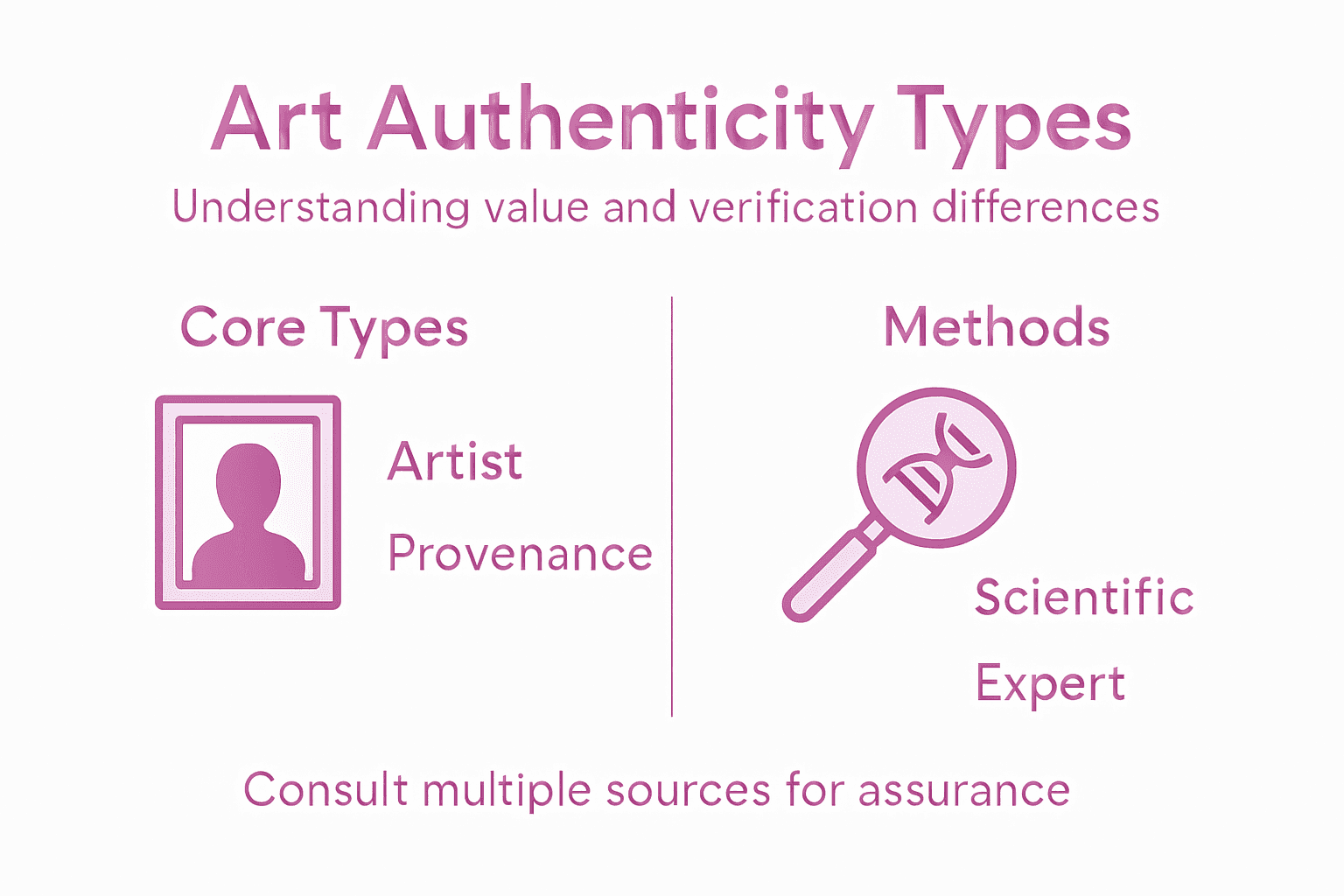
Each type of authenticity serves a different purpose in understanding an artwork’s intrinsic and extrinsic value. Nominal authenticity focuses on concrete evidence like artist signatures, provenance documentation, and historical records, while expressive authenticity delves into the deeper emotional and creative intent behind the artwork.
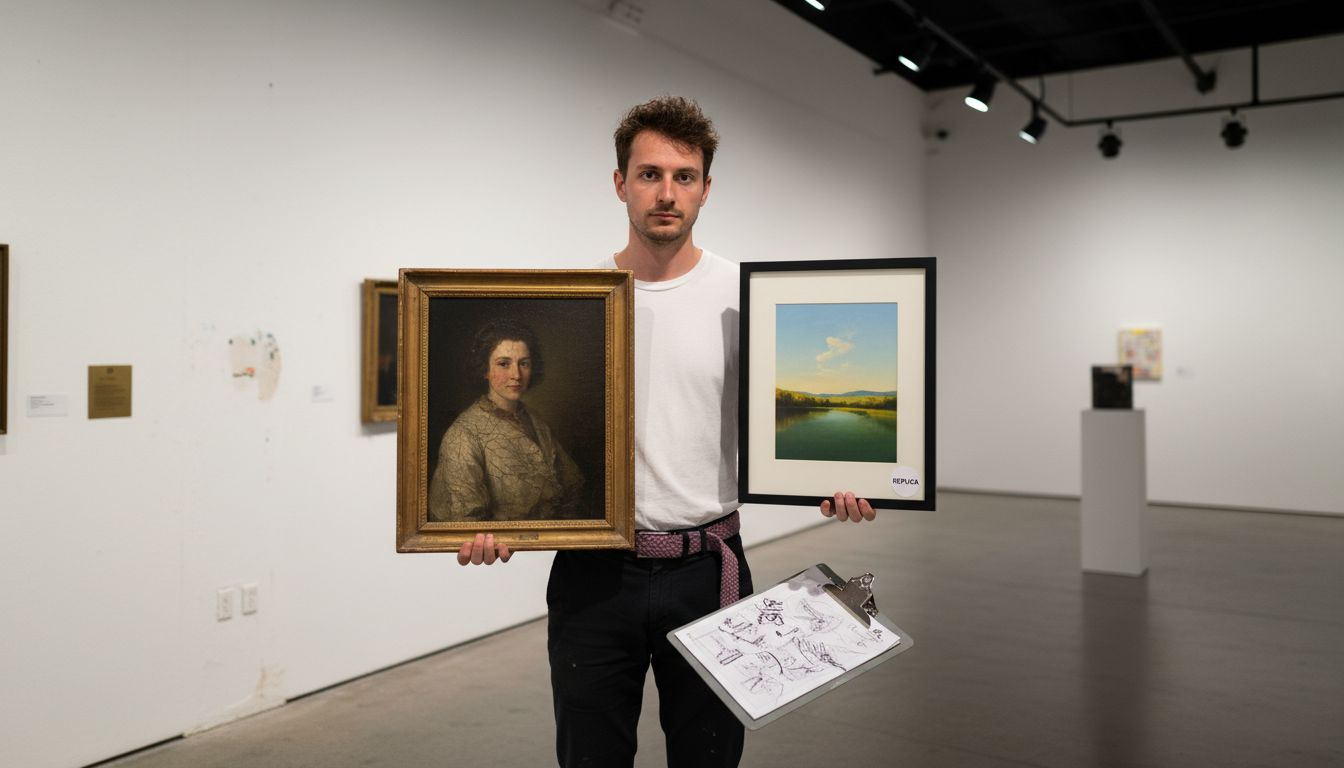
Key Differences Between Authenticity Types:
Here’s a comparison of key art authenticity types and their primary focus:
| Authenticity Type | Main Focus | Typical Evidence |
|---|---|---|
| Ontological | Physical origin and authorship | Materials, artist records |
| Expressive | Artistic intent and creativity | Style, technique insight |
| Cultural | Societal and traditional context | Symbols, practices |
| Performance | Execution and interpretation | Skill, accuracy, approach |
| Referential | Concept and representation | Idea, theme consistency |
- Ontological authenticity primarily concerns verifiable physical attributes
- Expressive authenticity evaluates artistic intent and emotional resonance
- Cultural authenticity examines broader artistic and societal contexts
- Performance authenticity looks at technical execution and interpretation
- Referential authenticity analyzes conceptual accuracy and representational integrity
Pro Tip: Consult multiple expert sources and request comprehensive documentation to thoroughly evaluate an artwork’s multifaceted authenticity.
How Art Authenticity Is Verified Today
Art authentication has transformed from traditional connoisseurship into a sophisticated, multidisciplinary process. Expert verification combines multiple techniques that go far beyond simple visual assessment, creating a comprehensive approach to determining an artwork’s legitimacy.
Modern art authentication involves several critical methodologies:
- Provenance Research: Tracing the complete ownership history of an artwork
- Scientific Analysis: Using advanced technologies to examine materials and techniques
- Expert Evaluation: Consulting art historians and specialized authenticators
- Forensic Investigation: Employing detailed technical and historical verification
- Digital Documentation: Utilizing AI and pattern recognition technologies
The verification process typically encompasses multiple sophisticated steps. Forensic techniques now include advanced methods like spectral imaging, pigment analysis, and X-ray scanning that can detect subtle inconsistencies invisible to the naked eye. These scientific approaches complement traditional expert evaluation, creating a more robust authentication framework.
Key Authentication Verification Methods:
The table below summarizes modern art authentication methods and their business implications:
| Method | What It Does | Business Impact |
|---|---|---|
| Provenance Research | Tracks artwork ownership history | Reduces investment risk |
| Scientific Analysis | Examines materials and technique | Identifies hidden forgery |
| Expert Evaluation | Provides specialist opinion | Boosts buyer confidence |
| Forensic Investigation | Uses advanced technology for checks | Prevents legal disputes |
| Digital Documentation | Uses AI and digital tools | Streamlines verification process |
- Comprehensive document review
- Material and chemical composition testing
- Stylistic and technical pattern analysis
- Cross-referencing with artist catalogues
- Advanced imaging technology examination
The future of art authentication lies in the seamless integration of human expertise and cutting-edge scientific technologies.
Pro Tip: Request a comprehensive authentication report that includes both scientific analysis and expert historical evaluation before making any significant art investment.
Legal Standards and Documentation for Art Buyers
Art acquisition involves complex legal considerations that extend far beyond simple purchase transactions. International legal standards govern art purchases to protect buyers and preserve cultural heritage, creating a sophisticated framework for secure art investments.
Key legal documentation requirements for art buyers include:
- Provenance Certificate: Complete ownership history documentation
- Authentication Report: Expert verification of artwork origin and legitimacy
- Import/Export Clearance: Legal permissions for cross-border art transfers
- Condition Report: Detailed assessment of artwork’s physical state
- Ownership Transfer Documentation: Legal paperwork transferring artwork ownership
Buyers must understand that legal protection requires meticulous documentation. Due diligence encompasses comprehensive research, including verifying the artwork’s complete historical background, checking for potential legal encumbrances, and ensuring compliance with international cultural heritage regulations.
Critical Legal Protection Steps:
- Request comprehensive provenance documentation
- Verify artwork’s legal export status
- Obtain independent authentication reports
- Confirm seller’s legal right to sell
- Understand international art trade regulations
Legal protection in art purchases is not optional – it’s an essential investment safeguard.
Pro Tip: Always consult an art law specialist before finalizing any significant art purchase to ensure complete legal compliance and protect your investment.
Risks and Mistakes When Assessing Authenticity
Art market complexity creates numerous pitfalls for collectors and investors seeking authentic artworks. Sophisticated forgery risks challenge traditional authentication methods, demanding a comprehensive and nuanced approach to artwork verification.
Common mistakes art buyers frequently make include:
- Overreliance on Visual Similarity: Assuming an artwork is authentic based solely on appearance
- Insufficient Provenance Research: Neglecting to thoroughly investigate an artwork’s ownership history
- Ignoring Scientific Authentication: Skipping advanced forensic and technical analysis
- Expert Opinion Bias: Trusting a single expert’s assessment without multiple confirmations
- Inadequate Legal Due Diligence: Failing to verify legal transfer and ownership rights
The art market’s high-stakes environment means that even experienced collectors can fall victim to sophisticated deception. Forensic authentication requires a multidisciplinary approach combining visual expertise, scientific testing, historical research, and legal verification to minimize potential risks.
Top Risk Mitigation Strategies:
- Engage multiple independent experts
- Demand comprehensive scientific analysis
- Thoroughly document provenance
- Verify legal ownership transfer
- Consider professional authentication services
Protecting your art investment demands skepticism, thorough research, and a systematic verification approach.
Pro Tip: Allocate at least 10% of your artwork’s potential value towards comprehensive authentication and verification processes.
Secure Your Art Investment with Genuine Original Works from Eman’s Gallery
The challenge of confirming art authenticity demands careful research and expert verification to protect your investment. At Eman’s Gallery, we understand the importance of provenance, expert evaluation, and technical authentication as key elements in avoiding counterfeit artworks. Our collection features only one-of-a-kind original paintings, ensuring you receive genuine pieces crafted by acclaimed artist Eman Khalifa rather than uncertain reproductions or forgeries.
Explore our Expressionist Original Art Collection to discover artworks with clear provenance and artistic integrity. We make authentication straightforward by offering museum-quality canvas prints and original paintings that come with detailed documentation. Visit Eman’s Gallery today and take the confident step toward owning authentic, investment-worthy art that brings lasting value and beauty into your space.
Frequently Asked Questions
What is art authenticity and why is it important?
Art authenticity refers to the process of verifying the true origin, authorship, and legitimacy of an artwork. It is crucial for protecting investments, ensuring that buyers acquire genuine pieces rather than forgeries or misattributed works.
How is art authenticity verified today?
Modern art authentication employs a multidisciplinary approach that includes provenance research, scientific analysis, expert evaluation, forensic investigation, and digital documentation to determine an artwork’s legitimacy.
What are some common myths about art authenticity?
Common myths include the belief that only expensive artworks require authentication, that visual similarity alone proves legitimacy, and that the verification process is straightforward. In truth, authenticating art involves complex evaluation and verification methods.
What legal documentation is necessary when buying art?
Key legal documents include a provenance certificate, authentication report, import/export clearance, condition report, and ownership transfer documentation. These documents ensure legal protection and secure art investments.
Recommended
- Exclusive Art Prints: Elevating Luxury Home Spaces
- 7 Key Art Investment Benefits for Collectors and Homeowners
- Art for Collectors Guide: Expert Insights and Strategies – Eman’s Gallery
- How to Spot Authentic Art: A Step-by-Step Guide – Eman’s Gallery
- 7 Key Insights About Switzerland Trust for Investors
Stay Connected
- ✨ Explore Eman Khalifa’s original art and fine art prints
- 📸 Follow Eman Khalifa’s art journey on: Instagram @emans_gallery and Facebook Eman’s Gallery
- 📹 Watch Eman Khalifa creating live art on: YouTube @emans_gallery
