


Role of Art in Self-Expression for Luxury Spaces
Selecting the perfect artwork for a luxury space often starts with the desire to express a unique identity far beyond what words or trends can achieve. For both art collectors and interior designers, handmade pieces provide more than decoration—they become powerful tools for self-expression through artistic creation. Discover how each artwork can help translate inner experience into a refined visual statement, transforming private spaces into deeply personal narratives that reflect American and British individuality.
Table of Contents
- Defining Art’s Role In Self-Expression
- Types Of Art Used For Personal Expression
- How Art Shapes Luxury Interiors
- Personal Narratives Through Collecting And Design
- Investment, Exclusivity, And Common Pitfalls
Key Takeaways
| Point | Details |
|---|---|
| Art as a Medium of Self-Expression | Artistic creation enables individuals to translate complex emotions into tangible representations, serving as a bridge between internal experiences and external communication. |
| Diverse Art Forms | Various art disciplines, including visual, performing, and literary arts, provide unique pathways for personal expression and emotional release. |
| Personal Narratives Through Collecting | Art collecting is a method of self-discovery, where curated pieces reflect personal history and cultural experiences, creating a visual autobiography. |
| Investment and Strategy | Successful art collecting requires careful consideration of authenticity, provenance, and emotional resonance to avoid common pitfalls and enhance value. |
Defining Art’s Role in Self-Expression
Self-expression through art represents a profound human mechanism for communicating complex inner experiences beyond traditional language. Artistic creation serves as a powerful medium through which individuals can externalize their emotional landscapes, transforming abstract feelings into tangible visual representations.
Academic research highlights that art functions as a critical agent of self-actualization through creative processes. The creative journey involves multiple interconnected stages:
- Awareness: Recognizing internal emotional states
- Focus: Channeling those emotions into intentional artistic expression
- Working Process: Translating feelings into visual language
- Product: Creating a tangible representation of personal experience
Through art, individuals can articulate nuanced emotional experiences that might otherwise remain unexpressed. Creative expression connects individual experiences with broader human narratives, transforming personal moments into universal communication.
Psychological Dimensions of Artistic Self-Expression
Psychological perspectives reveal that artistic creation is more than aesthetic production—it’s a deeply introspective process of identity construction. By translating internal experiences into visual forms, artists map their emotional terrain, creating tangible evidence of their inner worlds.
Art allows individuals to communicate what cannot be easily articulated through words alone, serving as a bridge between internal experience and external understanding.
Pro tip: Begin your artistic self-expression journey by selecting mediums that resonate most authentically with your emotional landscape, whether that’s painting, sculpture, digital art, or mixed media.
Types of Art Used for Personal Expression
Personal expression through art encompasses a diverse range of creative mediums, each offering unique pathways for individuals to communicate their inner experiences. Various art disciplines capture emotional landscapes through distinct visual and performative languages, allowing for rich and nuanced self-representation.
Art Forms for Personal Expression include:
-
Visual Arts:
- Painting
- Sculpture
- Photography
- Digital art
- Mixed media
-
Performing Arts:
- Music
- Dance
- Theater
- Performance art
-
Literary Arts:
- Poetry
- Creative writing
- Journaling
- Storytelling
Artistic styles and forms offer individuals multiple channels to explore and communicate personal narratives. Each medium provides a unique mechanism for translating internal experiences into external representations, enabling deeper psychological exploration and emotional release.
Personal expression through art transcends traditional communication, allowing individuals to articulate complex emotions and experiences that words often cannot capture.
Each art form carries its own emotional vocabulary and communicative potential. Visual arts like painting allow for direct emotional mapping through color, texture, and composition, while performing arts enable dynamic, embodied expressions of inner states.
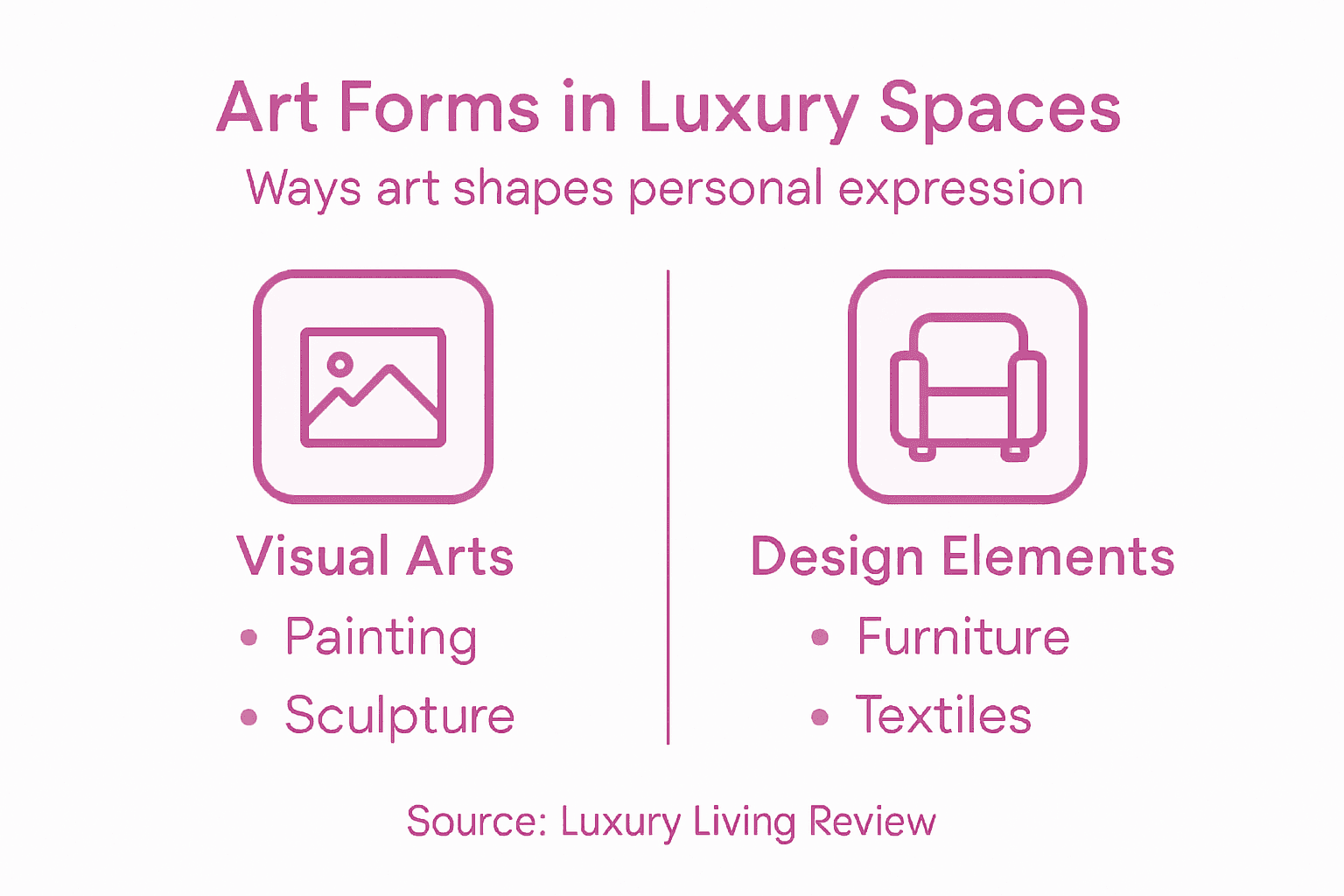
Here’s how various art forms facilitate personal expression:
| Art Form | Emotional Impact | Typical Use in Self-Expression | Challenges for Beginners |
|---|---|---|---|
| Painting | Direct emotional mapping | Color and texture exploration | Skill acquisition and material costs |
| Sculpture | Tactile engagement | Three-dimensional storytelling | Requires spatial awareness |
| Music | Mood modulation | Conveying feelings via sound | Instrument learning curve |
| Dance | Physical release | Embodied expression | Performance confidence |
| Poetry | Subtle emotional nuance | Wordcraft and introspection | Writer’s block, finding voice |
Pro tip: Experiment with multiple art forms to discover which medium most authentically resonates with your emotional landscape and personal storytelling style.
How Art Shapes Luxury Interiors
Luxury interiors are transformed by art, evolving from mere decorative spaces to profound personal narratives. Art defines spatial character and cultural depth through strategic placement and thoughtful selection, turning living environments into immersive expressions of individual identity.
Key Ways Art Shapes Luxury Interiors:
- Creates visual focal points
- Establishes emotional atmosphere
- Communicates personal narratives
- Reflects cultural sophistication
- Adds architectural complexity
Contemporary art trends influence innovative interior architecture, integrating artistic elements across multiple design dimensions. Art is no longer a peripheral decoration but a fundamental component that dialogues with architectural structures, furniture, and spatial dynamics.
Luxury interiors are living canvases where art becomes the primary language of personal expression, transcending traditional decorative boundaries.
Artistic elements strategically embedded within luxury spaces—whether through large-scale paintings, sculptural installations, or curated photography—transform rooms from static environments into dynamic, emotionally resonant experiences. Each artwork becomes a narrative thread, weaving personal history and aesthetic sensibility into the architectural fabric.
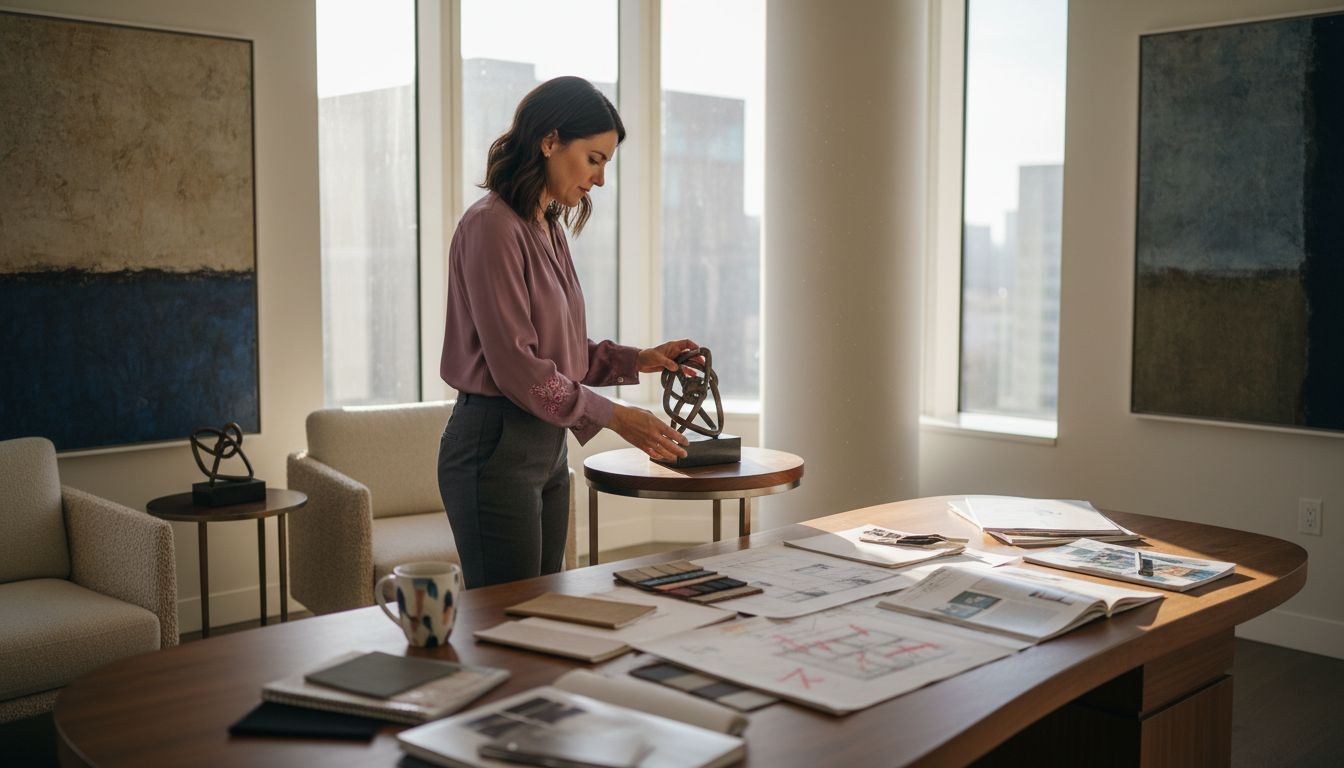
Pro tip: Select artworks that not only complement your interior design but also tell a personal story, creating a space that feels authentically and intimately yours.
Personal Narratives Through Collecting and Design
Collecting experiences and objects represents a profound method of personal storytelling, transforming art acquisition into a deeply intimate journey of self-discovery and identity construction. Art collectors do not merely accumulate objects; they curate personal narratives that reflect their inner worlds, cultural encounters, and emotional landscapes.
Key Aspects of Personal Narrative Development Through Art Collecting:
- Documenting personal history
- Reflecting cultural experiences
- Expressing individual aesthetic sensibilities
- Creating emotional connections
- Constructing social identity
Contemporary art collector motivations reveal that collecting transcends mere acquisition, becoming a sophisticated form of personal and cultural expression. Each artwork selected represents a deliberate choice that communicates individual values, experiences, and aspirational identities.
Art collecting is a continuous dialogue between personal memory, cultural context, and aesthetic vision.
The process of collecting becomes a dynamic narrative where each piece contributes to a larger story of personal evolution. Collectors meticulously select artworks that resonate with their life experiences, creating visual autobiographies that speak volumes about their inner landscapes without uttering a single word.
Pro tip: Approach art collecting as a reflective practice, selecting pieces that genuinely speak to your personal journey and emotional depth rather than following transient trends.
Investment, Exclusivity, and Common Pitfalls
Exclusivity as a strategic asset represents a delicate balance in luxury art collecting, where maintaining rarity and prestige becomes as crucial as the artwork itself. Sophisticated collectors understand that investment extends beyond monetary value, encompassing cultural significance and personal narrative potential.
Key Investment and Exclusivity Considerations:
- Authenticity verification
- Provenance documentation
- Market trend analysis
- Artist reputation assessment
- Long-term appreciation potential
Art experiences within luxury spaces can paradoxically impact consumer perception, requiring nuanced strategies to preserve both artistic integrity and collector status. Successful art investment demands a sophisticated understanding of market dynamics and personal aesthetic vision.
True art collecting transcends financial transactions, representing an intricate dance between cultural capital, personal expression, and strategic investment.
Common pitfalls in art collecting include impulsive purchasing, neglecting provenance research, and failing to understand an artwork’s broader cultural context. Collectors must develop a discerning eye that evaluates art beyond immediate visual appeal, considering historical significance, artist trajectory, and potential future value.
The following table summarizes essential strategies for successful art collecting while minimizing common pitfalls:
| Strategy | Purpose | Potential Pitfall | Tip for Avoidance |
|---|---|---|---|
| Authenticity Verification | Ensure artwork is genuine | Fake or mislabeled art | Consult reputable experts |
| Provenance Documentation | Trace ownership history | Missing records | Request certificates |
| Market Trend Analysis | Understand long-term value | Short-term speculation | Focus on personal resonance |
| Emotional Resonance | Maintain collection’s meaning | Impulsive purchases | Reflect on narrative connection |
Pro tip: Develop a comprehensive collection strategy that balances emotional resonance with methodical investment research, consulting expert appraisers and staying informed about emerging artistic trends.
Elevate Your Luxury Space Through Artistic Self-Expression
Many luxury homeowners and interior designers face the challenge of transforming their living spaces into personalized sanctuaries that tell meaningful stories. The article highlights how art serves as a powerful medium to communicate inner experiences and cultural sophistication. If you want to bring emotional resonance, personal narrative, and distinctive style into your home, the right artwork is the key.
Discover how original pieces from Eman Khalifa capture the essence of self-expression with collections like the Expressionist Original Art Collection and Geometric Original Art Collection. Each piece is a unique visual story designed to complement luxury interiors and create immersive atmospheres that reflect your individuality.
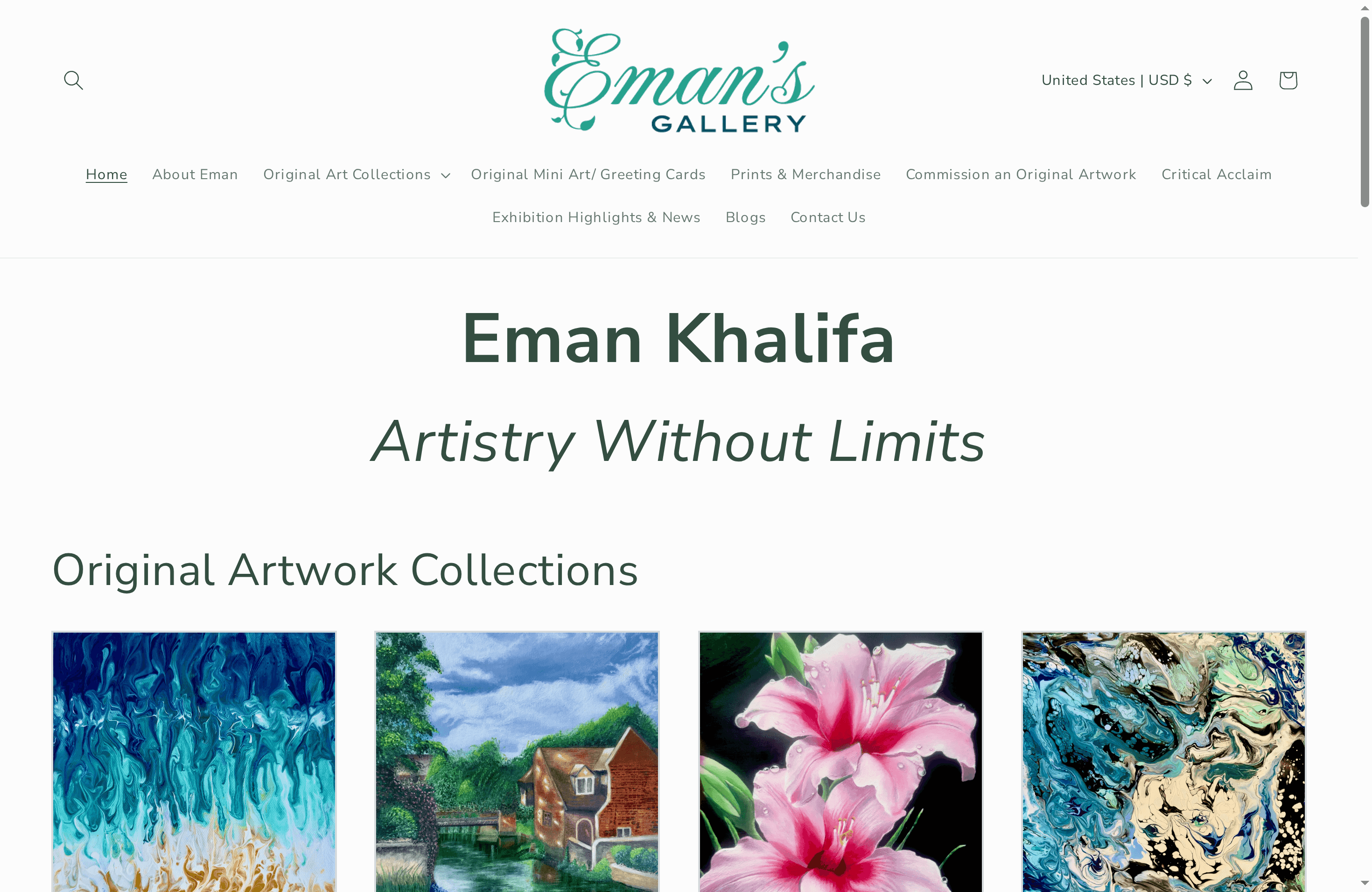
Experience the power of art to transform your space today by exploring exclusive, museum-quality originals at Eman’s Gallery. Invest in art that speaks to your soul and elevates your luxury living environment. Start your journey now to design interiors where your personal narrative takes center stage.
Frequently Asked Questions
How does art contribute to self-expression in luxury spaces?
Art serves as a powerful medium for self-expression in luxury spaces by transforming them into reflections of personal identity, emotions, and cultural narratives, thus creating immersive environments that resonate with individual experiences.
What types of art can be used for personal expression in luxury interiors?
Various types of art can be utilized in luxury interiors, including visual arts (painting, sculpture, photography), performing arts (music, dance), and literary arts (poetry, creative writing), each offering unique ways to communicate personal narratives.
How can I select art that enhances the emotional atmosphere of my luxury space?
To enhance the emotional atmosphere of your luxury space, select artworks that resonate with your personal experiences and aesthetic preferences, ensuring they create a cohesive narrative that reflects your identity and cultivates the desired ambiance.
What are common pitfalls in art collecting for luxury interiors?
Common pitfalls in art collecting include impulsive purchasing, neglecting provenance research, and failing to align art with personal narratives. Collectors should focus on emotional resonance and conduct thorough research to avoid these mistakes.
Recommended
- Art Styles Explained: Shaping Luxury Interiors
- Why Display Art at Home: Transforming Modern Spaces
- Why Art Matters in Interiors: Transforming Spaces
- Role of Art Prints in Interior Design Luxury Spaces
- Role of Art in Fashion – Shaping Identity and Culture – ELEDOasis
Stay Connected
- ✨ Explore Eman Khalifa’s original art and fine art prints
- 📸 Follow Eman Khalifa’s art journey on: Instagram @emans_gallery and Facebook Eman’s Gallery
- 📹 Watch Eman Khalifa creating live art on: YouTube @emans_gallery
