


Printmaking Techniques: Elevating Artistic Expression
Many artists in the UK and USA face confusion when deciding whether prints are true originals or just mechanical copies. This misunderstanding overlooks the creative process behind printmaking, where each impression is crafted under the artist’s supervision using techniques like etching or screen printing. For those seeking to refine their artistic skill or grow a collection with distinctive works, learning the differences between methods and dispelling myths about authenticity opens new opportunities in contemporary art.
Table of Contents
- Printmaking Defined And Common Myths
- Major Types Of Printmaking Techniques
- Step-By-Step Printmaking Processes
- Unique Qualities Of Each Technique
- Risks And Common Mistakes In Printmaking
- How Printmaking Impacts Art Collecting
Key Takeaways
| Point | Details |
|---|---|
| Artistic Intent in Printmaking | Printmaking is a sophisticated art form where each impression is considered an original work crafted under the artist’s supervision. |
| Common Misconceptions | Many believe prints are mere copies; however, they are unique artistic expressions created through various techniques. |
| Technique Diversity | Different printmaking techniques like Relief, Intaglio, and Surface Printing offer diverse aesthetic outcomes and methods of image creation. |
| Impact on Art Collecting | Printmaking has made original art more accessible and democratized art ownership, revolutionizing how collectors engage with and invest in art. |
Printmaking Defined and Common Myths
Printmaking represents a nuanced artistic practice involving the creation of original images through deliberate multiplication techniques. Contemporary printmaking techniques have evolved far beyond simple reproduction, encompassing complex creative processes that challenge traditional perceptions.
At its core, printmaking is an art form where artists intentionally create multiple impressions of an original artwork using specialized techniques like etching, woodcut, lithography, and screenprinting. Unlike mechanical reproduction, each print is an original artwork crafted under the artist’s direct supervision. The critical distinction lies in artistic intent and the unique character of each impression.
Common myths about printmaking often misunderstand its sophisticated nature. Many people mistakenly believe that prints are mere copies or reproductions, when in reality, they represent carefully crafted artistic expressions. Here are several prevalent misconceptions:
- Prints are not original artworks
- All prints look exactly the same
- Printmaking is a simple, mechanical process
- Digital techniques have made traditional printmaking obsolete
- Prints are less valuable than unique paintings
Printmaking’s value emerges from its intentional creative process. Each technique - whether monoprinting, linocut, or etching - offers distinctive aesthetic possibilities. Printmaking techniques reflect an artist’s skill in manipulating materials and generating unique visual experiences.
Pro tip: Explore multiple printmaking techniques to understand the subtle variations and artistic potential inherent in each method.
Major Types of Printmaking Techniques
Printmaking encompasses several distinctive techniques, each offering unique artistic possibilities and methods of image creation. Major printmaking techniques can be broadly categorized into three fundamental processes: relief, intaglio, and surface printing, each with its own intricate approach to artistic expression.
Relief Printing involves carving away nonprinting areas of a surface, leaving raised sections to hold ink. Artists typically use materials like wood or linoleum, creating bold graphic images by applying ink to the raised surfaces. Classic examples include woodcuts and linocuts, where the artist carefully removes material to create intricate designs.
Intaglio Techniques represent a contrasting approach, where images are incised into metal plates. In this method, ink settles into carved grooves and recessed areas, which are then transferred onto paper through high-pressure printing. Specific intaglio methods include:
- Etching
- Engraving
- Drypoint
- Aquatint
- Mezzotint
Surface Printing includes two primary subcategories: planographic (like lithography) and stencil methods. Lithography relies on the principle of oil and water repulsion, allowing artists to draw directly on smooth surfaces. Screen printing involves pushing ink through mesh screens, creating layered and vibrant designs.
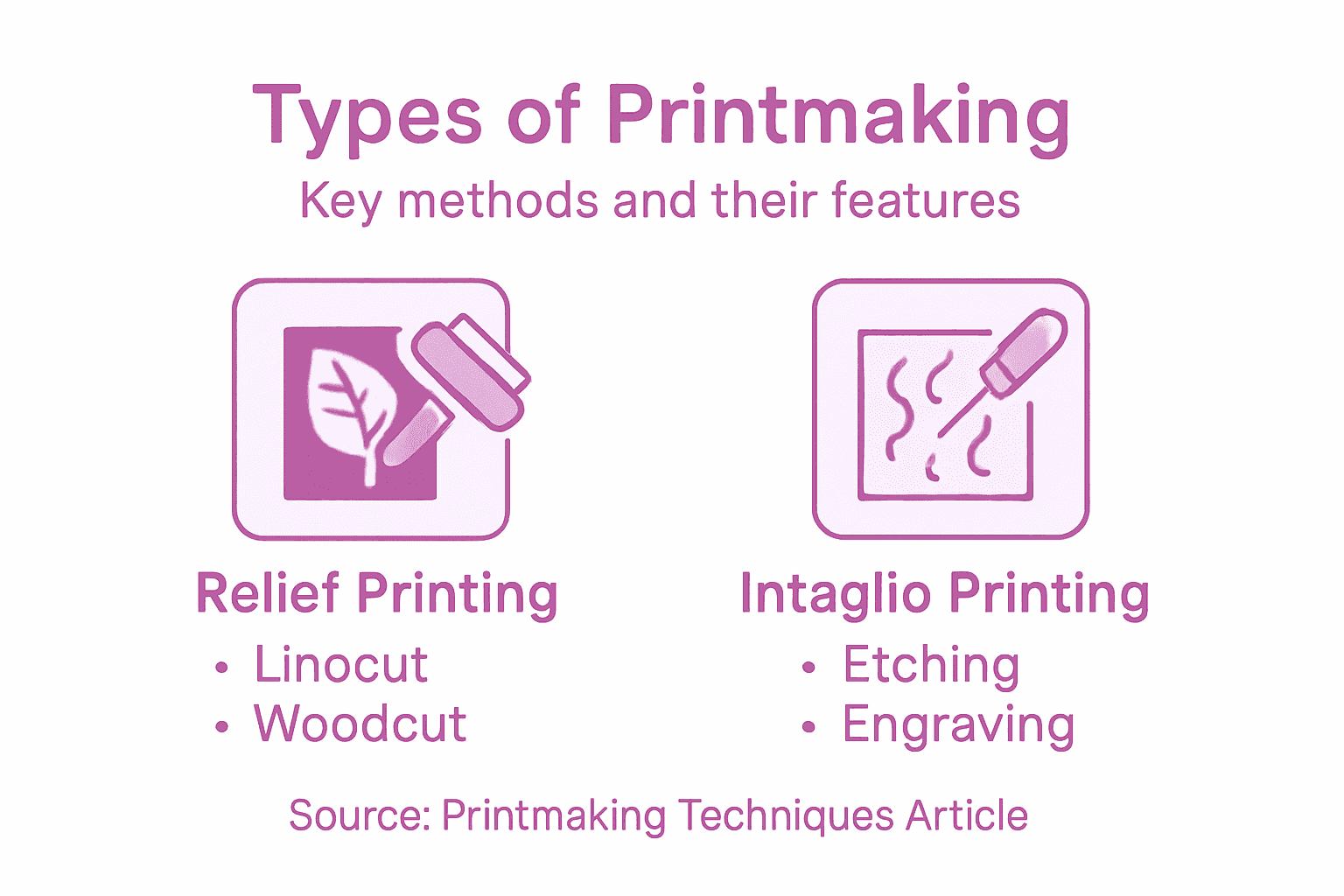
Pro tip: Experiment with multiple printmaking techniques to discover the unique textural and visual qualities each method offers.
Here’s how major printmaking techniques differ in process and artistic impact:
| Technique | Process Description | Artistic Result | Ideal Use Cases |
|---|---|---|---|
| Relief Printing | Carving raised surfaces for ink | Bold, graphic imagery | Woodcuts, linocuts, posters |
| Intaglio | Incising metal plate, inking grooves | Fine lines, rich textures | Etchings, engravings, illustrations |
| Surface Printing | Applying ink on a flat or through mesh | Vibrant layered colors | Lithography, screen prints, branding |
Step-by-Step Printmaking Processes
Printmaking is a meticulous art form that requires precision and creative skill across multiple stages. Basic printmaking processes typically involve four critical stages: designing, preparing the matrix, inking, and transferring the image.
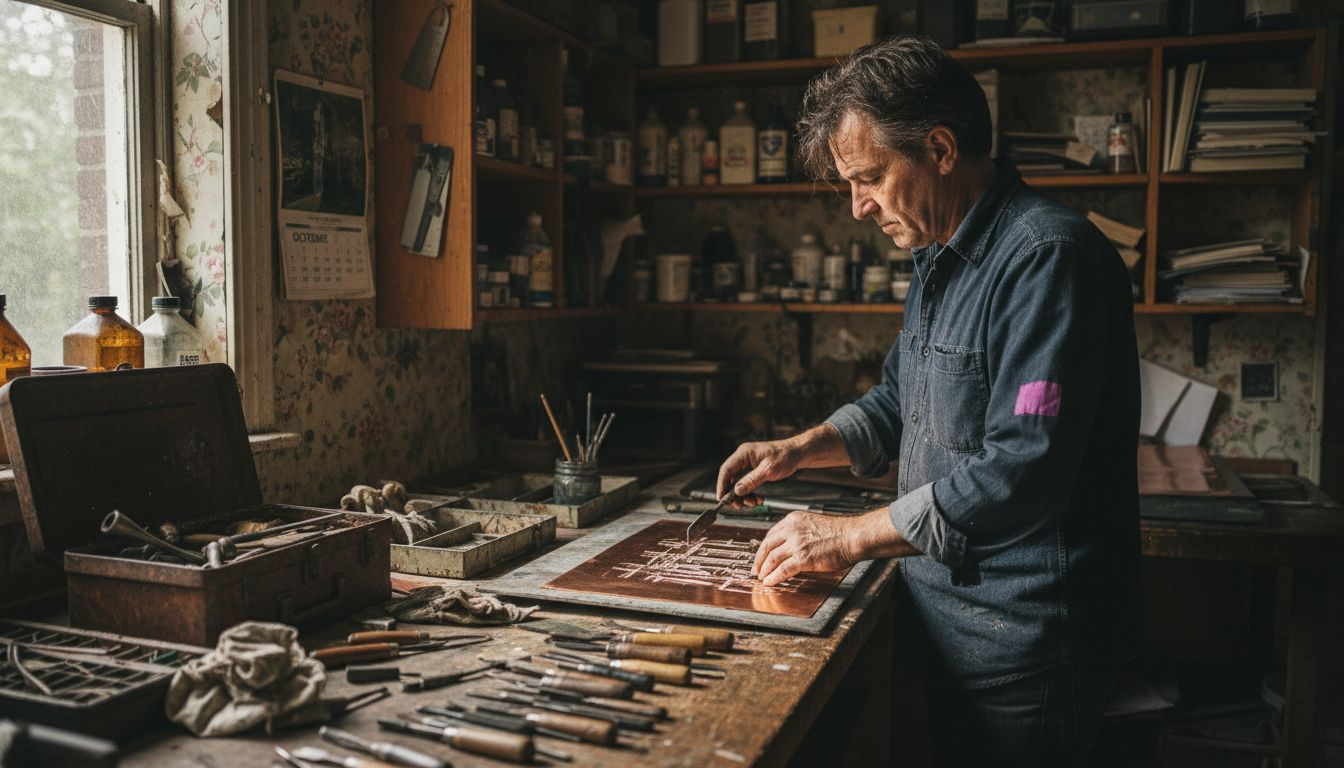
Matrix Preparation is the foundational step where artists carefully craft their printing surface. Depending on the chosen technique, this might involve carving wood blocks, etching metal plates, or creating stencils. Each material demands unique tools and approaches, with artists strategically removing or treating surfaces to define their image.
Inking Techniques represent a nuanced process of applying pigment to the prepared matrix. Artists must develop a delicate touch, ensuring even coverage and precise color distribution. Different methods require specific approaches:
- Relief printing: Rolling ink onto raised surfaces
- Intaglio: Carefully wiping ink into carved grooves
- Lithography: Applying ink using rollers on treated surfaces
- Screen printing: Pushing ink through mesh screens
Print Transfer requires careful alignment and controlled pressure to move the inked image onto paper or alternative surfaces. Professional printmakers use specialized printing presses that apply consistent, even pressure, ensuring crisp and detailed image reproduction.
Precision in each stage transforms a simple matrix into a complex artistic statement.
Pro tip: Practice each printmaking stage separately to understand the subtle techniques that create exceptional artistic prints.
Unique Qualities of Each Technique
Printmaking techniques are distinguished by their distinctive aesthetic characteristics and creative approaches. Printmaking techniques reflect a rich historical tradition where artists leverage unique material properties to create expressive visual narratives.
Woodcut Printing offers bold, graphic qualities characterized by strong lines and dramatic textures. Originating in ancient China, this technique involves carving intricate designs into wood surfaces, creating powerful visual statements with high-contrast imagery. Artists use specialized carving tools to remove material, leaving raised surfaces that capture ink and transfer distinctive, chunky impressions.
Intaglio Techniques provide extraordinary detail and nuanced line work. Methods like etching and engraving allow artists to create incredibly fine lines by incising metal plates. The process involves:
- Acid-based etching for expressive line variations
- Precise engraving for ultra-sharp details
- Controlled line depth for tonal gradations
- Complex texture generation
- Subtle color transitions
Screen Printing stands out for its vibrant color layering and versatility. This technique enables artists to create multiple color applications by pushing ink through mesh screens, allowing for bright, saturated designs across various surfaces. Screen printing’s flexibility makes it popular in both fine art and commercial design contexts.
Each printmaking technique offers a unique visual language, transforming artistic expression through material and method.
Pro tip: Explore multiple printmaking techniques to understand how different methods can dramatically alter your artistic narrative.
Risks and Common Mistakes in Printmaking
Printmaking involves complex technical processes that can easily lead to unexpected challenges for artists. Common printmaking mistakes frequently stem from inadequate preparation, material mishandling, and insufficient technical understanding.
Technical Errors represent the most prevalent risks in printmaking. Artists often encounter issues like uneven ink application, paper misalignment, and inappropriate surface preparation. These technical missteps can dramatically compromise the final print’s quality and aesthetic integrity. Typical technical mistakes include:
- Applying inconsistent ink pressure
- Using incorrect ink viscosity
- Failing to clean printing surfaces thoroughly
- Misaligning registration marks
- Selecting inappropriate paper types
Health and Safety Risks are another critical concern in printmaking studios. Many printmaking materials contain hazardous chemicals that can cause significant health complications. Professional artists must be vigilant about:
- Volatile organic compound (VOC) exposure
- Potential heavy metal contamination
- Respiratory risks from chemical solvents
- Skin irritation from printing inks
- Long-term systemic health effects
Proper safety protocols are not optional - they are essential for artistic and personal well-being.
Pro tip: Invest in high-quality personal protective equipment and establish a structured safety protocol before beginning any printmaking project.
How Printmaking Impacts Art Collecting
Printmaking’s role in art collecting has fundamentally transformed how artists create and collectors acquire artwork. This revolutionary technique democratized art access, shifting traditional paradigms of artistic ownership and distribution.
Market Accessibility emerged as a critical transformation in art collecting. Printmaking enabled artists to produce multiple original works, making fine art more affordable and accessible to diverse audiences. This shift challenged the historical exclusivity of art collecting, which previously remained confined to wealthy patrons and institutions.
Collecting Dynamics now involve sophisticated considerations unique to printed artworks:
- Edition size and numbering
- Artist’s reputation
- Print quality and condition
- Historical significance
- Technical complexity of the print
Investment Potential has been dramatically reshaped by printmaking. Collectors can now acquire original artworks at various price points, with prints offering a nuanced alternative to unique paintings. Some limited edition prints appreciate significantly, creating interesting investment opportunities for art enthusiasts and financial strategists.
Printmaking transformed art from an exclusive commodity to a democratized form of cultural expression.
Pro tip: Research an artist’s entire print edition history before making a significant art investment.
This summary highlights key factors that influence the value of printmaking works for collectors:
| Factor | Why It Matters | Impact on Value |
|---|---|---|
| Edition Size | Limited editions increase rarity | Higher collectible worth |
| Artist Reputation | Established artists attract more demand | Greater price potential |
| Print Condition | Well-preserved pieces command premiums | Strong resale value |
| Technical Complexity | Advanced methods spark collector interest | Enhanced artistic appreciation |
Discover the Power of Printmaking in Contemporary Art
Printmaking challenges artists to master technique and express unique stories through texture, line, and color. If you are drawn to the rich traditions and innovative possibilities described in printmaking techniques, embrace this creative journey with pieces that bring these concepts to life. At Tectonic - From Geologic Art to Prints & Merch | by Eman Khalifa – Eman’s Gallery, you will find original handmade artworks that echo the spirit of printmaking’s intricate processes and bold aesthetics.
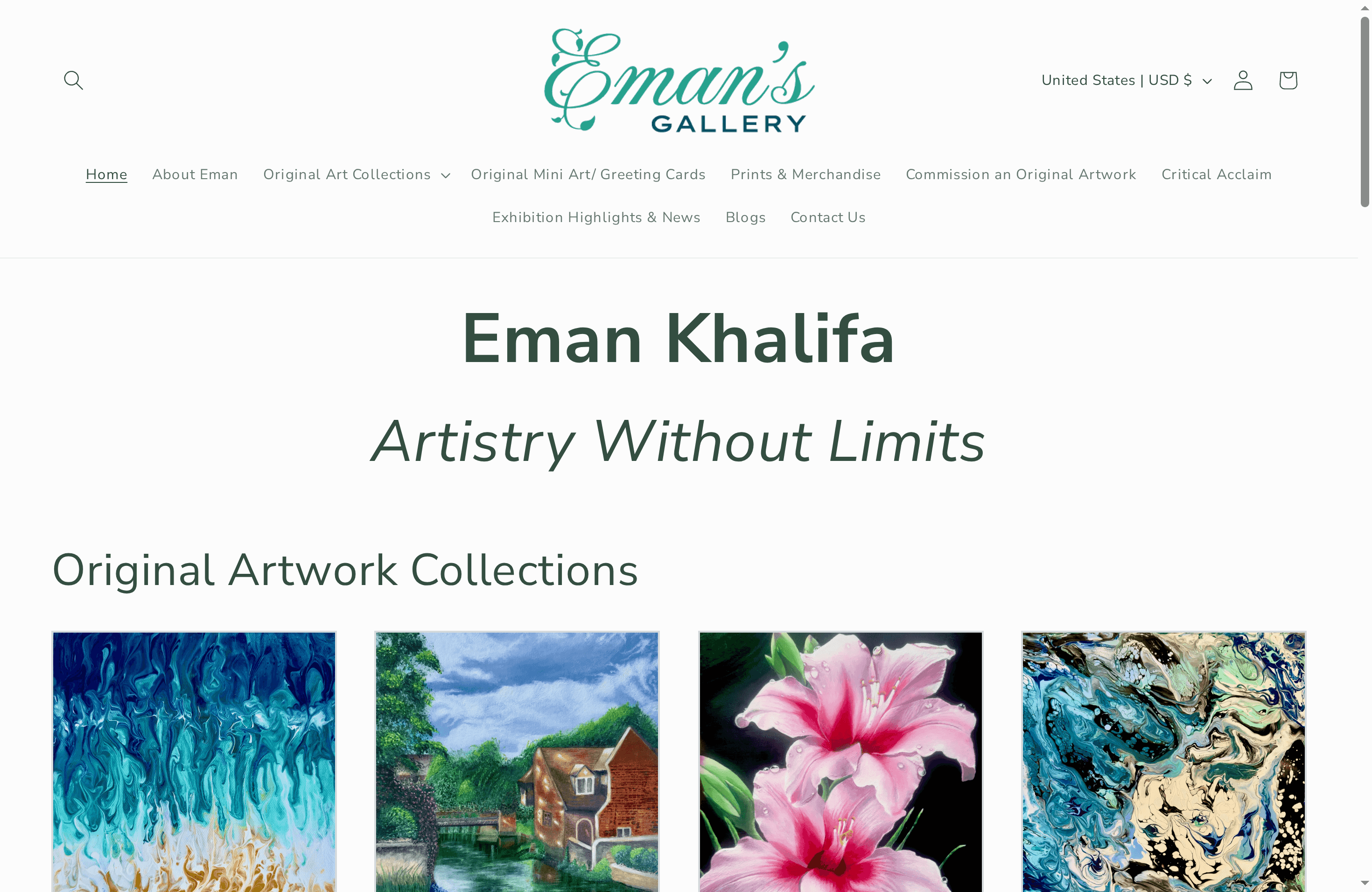
Explore museum-quality canvas prints and exclusive art-printed merchandise that capture the essence of skilled craftsmanship and artistic expression. Don’t wait to elevate your collection with original pieces that reflect the sophistication of printmaking methods. Visit Eman’s Gallery today to discover how authentic art can transform your space and inspire your imagination.
Frequently Asked Questions
What are the main printmaking techniques used in art?
Printmaking techniques can be categorized into three main types: relief printing, intaglio, and surface printing. Each technique has its unique processes and artistic outcomes, with relief printing involving carving away non-printing areas, intaglio focusing on incising images into metal plates, and surface printing using techniques like lithography and screen printing.
How does relief printing differ from intaglio techniques?
Relief printing involves carving out areas of a material, leaving raised surfaces that receive ink, producing bold, graphic images. In contrast, intaglio techniques incise images into a surface, where ink fills the grooves and is transferred to paper using high pressure, resulting in fine lines and rich textures.
What are some common mistakes to avoid in printmaking?
Common mistakes in printmaking include inconsistent ink application, misalignment of paper or registration marks, and inadequate surface preparation. These errors can compromise the quality and clarity of the final print.
What should artists consider when preparing for printmaking?
Artists should carefully choose their materials and techniques, practice precise inking methods, and ensure safety protocols are in place to handle potentially hazardous chemicals. Understanding the intricacies of each printmaking stage is crucial for achieving exceptional results.
Recommended
- What Is Fine Art Printing and Why It Matters
- Why Decorate With Prints: Impact on Luxury Spaces
-
Digital Art Prints: Elevating Luxury Home Design
Stay Connected
- ✨ Explore Eman Khalifa’s original art and fine art prints
- 📸 Follow Eman Khalifa’s art journey on: Instagram @emans_gallery and Facebook Eman’s Gallery
- 📹 Watch Eman Khalifa creating live art on: YouTube @emans_gallery
