


What Makes Art Valuable: Key Factors Explained
Over ninety percent of American art collectors believe value in art stretches beyond price tags. The challenge lies in understanding what makes a piece truly meaningful, as influences from culture, originality, and the artist’s reputation all play a role. Unpacking these key factors can reveal why certain artworks capture attention, dominate conversations, and inspire lasting appreciation among collectors and enthusiasts alike.
Table of Contents
- Defining Value In Art: Core Concepts
- How Rarity And Originality Affect Worth
- Artist Reputation And Provenance Insights
- Cultural Impact And Historical Context
- Market Perception, Trends, And Investment Risks
Key Takeaways
| Point | Details |
|---|---|
| Aesthetic Quality is Key | The visual appeal, technical mastery, and emotional resonance of an artwork are fundamental in determining its value. |
| Rarity and Originality Drive Market Value | Unique and innovative artworks often command higher valuations due to their exclusivity and distinctive artistic approaches. |
| Artist Reputation Matters | Established artists with significant exhibition histories and critical acclaim tend to achieve higher market values for their works. |
| Cultural Impact Enhances Value | Art that engages with cultural narratives or historical contexts can possess exceptional market worth, reflecting broader societal dynamics. |
Defining Value in Art: Core Concepts
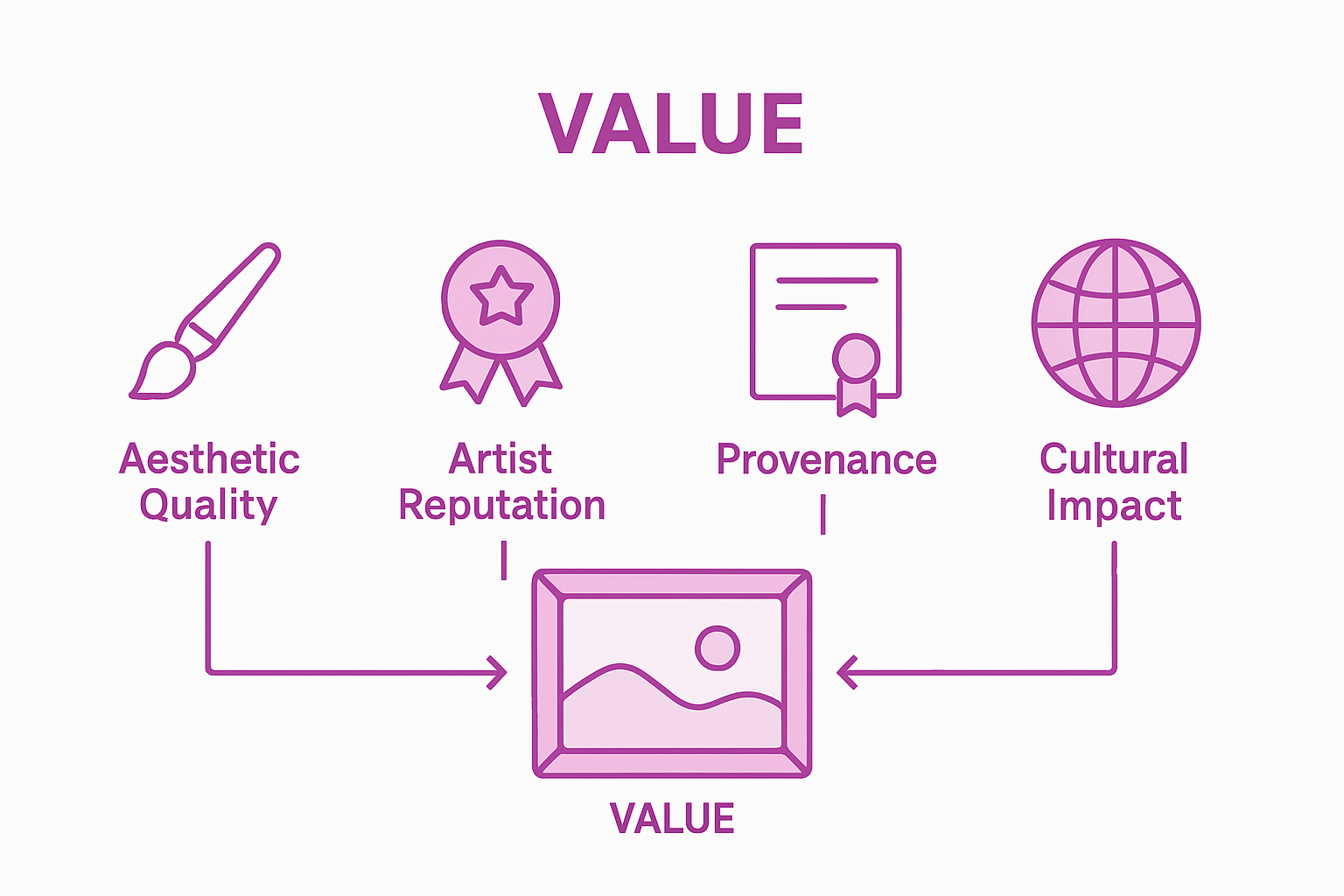
Art valuation transcends simple monetary assessment, representing a complex interplay of aesthetic, cultural, and market dynamics. Art valuation involves estimating an artwork’s worth through multiple interconnected dimensions beyond pure financial metrics.
At its core, artistic value emerges from several fundamental elements. Aesthetic quality remains paramount, encompassing the artwork’s visual appeal, technical mastery, and emotional resonance. Artists create pieces that communicate profound experiences, challenging viewers to engage intellectually and emotionally. Intrinsic artistic qualities like originality, creative expression, and conceptual depth contribute significantly to an artwork’s perceived value.
Furthermore, art’s value derives from contextual factors including the artist’s reputation, historical significance, and cultural impact. Emerging and established artists alike contribute to the art ecosystem, with professional recognition, exhibition history, and critical acclaim playing crucial roles in determining an artwork’s market potential. Professional art collectors and curators evaluate pieces through nuanced lenses that consider both immediate aesthetic appeal and long term cultural significance.
Key factors influencing art valuation include:
- Artist’s professional reputation
- Technical execution and skill
- Emotional and intellectual complexity
- Historical and cultural context
- Rarity and uniqueness of the artwork
- Provenance and exhibition history
Understanding these multifaceted dimensions helps art enthusiasts and collectors appreciate the profound complexity behind artistic valuation.
Stay Connected
-
✨ Explore Eman Khalifa's original art, fine art prints & art merchandise
-
📸 Follow Eman Khalifa's art journey on: Instagram @emans_gallery and Facebook Eman's Gallery
-
📹 Watch Eman Khalifa creating live art on: YouTube @emans_gallery
-
Supported by BabyLoveGrowth
How Rarity and Originality Affect Worth
Rarity emerges as a critical determinant in establishing an artwork’s market value, fundamentally transforming how collectors and investors perceive artistic worth. Research demonstrates that artwork scarcity significantly drives pricing mechanisms, with unique pieces commanding substantially higher valuations due to their inherent exclusivity.
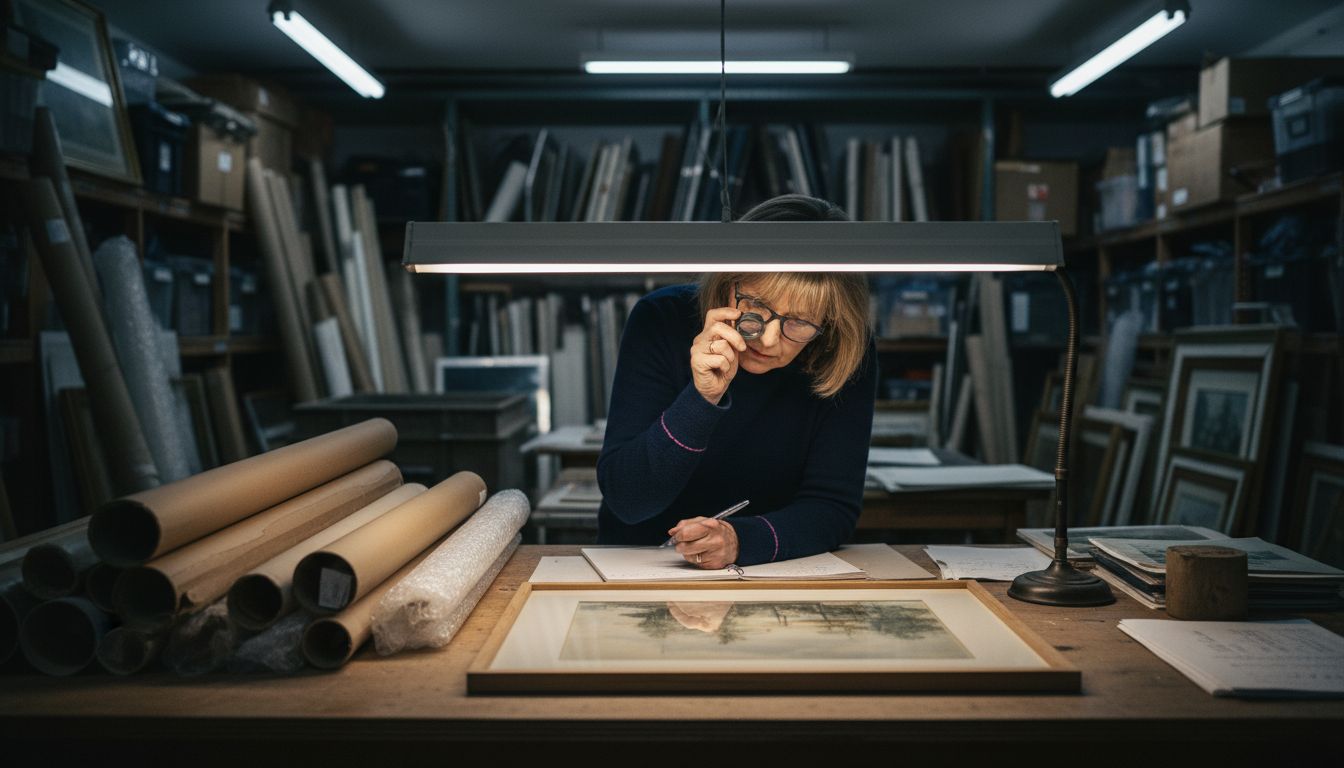
The concept of originality represents another pivotal factor in art valuation. Distinctive artistic techniques and innovative subject matter substantially enhance an artwork’s market potential, creating compelling narratives that distinguish pieces from more conventional productions. Artists who develop groundbreaking approaches or explore uncharted creative territories often find their works attracting heightened interest from discerning collectors and art enthusiasts.
Key characteristics that contribute to an artwork’s rarity and originality include:
- Limited edition prints or singular compositions
- Innovative artistic techniques
- Unconventional material usage
- Distinctive stylistic approaches
- Groundbreaking conceptual frameworks
- Complex technical execution
Collectors and art professionals recognize that truly exceptional pieces transcend traditional aesthetic boundaries, representing not just visual objects but intellectual and cultural statements. The interplay between rarity and originality creates a nuanced ecosystem where artistic merit directly correlates with potential market value.
Stay Connected
-
✨ Explore Eman Khalifa's original art, fine art prints & art merchandise
-
📸 Follow Eman Khalifa's art journey on: Instagram @emans_gallery and Facebook Eman's Gallery
-
📹 Watch Eman Khalifa creating live art on: YouTube @emans_gallery
-
Supported by BabyLoveGrowth
Artist Reputation and Provenance Insights
Artist reputation stands as a fundamental cornerstone in determining an artwork’s intrinsic and market value. Established artists with consistent critical acclaim and significant exhibition histories naturally command higher valuations, as their professional trajectory becomes a testament to their artistic significance. Provenance plays a crucial role in authenticating and contextualizing an artwork’s historical significance, providing potential collectors with comprehensive insights into the piece’s lineage and cultural importance.
The complex ecosystem of art valuation revolves around an artist’s professional narrative. Emerging and renowned artists alike build their reputation through multiple channels: critical reviews, museum exhibitions, gallery representations, academic recognition, and peer acknowledgment. Each of these elements contributes to constructing a comprehensive professional profile that directly influences an artwork’s perceived and actual market value.
Key components that substantiate an artist’s reputation include:
- Academic and professional art training credentials
- Solo and group exhibition history
- Critical reviews and scholarly publications
- Museum and gallery representation
- Awards and professional recognitions
- Acquisition by significant public or private collections
Professional art collectors and curators meticulously examine an artwork’s provenance, viewing it as a comprehensive narrative that extends beyond mere ownership documentation. This detailed historical record provides transparency, validates authenticity, and offers fascinating insights into an artwork’s journey through various collections and cultural contexts.
How to verify authentic art becomes an essential skill for collectors navigating this nuanced landscape of artistic valuation.
Stay Connected
-
✨ Explore Eman Khalifa's original art, fine art prints & art merchandise
-
📸 Follow Eman Khalifa's art journey on: Instagram @emans_gallery and Facebook Eman's Gallery
-
📹 Watch Eman Khalifa creating live art on: YouTube @emans_gallery
-
Supported by BabyLoveGrowth
Cultural Impact and Historical Context
Cultural significance transforms artworks from mere visual objects into profound historical documents that capture the essence of their time. Artworks that meaningfully engage with or challenge cultural narratives often command exceptional value, serving as powerful reflections of societal dynamics, philosophical shifts, and collective human experiences.
Historical significance dramatically elevates an artwork’s market potential, particularly when pieces are associated with pivotal cultural movements or transformative moments in artistic evolution. Artists who capture the zeitgeist of their era create works that transcend aesthetic appreciation, becoming critical archaeological artifacts that document social, political, and emotional landscapes.
Key elements that contribute to an artwork’s cultural and historical impact include:
- Representation of specific cultural movements
- Reflection of significant social transformations
- Documentation of historical turning points
- Challenging prevailing artistic or social conventions
- Embodying collective cultural experiences
- Capturing unique geographical or temporal perspectives
Professional art historians and curators understand that true artistic value extends far beyond technical execution. An artwork’s ability to communicate complex narratives, challenge existing paradigms, and provide profound insights into human experience determines its long-term cultural relevance and potential appreciation.
Stay Connected
-
✨ Explore Eman Khalifa's original art, fine art prints & art merchandise
-
📸 Follow Eman Khalifa's art journey on: Instagram @emans_gallery and Facebook Eman's Gallery
-
📹 Watch Eman Khalifa creating live art on: YouTube @emans_gallery
-
Supported by BabyLoveGrowth
Market Perception, Trends, and Investment Risks
Art market dynamics represent a complex ecosystem where aesthetic value intersects with financial speculation. Market trends and economic indicators significantly influence artwork valuations, creating a nuanced landscape where collector preferences continuously evolve in response to broader economic conditions.
Investing in art carries inherent risks driven by fluctuating market perceptions, which can dramatically shift based on cultural movements, geopolitical events, and emerging artistic paradigms. Professional collectors and investors must navigate these intricate dynamics with strategic insight, understanding that an artwork’s value extends far beyond its immediate aesthetic appeal.
Key considerations for art investment risk management include:
- Monitoring global economic indicators
- Tracking emerging artistic movements
- Analyzing collector sentiment trends
- Understanding geopolitical influences
- Evaluating artist reputation trajectories
- Assessing long-term cultural relevance
Successful art investors recognize that market perception is a multifaceted construct. Artworks represent not just visual assets but complex cultural artifacts whose value can transform rapidly based on shifting societal narratives, critical reception, and broader economic frameworks. Strategic diversification and deep research become essential tools in mitigating potential investment uncertainties.
Stay Connected
-
✨ Explore Eman Khalifa's original art, fine art prints & art merchandise
-
📸 Follow Eman Khalifa's art journey on: Instagram @emans_gallery and Facebook Eman's Gallery
-
📹 Watch Eman Khalifa creating live art on: YouTube @emans_gallery
-
Supported by BabyLoveGrowth
Discover Art That Truly Reflects Its Value
Understanding what makes art valuable involves recognizing rarity, originality, and cultural impact as key factors. If you are passionate about owning meaningful art that goes beyond simple decoration, explore our curated collection of Contemporary works by Eman Khalifa. Each piece captures unique expression and professional mastery, offering you a genuine connection to authentic, one-of-a-kind creations.
Experience the emotional and intellectual depth of art that holds real significance. Find museum-quality options like our Artwork Printed on Canvas and Canvas Art Prints by Eman Khalifa | Premium Giclée Wall Art that add lasting value to your collection or space. Visit Eman’s Gallery now and secure distinctive art that resonates with your vision and investment goals.
Frequently Asked Questions
What are the key factors that determine the value of art?
Key factors that influence art valuation include the artist’s reputation, technical execution and skill, emotional and intellectual complexity, historical and cultural context, rarity and uniqueness of the artwork, and provenance and exhibition history.
How does an artist’s reputation affect the value of their art?
Artist reputation significantly impacts market value. Established artists with critical acclaim and a strong exhibition history tend to command higher valuations because their professional trajectory adds to the perceived importance of their works.
Why are rarity and originality important in art valuation?
Rarity and originality enhance an artwork’s value as unique pieces often command higher prices due to their exclusivity. Distinctive techniques and innovative subject matter also attract collectors and investors, setting the artwork apart in the market.
How do cultural and historical contexts influence art worth?
Artworks with cultural and historical significance reflect societal dynamics and moments in history, making them invaluable. Their capacity to challenge norms and represent specific movements can elevate their market potential significantly.
Recommended
- Why Choose Original Art – Value, Meaning, and Impact – Eman’s Gallery
- Complete Guide to Valuing Art Prints – Eman’s Gallery
- Art for Collectors Guide: Expert Insights and Strategies – Eman’s Gallery
- 7 Key Differences: Art Print vs Painting for Collectors – Eman’s Gallery
Stay Connected
- ✨ Explore Eman Khalifa’s original art and fine art prints
- 📸 Follow Eman Khalifa’s art journey on: Instagram @emans_gallery and Facebook Eman’s Gallery
- 📹 Watch Eman Khalifa creating live art on: YouTube @emans_gallerye
