


Types of Drawing Styles: A Practical Guide for Artists
TL;DR:
- Understanding different drawing styles helps artists make confident choices aligned with their skills and goals.
- Beginners should focus on fundamental skills and experiment with styles like cartooning or abstract art to develop confidence and personal expression.
If you have ever stared at a blank page wondering which types of drawing styles actually match your goals, you are not alone. The range of options can feel paralyzing for beginners and hobbyists alike. Knowing how to categorize drawing styles gives you a real framework for making progress, not just picking something at random. This guide breaks down the most popular and unique drawing approaches by technique, skill level, and artistic purpose so you can make a confident choice and start building your practice.
Table of Contents
- Key takeaways
- 1. How to evaluate the types of drawing styles before you commit
- 2. Realism and representational drawing styles
- 3. Cartooning and stylized drawing styles
- 4. Abstract and experimental drawing styles
- 5. Line-based and texture-driven styles
- 6. Drawing style comparison: skill level, time, and best uses
- My take on developing a drawing style
- Explore art that puts these styles into practice
- FAQ
Key takeaways
| Point | Details |
|---|---|
| Style categories matter | Grouping styles by technique and intent helps you choose one that fits your current skill level and goals. |
| Fundamentals come first | Mastering basics like line, form, and value gives you more control over any style you choose later. |
| Line-based styles suit beginners | Ink and line techniques require minimal tools and build confidence through commitment and mark-making. |
| Realism demands time | Realistic drawing styles can take 12 to 20 hours per piece and require disciplined observation skills. |
| Experimentation builds identity | Trying multiple styles before settling on one is how most artists develop a signature approach. |
1. How to evaluate the types of drawing styles before you commit
Drawing techniques span over 50 essential methods, grouped into line-based, shading and tonal, and spatial categories. That number alone tells you something useful: no single style covers everything, and each one prioritizes different skills.
Before diving into specific styles, use these criteria to evaluate your options:
- Representational vs. abstract: Does the style aim to depict recognizable subjects or communicate through form and feeling?
- Line dominance: Is the style built primarily on line work, or does it rely on tone and value?
- Complexity: How much technical skill does it demand upfront?
- Media compatibility: Does it work best with graphite, ink, charcoal, or digital tools?
- Time investment: Some styles reward speed and spontaneity; others require extended sessions.
Art styles divide primarily into representational and non-representational categories, with realism, cartooning, manga, expressionism, and abstract styles forming the main branches. Understanding this split is the first real filter you can apply.
Pro Tip: Match your style to your current goal. If you want to improve observation, pick a representational style. If you want to develop personal voice quickly, start with a stylized or abstract approach.
2. Realism and representational drawing styles
Realism is what most people picture when they think about serious drawing. It prioritizes accuracy, proportion, and the faithful rendering of light and shadow. Academic realism, photorealism, and observational drawing all fall under this umbrella, but they differ in intensity.
Key characteristics of realistic drawing styles:
- Accurate proportion: Figures, objects, and spaces must relate correctly to one another.
- Chiaroscuro: Strong contrast between light and shadow creates a three-dimensional illusion.
- Hatching and blending: These are the core tonal rendering techniques used to model form.
- Perspective: Spatial depth requires consistent one-point, two-point, or three-point perspective.
One of the most common obstacles for beginners is that drawing accuracy is a seeing problem, not a hand problem. Most beginners draw what they think they see rather than what is actually in front of them. The fix is learning techniques like squinting to simplify values and measuring relationships with a pencil.
Photorealistic comic or portrait work can take 12 to 20 hours per page to complete. That is a serious time commitment that beginners need to understand before choosing this path.
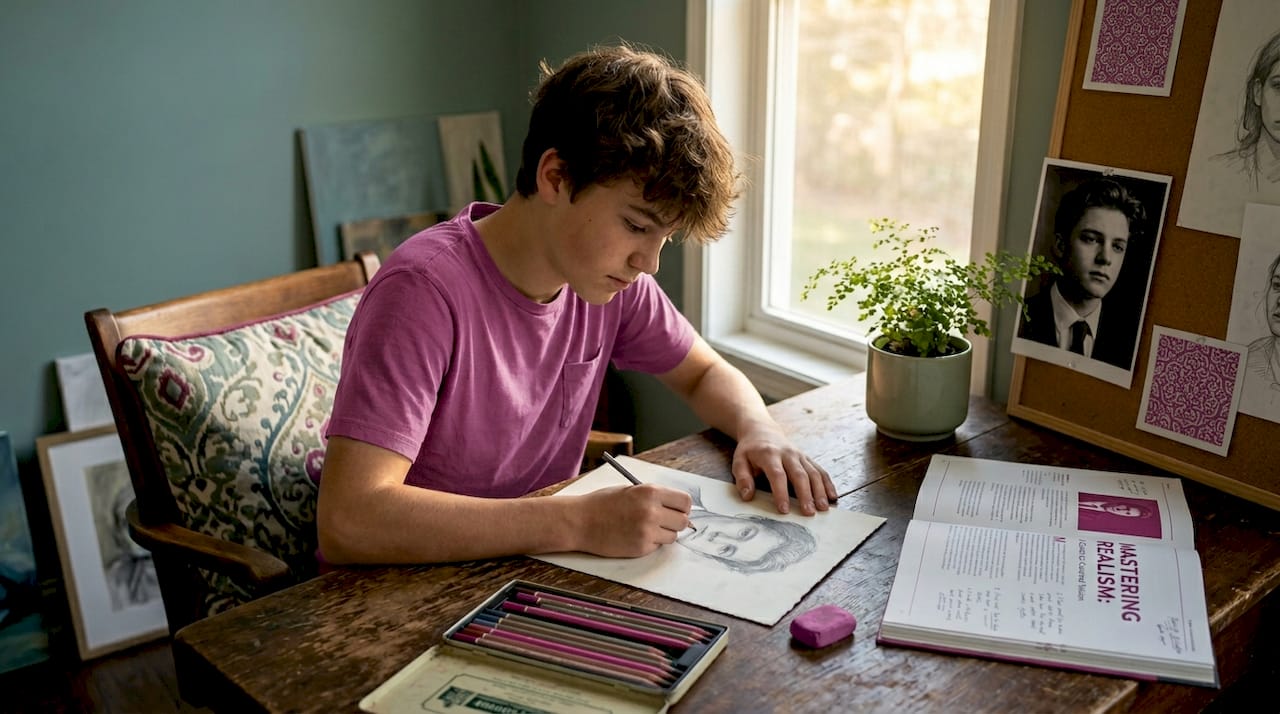
Pro Tip: Avoid outlining every single form you draw. Staging your edges with selective hard and soft lines, as experienced artists recommend, adds depth and prevents your work from looking flat and sticker-like.
3. Cartooning and stylized drawing styles
Cartooning is one of the most beginner-friendly yet technically rich types of art drawing available. It trades photographic accuracy for exaggeration, clarity, and personality. Caricature pushes facial features to comic extremes. Retro American cartoons use thick outlines and flat color fields. Each variant has its own set of conventions.
What makes stylized drawing different:
- Simplified shapes: Complex forms get reduced to bold, readable geometry.
- Line variation: Thick and thin lines create emphasis and visual rhythm without shading.
- Expressive anatomy: Proportions are deliberately distorted for emotional effect.
- Cultural conventions: Manga-influenced styles use speed lines, screen tones, and sweat drops as a visual language that readers recognize instantly.
Manga deserves special mention because it operates on two registers at once. Manga-influenced art involves alternating between detailed realistic proportions and simplified chibi forms within the same work to convey emotional shifts. A character shown in a dramatic moment is rendered with anatomical care; the same character in a comedic reaction switches to a tiny, round, exaggerated form. That kind of code-switching is a deliberate artistic choice, not a shortcut.
Character design styles rooted in cartooning also transfer directly to professional fields like animation, game design, and graphic novels, making them practical skills beyond hobbyist practice.
4. Abstract and experimental drawing styles
Abstract drawing styles move away from representing the visible world and focus on what the artist wants to communicate emotionally or conceptually. This does not mean anything goes. It means the visual language shifts. Line, shape, tone, and composition carry meaning directly rather than through recognizable imagery.
Common techniques in abstract styles:
- Gesture drawing: Loose, energetic marks capture movement and feeling rather than accurate form.
- Silhouette and tonal blocks: Large areas of value replace detailed linework.
- Automatism: Drawing without conscious planning to access subconscious imagery.
- Layered mark-making: Repeated strokes build texture and visual complexity.
Graphic novel artists exploit style families strategically based on the narrative tone and audience they are targeting. An expressionist approach creates unease and emotional intensity. A cleaner abstract approach signals design sensibility and contemporary taste. The style choice is always deliberate.
For hobbyists, abstract drawing styles offer one major advantage: they remove the pressure of accuracy. This makes experimentation faster, which in turn accelerates how quickly you discover what your personal aesthetic actually is. You can explore line drawing techniques through the Emansgallery blog to see how line and abstraction intersect across different bodies of work.
5. Line-based and texture-driven styles
Line-based drawing is one of the most distinct and recognizable groups in any drawing style comparison. The style lives or dies by the quality of its marks. Different tools create fundamentally different results.
Ink drawing tools each produce distinct line qualities:
- Fineliners: Consistent, controlled lines. Best for precision work and technical illustration.
- Brush pens: Variable line weight based on pressure. Excellent for expressive, dynamic work.
- Ballpoint pens: Highly accessible, great for layered tonal buildup through repeated strokes.
- Dip pens: High line variation, traditional look, but require more practice to control.
Two of the most widely used ink-based tonal techniques are cross-hatching and stippling. Cross-hatching builds value using overlapping angled lines, while stippling builds tone through accumulated dots, producing a unique smooth gradient. Both methods construct tonal depth without any blending, which suits artists who prefer crisp, clean work.
Working with permanent media like micron pens also changes your relationship to mistakes. Permanent tools force commitment to each mark you make, which builds confidence and develops a signature line quality over time. Artists learn to incorporate errors rather than erase them, and this practice directly shapes their personal style.
Pro Tip: Start with a fineliner if you are new to ink. The consistent line width removes one variable while you focus on composition and mark density.
| Technique | Tool | Effect |
|---|---|---|
| Cross-hatching | Pen, fineliner | Builds tonal value with angled overlapping lines |
| Stippling | Fine-tip pen | Creates smooth gradients using dot density |
| Contour line | Brush pen, fineliner | Defines form with single continuous or varied lines |
| Scumbling | Ballpoint, soft pencil | Random circular marks create organic texture |
6. Drawing style comparison: skill level, time, and best uses
Choosing between different drawing techniques is easier when you see them side by side. Here is a direct comparison across the four main style categories discussed in this guide:
| Style | Skill level | Time per piece | Best for |
|---|---|---|---|
| Realism | Intermediate to advanced | High | Portraits, still life, technical work |
| Cartooning | Beginner to intermediate | Low to medium | Character design, comics, storytelling |
| Abstract/Experimental | All levels | Variable | Personal expression, concept development |
| Line-based/Ink | Beginner to intermediate | Low to medium | Illustration, urban sketching, graphic work |
Hobbyists who want fast results and expressive freedom do well with cartooning or abstract methods. Art students who need to demonstrate technical ability often focus on realism as a foundation. Aspiring professionals working in illustration or comics typically blend line-based precision with stylized character work.
The honest advice here is to try at least two styles before committing. Understanding drawing vs. painting approaches can also help you see where your preferred drawing style might lead as your practice grows.
My take on developing a drawing style
I get asked often which style someone should learn first. My answer is always the same: learn to draw before you learn a style.
I have watched many students latch onto a stylized approach early because it feels more personal and expressive. The results are often charming at first. But without understanding proportion, value, and edge control, the style becomes a ceiling rather than a starting point. As the Proko research confirms, beginners frequently use style as a crutch, leaning on its conventions to avoid the harder work of foundational skill-building.
What I have found through my own practice is that the styles you develop confidence in later carry far more personal meaning than the ones you adopt early out of imitation. When you can draw accurately and then choose to distort, simplify, or abstract, that choice has intention behind it. That intention is what makes a style feel genuinely yours.
My advice: spend real time with representational drawing even if you have no interest in realism as an end goal. Then take what you have learned and apply it deliberately to whatever stylized or experimental direction you want to go. The detour pays off.
— Eman
Explore art that puts these styles into practice
If seeing different styles in finished, professional work helps you understand what is possible, Emansgallery is a good place to start.
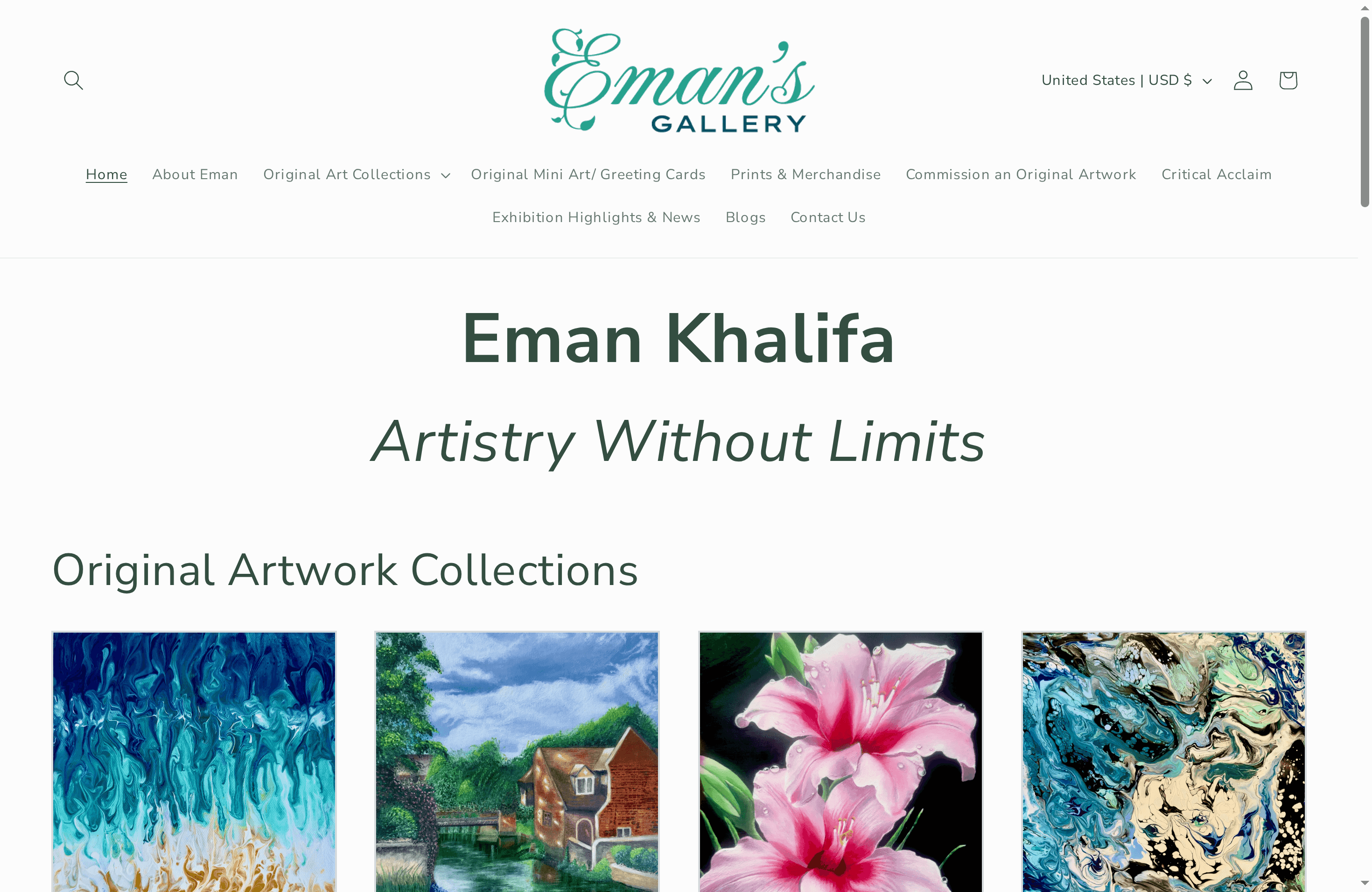
Eman’s Gallery features original handmade works spanning contemporary realism, cubist portraiture, and expressionist figurative art. You can see how line-based approaches translate to finished canvas in pieces like the abstract ink splash print or experience the emotional weight of expressionist figurative work. Each piece reflects a deliberate style choice backed by technical skill. Exploring the collection gives you real reference points for the styles covered in this guide.
FAQ
What are the main types of drawing styles?
The main types divide into representational styles like realism, stylized styles like cartooning and manga, abstract and experimental approaches, and line-based or texture-driven ink styles. Each category uses different techniques and suits different artistic goals.
Which drawing style is easiest for beginners?
Cartooning and line-based ink styles are generally the most accessible for beginners because they require fewer tools, reward commitment, and produce results faster than realism. Abstract approaches also work well at any skill level.
How do I choose a drawing style that fits my goals?
Evaluate your style options using criteria like subject type, tool preference, time available, and whether you want to focus on technical accuracy or personal expression. Matching the style to your actual goal, rather than picking what looks impressive, leads to faster improvement.
What is the difference between hatching and stippling?
Hatching builds tonal value using parallel or overlapping angled lines, while stippling uses concentrated dots to create gradients and texture. Both are line-based shading techniques that work without blending, common in ink drawing.
Do I need to master realism before learning other styles?
You do not need to achieve photorealistic precision, but a solid grounding in proportion, value, and edge control will make every other style stronger. Foundation skills give you intentional control over your stylistic choices rather than leaving them up to chance.
Stay Connected
-
✨ Explore Eman Khalifa's original art,
-
Follow Eman Khalifa's art journey on: Instagram @emans_gallery and Facebook Eman's Gallery
-
Watch Eman Khalifa creating live art on: YouTube @emans_gallery
