


How to display artwork in a gallery for maximum impact
TL;DR:
- Proper space assessment and correct hardware selection are essential for impactful, safe art display.
- Guidelines for ideal height, sizing, and stylistic choices help create balanced, professional-looking gallery arrangements.
Investing in a striking contemporary piece and then watching it disappear into a wall is a frustrating experience that more collectors face than most would admit. Poor placement, incorrect scale, and inadequate lighting can reduce even a museum-quality painting to background noise. This guide covers every stage of the display process, from initial space assessment through final styling, so your collection commands the attention and respect it deserves.
Table of Contents
- Assessing your space and artwork
- Tools, materials, and prep work
- Step-by-step guide to hanging artwork
- Styling and finishing touches
- The art of display: lessons from real galleries
- Elevate your space with curated gallery art
- Frequently asked questions
Key Takeaways
| Point | Details |
|---|---|
| Get the scale right | Art should relate to nearby furniture and wall space, spanning about 60-75% above furniture. |
| Use proper hardware | D-rings and the correct picture hooks keep your art securely mounted and safe. |
| Follow gallery-level steps | Measure carefully, mark placements, and use a level to ensure a professional finish. |
| Style with intent | Creative frames, modern displays, and polished labels elevate your presentation. |
| Learn from experts | Balance technical advice with personal storytelling for truly memorable gallery walls. |
Assessing your space and artwork
Once you recognize the potential pitfalls in art display, it is time to evaluate your space and collection to set a strong foundation.
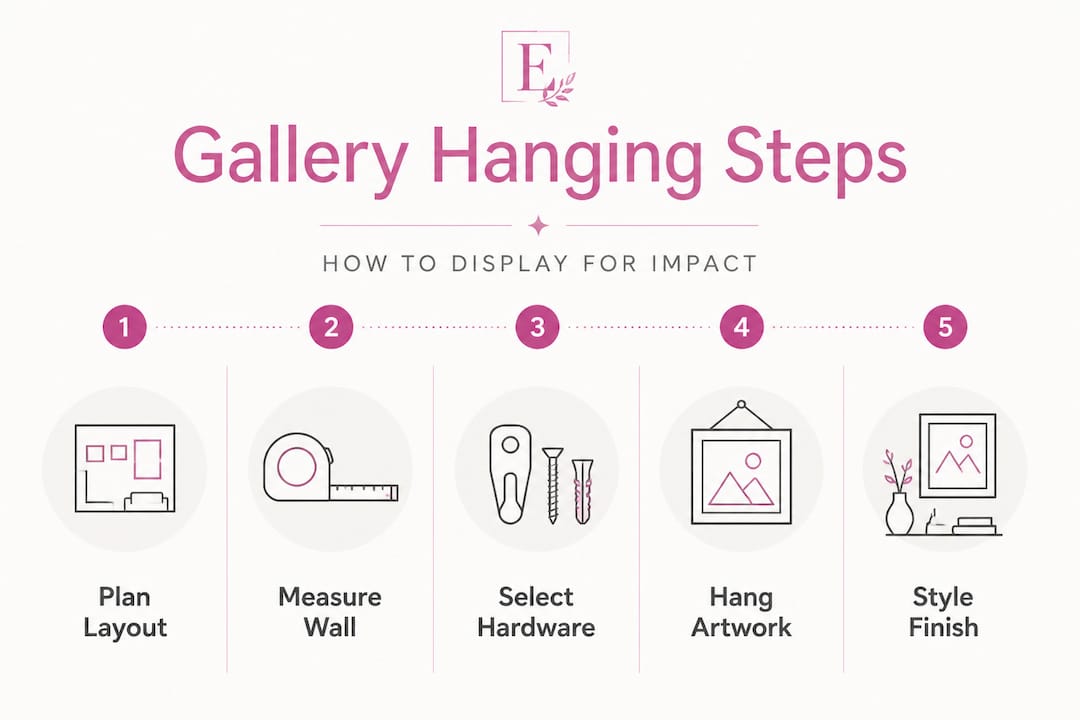
Before a single nail goes into the wall, thorough assessment prevents costly mistakes. Many collectors skip this stage and end up with pieces that feel out of proportion or visually disconnected from the rest of the room. Taking 30 minutes to measure and photograph your walls pays dividends at every step that follows.
Wall and room measurements to record:
- Total wall width and height
- Width and height of any furniture placed against or near that wall
- Distance from floor to ceiling
- Location of windows, doors, outlets, and light switches
- Natural light direction and intensity at different times of day
Artwork inventory checklist:
- Dimensions of each piece (height, width, depth)
- Weight of each piece including the frame
- Hanging hardware already attached (wire, D-rings, sawtooth bracket)
- Framed or unframed canvas
- Fragility of medium (oil, watercolor, mixed media)
One of the most referenced sizing guidelines states that art hung above furniture should maintain 6 to 10 inches between the top of the furniture and the bottom of the artwork, and the piece should span 60 to 75 percent of the furniture’s width. A sofa that is 84 inches wide, for example, calls for artwork or a grouping between 50 and 63 inches wide.
Design professionals consistently flag the same recurring display errors: hanging too high, choosing pieces too small for the wall, ignoring the visual relationship to furniture, and overlighting in ways that fade or damage the artwork over time. Knowing these pitfalls before you start keeps you from repeating them.
| Space type | Recommended art width | Ideal center height |
|---|---|---|
| Above a sofa (84 in.) | 50 to 63 inches | 57 to 60 in. from floor |
| Above a console (48 in.) | 29 to 36 inches | 57 to 60 in. from floor |
| Dining room focal wall | 50 to 70% of wall width | 57 to 60 in. from floor |
| Hallway (narrow) | No wider than hallway minus 12 in. | 57 in. from floor |
For rooms with limited square footage, the approach to scale changes slightly. Specific strategies for displaying art in small spaces can help you maintain visual impact without overwhelming compact interiors. Larger homes benefit from the broader range of techniques covered in modern interior art display ideas.
Pro Tip: Take photographs of your walls at the same time of day you will most often view the art. Natural light changes dramatically from morning to evening and directly affects how colors and textures read on the wall.
Tools, materials, and prep work
Having sized up your space and art, assemble the right tools and prep for flawless, secure installation.
The difference between a gallery-ready display and an amateur result often comes down to hardware, not talent. Professionals use the right tool for every weight class and wall type. Improvising with whatever is in the junk drawer leads to crooked frames, wall damage, and in the worst cases, fallen artwork.
Step-by-step prep process:
- Gather all tools before starting: tape measure, pencil, level (digital or bubble), stud finder, power drill, screwdriver, hammer, picture hooks, wall anchors, and painter’s tape.
- Locate studs using the stud finder and mark them lightly with pencil. For heavy pieces, screwing directly into studs is the safest method.
- If studs are not available in the ideal location, use drywall anchors rated well above the artwork’s weight.
- Inspect the back of each piece. Tighten any loose D-rings and replace old wire that shows fraying.
- Clean the wall surface where hardware will go. Dust and grease reduce anchor adhesion.
- For temporary or rental-space displays, command strips rated for the artwork’s weight can work for lighter pieces under 20 pounds.
The Milan Art Institute recommends D-rings with coated wire for secure hanging, with the key rule being that the hook’s weight rating must always exceed the actual weight of the artwork. A 40-pound painting needs hooks and wire rated for at least 50 to 60 pounds to include a safety margin.
| Hardware type | Best for | Weight range |
|---|---|---|
| Sawtooth bracket | Small framed prints | Up to 15 lbs |
| Single picture hook and nail | Medium framed works | 15 to 30 lbs |
| Two D-rings and coated wire | Most gallery works | 20 to 50 lbs |
| Wall anchors and heavy hooks | Large or heavy pieces | 50 to 100+ lbs |
| Gallery rail system | Multiple pieces, flexible layout | Varies by rail |
For luxury interiors where wall integrity is a priority, detailed guidance on hanging paintings for luxury interiors covers both the technical and aesthetic considerations. Collectors working with canvas prints will find installation specifics in these canvas print tips worth reviewing before installation.
Pro Tip: Before drilling, press a strip of painter’s tape over the mark. Drill through the tape. This reduces wall surface crumbling and makes cleanup faster.
Step-by-step guide to hanging artwork
With your materials at the ready, follow these steps for accuracy and stability in your final presentation.
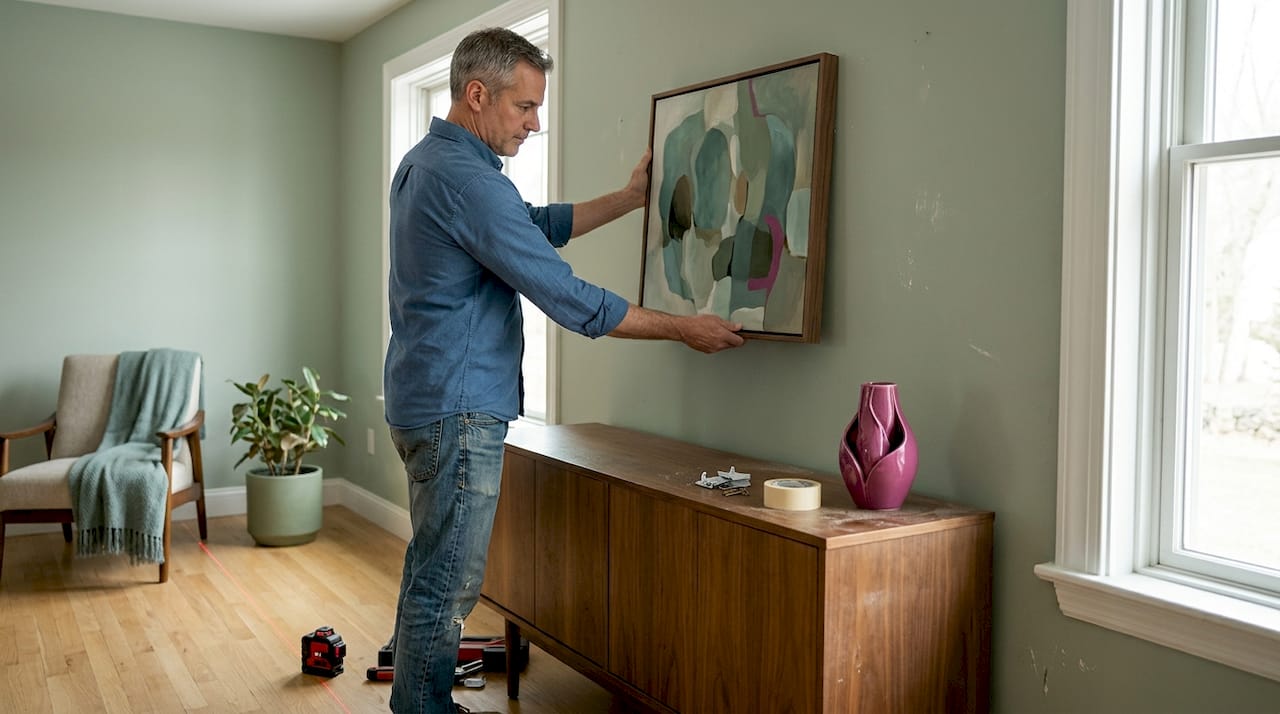
Measurement errors compound quickly, especially on gallery walls with multiple pieces. A mark that is a half-inch off on the first piece can translate into a visible misalignment across an entire arrangement. Precise sequencing is the key to a clean result.
Hanging a single piece:
- Determine the center point of your chosen wall section and mark it with a light pencil dot.
- Decide on your hanging height. The standard gallery center is 57 to 60 inches from the floor to the artwork’s center.
- Calculate the hanging point: subtract half the artwork’s height from your center height, then add the distance from the top of the artwork to the wire or hook when taut.
- Mark the wall at this calculated point.
- Install the hook or anchor at that mark.
- Hang the piece, then use a level to confirm it is straight. Adjust before the hook fully sets.
Hanging a pair or symmetrical grouping:
- Treat the grouping as one combined unit. Find the center of the entire arrangement.
- Map out the full arrangement on the floor first using paper templates or the actual pieces.
- Maintain 2 to 3 inches of space between frames within a grouping.
- Hang the center piece first, then work outward symmetrically.
Creating a gallery wall:
- Cut paper templates for each piece and tape them to the wall using painter’s tape.
- Step back and assess the layout from a normal viewing distance, at least 8 feet away.
- Adjust templates until satisfied, then mark through each template where the hook point will go.
- Remove templates and install hardware at each marked point.
- Hang pieces and level each one individually before stepping back for a final check.
Art should span 60 to 75 percent of furniture width when hung above it, with 6 to 10 inches of clear space between the top of the furniture and the bottom of the frame.
For curated multi-piece arrangements in high-end settings, additional art showcasing techniques for luxurious spaces address layout, spacing, and the visual weight balancing that separates polished displays from cluttered ones. If you are drawn to the gallery wall format specifically, a detailed look at gallery wall style covers the full range of aesthetic approaches.
Styling and finishing touches
Once your art is securely hung, add details and styling to achieve a professional polish.
Technical accuracy brings the display to a functional standard. Styling elevates it to something memorable. This final phase addresses lighting, framing choices, labels, and the small contextual additions that transform a collection of hung pictures into a curated presentation.
Contemporary and unframed display options:
- Gallery-wrapped canvas presents a clean, frameless look with painted or mirrored edges that work well in modern and minimalist spaces.
- Floating frames add a thin border of visible space between the artwork and the frame, creating depth without heavy visual framing.
- Leaning against a shelf or mantle gives a casual, curated look appropriate for relaxed contemporary settings.
- Thumbtack or clip rail systems work for paper-based works and allow frequent rotation without wall damage.
According to House Beautiful, gallery-wrapped canvas and floating frames achieve a relaxed but deliberate aesthetic for contemporary pieces, making unframed art feel intentional rather than unfinished. The approach you choose should relate directly to the formality level of the surrounding space.
Lighting guidelines:
- Use adjustable track lighting or picture lights to illuminate individual works without glare.
- Aim light at a 30-degree angle to the wall to minimize reflection on glass or varnished surfaces.
- Avoid direct sunlight, which fades pigments over time. UV-filtering glass or film is a worthwhile investment for valuable originals.
- LED lighting is preferred for art spaces because it produces minimal heat and no UV output.
Adding labels and artist statements:
Gallery labels provide context and add credibility to any private or public display. The Brower Center recommends that gallery labels include the artist’s name, artwork title, medium, and creation date, paired with a two to three sentence artist statement that gives the viewer context for the work. This approach is standard in professional gallery settings and translates directly to home displays, particularly in living rooms, offices, or dedicated art rooms where guests will spend time with the work.
Finishing touches that make a difference:
- Add small adhesive bumpers to the lower back corners of frames to keep them level and protect wall surfaces.
- Group related works by theme, color palette, or medium to create visual coherence.
- Leave negative wall space. Not every wall needs art. Strategic placement of one statement piece often outperforms a crowded arrangement.
- Rotate works seasonally to keep the display fresh and protect pieces from prolonged light exposure.
If you are selecting canvas prints for modern homes, finish and edge options directly affect how the final display reads on the wall. Collectors exploring a lighter, contemporary presentation can also browse unframed canvas print options to find pieces that suit a frameless gallery aesthetic.
The art of display: lessons from real galleries
With the technical basics covered, consider what seasoned curators and experienced collectors know about creating lasting impact with a display.
The most instructive observation from professional gallery settings is that restraint consistently outperforms density. Many first-time collectors believe that filling wall space justifies the investment. Experienced curators operate on the opposite logic: every piece shown should be shown because it earns its place, not because wall space is available. Removing one piece from a grouping often strengthens the remaining works by giving each one room to communicate.
Context matters more than placement precision. A technically perfect hang at exactly 58 inches, perfectly level, with ideal lighting, still falls flat if the piece has no relationship to its surrounding environment. The most effective private collections create visual conversations between works, between art and furniture, and between the overall space and the pieces shown within it. This is less about formula and more about understanding why a particular work belongs in a particular spot.
Breaking standard rules is sometimes the right move. The 57-to-60-inch center height is a guideline derived from average human eye level, and it is correct for most situations. But a large-scale abstract piece in a room with 12-foot ceilings might read better hung slightly higher to interact with the full vertical scale of the space. A low-slung seating arrangement might call for artwork centered closer to 52 or 54 inches. The rule is a starting point, not a fixed requirement.
Personal taste and museum-worthy presentation are not opposites. Some collectors assume that professional display requires suppressing individual preference in favor of neutral, gallery-white aesthetics. The strongest private collections reflect the collector’s eye while applying technical discipline. Knowing why gallery walls remain popular is partly about understanding how personal expression and structured curation can reinforce each other rather than conflict.
Elevate your space with curated gallery art
Ready to take action with your own gallery wall or standout display? Explore curated options made for impact.
Finding the right piece is the starting point for everything covered in this guide. Eman’s Gallery offers original handmade contemporary paintings and museum-quality canvas prints across abstract, geometric and optical illusion, floral, landscape, seascape, and still-life categories, all created by artist Eman Khalifa. She also offers original hand-painted art cards that can serve as mini art or giftable cards.

The Good Tidings original painting is one example of a statement work sized and crafted for a dominant wall position, delivering the kind of visual presence that makes a display memorable. For collectors building out a broader wall arrangement, the full range of gallery-ready wall art prints offers versatile options across scales and styles, with worldwide shipping from the UK, USA, Canada, Australia, Germany, France, Italy, Spain, Portugal, Greece, UAE, and the Netherlands.
Frequently asked questions
What is the optimal height to hang artwork in a gallery?
Most experts recommend centering art at eye level, between 57 and 60 inches from the floor to the artwork’s center. When hung above furniture, the bottom of artwork should sit 6 to 10 inches above the top of the furniture.
How do I hang heavy or large pieces safely?
Use D-rings paired with coated stainless steel wire, and verify that the hook’s weight rating exceeds the artwork’s actual weight. The Milan Art Institute confirms that D-rings with coated wire provide the most secure setup for gallery-standard installation.
Should contemporary art always be framed?
Contemporary art does not require traditional framing. Gallery-wrapped canvas, floating frames, and minimalist shelf or lean displays are all accepted approaches that suit modern and contemporary aesthetics.
What information should go on gallery labels?
Include the artist’s name, artwork title, medium, and creation date alongside a two to three sentence artist statement. The Brower Center’s guidelines confirm that complete gallery labels add context and professionalism to any art display setting.
Recommended
- 7 Innovative Interior Art Display Ideas for Modern Homes - Eman’s Gallery
- Why Gallery Walls Stay Popular: 65% Embrace Personal Style
- Displaying Art in Small Spaces for a Bold Visual Impact - Eman’s Gallery
- Gallery Wall Style: Transforming Spaces With Art - Eman’s Gallery
- How to create artful interiors with diamond painting
Stay Connected
- ✨ Explore Eman Khalifa’s original art and fine art prints
- 📸 Follow Eman Khalifa’s art journey on: Instagram @emans_gallery and Facebook Eman’s Gallery
- 📹 Watch Eman Khalifa creating live art on: YouTube @emans_gallery
