


Canvas vs paper prints: choosing the best art for your space
Choosing the right print medium transforms how your artwork looks, lasts, and harmonizes with your decor. Canvas and paper prints each deliver distinct visual experiences, durability profiles, and framing requirements that profoundly impact your art investment. Understanding these material differences ensures you select prints that suit your aesthetic preferences and preservation goals for decades to come. This guide clarifies the core distinctions between canvas and fine art paper, empowering you to make confident buying decisions that elevate your interior design.
Table of Contents
- Understanding Canvas And Paper Print Materials
- Visual Appeal And Style: How Canvas And Paper Prints Affect Your Art
- Durability And Lifespan: Preserving Your Art Investment
- Choosing The Right Print For Your Artwork And Space
- Explore Curated Canvas And Paper Prints At Eman’s Gallery
- FAQ
Key takeaways
| Point | Details |
|---|---|
| Visual style | Canvas adds texture and depth for a painterly feel, while paper delivers sharp detail ideal for photography and intricate art. |
| Durability | Canvas lasts 75-100 years indoors; archival paper behind UV glass can last 100-200 years with proper care. |
| Framing needs | Paper prints require protective glass framing, whereas canvas often hangs unframed with a gallery-wrapped look. |
| Best uses | Choose canvas for bold abstracts and expressive art; select paper for detailed landscapes, photography, and precision illustrations. |
Understanding canvas and paper print materials
The fundamental physical traits of canvas prints and fine art paper create dramatically different visual and tactile experiences. Canvas is woven fabric, usually cotton or linen, with a textured surface that mimics traditional painting supports. This texture adds dimension and a tactile quality that enhances large statement pieces, bold graphic art, and oil or acrylic painting reproductions. The woven structure creates a visible grain that softens edges and contributes to a painterly aesthetic.
Fine art paper features a smooth, non-textured surface that preserves intricate details and subtle tonal shifts. This smoothness makes paper ideal for photography, watercolor reproductions, and precision-focused drawings where sharpness matters. The lack of texture allows ink to sit evenly, producing clean gradients and razor-sharp lines that canvas cannot match. Understanding these art print mediums explained helps you visualize how each material affects your artwork’s final appearance.
Typical canvas prints are gallery wrapped over a wooden frame, giving them a three-dimensional quality that extends the image around the sides. This construction allows canvas to hang without additional framing, creating a modern, minimalist presentation. Paper prints arrive flat and rigid, requiring framing behind glass or acrylic for protection. The glass barrier shields paper from environmental damage but adds weight and cost to the final display.
Surface and material differences guide suitability for various art styles:
- Canvas texture complements abstract expressionism, bold geometric patterns, and impressionist reproductions
- Paper smoothness enhances black and white photography, botanical illustrations, and architectural drawings
- Canvas weave softens fine details, making it less ideal for intricate line work
- Paper preserves every subtle color shift and detail in high-resolution images
These material characteristics form the foundation for understanding how each print medium serves different artistic and decorative purposes in your home.
Visual appeal and style: how canvas and paper prints affect your art
The visual characteristics of canvas and paper dramatically influence how artwork impacts your space’s atmosphere and style. Paper prints deliver razor-sharp detail with clean color transitions, creating a modern or classic gallery look that feels polished and precise. This sharpness makes paper the superior choice for landscapes with intricate foliage, portraits requiring fine facial detail, and digital art with crisp geometric elements. The smooth surface allows colors to appear vibrant and true to the original, without texture interference.
Canvas’s woven structure softens edges and adds dimension, creating a painterly effect that evokes traditional fine art. This texture gives abstract and expressionist works an authentic, handcrafted feel that paper cannot replicate. The fabric weave catches light differently across the surface, adding visual interest and depth that changes with viewing angle. Canvas prints often feel warmer and more organic, while paper prints appear crisp and contemporary.
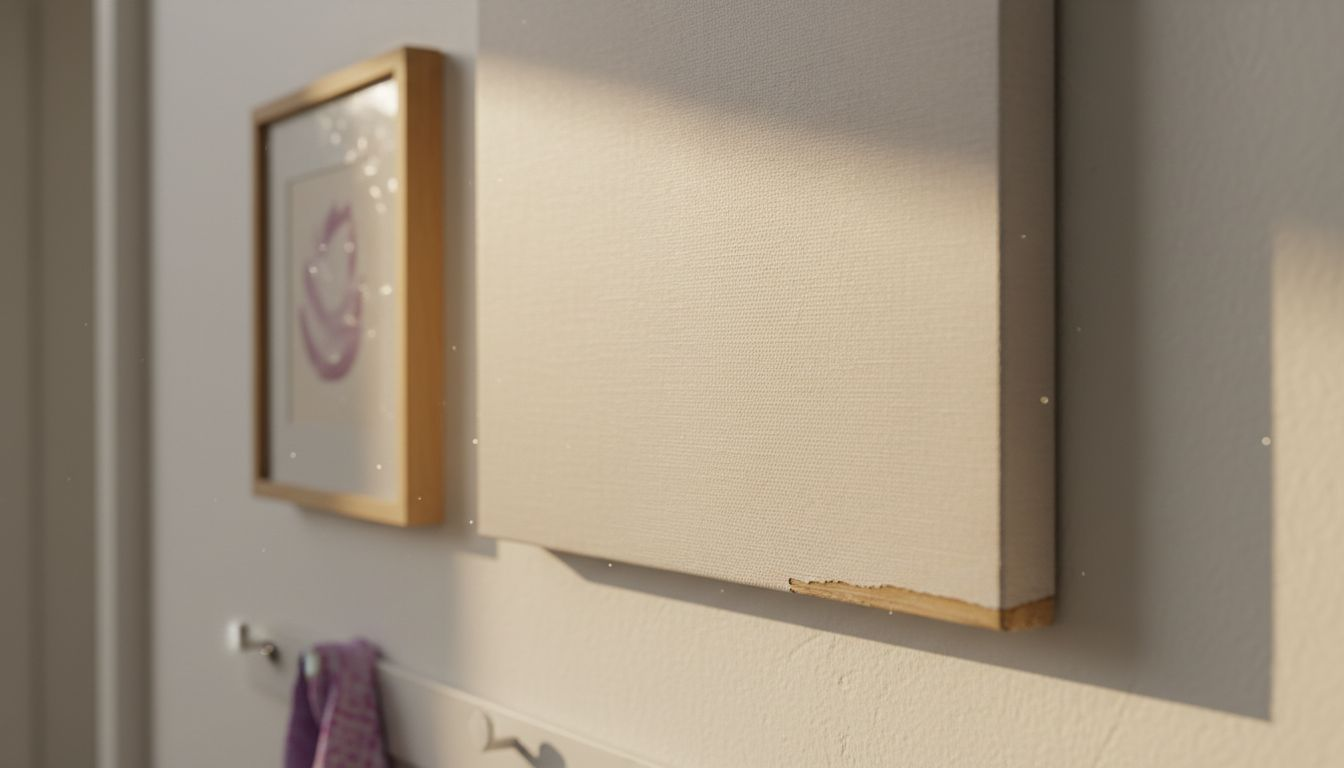
The three-dimensional quality of canvas comes from gallery wrapping, where the image extends around wooden stretcher bars. This construction creates shadow lines and depth that make artwork feel like an architectural element rather than a flat picture. Paper prints behind glass create a different effect, with the protective barrier adding reflective qualities that can enhance or distract depending on lighting conditions.
Pro Tip: View sample prints in your actual lighting conditions before committing to large pieces. Natural light, warm incandescent bulbs, and cool LED lighting each affect how canvas texture and paper smoothness appear in your space.
Comparing visual outcomes helps clarify which medium suits your decor:
| Aspect | Canvas Prints | Paper Prints |
|---|---|---|
| Detail sharpness | Softened by weave texture | Razor-sharp precision |
| Color vibrancy | Slightly muted, warm tones | Brilliant, true colors |
| Surface reflection | Matte, non-reflective | Glass creates some glare |
| Display style | Frameless, contemporary | Framed, traditional or modern |
| Tactile quality | Textured, dimensional | Smooth, flat |
Canvas prints work beautifully in casual, cozy spaces where texture and warmth matter. They blend naturally with rustic, bohemian, or eclectic decor styles. Paper prints excel in formal settings, minimalist interiors, and spaces where precision and clarity reinforce the design aesthetic. Choosing canvas prints for decor depends on whether you prioritize texture and dimension or sharpness and color accuracy.
Consider how each medium interacts with your existing furniture and wall colors. Canvas’s texture can soften stark white walls and complement natural wood tones. Paper’s crispness enhances clean, modern spaces with metal accents and glass surfaces. The right choice reinforces your overall design vision while showcasing your artwork at its best.
Durability and lifespan: preserving your art investment
Understanding longevity differences between canvas and paper prints ensures your art investment endures for generations. Canvas prints last 75-100 years indoors when kept away from direct sunlight and extreme humidity. This durability makes canvas practical for high-traffic areas and casual display environments. The fabric base resists minor impacts and handling better than paper, though it remains vulnerable to punctures and tears.
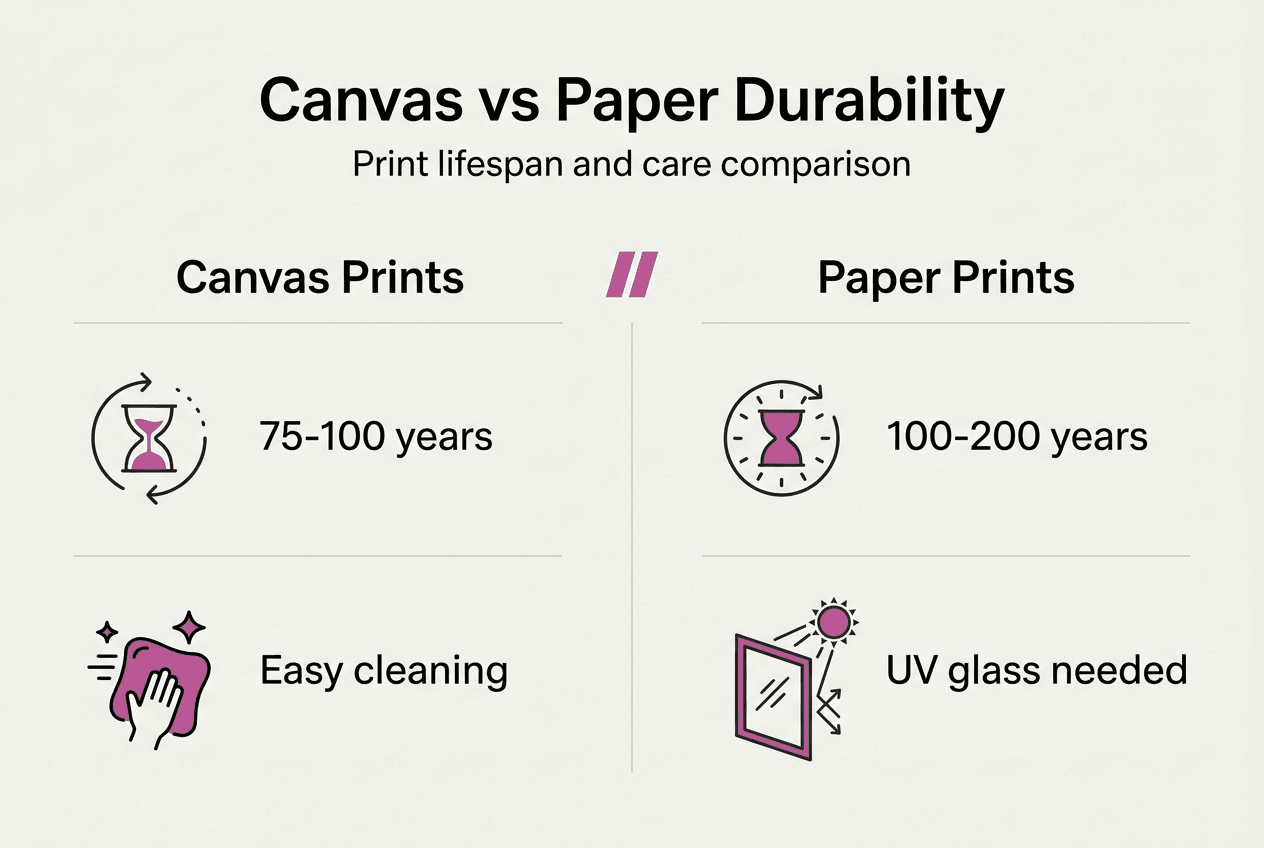
Fine art paper prints with archival, acid-free quality can last 100-200 years when displayed behind UV-protective glass. This exceptional longevity positions paper as the museum-quality choice for collectors prioritizing preservation. The glass barrier shields paper from airborne pollutants, moisture fluctuations, and physical contact that accelerate deterioration. Without this protection, paper prints fade and discolor within decades.
Environmental factors profoundly affect both print types. Direct sunlight causes faster fading regardless of medium, though UV coatings slow this process on canvas prints. High humidity encourages mold growth on both canvas and paper, while extremely dry conditions make materials brittle. Maintaining stable indoor conditions between 35-55% relative humidity and 65-75°F extends lifespan significantly.
Pro Tip: Rotate displayed artwork seasonally to distribute light exposure evenly, preventing uneven fading. Store unused prints in acid-free sleeves within climate-controlled spaces to maximize preservation.
Pigment-based inks used for quality canvas and paper prints outlast dye-based inks by decades. Pigment inks resist fading and maintain color accuracy far longer, making them essential for archival-quality prints. Always verify that prints use pigment inks before purchasing if longevity matters to you.
Protective measures vary by medium:
- Canvas prints benefit from clear acrylic varnish or UV-resistant coatings applied after printing
- Paper prints require UV-filtering glass or acrylic in frames to block harmful light wavelengths
- Both mediums need regular dusting with soft, dry cloths to prevent particle buildup
- Avoid hanging either medium in bathrooms, kitchens, or other high-moisture areas
Comparing lifespan under optimal conditions:
| Print Medium | Expected Lifespan | Protection Required | Maintenance Level |
|---|---|---|---|
| Canvas (uncoated) | 50-75 years | Avoid direct sun | Light dusting |
| Canvas (UV coated) | 75-100 years | Minimal light control | Occasional cleaning |
| Paper (unframed) | 10-30 years | Not recommended | High vulnerability |
| Paper (UV glass) | 100-200 years | Proper framing essential | Glass cleaning |
Investing in proper display conditions pays dividends in preservation. The initial cost of UV-protective framing for paper prints or quality varnish for canvas extends lifespan dramatically. Following preserving art prints guide recommendations ensures your artwork maintains its beauty and value for future generations.
Choosing the right print for your artwork and space
Applying your knowledge of visual appeal and durability helps you select the perfect print medium for specific artwork and rooms. Match paper prints with detailed photography, digital art, or designs requiring sharp precision. The smooth surface and color accuracy make paper ideal for landscape photography where every leaf and cloud detail matters. Architectural drawings, botanical illustrations, and black-and-white portraits also shine on paper.
Choose canvas for abstract art reproductions and expressive landscapes that benefit from textured, artistic presentation. Bold color blocks, gestural brushwork, and impressionist styles gain authenticity from canvas’s painterly surface. The dimensional quality enhances large statement pieces in living rooms, dining areas, and entryways where artwork anchors the space.
Room-specific considerations guide medium selection:
- Evaluate lighting conditions, choosing canvas for bright spaces where glass glare would distract
- Assess humidity levels, avoiding paper in moisture-prone areas without proper sealing
- Consider viewing distance, selecting paper for close inspection and canvas for impact from across the room
- Match framing style to existing decor, using frameless canvas for modern minimalism or framed paper for traditional elegance
- Factor in budget constraints, noting that paper requires additional framing investment
- Prioritize longevity needs, choosing paper with UV glass for heirloom-quality preservation
Use this decision checklist to evaluate your specific needs:
- Does the artwork feature intricate details requiring maximum sharpness? Choose paper.
- Will the piece hang in bright natural light without window treatments? Choose canvas with UV coating.
- Do you prefer a tactile, dimensional presentation? Choose canvas.
- Is this artwork an investment piece requiring museum-quality preservation? Choose paper with archival framing.
- Does your decor style lean modern minimalist or traditional formal? Match accordingly.
Framing choices significantly impact final presentation and cost. Paper prints need protective framing, adding $50-$300 depending on size and glass quality. This investment protects your artwork but increases total cost and weight. Canvas prints often hang unframed, reducing expense and creating a contemporary gallery aesthetic. Some decorators add floating frames to canvas for a finished look that bridges traditional and modern styles.
Testing samples before committing to large or expensive pieces prevents costly mistakes. Order small prints in both mediums to compare texture, color, and visual impact in your actual space. Hold samples against walls near furniture to visualize scale and style harmony. This hands-on evaluation reveals how lighting, wall color, and viewing angle affect each medium’s appearance.
Consider these framing prints guide principles and canvas print tips to refine your selection. The right print medium enhances both the artwork itself and your overall interior design, creating a cohesive, visually compelling environment that reflects your personal style and values your art investment.
Explore curated canvas and paper prints at Eman’s Gallery
Now that you understand how to choose between canvas and paper prints, discover expertly crafted options ready to transform your space. Eman’s Gallery offers exquisite wall art prints collection in both mediums, suitable for diverse decor styles from contemporary minimalism to classic elegance. Each piece features archival-quality materials and professional printing that ensures your artwork endures beautifully.
Browse ready-to-hang canvas prints that deliver bold visual impact without additional framing costs, or explore finely detailed paper prints that capture every nuance of the original artwork. The conceptual expressionism canvas print exemplifies how texture enhances abstract art, while options like the good tidings original painting showcase the gallery’s range. Professional presentation and museum-quality standards ensure your art investment maintains its beauty and value for generations.
FAQ
What are the main benefits of canvas prints compared to paper?
Canvas prints add texture, depth, and a painterly quality that enhances bold, expressive artwork. They typically last 75-100 years with proper care and often display without frames, reducing cost and creating a contemporary gallery aesthetic. The dimensional quality from gallery wrapping makes canvas ideal for statement pieces in living areas.
Can fine art paper prints be displayed without glass framing?
Fine art paper prints require framing behind glass or acrylic for protection against environmental damage. Unframed paper prints quickly suffer from moisture absorption, UV fading, and physical handling damage that permanently degrades image quality. Proper framing with UV-protective glass extends paper print lifespan to 100-200 years.
How does print medium affect artwork value and longevity?
Paper prints signal museum-quality presentation and last 100-200 years behind UV glass, making them preferred for archival collections. Canvas offers traditional appeal and lasts 75-100 years with quality materials and protective coatings. Both mediums maintain value when properly displayed, though paper’s superior longevity appeals to serious collectors prioritizing preservation.
Which print medium works best for photography?
Fine art paper excels for photography because its smooth surface preserves intricate details, subtle tonal gradients, and true color accuracy that photographic images demand. Canvas’s texture softens fine details and can obscure the precision that makes photography compelling. Choose paper for landscapes, portraits, and any photographic work where sharpness matters.
How do I maintain canvas and paper prints long-term?
Maintain canvas prints by dusting regularly with soft cloths, avoiding direct sunlight, and keeping humidity between 35-55%. Paper prints need UV-protective glass, stable indoor conditions, and periodic glass cleaning to prevent dust buildup. Both mediums benefit from seasonal rotation to distribute light exposure evenly and prevent localized fading.
Recommended
- Selecting Art Prints Guide: Find Your Perfect Art Print - Eman’s Gallery
- How to Style Art Prints for Interior Display - Eman’s Gallery
- 7 Tips for Choosing Best Art Prints for Home - Eman’s Gallery
- 7 Pro Canvas Print Tips for Upscale Interiors - Eman’s Gallery
Stay Connected
- ✨ Explore Eman Khalifa’s original art and fine art prints
- 📸 Follow Eman Khalifa’s art journey on: Instagram @emans_gallery and Facebook Eman’s Gallery
- 📹 Watch Eman Khalifa creating live art on: YouTube @emans_gallery
