


Selecting Art Prints Guide: Find Your Perfect Art Print
Choosing the right art prints can make a powerful impact in any american home, yet more than 60 percent of homeowners say they feel uncertain about where to start. Your space, personal style, and the quality of the pieces all play a big role in shaping the atmosphere you want to create. This guide helps you navigate each step with confidence, so you can discover art prints that reflect your taste and elevate your living space.
Table of Contents
- Step 1: Assess Your Space And Style Needs
- Step 2: Define Your Art Print Preferences
- Step 3: Explore Available Artists And Collections
- Step 4: Evaluate Print Quality And Authenticity
- Step 5: Verify Fit And Finalize Your Art Print Purchase
Quick Summary
| Key Point | Explanation |
|---|---|
| 1. Assess your space and style | Analyze your room’s characteristics to select art that enhances your existing decor and reflects your personal style. |
| 2. Define your art preferences | Identify the styles and themes you connect with by examining art that resonates with you and creating a mood board. |
| 3. Research artists and collections | Explore various platforms to discover emerging artists and collections, focusing on those that align with your aesthetic preferences. |
| 4. Evaluate quality and authenticity | Check for artist signatures, edition numbers, and documentation to ensure the art print is genuine and of high quality. |
| 5. Finalize fit and placement | Measure your display area accurately and visualize the art’s placement with tape to ensure it complements your space before purchase. |
Step 1: Assess your space and style needs
Understanding your space and personal aesthetic is the critical first step in selecting art prints that will transform your environment. When choosing artwork that complements your interior design, you want pieces that not only reflect your personality but also harmonize seamlessly with your existing decor.
Start by taking a comprehensive visual inventory of your room. Walk around and analyze the color palette, furniture styles, architectural elements, and overall mood. Are you working with a modern minimalist space with clean lines and neutral tones? Or perhaps a more eclectic room with rich textures and vibrant colors? Each environment demands a different artistic approach. For contemporary spaces, geometric or abstract prints often work beautifully. In traditional settings, landscape or classical art might be more appropriate.
Consider the practical aspects too. Measure your wall spaces carefully and think about scale. A tiny print can look lost on a large wall, while an oversized piece might overwhelm a compact room. Pro tip: Use painter’s tape to mark potential artwork placement and get a visual sense of how different sizes will interact with your space. This simple technique can help you avoid costly mistakes and ensure your art print selection enhances rather than disrupts your room’s visual harmony.
Ready to dive deeper into art selection? The next step will help you explore print types and materials that will perfectly suit your newly assessed space.
Step 2: Define your art print preferences
Defining your art print preferences is about understanding what truly resonates with your aesthetic sensibilities and personal style. Learning to articulate your art preferences involves a journey of self discovery and visual exploration.
Start by examining the art that already attracts you. Spend time analyzing pieces that catch your eye in galleries, online platforms, or even in friends’ homes. Pay attention to patterns in your preferences. Do you gravitate towards bold geometric abstracts, serene landscape scenes, or vibrant contemporary works? Understanding the fundamental art elements like color, line, and shape can help you articulate why certain artworks speak to you.

Consider creating a mood board or digital collection of images that inspire you. This visual collage will help you identify recurring themes, color palettes, and styles that define your unique taste. Pro tip: Don’t limit yourself to traditional art mediums. Look at graphic design, photography, digital art, and even fashion photography to broaden your artistic perspective. Your art print preferences should feel like an authentic extension of your personal style and emotional landscape.
With a clearer understanding of your aesthetic preferences, you are now ready to explore the diverse world of art print mediums and techniques that can bring your vision to life.
Step 3: Explore available artists and collections
Exploring artists and collections is an exciting journey into the diverse world of art prints. Understanding the landscape of contemporary art requires careful research and an open mind to discover unique artistic voices and compelling collections.
Start by immersing yourself in various art platforms and resources. Online galleries, museum websites, and specialized art publications offer incredible insights. Print collecting organizations provide valuable resources for understanding different artistic styles and emerging talents. Look beyond mainstream channels. Follow independent artists on social media, attend local art exhibitions, and explore digital art platforms that showcase contemporary creators.
Develop a systematic approach to discovering art prints. Create a digital or physical portfolio of artists and collections that intrigue you. Pay attention to emerging artists who are pushing creative boundaries. International art publications can be excellent sources for discovering new talents and understanding current artistic trends. Pro tip: Don’t just collect with your eyes. Research the artist’s background, understand their creative process, and connect with their artistic vision.
With a curated collection of potential artists and styles, you are now prepared to dive deeper into evaluating specific art prints and their unique characteristics.
Step 4: Evaluate print quality and authenticity
Evaluating the quality and authenticity of art prints requires a keen eye and systematic approach. Understanding the nuanced details that distinguish exceptional prints from mediocre reproductions will help you make informed collecting decisions.
Begin by examining the proofing and labeling processes that validate an art print’s quality. Look for clear documentation such as artist signatures, edition numbers, and certificates of authenticity. Pay close attention to print details like paper quality, ink consistency, color accuracy, and printing technique. High quality prints will demonstrate precise reproduction of the original artwork with minimal color variation and crisp, well defined lines.
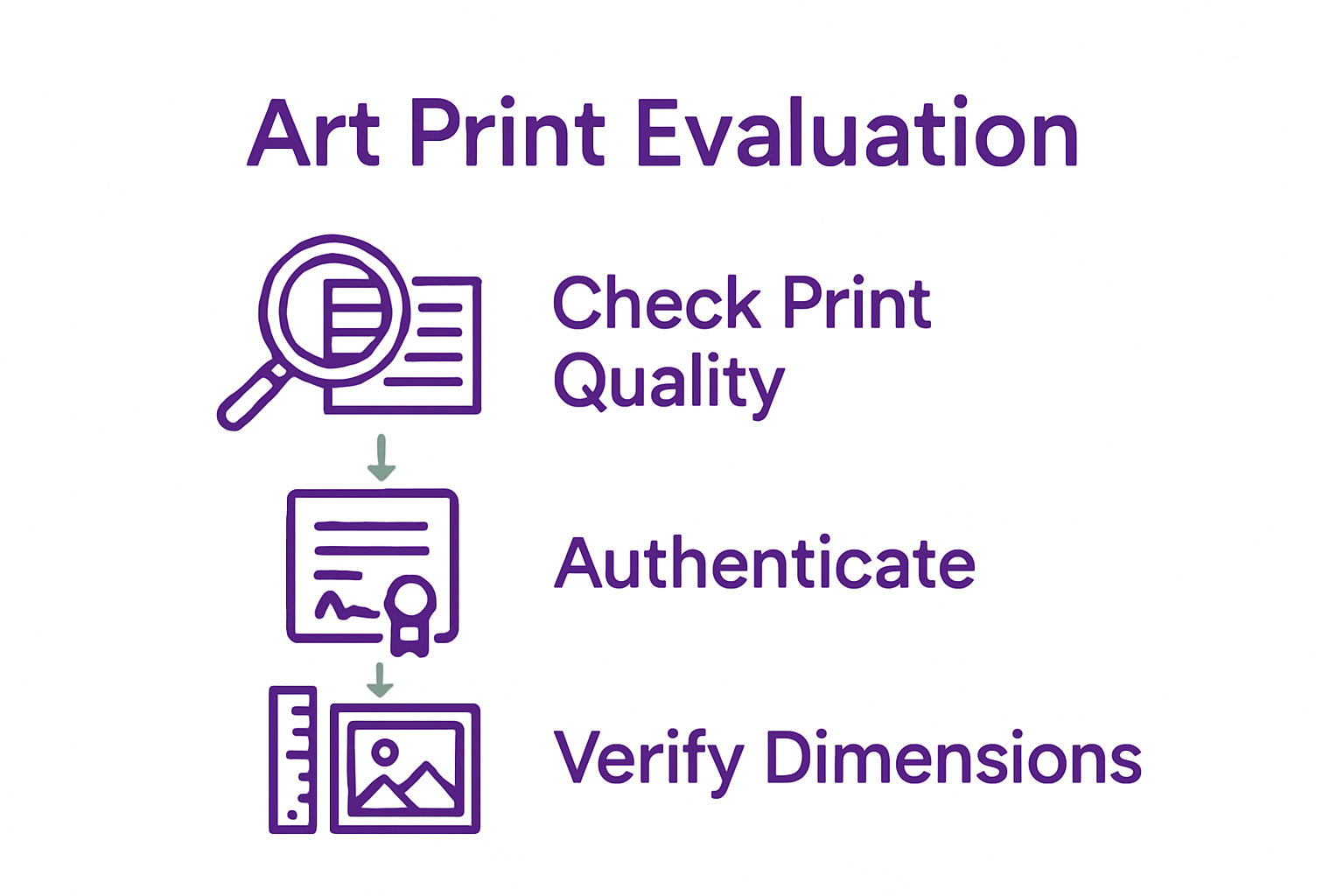
Develop a systematic approach to authentication by consulting expert resources. Specialized print organizations provide valuable guidelines for identifying genuine art prints. Pro tip: Always request detailed documentation from the seller and do not hesitate to ask about the print’s provenance, printing method, and edition size. Authentic prints will have transparent histories and clear documentation that can be independently verified.
With a comprehensive understanding of print quality and authenticity, you are now prepared to make an informed selection that reflects both artistic value and technical excellence.
Step 5: Verify fit and finalize your art print purchase
Finalizing your art print purchase involves careful planning and strategic consideration. Your goal is to select an artwork that not only captures your aesthetic vision but also integrates seamlessly into your living space.
Carefully measure your intended display area and create a visual mockup. Follow expert guidelines for art print placement to ensure proper positioning and visual balance. Consider factors like wall size, furniture arrangement, lighting conditions, and viewing angles. A good rule of thumb is to hang artwork at eye level and leave adequate breathing room around the piece. For standard wall spaces, aim to cover approximately two thirds to three quarters of the available wall area to create a proportional and visually appealing display.
Before making your final purchase, request a digital preview or sample print if possible. Pro tip: Use painter’s tape to outline the exact dimensions of your chosen art print on the wall. This simple technique allows you to visualize the artwork’s scale and placement before committing to the purchase. Ensure the print’s colors, style, and size harmonize with your existing decor and personal aesthetic.
With your art print carefully selected and placement strategy determined, you are now ready to transform your space with a meaningful and visually stunning piece of art.
Find the Perfect Art Print to Elevate Your Space
Choosing art prints can feel overwhelming when trying to match your unique style and space perfectly. This guide helps you tackle challenges like assessing your room, defining your taste, and verifying print quality so your chosen artwork truly enhances your environment. If you want original, museum-quality art that reflects your vision and fits your setting flawlessly, explore our stunning Canvas Art Prints by Eman Khalifa | Premium Giclée Wall Art – Eman’s Gallery.
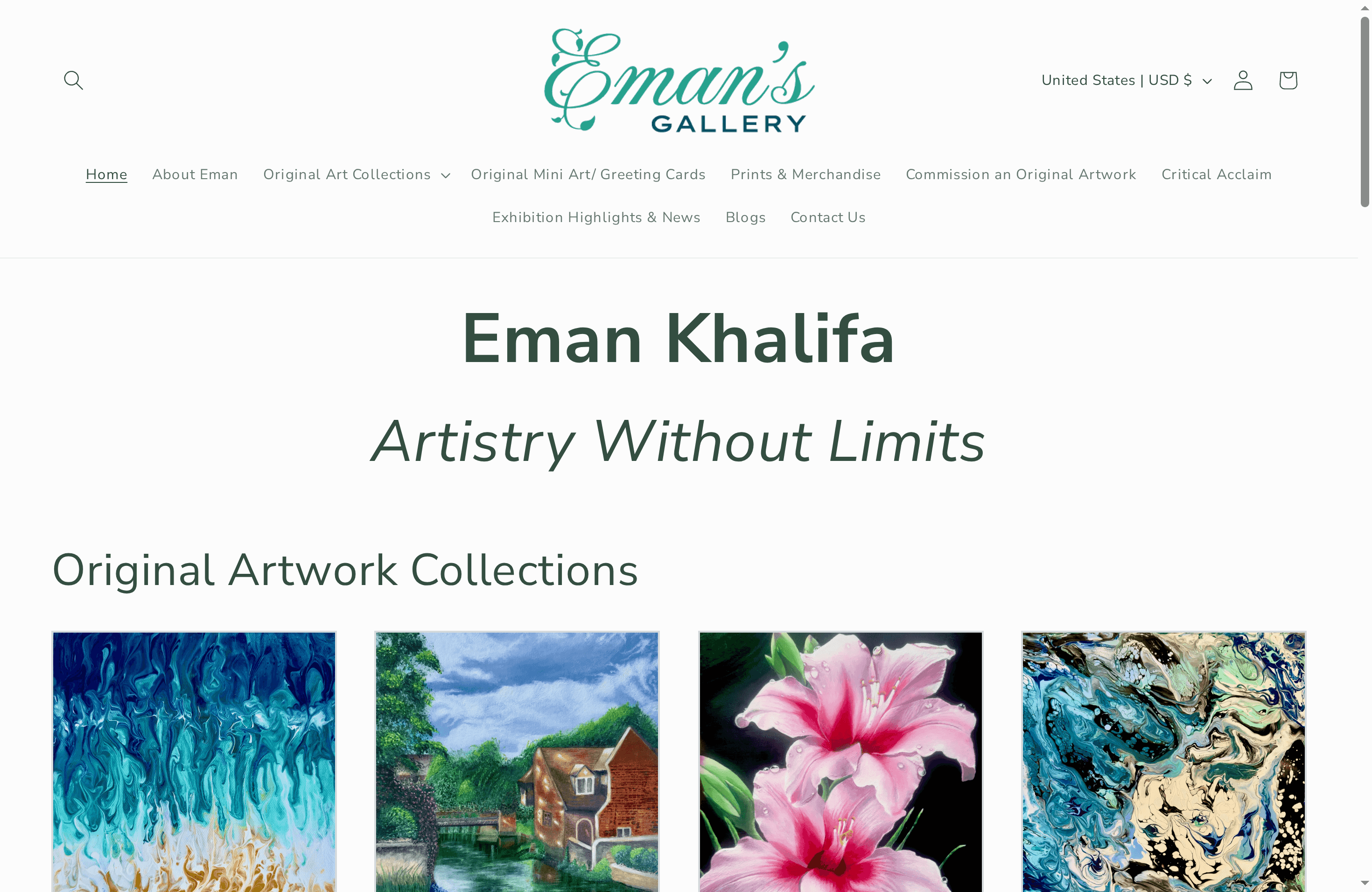
Transform your living space now with our carefully curated collection of authentic art pieces. Don’t wait to bring personality and harmony into your home or office. Visit Eman’s Gallery to discover exclusive geometric designs and original paintings. Start your seamless art print journey today with confidence and style.
Frequently Asked Questions
How do I assess my space for selecting art prints?
Start by taking a visual inventory of your room, noting the color palette, furniture styles, and overall mood. Walk around your space to determine whether it is modern, traditional, or eclectic, which will guide your choice of artwork to ensure it complements your decor.
What should I consider when defining my art print preferences?
Examine the types of art that resonate with you by exploring various mediums, such as photography or abstract prints. Create a mood board to identify consistent themes and styles that express your personal aesthetic, making art selection more intuitive.
How can I find artists and collections that fit my style?
Research various platforms, including online galleries and local exhibitions, to discover unique artists and collections that appeal to you. Keep a digital or physical portfolio of your favorite pieces and take note of emerging talents to enrich your options.
What factors should I consider when evaluating print quality and authenticity?
Look for documentation such as artist signatures and certificates of authenticity. Pay attention to print details like paper quality, ink consistency, and color accuracy to ensure you invest in high-quality art pieces that accurately reflect the original work.
How do I ensure my selected art print will fit in my space?
Carefully measure your wall space and create a visual mockup with painter’s tape to outline the dimensions of the art print. This practice helps visualize how the piece will integrate into your room, ensuring harmony with your existing decor before making a purchase.
Recommended
- 7 Essential Types of Art Prints for Every Decor Style – Eman’s Gallery
- Complete Guide to Why Buy Art Prints – Eman’s Gallery
- Complete Guide to Decorating With Art Prints – Eman’s Gallery
- What Is an Art Print? Complete Guide for 2025 – Eman’s Gallery
- Using Projector for Art: Creative Ideas and Tips 2025 - Projector Display
Stay Connected
- ✨ Explore Eman Khalifa’s original art and fine art prints
- 📸 Follow Eman Khalifa’s art journey on: Instagram @emans_gallery and Facebook Eman’s Gallery
- 📹 Watch Eman Khalifa creating live art on: YouTube @emans_gallerye
