


Art Curated: a Practical Guide for Collectors and Designers
TL;DR:
- Art curation involves a deliberate process of research, spatial reasoning, and narrative construction, not just selecting preferred artworks. It requires detailed space assessment, thematic development, sourcing, and installation management to create meaningful and coherent collections or exhibitions. Building a valued collection depends on patience, storytelling, and authentic interest, while integrated spatial planning enhances interior design and curatorial impact.
Most people think art curated simply means someone chose art they liked. It does not. Curation is a discipline involving research, spatial reasoning, cultural context, and deliberate narrative construction. Whether you are building a private curated art collection, working as an interior designer selecting pieces for a client, or an art student trying to understand what separates a great exhibition from a mediocre one, the principles are the same. This guide breaks down the full picture, from process to pricing, so you can engage with curated art more confidently and make decisions that actually hold up over time.
Table of Contents
- Key Takeaways
- What art curated really means
- Building a curated art collection with depth
- Curated art in interior design
- Comparing curated art services and online options
- How modern exhibitions are redefining curation
- My perspective on what makes curation matter
- Explore curated original art at Eman’s Gallery
- FAQ
Key Takeaways
| Point | Details |
|---|---|
| Curation is a process, not a pick | Art curated well follows defined steps: space review, vision development, artist sourcing, and installation. |
| Collections reflect lived experience | The strongest curated art collections prioritize cultural depth and personal meaning over trend-chasing. |
| Spatial direction matters | Integrating art into interiors requires analyzing light, room flow, and emotional atmosphere, not just wall space. |
| Service types differ significantly | Art advisors manage long-term portfolios; art consultants handle project-based curation. Know which you need. |
| Price range is wider than you think | Curated works start around $175 and can exceed $10,000, giving collectors real options at multiple budgets. |
What art curated really means
The word “curated” gets used casually today. A playlist is curated. So is a hotel minibar. In the art world, the term carries actual weight, and understanding the distinction changes how you approach collecting and exhibiting.
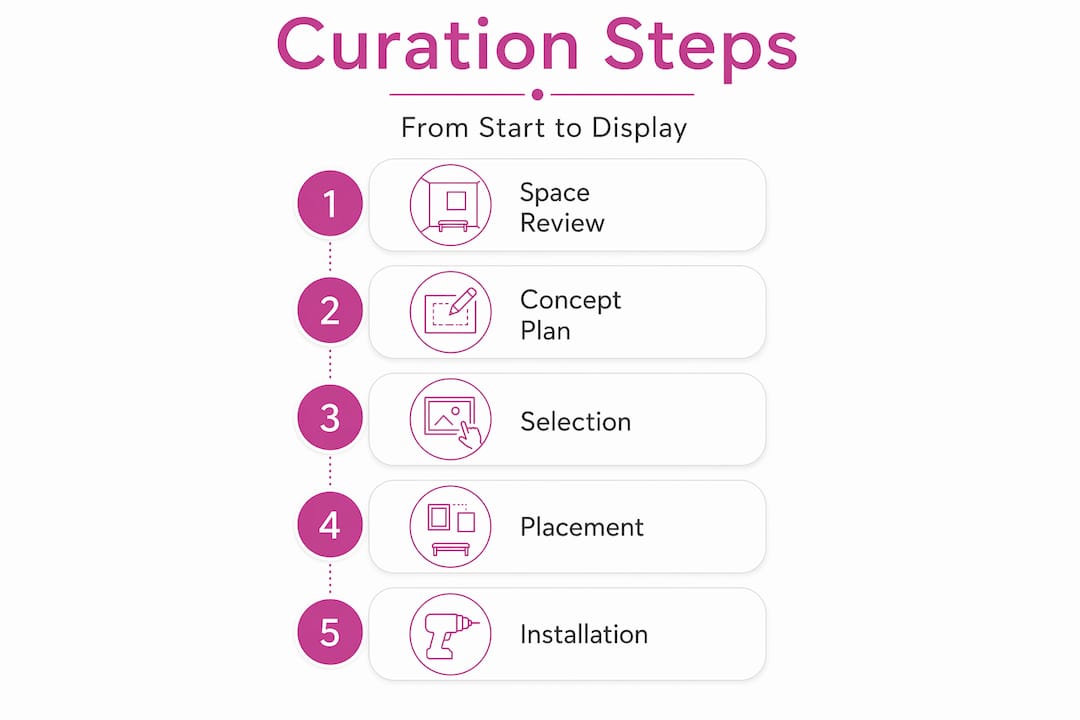
Professional art curation services follow a multi-step process that typically includes a detailed space and context review, artistic vision development, artist or artwork sourcing, and full installation management. That is not selection. That is project management applied to aesthetic decision-making. The difference matters because skipping any one of those steps produces results that feel incomplete, whether in a private home or a public institution.
Private collector curation and public exhibition curation share the same foundation but diverge in scale and accountability. A collector building a personal collection makes decisions for themselves, their household, and perhaps future heirs. A museum curator makes decisions for thousands of annual visitors, which means strategic lighting and traffic flow become part of the work itself. Research shows the average visitor spends less than 8 seconds with a single piece. That fact alone explains why spatial design and narrative sequencing are non-negotiable in serious curation.
Here is the typical curation process broken into distinct stages:
- Space and context review. Measure the physical environment, assess existing architecture, analyze natural and artificial light sources, and document the emotional character of the space.
- Artistic vision development. Define the thematic direction, tone, and cultural intent of the collection or exhibition before sourcing a single work.
- Artist and artwork sourcing. Research artists whose work aligns with the vision, negotiate acquisition or loan agreements, and authenticate provenance.
- Placement and installation management. Oversee hanging, lighting, and sequencing to create a coherent experience from first entry to final exit.
Pro Tip: Before hiring any curation service, ask for a written space review document. If a provider skips that step, they are decorating, not curating.
Building a curated art collection with depth
The collectors whose collections hold cultural and financial value over decades share one trait: patience. Building a meaningful collection requires intellectual curiosity and a willingness to sit with uncertainty rather than filling walls quickly.
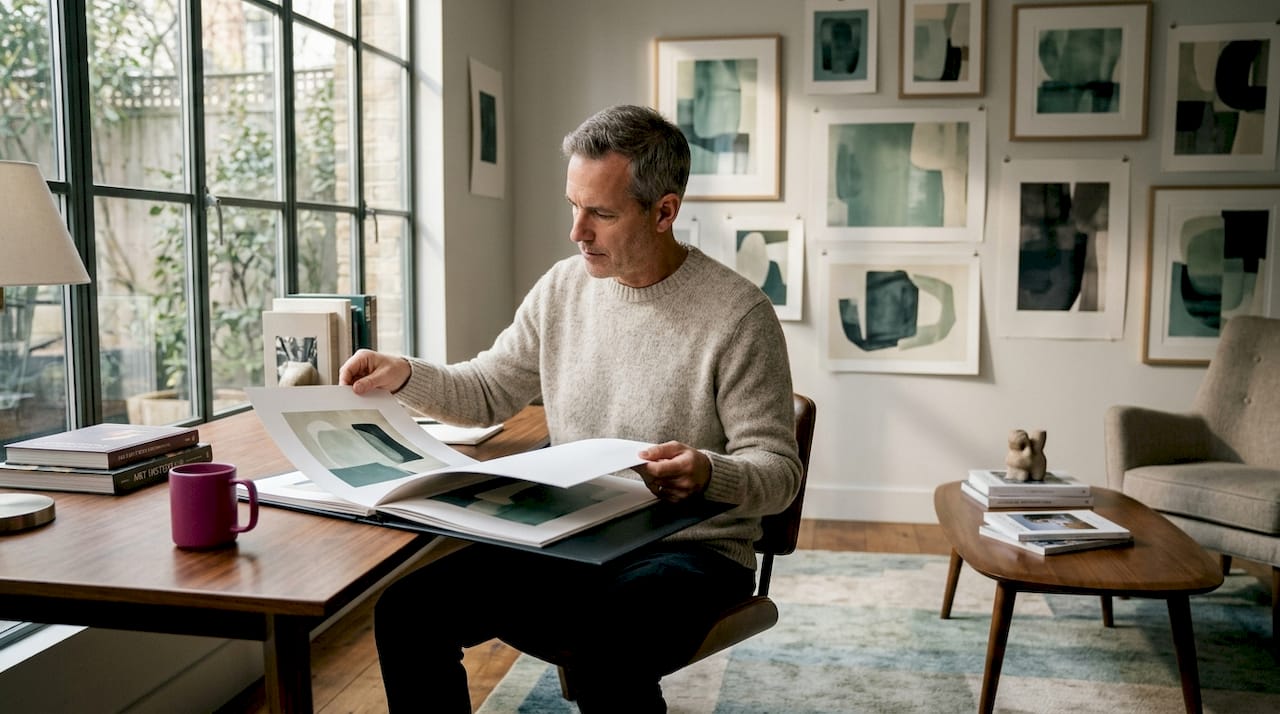
The common mistake is treating a collection as a display of status. The strongest collections tell a story that reflects the collector’s actual experience, interests, and questions about the world. That story might include historical works in conversation with contemporary ones, or regional artists placed alongside internationally recognized names. The friction between those choices is what gives a collection its texture.
When building your curated art collection, consider these principles:
- Thematic coherence over stylistic uniformity. A collection does not need every piece to look similar. It needs every piece to belong to the same conversation.
- Balance recognition with discovery. Recognized works lend credibility. Quiet discoveries from emerging artists give a collection its character.
- Incorporate historical context. A contemporary abstract painting reads differently when it hangs near a work from fifty years earlier on a related theme.
- Prioritize provenance and documentation. Know the history of each work you acquire. This matters for investment value and authenticity.
- Buy what genuinely interests you. Trend-chasing produces collections that look dated within a decade.
“The cultivated eye evolves through patience and intellectual curiosity. The best collections reflect a lived experience, not a trophy case.” — Galerie Magazine on collecting
One practical approach is to follow a “step and anchor” method. You anchor the collection around two or three works you feel genuinely certain about, then build outward from there, asking whether each new addition extends or enriches the existing conversation. This prevents the scattershot accumulation that plagues early-stage collectors who buy reactively.
Curated art in interior design
Interior designers and collectors often make the same mistake: treating art as the last decision. Art becomes wall filler after the furniture is placed and the paint is chosen. Professional spatial direction works in exactly the opposite direction.
Spatial direction for art placement involves analyzing architectural context, room circulation, light behavior across the day, and the emotional atmosphere the client wants to live or work in. Projections and digital mockups are now standard tools. A designer can preview a 1.5-meter painting on a specific wall at 7am and 7pm light before the work is purchased. That changes the decision completely.
Key considerations when integrating art spatially:
- Circulation paths matter. Art placed at natural pause points gets more attention than art in high-traffic corridors.
- Scale is relational. A large canvas does not overpower a room if the room’s proportions support it. Measure before you decide.
- Lighting is content. Warm directional light on a cool-toned painting changes the painting’s emotional register. Treat lighting as part of the work.
- Emotional intent should guide placement. A charged expressionist piece in a bedroom creates a different nightly experience than the same piece in an entry hall.
Pro Tip: When presenting art options to a client, use a room visualization tool to show placement before committing. Clients who see it in context approve faster and change their minds less often.
The collaboration between curator and interior designer produces the best results when it starts at the design brief stage, not the final install. If you are an interior designer, build art selection into your initial client conversations alongside paint, lighting, and furniture.
Comparing curated art services and online options
The market for curated art has expanded considerably, and the options now range from entry-level online selections to full bespoke commissions. Prices start around $175 for accessible original works and can exceed $10,000 for premium commissions. Knowing where your project falls on that spectrum determines which type of service or platform fits your needs.
One confusion that repeatedly affects buyers is the difference between art advisors and art consultants. These serve distinct functions: advisors focus on long-term portfolio management and investment strategy, while consultants handle project-based curation for specific spaces or collections. Most interior design projects need a consultant, not an advisor.
| Service Type | Best For | Typical Price Range | What Is Included |
|---|---|---|---|
| Online curated platforms | First-time buyers, decor refresh | $175 to $1,500 | Pre-selected works, basic descriptions |
| Art consultant | Specific projects, interiors | $1,500 to $10,000+ | Space review, sourcing, installation |
| Art advisor | Long-term collectors | Retainer or commission basis | Portfolio strategy, market research |
| Bespoke commission | Unique original artwork | $3,000 to $20,000+ | Custom creation to specification |
| Curated print collections | Budget-conscious buyers | $50 to $800 | Museum-quality reproductions, wide selection |
When evaluating any curator or platform, ask these questions before committing:
- Does the service include a written brief or project scope?
- Can they provide references from comparable projects?
- Do they disclose artist relationships and any markup structures?
- What does installation or delivery include?
How modern exhibitions are redefining curation
The traditional model of hanging art in chronological order and labeling it is no longer the dominant approach in serious exhibitions. Modern curators focus on creating visual dialogues rather than historical timelines, placing works in conversation based on theme, mood, or cultural tension rather than date.
Technology has changed what exhibitions can do. Projection mapping allows a single room to transform multiple times within an exhibition run. Augmented reality layers let visitors access artist commentary or historical context through a phone screen without cluttering the physical space with text panels. AI-driven curation tools now help institutions analyze visitor behavior and adjust hanging arrangements mid-exhibition.
The ArtSpectrum 2026 exhibition in San Diego is a direct example. Running from May 5 to June 1, 2026, the show used curated community engagement alongside digital presentation to place LGBTQ+ artists in a narrative context that extended beyond the gallery walls into public programming. The curatorial intent was legible in every spatial and editorial decision.
These approaches are influencing private and commercial curation directly. Collectors are now rotating works seasonally rather than leaving collections static. Galleries use projection previews for clients considering large-scale purchases. The insight from institutional curation, that surprising aesthetic conversations keep audiences engaged, applies equally to a private dining room as to a museum gallery.
My perspective on what makes curation matter
In my experience as an artist and gallery owner, the single biggest misunderstanding about art curated well is that it ends at installation. It does not. Curation is an ongoing responsibility.
I have seen collectors spend significant money on works that sit in storage because there was no plan for how they would live with them over time. A curated art collection is not a finished project. It is a relationship. The works you choose shape your daily environment, your thinking, and ultimately what you decide to acquire next. That is stewardship, and it requires the same attention after purchase as before.
What I have found actually works is developing a point of view before you buy anything. Not a style preference. An actual intellectual position: what questions interest you, what cultural conversations feel unresolved, what you want to understand better. Collections built from that place hold their meaning over decades. Collections built from “this looked good in the showroom” rarely do.
The risk in bold curatorial choices is real. Buying an emerging artist whose work feels challenging is uncomfortable. But the collections that carry genuine weight are always the ones where the collector was willing to be uncertain, to choose something they did not fully understand yet. That discomfort is not a warning sign. It is often a signal that you are paying attention.
— Eman
Explore curated original art at Eman’s Gallery
Eman’s Gallery offers original handmade paintings and museum-quality prints across abstract, seascape, geometric, and landscape styles, each selected as a one-of-a-kind work. Whether you are building a curated art collection for the first time or sourcing a statement piece for a client’s interior, the gallery provides works at multiple price points with worldwide shipping.
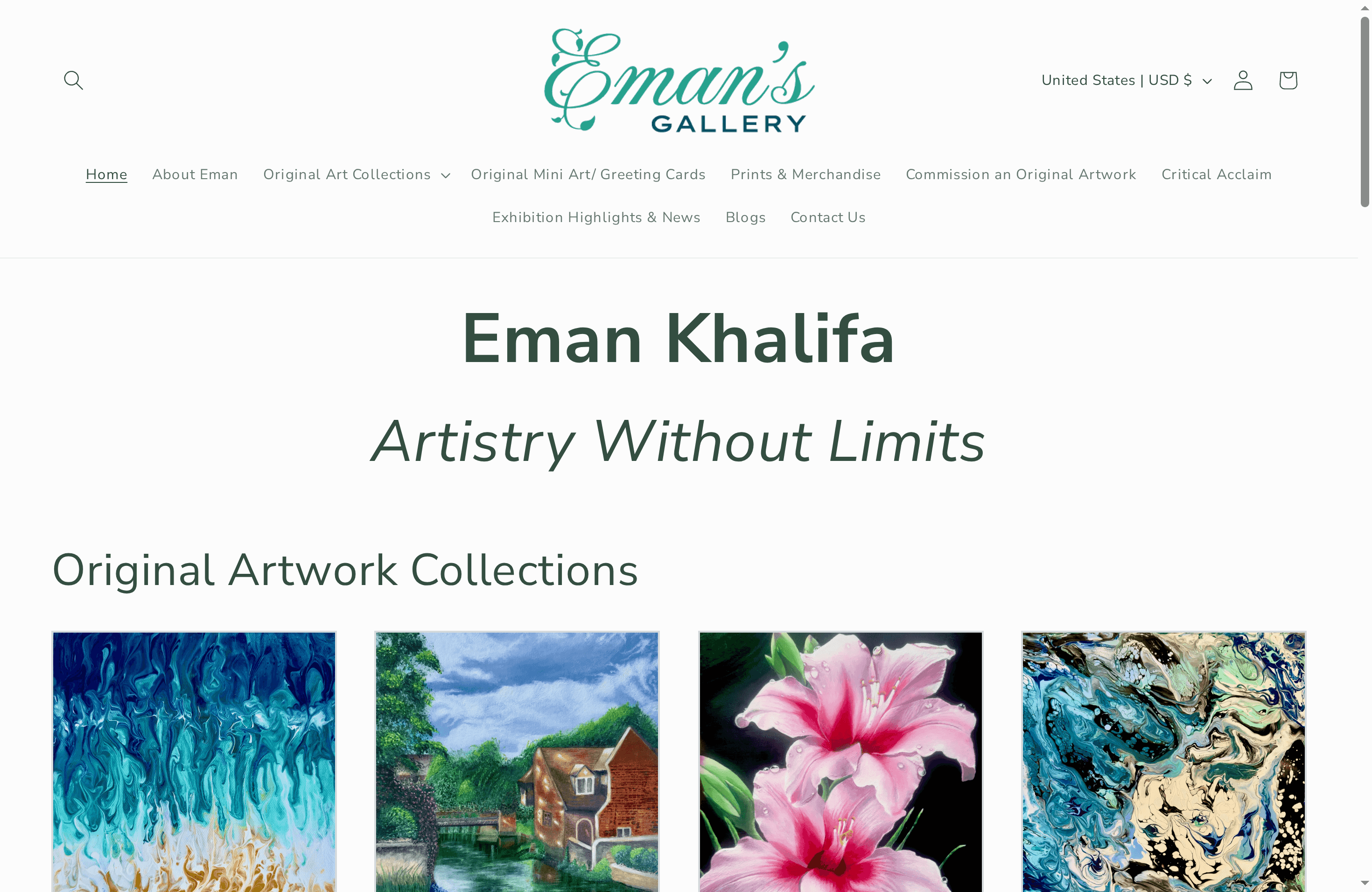
Start with original works like Good Tidings, a fluid blue and gold ocean painting, or Nocturned, a tonalism moonlit scene suited to intimate interiors. For collectors who prefer print formats, the canvas print collection includes abstract, figurative, and urban works ready for professional framing. Every piece ships from multiple fulfillment locations including the USA, UK, Germany, and Australia.
FAQ
What does “art curated” mean in practice?
Art curated in a professional context refers to a deliberate process of selecting, contextualizing, and presenting artworks based on spatial, thematic, and cultural criteria. It goes well beyond aesthetic preference to include research, placement analysis, and narrative intent.
What is the difference between an art advisor and an art consultant?
An art advisor manages a collector’s long-term portfolio and investment strategy. An art consultant handles project-based curation for specific spaces. Most interior design and private collection projects require a consultant, not an advisor.
How much does curated art cost?
Curated art options range from approximately $175 for entry-level original works to more than $10,000 for bespoke commissions. Print collections offer additional options starting below $100.
How do I start building a curated art collection?
Identify two or three anchor works that reflect a genuine intellectual interest, then build outward by asking whether each new addition extends the existing thematic conversation. Avoid purchasing reactively to trends.
Can I use online platforms for serious art curation?
Yes. Online art curation platforms are well-suited for first-time buyers and decor-focused projects. For large-scale installations or collection-building with investment intent, working with a professional art consultant provides more rigorous results.
Stay Connected
-
✨ Explore Eman Khalifa's original art, fine art prints & art merchandise
-
Follow Eman Khalifa's art journey on: Instagram @emans_gallery and Facebook Eman's Gallery
-
Watch Eman Khalifa creating live art on: YouTube @emans_gallery
-
Supported by BabyLoveGrowth
