


Art Collecting for Beginners: Build Your First Collection
TL;DR:
- Most beginners can start collecting art with modest purchases of prints and works on paper.
- Building a meaningful collection requires patience, genuine interest, and ongoing exposure to art.
Starting with art collecting for beginners feels intimidating until you realize most serious collectors began with a single modest purchase they simply loved. You do not need a large budget, insider contacts, or an art history degree. Emerging artist prints start in the low hundreds, and original works by early-career artists are often surprisingly within reach. This guide walks you through defining your taste, finding affordable art, understanding value and authenticity, caring for your pieces properly, and building a collection that genuinely reflects who you are.
Table of Contents
- Key Takeaways
- Understanding your personal art taste
- Affordable art and where to buy it
- Valuing and authenticating art as a beginner
- Caring for your art collection
- Building your collection over time
- My honest take on what nobody tells beginners
- Start your collection with Emansgallery
- FAQ
Key Takeaways
| Point | Details |
|---|---|
| Start with what you love | Personal connection to a piece matters more than market trends or status when building your first collection. |
| Affordable entry points exist | Prints, works on paper, and emerging artist pieces let you begin collecting without significant capital. |
| Documentation protects your purchase | Always request a certificate of authenticity and provenance records before completing any art transaction. |
| Care prevents costly damage | Stable humidity between 40 and 50 percent and avoiding direct sunlight preserves art for decades. |
| Patience builds better collections | Spending months observing art before buying helps you develop an eye and avoid regrettable decisions. |
Understanding your personal art taste
Before you buy a single piece, spend real time looking at art. Not shopping. Just looking. This is the step most beginners skip, and it is the one that separates collectors who build meaningful collections from those who end up with walls full of pieces they no longer connect with.
The practical way to do this is to vary your exposure deliberately. Visit local galleries on a regular basis, not just for opening nights. Walk through museum permanent collections slowly, paying attention to which rooms you linger in and which you pass through quickly. Attend art fairs when you can. These settings show you the full range of what art can be, from large-scale abstract canvases to intimate works on paper.
Social media has also made this kind of exploration more accessible than ever. Following artists and curators whose work interests you on Instagram or Pinterest gives you a continuous feed of reference material. Over weeks, patterns in what you save and return to reveal a lot about your genuine preferences.
- Notice which styles make you stop scrolling or slow your pace in a gallery.
- Pay attention to color palettes, scale, and subject matter separately.
- Ask yourself whether your interest in a piece fades after a few days or stays with you.
- Resist buying art that is simply trending or popular with people you know.
The core principle here is that collecting art is a personal story exercise. Your collection should reflect your narrative, not someone else’s taste.
Pro Tip: Keep a simple notes folder on your phone where you save images of art that genuinely moves you. After three months, look through it. The consistent threads you find there are your real taste, not what you think you should like.
Affordable art and where to buy it
One of the most persistent myths about how to start an art collection is that you need substantial funds before you can begin. You do not. The art world has multiple entry points designed for exactly the situation you are in right now.
The most accessible art types for beginners
Here is a straightforward breakdown of what new collectors typically start with, ranked roughly from most to least affordable:
- Prints and editions. Limited edition prints, giclée prints, and screenprints by established or emerging artists can start well under $300. They are produced in small runs, often signed and numbered, and carry genuine collectible value. Understanding the difference between prints and originals is foundational before you buy.
- Works on paper. Drawings, watercolors, and sketches are often priced lower than the same artist’s canvas work. They are also easier to store and display in smaller spaces.
- Student and degree show work. End-of-year exhibitions at art schools are one of the best-kept secrets in collecting. You buy directly from the artist, prices are low, and you often get the chance to meet and develop a relationship with someone at the start of a career that may grow significantly.
- Emerging artist originals. Artists in the first five to ten years of their career typically price their work to sell. Buying early means you acquire an original at a fraction of what the same artist may charge in a decade.
Where to look
| Venue | Price range | What to expect |
|---|---|---|
| Local art fairs | $100 to $2,000 | Wide variety, direct artist contact |
| Open studios | $50 to $1,500 | Intimate setting, negotiable pricing |
| Art school degree shows | $50 to $800 | Emerging talent, very affordable originals |
| Online galleries | $100 to $5,000+ | Convenience, but see work in person when possible |
| Auction houses (entry level) | Varies widely | Opportunity for deals; requires research |
Seeing art in person before buying it is always preferable when possible. Photographs, even professional ones, misrepresent scale, texture, and color consistently. If you are buying art online, request additional images, ask about exact dimensions, and confirm return policies before committing.
Pro Tip: Many galleries offer payment plans for works in the $500 to $3,000 range. Asking about installment options is completely normal and widely accepted. Never assume you have to pay the full amount at once.
Always ask for a certificate of authenticity and a receipt that includes the artist’s name, title, medium, dimensions, and year. Provenance documentation and proper invoices are not bureaucratic formalities. They are what protect your purchase for insurance, resale, and verification purposes down the line.
Valuing and authenticating art as a beginner
Understanding what a piece is worth, and verifying that it is what the seller claims it is, are two separate skills. Both matter from your very first purchase.
Market value versus sentimental value are not the same thing. A work can mean a great deal to you personally while having modest resale potential, and that is completely fine. Problems arise when beginners assume personal connection equals financial value, or when they buy primarily as an investment without genuine interest in the work itself.
The factors that affect market value most directly include:
- The artist’s exhibition history, awards, and institutional recognition.
- Whether the work is an original or a reproduction, and if an edition, the edition size and number.
- The condition of the piece, including any restoration, repairs, or visible damage.
- Documented provenance, meaning a clear record of previous ownership and purchase history.
- Authenticity verified through documentation, not just the word of the seller.
A certificate of authenticity from the artist or a reputable gallery is your baseline protection. For works over $1,000, it is worth requesting a condition report, a formal document noting any existing damage or restoration. For higher-value purchases, consider consulting an independent appraiser before completing the transaction.
The risk of buying without proper paperwork is real. Many beginners overlook essential documentation during initial purchases, which creates problems if they want to insure, sell, or donate the work later. Make documentation a non-negotiable part of every transaction from the start.
Caring for your art collection
Buying art is the beginning. Protecting it is the ongoing commitment that determines whether your collection holds its condition and value over years and decades.
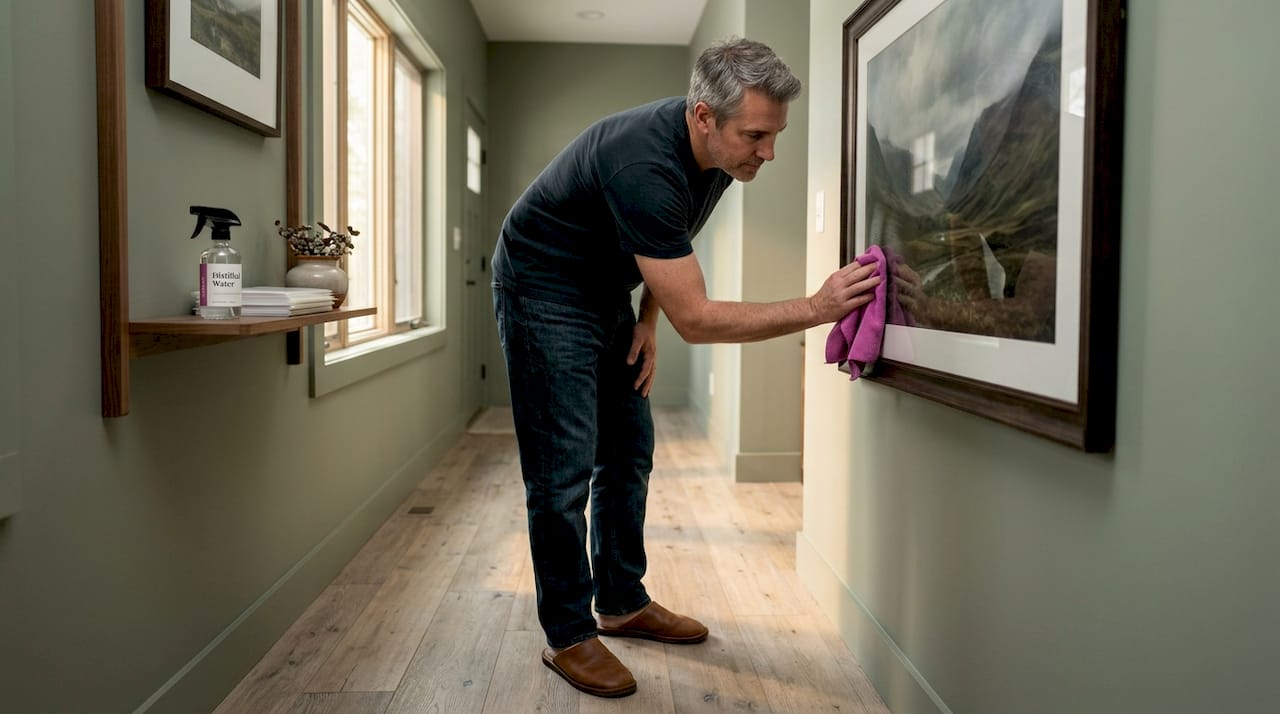
Environmental control is the single most important factor in art preservation. Maintain stable humidity between 40 and 50 percent and keep temperatures between 18 and 22°C (roughly 64 to 72°F). Fluctuations, not just extremes, cause the most damage. Canvas expands and contracts with humidity changes, paint layers crack, and paper-based works become brittle over time.
| Art type | Light exposure | Humidity sensitivity | Framing recommendation |
|---|---|---|---|
| Oil paintings | Low indirect light | Moderate | Unglazed or UV-filtering glass |
| Works on paper | Very low, UV-filtered | High | UV-filtering glass, acid-free mat |
| Canvas prints | Low indirect light | Moderate | Optional; stretcher bars adequate |
| Photographs | No direct light | High | UV-filtering glass, acid-free mount |
Pro Tip: Never hang art on an exterior wall in a climate with significant seasonal temperature variation. The wall itself can transmit moisture and cold, creating micro-climate damage even when your room feels controlled.
Beyond environment, handling matters more than most beginners realize. Use clean cotton gloves whenever you move a piece. Natural oils from your hands degrade varnish on paintings and leave permanent marks on works on paper. Acid-free archival materials are the standard for storage: acid-free tissue, acid-free boxes, and foam supports for canvases in storage.
Quality framing is both a display and a preservation choice. For works on paper, an acid-free mat keeps the artwork from touching the glass. UV-filtering glazing is worth the additional cost for anything with significant value or sentimental importance. A good frame protects the edges, prevents warping, and controls the micro-environment immediately around the work.
For detailed guidance on protecting prints specifically, Emansgallery’s resource on storing art prints safely covers the practical steps that make a measurable difference in longevity.
Building your collection over time
The collectors who end up with the most satisfying collections share one trait: they were not in a hurry. Art collecting done well is a slow accumulation of knowledge, relationships, and carefully chosen objects.
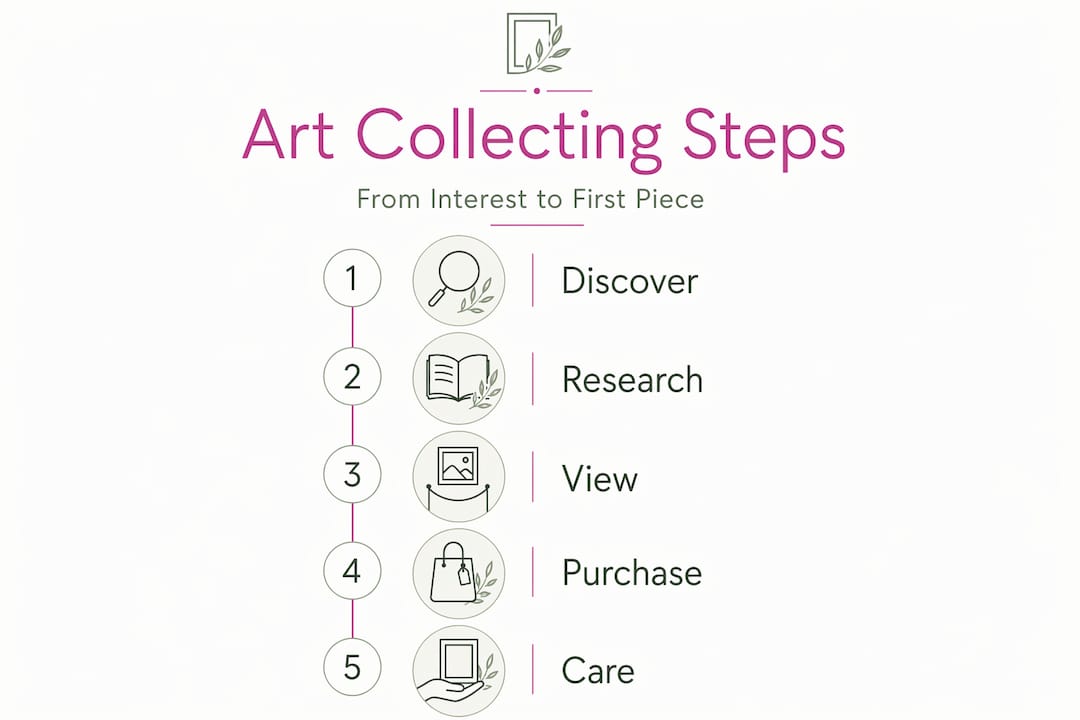
Patience and repeated exposure are what develop the kind of eye that lets you recognize quality, value, and authenticity with increasing confidence. You cannot shortcut this. Reading, looking, and asking questions over time are the actual work of becoming a collector.
A few principles that guide sustainable collecting:
- Set a yearly budget, even a modest one, and treat it as a ceiling not a floor.
- Buy one piece you genuinely love rather than several pieces you feel neutral about.
- Revisit the same galleries and follow the same artists across multiple shows. Relationships deepen over time and often lead to access, studio visits, and better buying opportunities.
- Be open to selling early pieces as your taste evolves. Early acquisitions are often learning pieces, and releasing them to make space for work that resonates more deeply is a sign of a maturing collection, not a failure.
Pro Tip: Tell gallery staff honestly that you are building your first collection. Most gallerists actively enjoy working with new collectors and will guide you toward works that fit your taste and budget without pressure.
Building relationships with artists and galleries transforms collecting from a series of transactions into an ongoing conversation. You learn more from one studio visit than from hours of reading. You understand the work differently when you know something about the person who made it.
My honest take on what nobody tells beginners
I have watched a lot of people start collecting art, and the advice that gets repeated most often, “buy what you love,” is true but incomplete. It leaves out the part where you first have to figure out what you actually love, which takes longer than most guides admit.
In my experience, the collectors who struggle most early on are those who buy reactively. They see something at a fair, feel excitement in the moment, and commit before they have enough reference points to know whether that excitement will last. The piece arrives home, goes on the wall, and within six months they have stopped seeing it.
What I have found actually works is giving yourself a waiting period before purchasing anything over a certain price point. Sleep on it. Return to the gallery or the listing a week later. If you are still thinking about the work, that is a meaningful signal.
The other thing rarely discussed is the community aspect. Collecting in isolation limits you. The most knowledgeable collectors I have encountered built their expertise through other collectors, through conversations with gallerists, and through artists themselves. The art world is less closed than it appears from the outside. Most people in it are genuinely happy to talk about what they know.
Art collecting is not about acquiring status symbols or making financial predictions. It is about building a visual environment that reflects your curiosity, your history, and your evolving sense of what matters. Start small, stay curious, and give yourself time.
— Eman
Start your collection with Emansgallery
If you are ready to move from research to your first real purchase, Emansgallery offers original handmade paintings and museum-quality canvas prints that work well for new collectors at multiple budget levels.
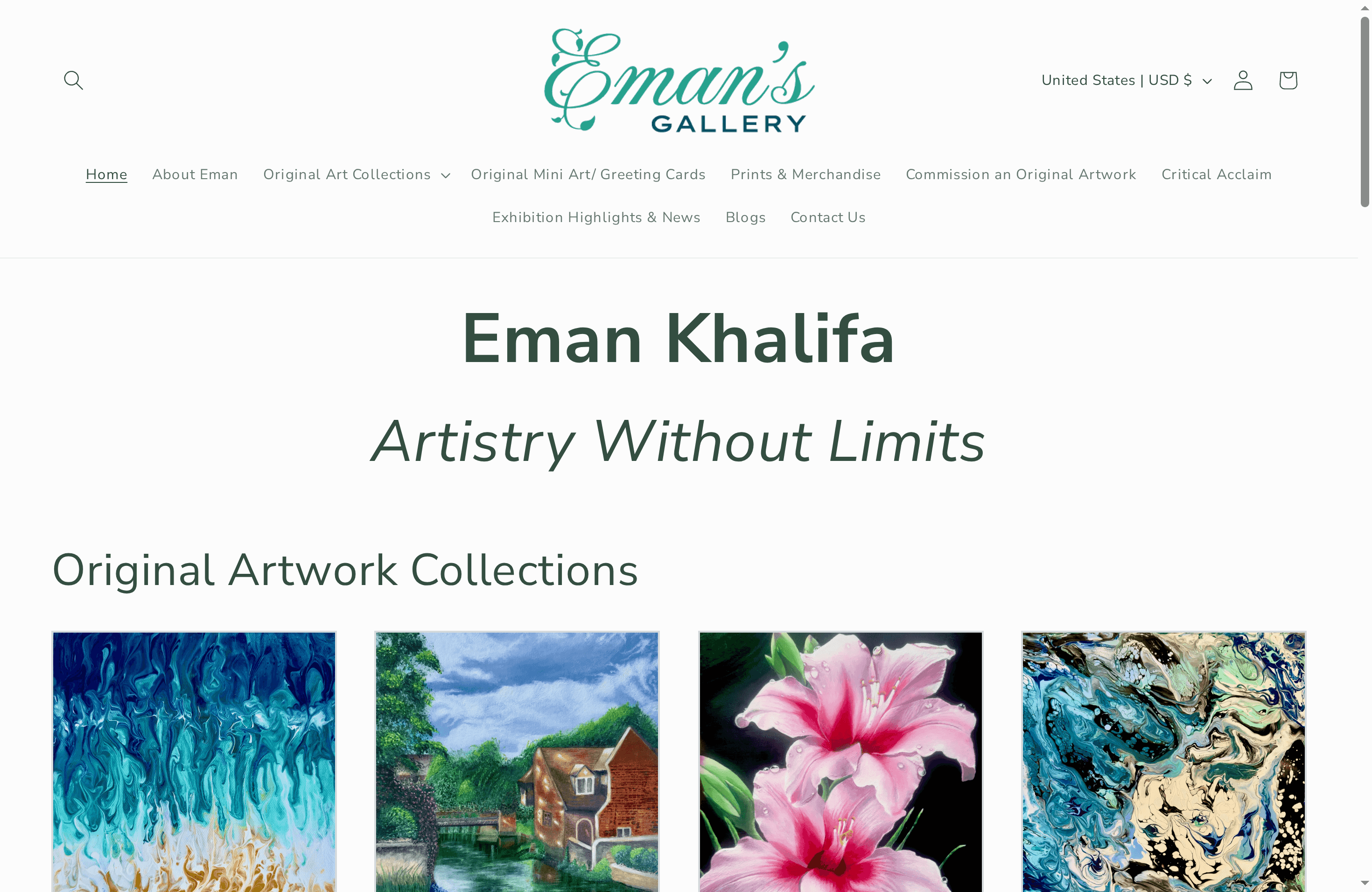
The collection includes abstract, geometric, floral, seascape, and landscape works by artist Eman Khalifa, with worldwide shipping from the UK, USA, Canada, Australia, and beyond. Canvas prints like the Private Eye conceptual print and the Fragments of Memory abstract are strong starting points for collectors who want an original artistic vision at an accessible price. For those ready to invest in a one-of-a-kind original, works like Good Tidings fluid ocean art offer genuine collectible value with strong visual presence. Browse the full wall art prints collection to find a piece that fits your space and your story.
FAQ
What is the best way to start an art collection on a small budget?
Begin with limited edition prints or works on paper by emerging artists, which often start in the low hundreds of dollars. Art school degree shows and local open studios are also reliable sources of affordable original work.
Do I need documents when buying art as a beginner?
Yes. Always request a certificate of authenticity and an invoice that includes the artist’s name, title, medium, dimensions, and year. These documents are necessary for insurance, resale, and verifying the artwork’s history.
How do I know if an artwork is a good investment?
Focus on the artist’s exhibition history, the work’s condition, and documented provenance rather than relying on the seller’s assurances alone. Early acquisitions are often learning pieces, and financial value becomes clearer as you develop more expertise over time.
How should I care for art I display at home?
Keep displayed works away from direct sunlight and maintain room humidity between 40 and 50 percent with temperatures between 18 and 22°C. Use UV-filtering glass for works on paper and handle all pieces with clean cotton gloves.
How many pieces should a beginner collector start with?
Start with one piece you genuinely connect with rather than buying several works at once. A single carefully chosen piece teaches you more about your taste and the buying process than multiple reactive purchases.
Stay Connected
-
✨ Explore Eman Khalifa's original art, fine art prints & art merchandise
-
Follow Eman Khalifa's art journey on: Instagram @emans_gallery and Facebook Eman's Gallery
-
Watch Eman Khalifa creating live art on: YouTube @emans_gallery
-
Supported by BabyLoveGrowth
