


7 Collectible Art Examples Every Collector Should Know
Choosing the right artwork for your collection—or even just your home—can feel overwhelming with all the different options out there. You might find yourself stuck between the emotional power of original handmade paintings and the lasting quality of museum-grade prints, or maybe you wonder how to spot genuine artistic value when so many styles compete for your attention. What makes a piece truly unique, and how do you recognize art that will keep its appeal for years to come?
This guide cuts through the confusion by outlining clear, actionable ways to understand the unique strengths and qualities of handmade originals, high-fidelity prints, large-scale art, and specialized genres. You will discover what distinguishes museum-quality reproductions, why large-scale art captivates audiences, and how to spot collectible pieces in every category. Explore these insights to build confidence in your choices and unlock the long-lasting joy that comes with collecting meaningful art.
Table of Contents
- 1. Understanding Original Handmade Paintings
- 2. Exploring Museum-Quality Canvas Prints
- 3. Investing in Large-Scale Wall Art Pieces
- 4. Collecting Art-Printed Merchandise
- 5. Recognizing Unique Abstract and Geometric Art
- 6. Choosing Floral, Landscape, and Seascape Works
- 7. Identifying Still-Life Art as Collectibles
Quick Summary
| Takeaway | Explanation |
|---|---|
| 1. Original art captures unique artist perspectives. | Original handmade paintings embody the individual vision and emotional depth of the artist, providing a unique connection to their creative process. |
| 2. Museum-quality prints offer affordable art access. | High-fidelity canvas prints utilize archival techniques to ensure long-lasting quality, making original art more accessible to a wider audience. |
| 3. Large wall art transforms space dynamics. | Investing in large-scale artworks can dramatically change a room’s visual impact and become a focal point for conversation and engagement. |
| 4. Art merchandise expands artistic expression. | Collecting art-printed items allows enthusiasts to integrate art into daily life, supporting artists and making art more approachable and functional. |
| 5. Still-life art tells intricate cultural stories. | Exceptional still-life pieces convey deeper meanings and narratives that reflect historical and cultural contexts through their careful arrangements of objects. |
1. Understanding Original Handmade Paintings
Original handmade paintings represent the pinnacle of artistic expression where creativity meets personal craftsmanship. Unlike mass-produced art, these pieces carry the unique emotional and sensory imprint of the artist’s individual vision.
Understanding original art requires recognizing its profound complexity. Artistic knowing transcends mere technical skill, encompassing non-discursive knowledge that includes emotional responses and cultural context.
Key characteristics of original handmade paintings include:
- Direct physical connection between artist and canvas
- Unique textural qualities reflecting personal technique
- Emotional depth impossible to replicate mechanically
- Spontaneous creative expressions
Original art captures human experience in ways mass production cannot.
Collectors appreciate handmade paintings not just for aesthetic value but as windows into an artist’s inner world. Each brushstroke represents a deliberate choice, a moment of creative decision that transforms raw materials into meaningful visual communication.
Pro tip: Always examine original paintings under different lighting conditions to appreciate their nuanced details and textural complexity.
2. Exploring Museum-Quality Canvas Prints
Museum-quality canvas prints represent the pinnacle of artistic reproduction technology, offering art collectors a remarkable way to own high-fidelity artwork without the astronomical cost of original paintings.
These exceptional prints are distinguished by their superior archival printing techniques, which ensure remarkable color accuracy and longevity. Unlike standard commercial prints, museum-quality canvas prints are engineered to preserve artistic integrity for generations.
Key characteristics of museum-quality canvas prints include:
- Archival-grade pigment-based inks
- High-resolution giclée printing methods
- Acid-free, preservation-focused materials
- Color calibration matching original artworks
- Exceptional detail and resolution
Museum-grade prints transform art accessibility while maintaining professional artistic standards.
Collectors appreciate these prints not just for their aesthetic value but for their potential to last 75-100 years when properly maintained. The meticulous production process ensures that each print represents a faithful representation of the original artwork.
Pro tip: Always display museum-quality canvas prints away from direct sunlight and use archival-grade framing to maximize their preservation and longevity.
3. Investing in Large-Scale Wall Art Pieces
Large-scale wall art represents a transformative approach to interior design and art collecting that goes far beyond traditional decorative elements. These monumental pieces are not just visual statements but immersive experiences that fundamentally reshape spatial perceptions.
Contemporary art has been revolutionized by contemporary technological production methods, enabling artists to create expansive artworks that command attention and provoke profound emotional responses. Large-scale pieces typically measure multiple meters and offer viewers an immersive visual narrative.
Key considerations for investing in large-scale wall art include:
- Dramatic visual impact
- Potential for significant room transformation
- Unique conversation starter
- Investment value appreciation
- Emotional resonance with viewers
Large-scale art transforms spaces from ordinary to extraordinary.
Artwork dimensions matter critically. Pieces measuring over two meters can dramatically alter room dynamics, creating focal points that draw the eye and communicate sophisticated aesthetic sensibilities. Collectors should consider room proportions, ceiling height, and existing decor when selecting monumental pieces.
Pro tip: Measure your wall space precisely and use painter’s tape to outline potential artwork dimensions before purchasing to ensure perfect visual integration.
4. Collecting Art-Printed Merchandise
Art-printed merchandise represents an innovative approach to art collecting that democratizes artistic expression beyond traditional canvas boundaries. These collectible items transform original artworks into wearable, usable, and shareable experiences.
The contemporary art market has increasingly recognized art merchandise as a significant collecting category, offering art enthusiasts multiple entry points for engagement and ownership. By extending artwork onto everyday objects, collectors can integrate artistic expression into their daily lives.
Key advantages of art-printed merchandise include:
- Affordable art ownership
- Increased artistic accessibility
- Versatile collection options
- Support for emerging artists
- Potential investment value
Art merchandise bridges the gap between high art and everyday experience.
Quality matters critically in art-printed merchandise. Discerning collectors seek items that maintain artistic integrity and demonstrate professional production standards. The best merchandise preserves the original artwork’s essence while offering functional utility.
Pro tip: Always verify the artist’s direct involvement and the production quality before purchasing art-printed merchandise to ensure authenticity and collectible value.
5. Recognizing Unique Abstract and Geometric Art
Abstract and geometric art represents a sophisticated visual language that transforms complex ideas into pure visual form. These art styles transcend traditional representational approaches by focusing on fundamental elements of shape, color, and composition.
Contemporary artists continue to explore geometric abstraction’s rich cultural heritage, creating works that challenge viewers’ perceptions and connect mathematical precision with emotional depth. This art form blends intellectual rigor with profound aesthetic expression.
Key characteristics of unique abstract and geometric art include:
- Emphasis on pure visual elements
- Mathematical and symmetrical structures
- Complex spatial relationships
- Minimal representational content
- Philosophical and cultural layering
Abstract art speaks a universal language beyond literal representation.
Discerning collectors recognize that geometric abstraction is not merely about visual complexity but about communicating profound ideas through carefully constructed visual relationships. These artworks invite viewers to engage intellectually and emotionally with pure form.
Pro tip: When evaluating abstract and geometric art, observe the artwork’s internal balance, symmetry, and how geometric elements interact to create meaning beyond their visual appearance.
6. Choosing Floral, Landscape, and Seascape Works
Floral, landscape, and seascape artworks represent powerful artistic genres that capture the profound beauty and emotional resonance of natural environments. These works offer collectors a unique opportunity to bring the tranquility and dynamism of nature into their personal spaces.
Seascape paintings have a rich historical legacy that extends beyond mere visual representation. Each artwork tells a nuanced story of natural rhythms, emotional landscapes, and the complex relationship between human perception and environmental beauty.
Key considerations when selecting natural-themed artworks include:
- Emotional connection to the scene
- Technical mastery of the artist
- Color palette and composition
- Representation of light and atmosphere
- Narrative depth and interpretation
Nature-inspired art transforms spaces by bringing external landscapes into intimate environments.
Discerning collectors understand that exceptional natural artworks transcend simple reproduction. They capture the essence of a moment the way a photograph cannot preserve the subtlety of light, texture, and emotional resonance.
Pro tip: Always examine potential landscape or seascape artworks under different lighting conditions to fully appreciate their depth, color nuances, and transformative visual qualities.
7. Identifying Still-Life Art as Collectibles
Still-life art represents a profound artistic genre that transforms ordinary objects into extraordinary visual narratives. Far more than simple representations, these artworks capture complex cultural stories hidden within seemingly mundane arrangements.
Still-life paintings reveal intricate cultural histories through meticulously arranged objects that speak volumes about social contexts, economic conditions, and artistic innovation. From 17th-century Dutch masterpieces to contemporary interpretations, these works offer collectors a unique window into human experience.
Key characteristics of collectible still-life art include:
- Exceptional technical mastery
- Rich symbolic storytelling
- Detailed object representation
- Cultural and historical significance
- Emotional depth beyond surface appearance
Every still-life artwork is a silent storyteller of its time.
Discerning collectors recognize that exceptional still-life pieces transcend mere visual representation. They are complex compositions that invite deep contemplation, revealing layers of meaning through carefully selected and arranged objects.
Pro tip: When evaluating still-life artworks, examine not just technical skill but the narrative complexity and emotional resonance embedded within the seemingly simple object arrangement.
Below is a comprehensive table summarizing the core concepts, features, and benefits discussed throughout the article.
| Topic | Attributes | Benefits |
|---|---|---|
| Original Handmade Paintings | Unique personal craftsmanship imbued with artist’s emotional imprint. | Unmatched emotional resonance and uniqueness. |
| Museum-Quality Canvas Prints | High-fidelity archival printing and preservation methods. | Long-lasting and accessible art reproduction. |
| Large-Scale Wall Art Pieces | Dramatic dimensions creating immersive visual experiences. | Transforms spatial dynamics profoundly. |
| Art-Printed Merchandise | Everyday objects featuring original artwork designs. | Affordable and functional ownership of art. |
| Abstract and Geometric Art | Emphasis on fundamental visual elements creating pure forms. | Invites intellectual and emotional engagement. |
| Floral, Landscape, and Seascape Works | Natural-themed art capturing the essence of scenes. | Enriches environments with tranquility and narrative depth. |
| Still-Life Art | Detailed arrangements symbolizing cultural insights. | Offers profound historical storytelling and artistic mastery. |
Discover Collectible Art That Speaks to Your Soul
Collecting art is about more than just acquiring pieces it is about connecting with unique stories and emotional depth. This article highlights the challenge of finding original handmade paintings, museum-quality prints, and meaningful styles like geometric or still-life art that carry rich personal and cultural significance. Whether you seek the intricate balance found in Geometric Original Art Collection - Unique Geometric Wall Decor or the timeless storytelling in Still Life Original Art: Timeless Beauty for Your Space Collection each artwork from Eman Khalifa is a one-of-a-kind creation that transforms spaces and emotions.
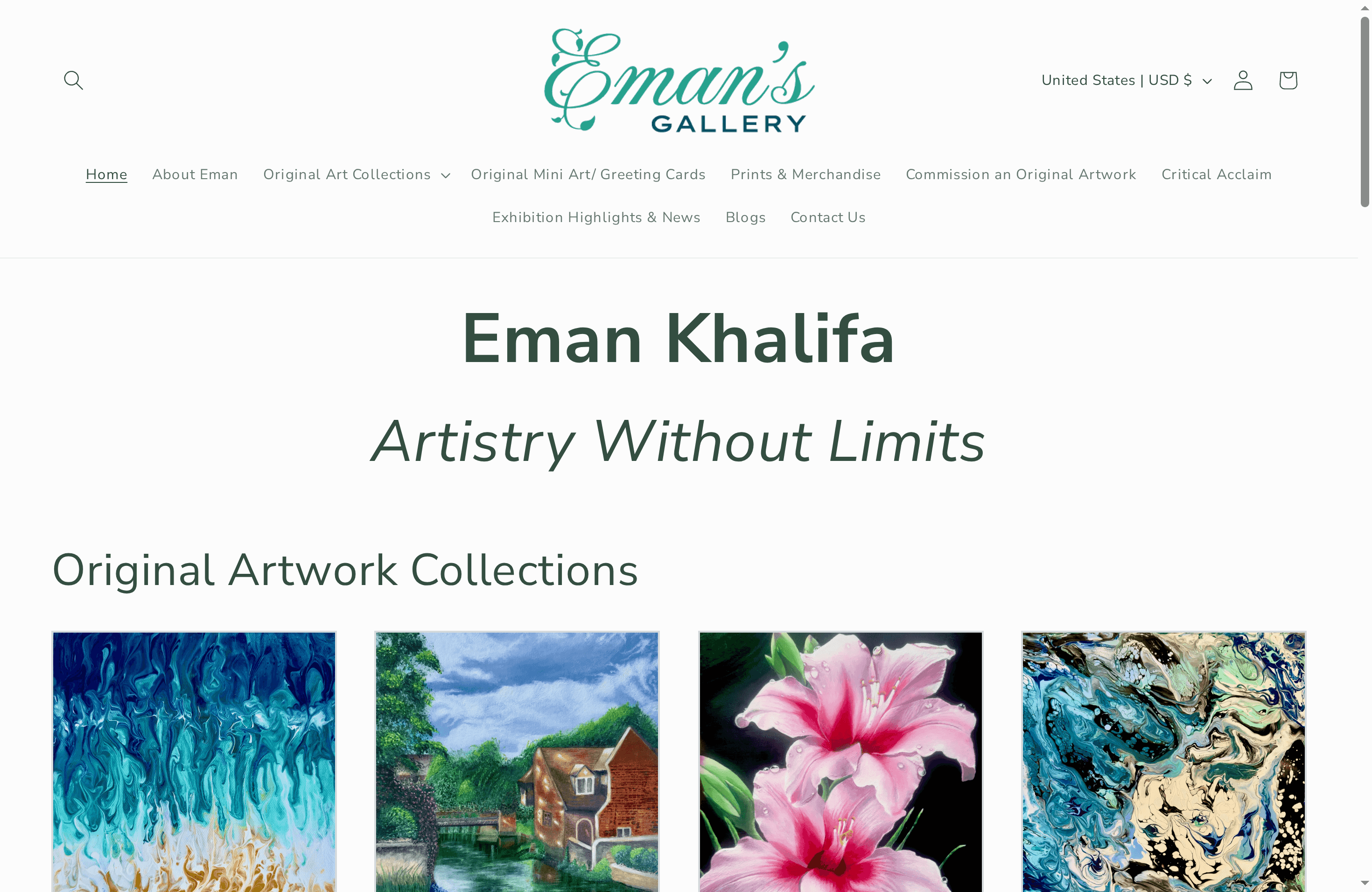
Elevate your collection today with original paintings, large-scale wall art, and exclusive art merchandise available worldwide. Experience authentic artistic expression crafted to last and inspire. Visit Eman’s Gallery now to explore unique pieces that resonate with your passion for collectible art and make your space truly extraordinary.
Frequently Asked Questions
What are original handmade paintings and why are they valuable?
Original handmade paintings are unique pieces of art created directly by an artist, reflecting their personal style and emotional expression. Collectors value them for their originality and the deep connection they establish between the artist and the viewer.
How can I ensure the quality of museum-quality canvas prints?
To ensure the quality of museum-quality canvas prints, look for prints made with archival-grade pigment-based inks and high-resolution giclée printing methods. Verify that the print is crafted from acid-free materials and has a color calibration that closely matches the original artwork.
What should I consider before investing in large-scale wall art?
Before investing in large-scale wall art, consider the dimensions of your space and how the artwork will interact with your existing decor. Ensure the piece has dramatic visual impact and fits well with the room’s proportions to create a captivating focal point.
What are the benefits of collecting art-printed merchandise?
Collecting art-printed merchandise offers several benefits, including affordable access to art and the ability to support emerging artists. Look for items that maintain the integrity of the original artwork while providing functional use in everyday life.
How do I evaluate unique abstract and geometric art?
When evaluating unique abstract and geometric art, focus on the internal balance, symmetry, and interaction of geometric elements. Analyze how the artwork communicates ideas and emotions through its visual complexity, which can deepen your appreciation and understanding.
Why should I consider acquiring still-life art?
Consider acquiring still-life art because it offers rich symbolic storytelling and insight into cultural history. Look for pieces with exceptional technical mastery that invite contemplation and convey deeper meanings about everyday objects and their relationships.
Recommended
- 7 Art Collector Tips for Valuable Collections – Eman’s Gallery
- Art for Collectors Guide: Expert Insights and Strategies – Eman’s Gallery
- Step by Step Art Collection for Modern Luxury Homes
- Art Collecting Terminology: Complete Guide for Enthusiasts – Eman’s Gallery
- 7 Creative Ways to Use Pet Portraits for Your Home – The Family Portrait Companys
Stay Connected
- ✨ Explore Eman Khalifa’s original art and fine art prints
- 📸 Follow Eman Khalifa’s art journey on: Instagram @emans_gallery and Facebook Eman’s Gallery
- 📹 Watch Eman Khalifa creating live art on: YouTube @emans_gallery
