


The Essential Guide to Art Appreciation
Over 60 percent of american adults admit they rarely take time to truly look at art, missing out on its deeper impact. Art appreciation goes far beyond admiring beautiful paintings or sculptures. It helps sharpen your mind, boost cultural awareness, and strengthen emotional intelligence. Whether you are new to art or looking to deepen your understanding, exploring art appreciation can open up richer experiences and lasting personal growth.
Table of Contents
- Defining Art Appreciation And Its Purpose
- Major Types And Movements In Art
- How To Analyze And Interpret Artworks
- Tips For Collecting And Displaying Art
- Common Mistakes In Appreciating Art
Key Takeaways
| Point | Details |
|---|---|
| Art Appreciation Enhances Growth | Engaging with art fosters critical thinking, cultural awareness, and emotional intelligence, transforming personal understanding and growth. |
| Purpose Across Dimensions | Art appreciation serves cognitive, cultural, emotional, and personal enrichment purposes, allowing individuals to understand diverse perspectives and narratives. |
| Analyzing Art Deepens Engagement | Effective interpretation involves examining visual elements, historical context, and emotional reactions to uncover deeper meanings and significance in artworks. |
| Avoid Common Mistakes | Art appreciation requires moving beyond personal preference and superficial observations to value historical context and artistic techniques. |
Defining Art Appreciation And Its Purpose
Art appreciation is a profound intellectual and emotional journey that transforms passive observation into active understanding of visual creativity. More than simply looking at artwork, it represents a deliberate process of engaging with artistic expressions to comprehend their deeper meanings, cultural contexts, and aesthetic qualities.
According to Khan Academy, engaging with art significantly enhances critical thinking, cultural awareness, and emotional intelligence by exploring diverse perspectives and human experiences. This means art appreciation goes beyond aesthetic pleasure, serving as a powerful tool for personal growth and intellectual development.
The purpose of art appreciation encompasses several key dimensions:
- Cognitive Development: Training the mind to analyze complex visual information and interpret symbolic representations
- Cultural Understanding: Exploring historical, social, and personal narratives embedded within artistic works
- Emotional Connection: Experiencing profound emotional responses that transcend language and cultural barriers
- Personal Enrichment: Expanding one’s worldview by encountering different artistic perspectives and creative expressions
By learning to appreciate art, individuals develop sophisticated observational skills, cultivate empathy, and gain insights into the human experience across different times, cultures, and individual perspectives. Art becomes a universal language that communicates complex ideas and emotions beyond the limitations of verbal communication.
Stay Connected
-
✨ Explore Eman Khalifa's original art, fine art prints & art merchandise
-
📸 Follow Eman Khalifa's art journey on: Instagram @emans_gallery and Facebook Eman's Gallery
-
📹 Watch Eman Khalifa creating live art on: YouTube @emans_gallery
-
Supported by BabyLoveGrowth
Major Types And Movements In Art
Art movements represent dynamic periods of collective artistic innovation, where creative minds collaborate and challenge existing aesthetic paradigms. These movements reflect broader cultural, social, and technological transformations, serving as visual narratives of human experience and intellectual evolution.
According to GeeksforGeeks, significant art movements like Abstract Expressionism, Classicism, and Realism have profoundly influenced artistic expression and cultural development. Each movement emerges with distinctive characteristics, philosophical underpinnings, and revolutionary approaches to representing visual experiences.
Key art movements throughout history include:
- Renaissance: Characterized by realistic representations, perspective, and humanistic themes
- Impressionism: Focused on capturing light, color, and momentary visual perceptions
- Cubism: Deconstructing objects into geometric shapes and presenting multiple perspectives simultaneously
- Surrealism: Exploring unconscious imagery and dream-like symbolic representations
- Abstract Expressionism: Emphasizing spontaneous, emotional, and non-representational artistic creation
These movements are not isolated phenomena but interconnected expressions of human creativity.
 They represent intellectual and emotional responses to changing societal conditions, technological advancements, and evolving philosophical perspectives. Check out our comprehensive guide on Contemporary Art to further explore how these historical movements continue to influence modern artistic practices.
Stay Connected
-
✨ Explore Eman Khalifa's original art, fine art prints & art merchandise
-
📸 Follow Eman Khalifa's art journey on: Instagram @emans_gallery and Facebook Eman's Gallery
-
📹 Watch Eman Khalifa creating live art on: YouTube @emans_gallery
-
Supported by BabyLoveGrowth
How To Analyze And Interpret Artworks
Art analysis is a nuanced skill that transforms passive viewing into an intellectual and emotional exploration of visual storytelling. It requires developing a systematic yet intuitive approach to understanding the complex layers of artistic expression, moving beyond surface-level observations to uncover deeper meanings and contextual significance.
According to Khan Academy, analyzing art involves carefully examining critical visual elements like composition, color, line, and texture to understand the artist’s intent and the work’s profound impact. This methodical approach allows viewers to decode the intricate visual language artists use to communicate complex emotions, ideas, and experiences.
Key strategies for effective artwork interpretation include:
- Visual Formal Analysis: Systematically examine composition, color palette, lines, shapes, and spatial relationships
- Historical Context: Research the artwork’s historical, cultural, and personal background of the artist
- Emotional Response: Reflect on your personal emotional and psychological reactions to the artwork
- Symbolic Interpretation: Identify and decode symbolic elements and metaphorical representations
- Comparative Analysis: Compare the artwork with other pieces from similar or contrasting movements
For collectors seeking deeper insights into art appreciation, understanding these analytical techniques can transform your interaction with artworks from mere observation to profound intellectual engagement. By developing a structured yet intuitive approach, you can unlock the rich narratives and emotional landscapes embedded within each artistic creation.
Stay Connected
-
✨ Explore Eman Khalifa's original art, fine art prints & art merchandise
-
📸 Follow Eman Khalifa's art journey on: Instagram @emans_gallery and Facebook Eman's Gallery
-
📹 Watch Eman Khalifa creating live art on: YouTube @emans_gallery
-
Supported by BabyLoveGrowth
Tips For Collecting And Displaying Art
Art collecting is a nuanced journey that blends personal passion with strategic investment. Successful collectors understand that acquiring art goes beyond mere aesthetic appreciation, involving careful consideration of quality, provenance, authenticity, and potential long-term value.
When building an art collection, focus on developing a cohesive personal aesthetic that reflects your unique taste and emotional connection. This means looking beyond trendy pieces and investing in artworks that resonate with your individual sensibilities and have the potential to create meaningful visual narratives within your living or working spaces.
Key strategies for effective art collecting and display include:
- Research and Education: Continuously learn about different art movements, emerging artists, and market trends
- Budget Wisely: Establish a realistic budget and prioritize quality over quantity
- Authenticity Verification: Always request documentation and provenance for potential acquisitions
- Diversify Your Collection: Explore various mediums, styles, and artists to create visual depth
- Proper Conservation: Invest in professional framing and understand appropriate display and storage conditions
Explore our comprehensive guide for art collector tips to develop a more sophisticated approach to building and curating your personal art collection. Successful collectors understand that each piece is not just a decorative element, but a storytelling medium that reflects personal taste, cultural understanding, and aesthetic sensibility.
Stay Connected
-
✨ Explore Eman Khalifa's original art, fine art prints & art merchandise
-
📸 Follow Eman Khalifa's art journey on: Instagram @emans_gallery and Facebook Eman's Gallery
-
📹 Watch Eman Khalifa creating live art on: YouTube @emans_gallery
-
Supported by BabyLoveGrowth
Common Mistakes In Appreciating Art
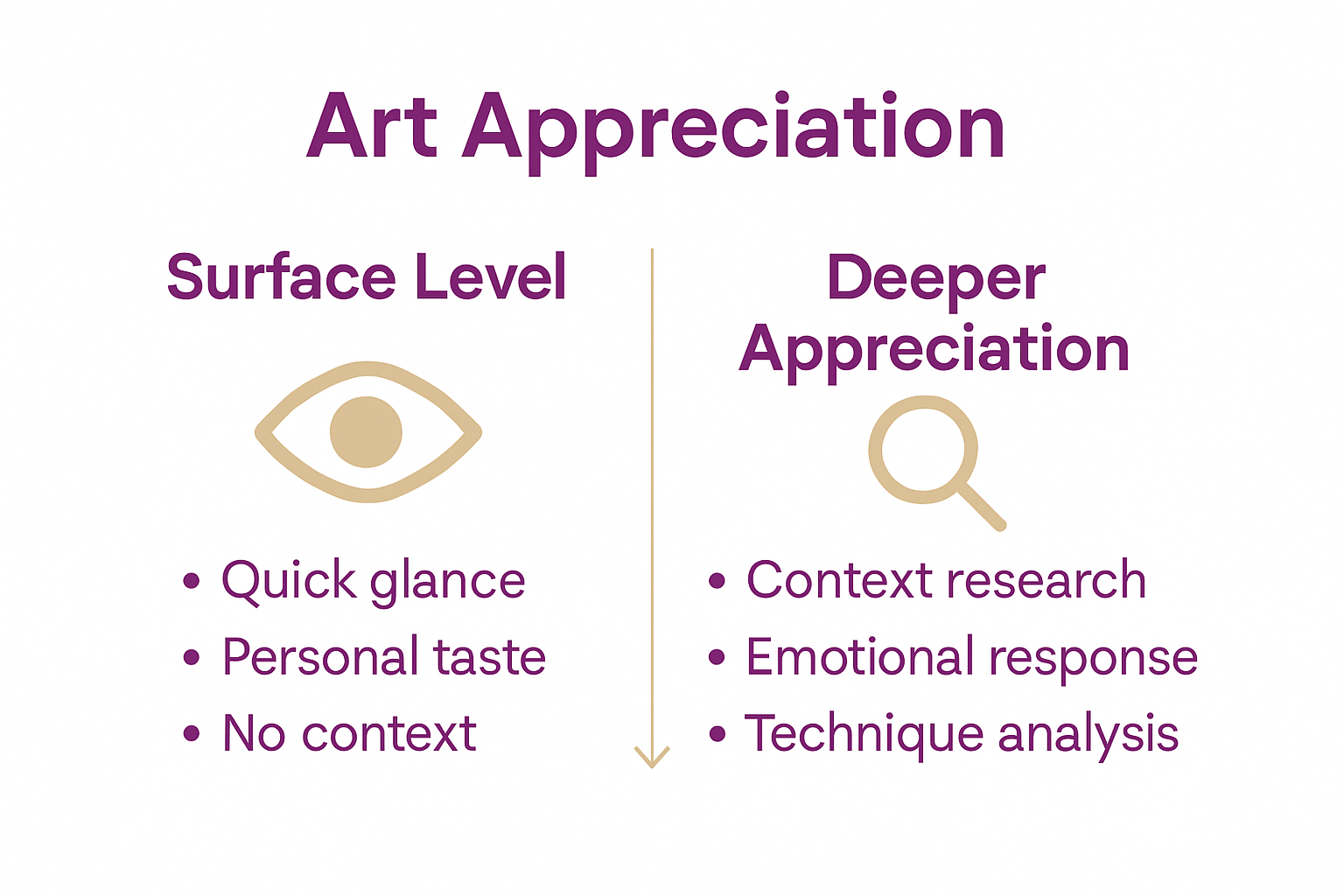
Art appreciation is a nuanced practice that requires more than casual observation. Many art enthusiasts unknowingly make critical errors that limit their understanding and connection with artistic works, transforming what could be a profound experience into a superficial encounter.
One of the most prevalent misconceptions involves judging artwork exclusively through personal aesthetic preferences. Art appreciation demands moving beyond immediate emotional reactions and developing a more comprehensive understanding of the piece’s historical context, artistic technique, and cultural significance. This means learning to value artworks that might not immediately resonate with your personal taste but hold substantial artistic merit.
Common mistakes that hinder authentic art appreciation include:
- Surface-Level Interpretation: Accepting only the most obvious visual narrative without exploring deeper symbolic meanings
- Overlooking Context: Ignoring the historical, cultural, and personal background that shapes an artwork’s creation
- Technical Ignorance: Failing to understand the technical skills and creative processes behind artistic techniques
- Rigid Aesthetic Judgments: Dismissing artworks that challenge personal comfort zones or conventional beauty standards
- Passive Observation: Viewing art without active engagement, reflection, or willingness to explore unfamiliar perspectives
Explore our comprehensive guide to valuing art prints to develop a more sophisticated and nuanced approach to art appreciation. True art lovers understand that meaningful engagement requires intellectual curiosity, emotional openness, and a willingness to challenge preconceived notions about artistic expression.
Stay Connected
-
✨ Explore Eman Khalifa's original art, fine art prints & art merchandise
-
📸 Follow Eman Khalifa's art journey on: Instagram @emans_gallery and Facebook Eman's Gallery
-
📹 Watch Eman Khalifa creating live art on: YouTube @emans_gallery
-
Supported by BabyLoveGrowth
Elevate Your Art Appreciation Journey with Eman’s Gallery
Discover the perfect way to deepen your understanding of art by exploring our carefully curated Contemporary collection. Embrace the concepts of emotional connection and cultural context discussed in The Essential Guide to Art Appreciation with artwork that speaks beyond aesthetics to engage your intellect and heart.
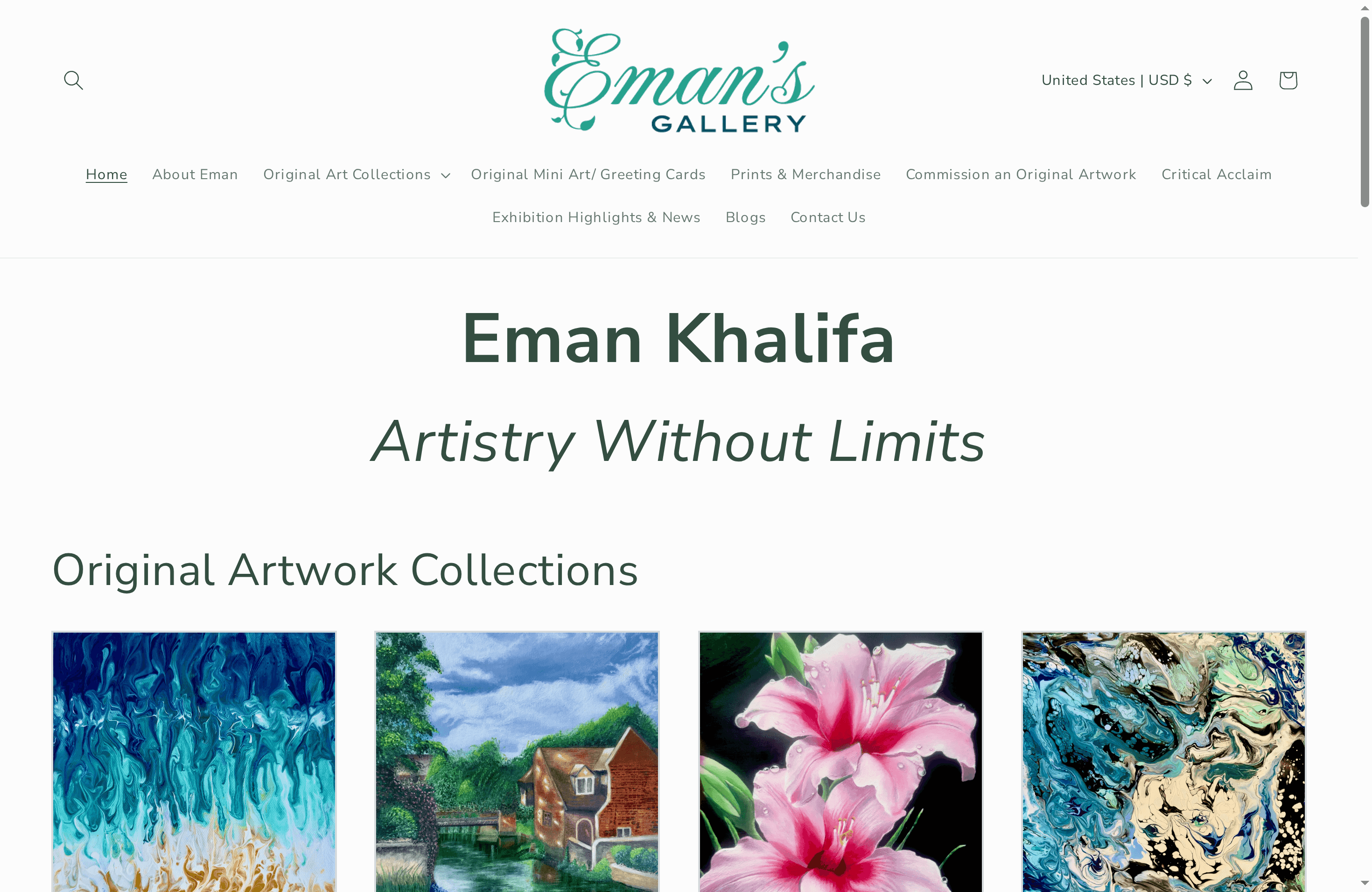
Experience firsthand how original paintings and museum-quality Artwork Printed on Canvas transform your living or working space into a gallery of meaningful narratives. Don’t wait to enrich your personal art collection with unique pieces from Eman’s Gallery. Start your art journey today and unlock new dimensions of creative enjoyment.
Frequently Asked Questions
What is art appreciation?
Art appreciation is the process of actively engaging with and understanding the meanings, cultural contexts, and aesthetic qualities of artistic expressions. It goes beyond mere observation and involves critical thinking and emotional engagement.
Why is art appreciation important?
Art appreciation is important because it enhances cognitive development, cultural understanding, emotional connection, and personal enrichment. It allows individuals to cultivate empathy and gain insights into diverse human experiences.
How can I analyze an artwork effectively?
To analyze an artwork effectively, consider employing visual formal analysis to examine elements like composition, color, and texture. Also, research the historical context, reflect on your emotional responses, identify symbolic elements, and compare the artwork with pieces from similar movements.
What are common mistakes in appreciating art?
Common mistakes in art appreciation include surface-level interpretation, overlooking historical context, lacking understanding of artistic techniques, making rigid aesthetic judgments, and being merely a passive observer. Engaging actively and with curiosity can enrich your art appreciation experience.
Recommended
- Art Collecting Terminology: Complete Guide for Enthusiasts – Eman’s Gallery
- Art for Collectors Guide: Expert Insights and Strategies – Eman’s Gallery
- What Is Contemporary Art? Complete Guide Explained – Eman’s Gallery
- 7 Art Collector Tips for Valuable Collections – Eman’s Gallery
Stay Connected
- ✨ Explore Eman Khalifa’s original art and fine art prints
- 📸 Follow Eman Khalifa’s art journey on: Instagram @emans_gallery and Facebook Eman’s Gallery
- 📹 Watch Eman Khalifa creating live art on: YouTube @emans_gallery
- Supported by BabyLoveGrowth
