


Art Collecting Terminology: Complete Guide
Art Collecting Terminology: Complete Guide
Most advice about art collecting stops short of explaining the language that shapes this fascinating world. Over 80 percent of new collectors struggle to interpret key terms like provenance, attribution, and edition, which can impact every decision from buying to documenting art. Understanding these concepts is not just useful but vital for anyone serious about building or appreciating a collection. By learning the right terminology, you gain the confidence to connect with artists, dealers, and fellow enthusiasts while safeguarding your investment and deepening your appreciation.
Table of Contents
- Defining Art Collecting Terminology And Concepts
- Key Categories And Types Of Collectible Art
- Essential Terms For Buying And Selling Art
- Understanding Editions, Originals, And Prints
- Legal, Authenticity, And Provenance Considerations
- Common Mistakes And How To Avoid Them
Key Takeaways
| Point | Details |
|---|---|
| Art Collecting Terminology | Mastering key terms such as provenance, authenticity, and attribution is essential for effective communication and informed decision-making in art collecting. |
| Categories of Collectible Art | Understanding diverse categories, from traditional paintings to emerging digital art, helps collectors curate meaningful and valuable collections. |
| Legal Considerations | Thorough due diligence on provenance and authenticity is crucial to avoid legal issues and ensure the integrity of art acquisitions. |
| Common Collecting Mistakes | Familiarizing oneself with common pitfalls like impulse buying and neglecting condition can enhance the overall success of an art collection. |
Defining Art Collecting Terminology and Concepts
Art collecting is a nuanced world with its own specialized language and intricate concepts that help enthusiasts, collectors, and professionals communicate effectively. The terminology serves as a critical framework for understanding, categorizing, and discussing artistic works and their historical, cultural, and aesthetic significance.
According to the Getty Research Institute, the Art & Architecture Thesaurus (AAT) provides a structured vocabulary containing standardized terms and concepts related to art, architecture, and material culture. This systematic approach helps professionals and collectors precisely document, research, and discuss artistic works. The AAT serves as a comprehensive reference that enables consistent communication across different institutions, museums, galleries, and private collections.
Key terminology in art collecting encompasses several important categories:
- Provenance: The documented history of an artwork’s ownership, which helps establish authenticity and value
- Attribution: Identifying the artist or school responsible for creating a specific artwork
- Condition Report: A detailed assessment of an artwork’s physical state and potential restoration needs
- Authenticity: Verification that an artwork is genuinely created by the attributed artist
- Appraisal: Professional evaluation of an artwork’s monetary value based on multiple factors
The Cultural Objects Name Authority (CONA) project further enhances art collecting terminology by creating a controlled vocabulary for cultural works. This standardization helps art professionals and collectors maintain precise documentation and communication about artistic pieces, ensuring that technical details and historical context are accurately preserved and shared across different platforms and institutions.
Understanding these terminologies transforms art collecting from a simple acquisition process into an intellectual and cultural engagement. By mastering these concepts, collectors can make more informed decisions, appreciate the deeper narratives behind artworks, and participate more meaningfully in the global art ecosystem.
Key Categories and Types of Collectible Art
Art collecting is a diverse and dynamic world that spans numerous categories, styles, and mediums, offering collectors an expansive landscape of artistic expression and investment potential. Each category represents a unique form of creative communication, historical documentation, and cultural preservation.
According to Independent Collectors, the contemporary art collecting scene encompasses a rich variety of artistic categories that reflect both traditional and emerging forms of creative expression. Private collections have become increasingly sophisticated, allowing collectors to curate personal museums that showcase their aesthetic preferences and cultural interests.
Key categories of collectible art include:
- Paintings: Traditional canvas works spanning oil, acrylic, watercolor, and mixed media
- Sculptures: Three-dimensional artworks created from materials like bronze, marble, wood, and contemporary mixed materials
- Prints: Reproduced artworks including lithographs, screen prints, etchings, and digital prints
- Photography: Fine art photographic works ranging from vintage prints to contemporary digital photography
- Digital Art: Emerging category including NFTs, generative art, and computer-generated artistic expressions
- Decorative Arts: Functional and aesthetic objects like ceramics, glassware, textiles, and design pieces
As Wikipedia explains, a private collection represents a personally curated assemblage of artworks that reflects an individual’s unique artistic vision and cultural interests. These collections are not just about acquisition but about creating a narrative and preserving artistic heritage through carefully selected pieces.
Modern art collecting transcends mere possession, becoming a form of cultural dialogue and personal expression. Collectors today are not just acquiring objects but participating in a global conversation about creativity, representation, and artistic innovation. By understanding and exploring these diverse categories, art enthusiasts can develop more nuanced and meaningful collections that reflect both personal taste and broader cultural narratives.

Essential Terms for Buying and Selling Art
Navigating the art market requires a sophisticated understanding of specialized terminology that enables collectors, dealers, and enthusiasts to communicate effectively and make informed decisions. These essential terms serve as a critical language that bridges the gap between artistic appreciation and financial investment.
According to Passion for Art, understanding key terminology is crucial for collectors to communicate effectively with artists, galleries, and fellow collectors. Market terms, artistic concepts, and technical definitions form the foundation of intelligent art transactions.
Key essential terms for buying and selling art include:
- Provenance: Documented history of an artwork’s ownership and origin
- Authentication: Verification of an artwork’s genuine origin and creator
- Edition: The total number of prints or reproductions of a specific artwork
- Limited Edition: A restricted number of artwork reproductions, increasing potential value
- Artist Proof: Special prints reserved for the artist, typically outside the main edition
- Certificate of Authenticity: Official document verifying an artwork’s legitimacy
- Fair Market Value: The estimated price an artwork would sell for in an open market
- Consignment: Process of selling artwork through a gallery or auction house
For collectors looking to expand their knowledge, Passion for Art suggests that a comprehensive glossary of art terms provides the vocabulary needed to navigate the complex art market effectively. This includes understanding nuanced definitions related to art types, media, market dynamics, and art historical contexts.
Understanding these terms transforms art collecting from a mere transactional experience into an intellectual pursuit. By mastering this specialized language, collectors can make more informed decisions, negotiate more effectively, and appreciate the deeper narratives behind each artistic piece.
For those interested in diving deeper, learn more about art print investment strategies to enhance your collecting expertise.
Understanding Editions, Originals, and Prints
The art world is complex, with nuanced distinctions between original artworks, prints, and various editions that can significantly impact an artwork’s value, authenticity, and collectibility. Understanding these differences is crucial for both seasoned collectors and emerging art enthusiasts navigating the intricate landscape of art acquisition.
According to Wikipedia, a catalogue raisonné serves as a comprehensive, annotated listing of an artist’s known works, providing critical documentation that helps collectors understand the intricate details of originals, prints, and editions. This systematic approach enables precise tracking of an artwork’s provenance and authenticity.
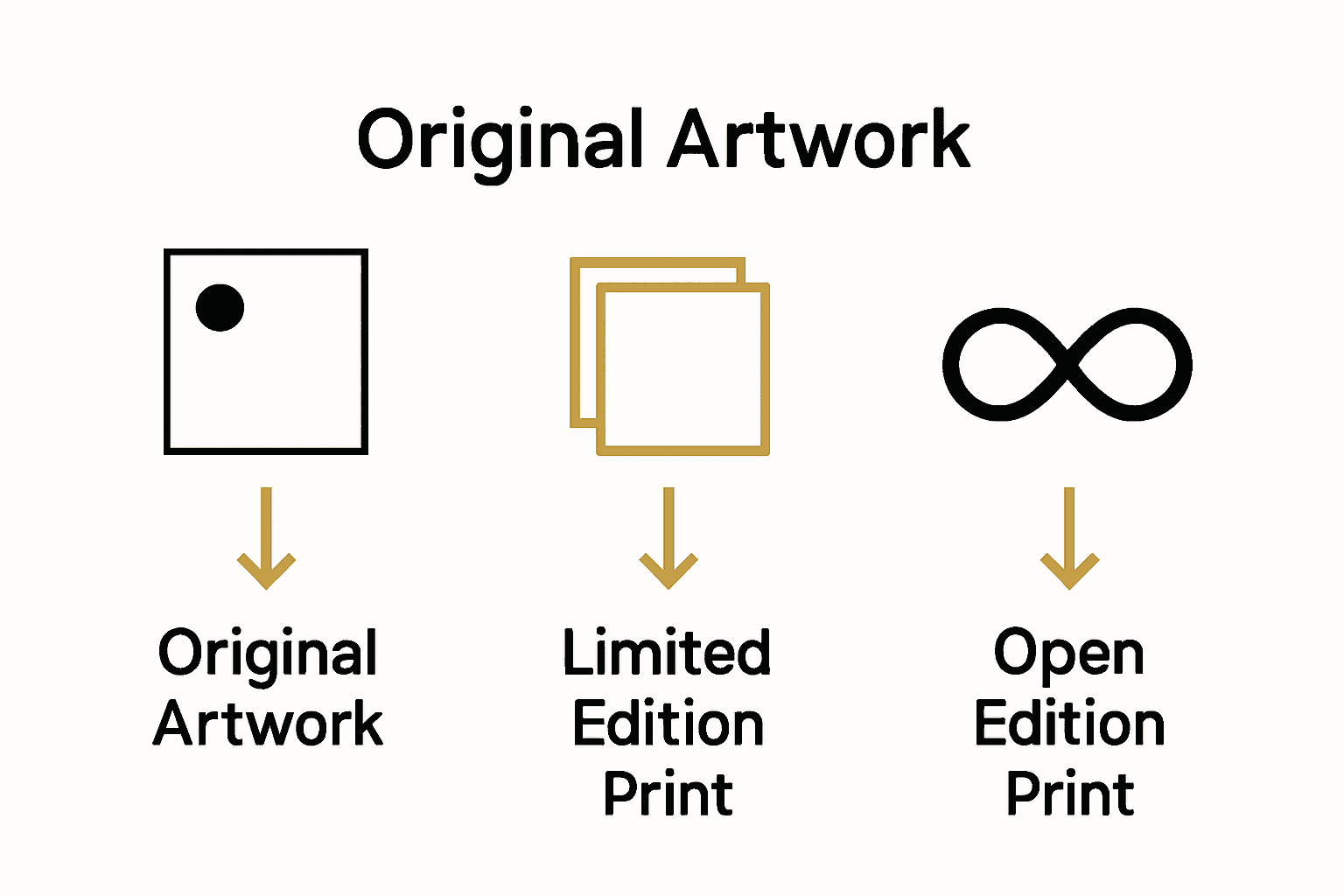
Key distinctions in art collecting include:
- Original Artwork: A unique piece created directly by the artist’s hand
- Limited Edition Print: A restricted number of authorized reproductions, typically signed and numbered by the artist
- Open Edition Print: Unlimited reproduction of an artwork without numerical restriction
- Artist Proof: Special prints reserved for the artist, usually outside the main edition
- Giclee Print: Giclee Print: High-quality digital reproduction using archival ink and paper
- Reproduction: A copy of an original artwork, which may vary in quality and method of production
The Lightweight Information Describing Objects (LIDO) schema demonstrates how museums and collectors standardize documentation of art objects, ensuring precise classification and preservation of artistic works. This systematic approach helps maintain the integrity and value of art collections.
For collectors eager to dive deeper into understanding the nuances between different types of art, 7 key differences between original art and prints can provide invaluable insights into making informed collecting decisions. Ultimately, knowledge is the most powerful tool in building a meaningful and valuable art collection.
Legal, Authenticity, and Provenance Considerations
The world of art collecting is fraught with complex legal and ethical considerations that extend far beyond simple aesthetic appreciation. Navigating the intricate landscape of art acquisition requires a sophisticated understanding of provenance, authenticity, and the legal frameworks that protect both artists and collectors.
According to Fladgate, conducting thorough checks on provenance and authenticity is essential to avoid potential legal complications. These investigations help prevent issues related to ownership history, suspect transactions, and potential value depreciation that could significantly impact a collector’s investment.
Key legal and authenticity considerations include:
- Provenance Documentation: Comprehensive ownership history tracing an artwork’s origins
- Certificate of Authenticity: Official document verifying an artwork’s genuine nature
- Artist’s Resale Rights: Legal protections ensuring artists receive compensation for secondary sales
- Cultural Property Laws: Regulations governing the international transfer of artworks
- Reproduction Rights: Legal restrictions on reproducing or commercially using artwork
- Export Restrictions: Government regulations controlling artwork movement across borders
Art and Media Law emphasizes the complexity of art law, highlighting the importance of understanding legal nuances surrounding cultural property, taxation, and intellectual property rights. These considerations go beyond simple transactions, forming a critical framework for responsible art collecting.
For collectors looking to deepen their understanding of authenticity and legal considerations, understanding what makes art original can provide crucial insights into making informed and legally sound art acquisitions. Ultimately, knowledge and due diligence are the most powerful tools in building a legally protected and valuable art collection.
Common Mistakes and How to Avoid Them
Art collecting is a nuanced journey filled with potential pitfalls that can derail even the most passionate enthusiast’s collecting strategy. Understanding these common mistakes is crucial for building a meaningful and valuable art collection that reflects both personal taste and intelligent investment.
According to Art Report, building a thoughtful art collection requires carefully avoiding critical mistakes that can compromise both the artistic and financial value of your acquisitions. Emotional impulse and uninformed decisions are the primary culprits behind most collecting missteps.
Common mistakes art collectors should be aware of include:
- Buying Without Research: Purchasing artworks without understanding their historical context or artistic significance
- Ignoring Provenance: Neglecting to verify an artwork’s ownership history and authenticity
- Chasing Trends: Collecting based on momentary market popularity rather than genuine appreciation
- Overlooking Condition: Failing to assess an artwork’s physical condition and potential restoration needs
- Neglecting Artist’s Narrative: Disconnecting the artwork from its creator’s broader artistic journey
- Impulse Purchasing: Making quick decisions without careful consideration and expert consultation
- Improper Storage: Not maintaining appropriate environmental conditions for artwork preservation
Successful art collecting demands a balanced approach that combines emotional connection with strategic thinking. Collectors must develop a discerning eye, continually educate themselves, and approach each potential acquisition with thoughtful deliberation.
For those looking to refine their collecting strategy, 7 expert tips for collecting limited edition prints can provide valuable insights into making more informed and meaningful art acquisitions. Remember, the most rewarding collections are built through patience, knowledge, and genuine passion.
Master the Art of Collecting With Pieces That Speak to You
Diving into art collecting terminology can feel overwhelming but discovering original artworks that resonate with your unique taste makes the journey rewarding. Whether you are exploring the meanings behind provenance or authenticity, owning art that reflects your passion and knowledge brings a deeper connection to the creative world. Explore the richness of Contemporary and Abstract collections crafted to complement your growing expertise and personal style.
Take the next step in your collecting adventure by choosing hand-painted original works or exclusive limited edition prints at Eman's Gallery. Act now to elevate your collection with art that not only inspires but also embodies key concepts you’ve discovered in this guide. Unlock your true appreciation for art today.
Frequently Asked Questions
What is provenance in art collecting?
Provenance refers to the documented history of an artwork’s ownership, which helps establish its authenticity and value.
How do I determine the condition of an artwork before purchasing?
A condition report provides a detailed assessment of an artwork’s physical state and any potential restoration needs, helping collectors make informed decisions.
What is the difference between original artwork and prints?
Original artwork is a unique piece created by the artist, while prints can be reproductions, including limited edition prints that are authorized and typically signed by the artist, or open edition prints without restrictions.
Why is understanding art terminology essential for collectors?
Understanding art terminology helps collectors communicate effectively with artists, galleries, and fellow collectors, making the art buying and selling process smoother and more informed.
Build Your Collection at Eman's Gallery
Put your new terminology to work — browse with confidence:
- Original Paintings — unique works with full provenance and certificate of authenticity
- Framed Archival Giclée Prints — limited edition, signed, museum-quality prints
- Abstract Art — expressive originals and prints for the discerning collector
- Mini Original Art — accessible entry point for new collectors
Recommended
- What Makes Art Original: Complete Guide for 2025 – Eman’s Gallery
- What Is an Art Print? Complete Guide for 2025 – Eman’s Gallery
- Complete Guide to Valuing Art Prints – Eman’s Gallery
- Contemporary Wall Art Explained: Complete Overview – Eman’s Gallery
Stay Connected
- ✨ Explore Eman Khalifa’s original art and fine art prints
- 📸 Follow Eman Khalifa’s art journey on: Instagram @emans_gallery and Facebook Eman’s Gallery
- 📹 Watch Eman Khalifa creating live art on: YouTube @emans_gallery
- Supported by BabyLoveGrowth
