


What is archival paper? Preserve artworks with lasting quality
TL;DR:
- Not all papers labeled “archival” meet verified longevity standards, risking artwork deterioration over time.
- True archival paper is chemically and physically designed for long-term preservation, requiring strict properties like acid-free status, low lignin, and alkaline buffering confirmed by independent ISO 9706 certification.
Not all paper labeled “archival” is created equal. Some products carry the word without meeting any verified permanence standard, putting your artwork, prints, and collections at genuine risk of yellowing, brittleness, or fading over time. Not all paper labeled “archival” meets stringent longevity standards, which means collectors and artists need more than marketing language to protect what they value. This guide covers what archival paper actually is, how its standards are defined and measured, and how to apply that knowledge when creating, buying, or preserving art.
Table of Contents
- What makes paper archival?
- Archival standards and certifications
- Archival vs. acid-free: What’s the difference?
- Practical considerations for using archival paper
- Common pitfalls: Marketing claims and quality nuances
- A collector’s truth: Why true archival paper is about more than the label
- Preserve and display art with confidence
- Frequently asked questions
Key Takeaways
| Point | Details |
|---|---|
| True archival definition | Archival paper is acid-free, lignin-free, and buffered to ensure maximum longevity for artworks. |
| Certification matters | ISO 9706 and similar standards verify true archival quality better than marketing claims. |
| Acid-free is not enough | Not all acid-free paper meets archival standards—look for additional criteria and documentation. |
| Longevity requires care | Proper storage, framing, and handling are vital for preserving art on archival paper. |
| Watch for pitfalls | Always confirm claims and avoid OBAs and non-certified papers when preservation is critical. |
What makes paper archival?
Archival paper is paper manufactured specifically for long-term preservation. The term refers to a defined set of chemical and physical properties, not a style or brand category. Archival paper requirements include being acid-free, having an alkaline buffer, and passing tear, lignin, and pH tests under international standards.
The most important properties include:
- Acid-free: Paper with a pH of 7.0 or higher. Acidic paper breaks down over time through a process called hydrolysis, causing brittleness and yellowing.
- Lignin-free: Lignin is a natural wood compound that, when left in paper, oxidizes and causes rapid deterioration. Archival paper removes or reduces lignin to trace levels.
- Alkaline buffered: An alkaline reserve (usually calcium carbonate) is added to neutralize future acid exposure from the environment, pollutants, and handling.
- Stable tear resistance: The paper must physically hold up over time without becoming fragile.
The chemistry behind these properties is straightforward. Acid accelerates the breakdown of cellulose fibers in paper. By removing acid sources and adding an alkaline buffer, manufacturers create a paper that resists environmental degradation for decades or longer. Understanding these properties gives artists and collectors a reliable filter for evaluating any product they consider using for valuable work.
Proper archival preservation methods go beyond the paper itself, but choosing the right substrate is where sound preservation always begins.
“Archival paper is designed for long-term permanence, meeting requirements like being acid-free, having an alkaline buffer, and passing tear, lignin, and pH tests.” — ISO 9706 Permanent Paper Requirements
Archival standards and certifications
Understanding what archival paper must contain is one thing. Knowing how those qualities are verified is another. ISO 9706 is the primary international benchmark for permanent paper, and it defines precise thresholds that paper must meet across several measurable criteria.
| Criterion | ISO 9706 Requirement | Why it matters |
|---|---|---|
| pH | 7.5 to 10.0 | Prevents acid-driven cellulose breakdown |
| Kappa number (lignin) | ≤ 5 | Low lignin means less oxidation and yellowing |
| Alkaline reserve | ≥ 2% CaCO₃ equivalent | Buffers future acid exposure from environment |
| Tear resistance | ≥ 350 mN (ISO 1974) | Ensures physical durability over handling and time |
Each of these criteria addresses a specific failure mode. High pH without an alkaline reserve, for example, only protects paper until the initial buffer is exhausted. Lignin content matters because even acid-free paper will discolor if lignin is present. ISO 9706 verification requires strict chemical and mechanical tests with defined threshold values, meaning a supplier cannot simply claim compliance without documented data.
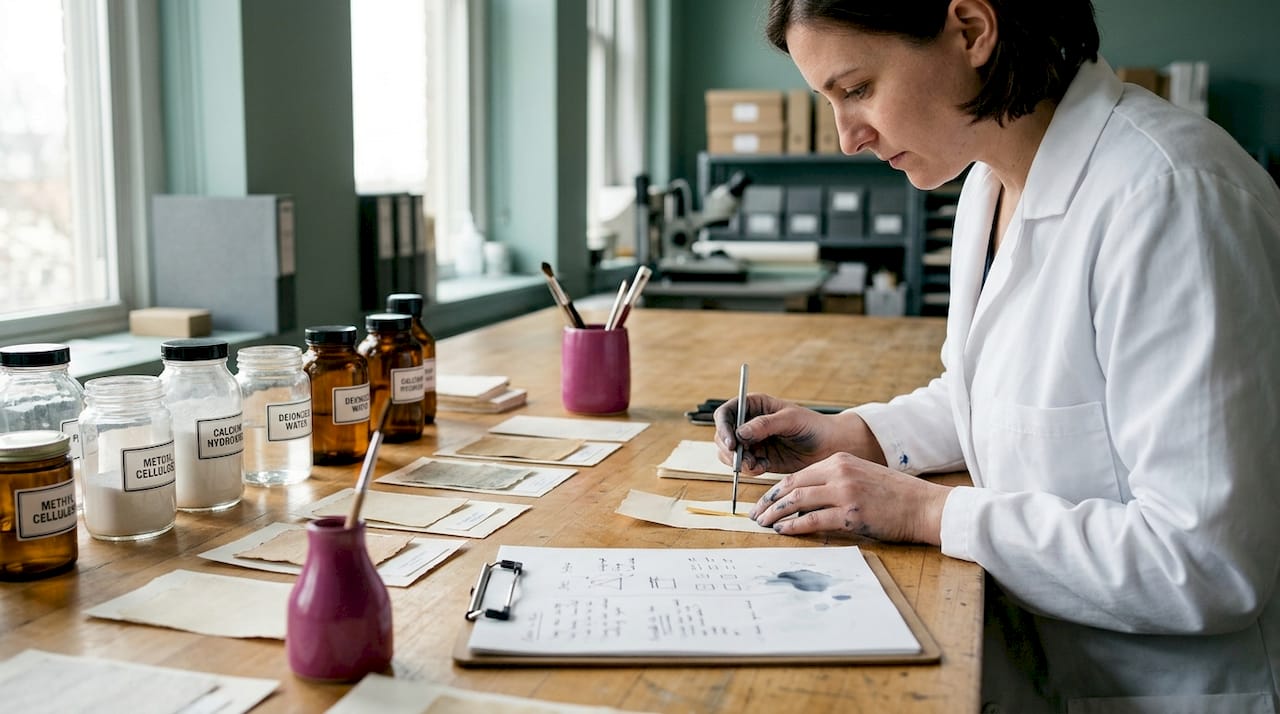
This is where independent certification becomes critical. Many paper manufacturers self-certify their products as archival. Without third-party lab testing against ISO 9706 thresholds, those claims are unverifiable. For artworks intended to last, that difference is significant.
Pro Tip: When commissioning fine art prints or purchasing paper for original work, ask the supplier or printer for ISO 9706 test documentation or a third-party certification report. Reputable suppliers provide this on request. If a company cannot or will not supply documentation, treat the archival claim with skepticism.
For further clarity on terminology common in the fine art print industry, reviewing a print terminology reference can help you ask the right questions before committing to a purchase.
Archival vs. acid-free: What’s the difference?
Many buyers assume that acid-free paper and archival paper are the same product. They are not. The distinction is practical and matters for anyone making decisions about fine art, prints, or collected works.
| Criteria | Acid-free paper | Archival (permanent) paper |
|---|---|---|
| pH level | ≥ 7.0 | 7.5 to 10.0 |
| Lignin content | Not always controlled | Controlled (Kappa ≤ 5) |
| Alkaline buffer | Not required | Required (≥ 2% CaCO₃) |
| Tear resistance tested | Not required | Required |
| Intended use | General documents, some art | Long-term preservation, fine art |
| Risk over time | Moderate, can still yellow | Low if properly stored |
“Acid-free” and “archival/permanent” are related but not identical terms. Archival standards are stricter in every dimension. All archival paper is acid-free by definition, but acid-free paper does not qualify as archival unless it also meets lignin, buffer, and mechanical requirements.
Beyond acid-free, three additional terms appear frequently on product packaging:
- Lignin-free: Indicates that lignin has been removed or reduced to acceptable levels. This is essential for preventing long-term yellowing even in papers that test neutral on pH.
- Buffered: Confirms an alkaline reserve has been added. Buffering is what gives paper the capacity to resist future acid attack, not just current acid content.
- OBA-free: Optical brightening agents (OBAs) are fluorescent chemicals added to make paper appear whiter under UV light. OBAs are not related to acid or lignin, but they degrade over time, causing white-point shifts that alter the appearance of printed artwork. Museum-grade archival paper typically excludes OBAs entirely.
Identifying true archival paper comes down to reading product data sheets, not just package labels. Look for documented pH range, confirmed lignin content, stated alkaline reserve percentage, and explicit OBA-free confirmation. Sellers who provide this data stand behind their product. Those who offer only marketing language may not. Understanding this distinction through art print terminology helps collectors and artists evaluate purchases with precision.
Practical considerations for using archival paper
Choosing archival paper is necessary but not sufficient for preserving art over time. Paper longevity depends on the whole preservation system: handling, enclosures, storage, matting, and protective barriers.
Here are the core practices that determine whether archival paper performs as intended:
- Handle with clean cotton gloves. Oils and acids from skin transfer to paper surfaces on contact, gradually degrading even buffered substrates at touch points.
- Store flat or rolled in acid-free enclosures. Folders, envelopes, and boxes used for storage should themselves be archival-grade. Non-archival enclosures off-gas acids that penetrate stored paper over years.
- Control temperature and humidity. Stable conditions, generally 60 to 70°F (15 to 21°C) and 30 to 50% relative humidity, prevent expansion and contraction cycles that stress fibers and cause cracking or warping.
- Avoid direct light exposure. UV light accelerates fading of inks and pigments even on archival paper. Store works away from windows and fluorescent lighting when not on display.
- Use archival mats and backing boards when framing. Non-archival mats in direct contact with paper artwork are among the most common causes of mat burns, the brown staining that appears at mat edges over time.
- Use reversible mounting methods. Irreversible adhesives damage paper permanently. Archival corners, hinges made with wheat starch paste, or similar reversible methods allow future conservation without harm to the work.
Pro Tip: When framing works on paper, specify UV-filter glazing (either glass or acrylic), an archival mat with a clear air gap between the mat and the glazing, and a sealed archival backing board. This combination blocks UV, prevents condensation contact with the artwork surface, and isolates the work from off-gassing materials behind the frame.
“Archival paper longevity depends on the whole preservation system: handling, enclosures, storage, matting, and protective barriers.” — Preventive Conservation Guidance, Government of Canada
Investing in archival paper without attending to storage, framing, and handling is a common and costly oversight. For guidance on storing art prints safely, the approach used matters as much as the materials chosen. Collectors interested in display options can also explore framed archival art prints that have been prepared with these standards in mind.
Common pitfalls: Marketing claims and quality nuances
The art supply and print industry uses “archival” as a selling point, but the word alone carries no legal or regulatory requirement in most markets. Papers may be labeled “archival” without meeting a permanence standard, especially when no independent certification backs the claim. This gap between marketing and reality creates risk for anyone relying on the label alone.
The most common pitfalls include:
- Vague claims without documentation. Terms like “acid-free for 100 years” or “museum quality” are unverifiable without test data. Ask for ISO 9706 documentation or equivalent.
- Optical brightening agents (OBAs). Many papers marketed as archival contain OBAs for an appealing bright white appearance. OBAs can cause long-term white-point and color shifts, making them unsuitable for museum-grade art paper. Fine art prints intended to retain their original color balance should use OBA-free substrates.
- Acid-free but not buffered. A paper can test neutral at time of manufacture but lack an alkaline reserve to absorb future acid exposure. Without a buffer, the paper’s neutral pH will not hold long-term in a typical environment.
- Inconsistent batch quality. Some manufacturers meet standards in tested production runs but not consistently across all batches. Certification from recognized third-party labs addresses this directly.
A checklist for buyers evaluating archival paper or prints:
- Does the supplier provide ISO 9706 test results or equivalent third-party certification?
- Is the paper confirmed OBA-free with documented evidence?
- Is lignin content tested and reported (Kappa number ≤ 5)?
- Is an alkaline buffer confirmed at ≥ 2% CaCO₃ equivalent?
- What is the verified pH range under ISO standards?
Pro Tip: When in doubt, request ISO 9706 documentation before purchasing paper for valuable work. For printed artworks, choose suppliers who explicitly state their paper specifications and can confirm museum-grade, OBA-free substrates. Reputable fine art printers and galleries working to preservation standards will provide this information without hesitation.
For collectors managing existing prints, reviewing care instructions for fine art provides a clear framework for protecting works already in a collection.
A collector’s truth: Why true archival paper is about more than the label
The word “archival” is used freely in product descriptions, packaging, and marketing across the art supply industry. In practice, it functions more as a quality signal than a verified standard for many products on the market. This matters for collectors and artists making real decisions about preserving real work.
The only reliable path to confirming archival quality is documentation. ISO 9706 certification, third-party lab testing, and transparent product data sheets are what separate genuine preservation materials from products borrowing preservation language. Chasing the label without verifying the substance offers no actual protection.
There is a broader point worth stating directly. Archival paper is one component of a preservation system. A work printed on certified ISO 9706 paper and then stored in a non-archival folder, mounted with acidic adhesive, or framed without UV protection will still degrade. The paper cannot compensate for weaknesses elsewhere in the system. Preservation requires consistency across every material and method in contact with the artwork.
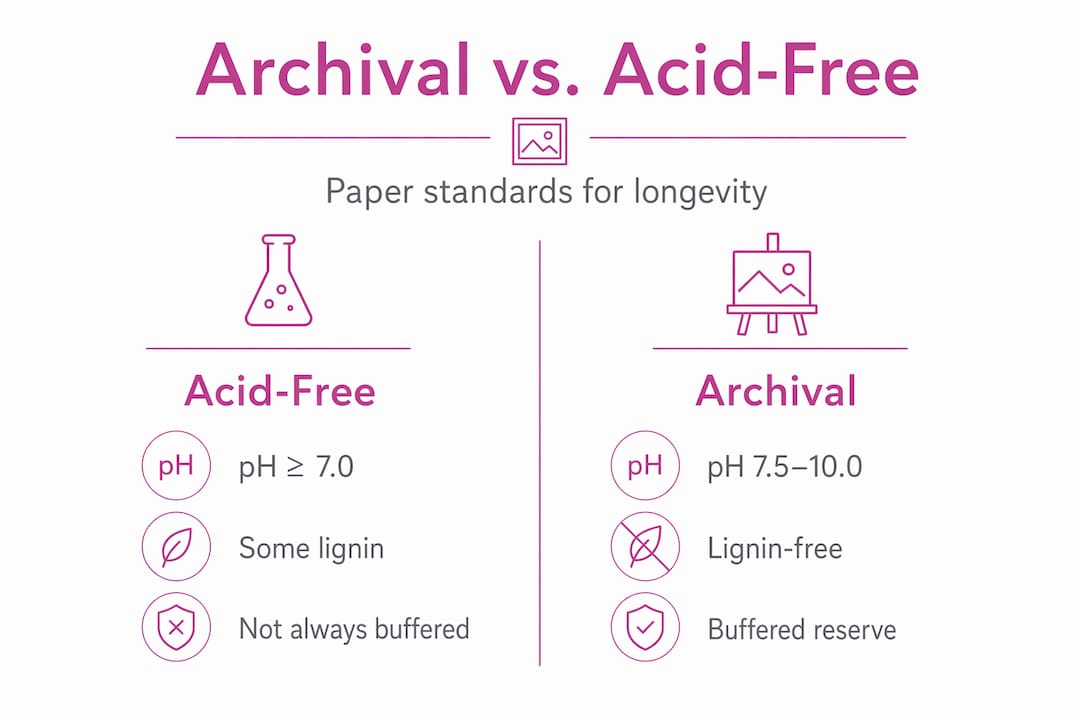
For collectors and artists who care about longevity, the investment is not only in finding good paper. It is in understanding what that paper requires to perform as intended, verifying claims with documentation, and building a care environment that supports the paper’s properties over time. Preservation for art print longevity is a system-level commitment, not a one-time product selection.
The transparent approach from galleries and suppliers is what the market should demand. Ask for documentation. Require specifications. Support sellers who provide both.
Preserve and display art with confidence
With expert insights on archival paper in hand, the next step is finding artworks produced to the same standard of quality and care.
At Eman’s Gallery, museum-quality canvas prints and framed archival prints are produced with attention to material quality and longevity. The gallery offers original handmade paintings and fine art prints across abstract, geometric, floral, landscape, seascape, and still-life subjects, created by artist Eman Khalifa and shipped worldwide. The Fragments of Memory canvas print is one example of a high-quality, lasting artwork ready to display. Explore the full collection to find original and print options suited to collectors, interior designers, and art enthusiasts who value both beauty and durability.
Frequently asked questions
How long does archival paper actually last?
True archival paper can last for decades to centuries if stored and handled properly, thanks to its permanent, acid-free, and buffered properties as defined under ISO 9706.
Is all acid-free paper archival?
No. Acid-free paper lacks the strict criteria for lignin content and buffering required for archival status. “Acid-free” and “archival/permanent” are related but not identical terms, with archival standards being significantly stricter.
Are there risks in using optical brightening agents (OBAs) in art paper?
Yes. OBAs cause long-term color shifts and white-point instability, which is why museum-grade archival papers specify OBA-free formulations for long-term color stability.
What else impacts the longevity of artwork on archival paper?
Longevity depends on proper handling, storage, and display, including reversible, acid-free framing and UV protection. Preventive conservation guidance identifies enclosures, storage conditions, and framing materials as equally critical factors.
How can I verify if a paper is archival for my fine art prints?
Ask for ISO 9706 or independent certification documentation and avoid generic “archival” claims without supporting data. Papers may be labeled “archival” without meeting any permanence standard unless verified certification is provided.
Recommended
- How to Store Art Prints & Preserve Quality - Eman’s Gallery
- Art Print Care: 40% Longer Life with Archival Methods
- Art Print Maintenance Workflow for Long-Lasting Beauty - Eman’s Gallery
- Canvas vs paper prints: choosing the best art for your space
Stay Connected
- ✨ Explore Eman Khalifa’s original art and fine art prints
- 📸 Follow Eman Khalifa’s art journey on: Instagram @emans_gallery and Facebook Eman’s Gallery
- 📹 Watch Eman Khalifa creating live art on: YouTube @emans_gallery
