


What is wall art: A 2026 guide to styles and home impact
Wall art transforms more than just blank walls. Studies reveal that thoughtfully chosen pieces can boost perceived comfort by 20%, fundamentally altering how you experience your home. Yet many homeowners struggle to understand what truly qualifies as wall art and which styles best serve their spaces. This guide clarifies wall art’s definition, explores popular styles from Bohemian to geometric, and delivers actionable tips for selecting and displaying pieces that elevate your living environment with confidence and creativity.
Table of Contents
- Understanding Wall Art And Its Impact On Your Home
- Popular Wall Art Styles And Their Unique Vibes
- How To Choose And Display Wall Art That Transforms Your Space
- The History And Evolving Role Of Wall Art In Interior Design
- Explore Original Wall Art At Eman’s Gallery
- FAQ
Key takeaways
| Point | Details |
|---|---|
| Wall art definition | Decorative pieces mounted on walls including paintings, prints, murals, and sculptures that enhance visual appeal. |
| Emotional influence | Art significantly impacts mood and atmosphere, creating personalized spaces that reflect individual style. |
| Popular styles | Bohemian, abstract, minimalist, and geometric styles each offer distinct vibes suited to different rooms. |
| Display strategy | Proper placement, scale, and lighting maximize visual impact and create cohesive gallery walls. |
| Historical context | Wall art evolved from 40,000-year-old murals to modern personal expression in contemporary homes. |
Understanding wall art and its impact on your home
Wall art encompasses any decorative piece mounted on walls, from paintings and prints to murals and three-dimensional sculptures. This definition extends beyond traditional canvases to include tapestries, metal installations, and mixed media works. Many assume wall art means only framed paintings, but the category spans diverse materials and formats that transform vertical surfaces into expressive focal points.
The psychological effects of wall art reach deeper than mere decoration. Research confirms that art influences emotional responses, with certain colors and compositions triggering specific moods. Warm tones energize spaces while cool palettes promote calm. Abstract patterns stimulate creativity, whereas landscapes evoke tranquility. Your brain processes these visual cues unconsciously, shaping how you feel in each room throughout the day.
Wall art significantly impacts the perceived aesthetic and emotional atmosphere of a space, influencing mood and visual interest.
Texture adds another dimension to wall art’s impact. Canvas weaves, brushstroke ridges, and sculptural elements create depth that flat prints cannot match. The role of texture in wall art becomes especially apparent under varied lighting, where shadows and highlights reveal surface complexity. This tactile quality invites closer inspection and sustains visual interest over time, preventing spaces from feeling static or one-dimensional.
Material choices further influence perception. Oil paintings project traditional elegance, while metal sculptures suggest modern sophistication. Reclaimed wood installations communicate rustic warmth, and acrylic pieces deliver contemporary vibrancy. Each material carries cultural associations that subtly communicate your design priorities and personal values to visitors, making material selection as important as subject matter when curating your collection.
Common misconceptions persist about wall art’s scope and purpose. Some believe expensive originals outperform quality prints, yet museum-grade reproductions deliver comparable visual impact at accessible prices. Others assume matching sets create cohesion, when thoughtfully curated eclectic collections often generate more dynamic energy. Understanding these nuances empowers you to make informed choices that align with both aesthetic goals and practical budgets.
Popular wall art styles and their unique vibes
Bohemian style celebrates eclectic freedom through vibrant colors, global patterns, and layered textures. This approach mixes vintage finds with handcrafted pieces, creating spaces that feel traveled and collected over time. Bohemian art’s popularity increased 10% recently as homeowners embrace personalized, non-traditional aesthetics that reject rigid design rules. The style thrives in informal living areas where relaxation and self-expression take priority over formal presentation.
Mural art represents humanity’s oldest decorative tradition, with the earliest examples dating 40,000 years to prehistoric cave paintings. Modern murals range from street art-inspired graphics to sophisticated trompe-l’oeil scenes that expand perceived space. These large-scale works make bold statements, transforming entire walls into immersive visual experiences that anchor room design and spark conversation among guests.
Abstract art liberates viewers from literal interpretation, inviting emotional responses through color, form, and composition alone. This style suits contemporary spaces where clean lines and conceptual thinking dominate. Expressionism intensifies emotional impact through distorted forms and dramatic color contrasts, perfect for creative studios or energizing workout rooms. Both styles offer flexibility in interpretation, allowing the same piece to resonate differently with various viewers.
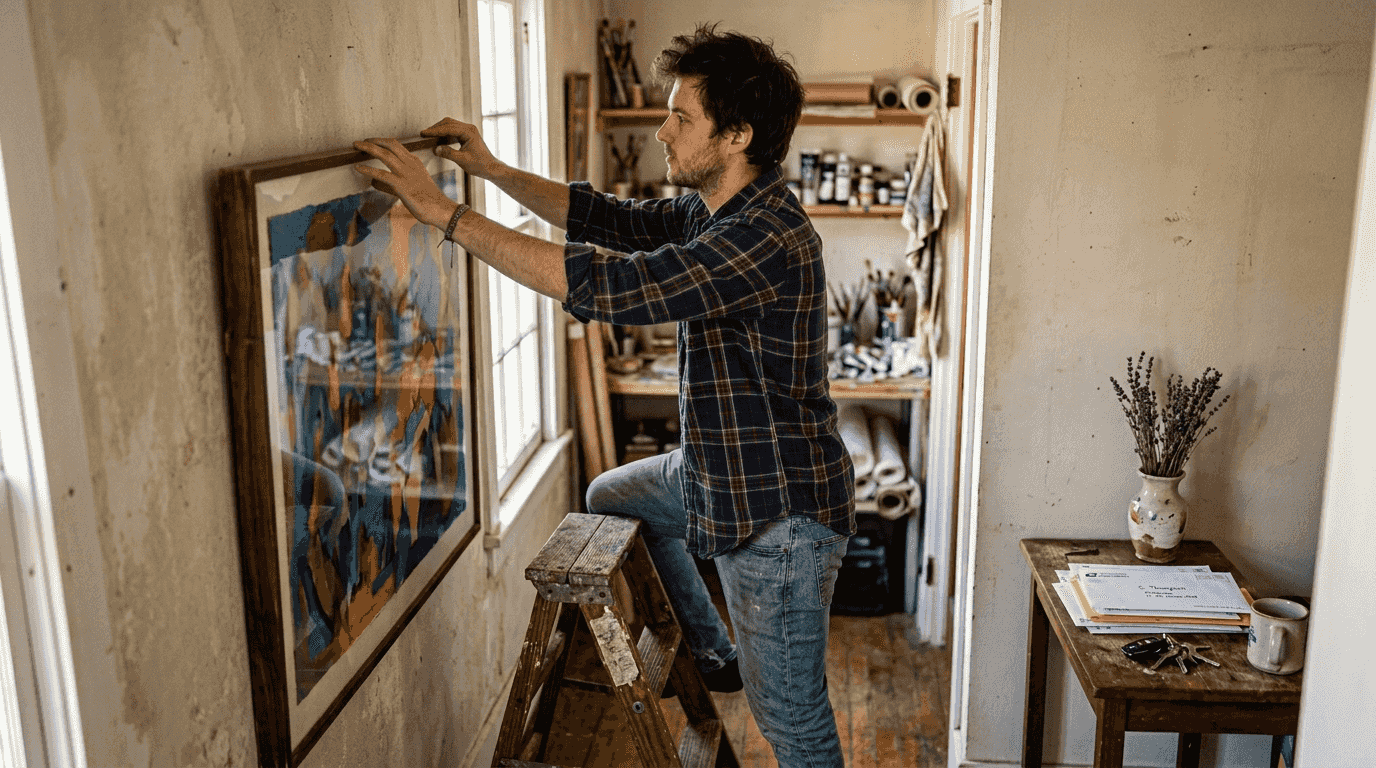
Minimalist art strips away excess, focusing attention on essential elements through restrained palettes and simple geometries. This approach complements modern interiors where negative space and intentional placement create visual breathing room. Geometric art employs mathematical precision and repeating patterns to generate rhythm and structure, appealing to analytical minds and spaces requiring organized visual energy like home offices or study areas.
Each style creates distinct atmospheric effects:
- Bohemian pieces generate warmth and approachability through layered complexity
- Murals establish dramatic focal points that define entire room characters
- Abstract works stimulate imagination and support varied interpretations
- Minimalist selections promote calm focus through visual simplicity
- Geometric designs impose order and rhythm on chaotic environments
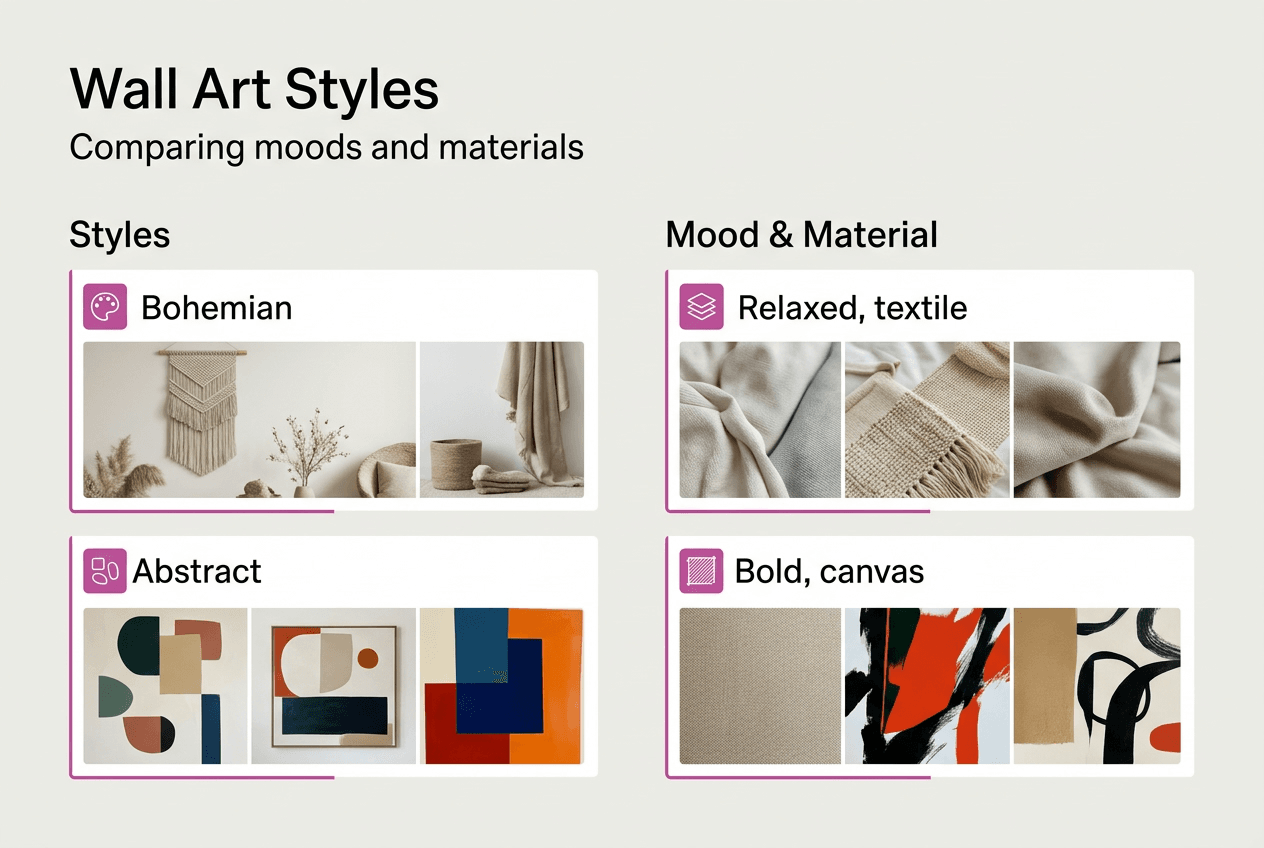
Comparing styles helps match art to specific room functions:
| Style | Primary Mood | Best Materials | Ideal Rooms |
|---|---|---|---|
| Bohemian | Relaxed, eclectic | Textiles, mixed media | Living rooms, bedrooms |
| Mural | Bold, immersive | Paint, wallpaper | Dining rooms, entryways |
| Abstract | Contemplative, open | Canvas, acrylic | Home offices, studios |
| Minimalist | Calm, focused | Metal, simple frames | Bedrooms, meditation spaces |
| Geometric | Structured, energetic | Wood, metal, canvas | Offices, kitchens |
Style choice reflects personal identity while serving functional purposes. A contemporary art guide reveals how mixing styles within cohesive color schemes prevents monotony without creating chaos. The key lies in identifying one dominant style that establishes overall tone, then introducing accent pieces from complementary movements to add depth and prevent predictability.
Proper style selection considers existing architecture and furnishings. Traditional homes accommodate classic landscapes and portraiture naturally, while modern constructions suit abstract and geometric works. Transitional spaces benefit from versatile styles like Bohemian that bridge formal and casual elements. Understanding how to hang wall art perfectly ensures chosen styles display at their best, maximizing intended atmospheric effects.
How to choose and display wall art that transforms your space
Selecting wall art begins with assessing room function and existing design elements. Follow this systematic approach:
- Identify the room’s primary purpose and desired emotional tone
- Analyze existing color schemes to determine complementary or contrasting art palettes
- Measure wall dimensions to establish appropriate scale parameters
- Consider lighting conditions including natural and artificial sources
- Define budget ranges for originals versus prints
- Evaluate personal style preferences against household member input
- Research artists and movements that align with identified criteria
- Select pieces that balance aesthetic appeal with functional requirements
Placement strategy dramatically affects visual impact. The standard guideline positions art centers at 57 to 60 inches from the floor, aligning with average eye level. This height works for most spaces, but adjustments suit specific contexts. Hang pieces slightly lower in rooms where viewers sit frequently, like dining areas. Raise art in hallways where people stand while viewing.
Lighting transforms how colors and textures appear throughout the day. Natural light shifts with seasons and weather, affecting warm and cool tones differently. Position light-sensitive works away from direct sunlight to prevent fading. Install picture lights or track lighting to maintain consistent illumination during evening hours, ensuring pieces remain focal points regardless of time.
Pro Tip: Measure your wall art and furniture together to maintain proper scale relationships. Large sofas require substantial pieces or grouped arrangements to avoid looking unbalanced, while petite furniture pairs better with smaller works or vertical orientations that draw eyes upward.
Gallery walls offer creative freedom but demand careful planning. Start by arranging pieces on the floor to test layouts before committing to nail holes. Maintain consistent spacing between frames, typically 2 to 3 inches, to create visual cohesion. Mix frame styles and art sizes deliberately, ensuring variety serves composition rather than creating random clutter. A detailed gallery wall checklist streamlines this process.
Small spaces require strategic thinking to maximize impact without overwhelming limited square footage. Displaying art in small spaces succeeds when you choose one statement piece rather than multiple competing works. Vertical orientations emphasize ceiling height, making compact rooms feel more spacious. Mirrors and reflective surfaces multiply visual interest by creating depth through reflection.
Common pitfalls undermine even thoughtful selections. Avoid hanging art too high, which disconnects pieces from surrounding furniture and human interaction. Resist matching art exactly to throw pillows or accessories, as this approach feels contrived rather than curated. Skip overcrowding walls with excessive pieces that compete for attention instead of creating harmonious dialogue. Recognize that empty wall space serves compositional purposes, providing visual rest between focal points.
Color coordination requires nuance beyond simple matching. Pull accent colors from existing textiles and furnishings, but introduce unexpected hues that energize rather than duplicate. Monochromatic schemes benefit from varied textures and tonal ranges within single color families. Complementary color pairings generate dynamic tension, while analogous combinations create soothing flow. Test how art colors interact with wall paint under different lighting before final installation.
Framing decisions affect overall presentation as much as the artwork itself. Simple frames suit bold, complex pieces that need minimal competition. Ornate frames elevate traditional works and add gravitas to formal spaces. Floating frames create modern sophistication by suspending art within transparent borders. Mat boards introduce breathing room around smaller pieces, preventing them from appearing lost on large walls.
The history and evolving role of wall art in interior design
Wall art’s origins trace to prehistoric humans who decorated cave walls with pigments and natural materials. These 40,000-year-old murals served ritualistic and communicative purposes, establishing art’s foundational role in human expression. Ancient civilizations expanded techniques, with Egyptians creating tomb paintings and Romans developing fresco methods that adorned public buildings and private villas.
Historical progression reveals how social changes shaped artistic movements:
| Era | Dominant Style | Key Characteristics | Cultural Driver |
|---|---|---|---|
| Prehistoric | Cave paintings | Natural pigments, animal subjects | Spiritual ritual, storytelling |
| Classical | Frescoes, mosaics | Mythological themes, architectural integration | Religious devotion, status display |
| Renaissance | Oil paintings | Realistic perspective, human-centered | Humanism, scientific inquiry |
| Modern | Abstract, conceptual | Non-representational forms | Industrialization, individualism |
| Contemporary | Mixed media, digital | Diverse materials, global influences | Technology, cultural fusion |
The Renaissance revolutionized wall art through oil painting techniques that enabled unprecedented realism and emotional depth. Wealthy patrons commissioned portraits and religious scenes that demonstrated cultural sophistication and spiritual devotion. Art became status currency, with collection quality signaling social position and intellectual refinement. This association between art ownership and prestige persists in contemporary luxury markets.
Industrial revolution technologies democratized art access. Lithography enabled mass production of quality prints, bringing visual culture to middle-class homes previously limited to elite circles. Photography further expanded possibilities, capturing reality with mechanical precision that freed painters to explore abstraction and emotional expression. These technological shifts fundamentally altered who could display art and what subjects merited representation.
Twentieth-century movements rejected traditional constraints, embracing experimentation and conceptual thinking. Abstract Expressionism prioritized emotional spontaneity over literal representation. Pop Art elevated commercial imagery to fine art status. Minimalism stripped away decorative excess. Each movement reflected broader cultural conversations about meaning, value, and beauty in rapidly changing societies navigating technological acceleration and social upheaval.
Contemporary wall art serves primarily personal expression rather than status signaling or religious devotion. Homeowners curate collections reflecting individual experiences, travels, and values. The gallery wall trend exemplifies this shift, mixing professional works with family photos and found objects in arrangements that tell personal narratives. This democratization empowers everyone to become curator of their own visual environment.
Digital technology continues reshaping wall art’s future. Projection mapping transforms walls into dynamic canvases. Augmented reality layers virtual art onto physical spaces. Online galleries connect artists directly with global buyers, bypassing traditional gatekeepers. These innovations expand creative possibilities while maintaining art’s core function as emotional connector and aesthetic enhancer in spaces where we live, work, and gather.
Explore original wall art at Eman’s Gallery
Transform your understanding into action by discovering curated collections that bring these principles to life. Eman’s Gallery offers original handmade paintings and museum-quality prints across abstract, geometric, floral, landscape, and still-life styles. Each piece reflects artist Eman Khalifa’s commitment to craftsmanship and emotional resonance.
Browse distinctive works like Good Tidings Original for vibrant energy or explore the complete wall art prints collection for accessible options. Pieces like Nocturned Original demonstrate how contemporary art elevates everyday spaces into personal sanctuaries. Worldwide shipping from multiple international locations ensures your selected works arrive ready to transform your walls into expressions of individual style and refined taste.
FAQ
What is the best type of wall art for small rooms?
Smaller scale prints or single statement pieces work best in small rooms to avoid visual clutter and overwhelming limited wall space. Using vertical orientation adds perceived height, making compact rooms feel more expansive. Strategic placement on focal walls creates impact without crowding, and choosing lighter colors helps maintain an airy atmosphere. Learn more about displaying art in small spaces for maximum effect.
How do I care for and maintain wall art?
Regular dusting with a soft, dry cloth preserves colors and prevents buildup that dulls finishes over time. Avoid placing art in direct sunlight, which fades pigments and damages materials through UV exposure. Proper framing with UV-protective glass and stable hanging hardware reduces damage risks from environmental factors. Maintain consistent humidity levels to prevent canvas warping or paper deterioration in original works.
Can wall art improve my mental well-being?
Art creates visually pleasing environments that boost comfort and positively influence mood through color psychology and compositional harmony. Choosing art styles and color palettes aligned with desired emotional states tailors these effects to personal needs. Calming landscapes reduce stress in bedrooms, while energizing abstracts stimulate creativity in workspaces. The act of curating meaningful collections also provides psychological benefits through self-expression and environmental control.
How many pieces should I include in a gallery wall?
Gallery walls typically feature 5 to 15 pieces depending on available wall size and desired visual density. Odd numbers create more dynamic compositions than even groupings, with 7 or 9 pieces offering balanced variety. Start with a central anchor piece, then build outward maintaining consistent spacing between frames. Test arrangements on the floor before hanging to ensure cohesive flow and proper scale relationships across the entire composition.
Should I match wall art to my furniture colors?
Pull accent colors from art into accessories rather than matching furniture directly to avoid overly coordinated looks that feel staged. Art should complement existing palettes while introducing fresh hues that energize spaces and prevent monotony. Consider undertones in furniture finishes when selecting art, ensuring warm or cool color temperatures align. Allow art to serve as the room’s focal point rather than blending into background elements through exact color matching.
Recommended
- Contemporary Wall Art Explained: Full Overview - Eman’s Gallery
- Why Gallery Walls Stay Popular: 65% Embrace Personal Style
- How to hang wall art perfectly: expert tips for 2026
- Gallery Wall Style: Transforming Spaces With Art - Eman’s Gallery
Stay Connected
- ✨ Explore Eman Khalifa’s original art and fine art prints
- 📸 Follow Eman Khalifa’s art journey on: Instagram @emans_gallery and Facebook Eman’s Gallery
- 📹 Watch Eman Khalifa creating live art on: YouTube @emans_gallery
