


What is art therapy: a modern guide to healing creativity
Art therapy is a scientifically validated psychotherapeutic approach that combines creative expression with psychological healing to address mental health challenges. Unlike traditional talk therapy, this practice engages brain networks through active art-making guided by trained professionals. Research demonstrates that art therapy reconfigures neural connectivity, modulating the default mode, salience, and central executive networks to support emotion regulation and trauma recovery. This guide explores the mechanisms, frameworks, and practical applications that make art therapy an effective complement to conventional mental health treatment.
Table of Contents
- Understanding What Art Therapy Is And How It Works
- Frameworks And Modalities In Art Therapy: The Expressive Therapies Continuum
- Efficacy And Cultural Considerations In Art Therapy
- Practical Applications And Customizing Art Therapy To Client Needs
- Explore Unique Original Artwork For Your Well-Being
Key takeaways
| Point | Details |
|---|---|
| Active art-making process | Art therapy involves creating visual art with a trained therapist, not simply viewing or discussing art. |
| Brain network modulation | The practice alters connectivity in default mode, salience, and central executive networks to support healing. |
| Expressive Therapies Continuum | The ETC framework guides therapists in selecting personalized interventions across four processing modalities. |
| Strong PTSD evidence | Creative arts interventions show significant symptom reduction particularly in non-Western populations. |
| Cultural adaptability | Therapists adjust materials, modalities, and approaches based on client background and developmental needs. |
Understanding what art therapy is and how it works
Art therapy operates as a distinct psychotherapeutic intervention requiring active participation from both client and trained art therapist. The therapeutic relationship forms the foundation, but the art-making process itself drives neurobiological and psychological change. Unlike art classes or recreational painting, this modality targets specific mental health outcomes through carefully structured creative activities.
The healing mechanisms occur at multiple levels. Neurobiological reconfiguration of brain networks represents the most profound change, with functional connectivity shifts observable in regions controlling emotion regulation, self-identity, and social cognition. The default mode network, typically associated with self-referential thinking and rumination, shows altered activation patterns during and after art therapy sessions. The salience network, which determines what stimuli deserve attention, becomes more responsive to positive emotional cues. The central executive network, governing cognitive control and decision-making, demonstrates improved efficiency.
These neural changes translate into tangible psychological benefits:
- Enhanced emotion regulation capacity allowing clients to process difficult feelings without becoming overwhelmed
- Strengthened sense of self-identity through visual representation of internal experiences
- Improved interpersonal neural synchrony during collaborative art-making sessions
- Cognitive restructuring as clients reframe traumatic memories through creative expression
Painting specifically offers unique therapeutic advantages. The medium facilitates non-verbal communication for clients who struggle to articulate trauma or complex emotions verbally. Fluid paints like watercolors encourage emotional release, while resistive media like oil paints support containment and control. The visual permanence of paintings creates tangible evidence of progress and transformation.
“Art therapy addresses both psychological symptoms and underlying neural dysfunction, making it a comprehensive intervention for complex mental health conditions.”
This dual-action approach explains why art therapy complements traditional treatments so effectively. While medication may address neurochemical imbalances and talk therapy processes cognitive patterns, art therapy engages sensorimotor and visual processing systems often bypassed by conventional approaches. For individuals seeking art for well-being and mental health, understanding these mechanisms clarifies how creative engagement supports psychological healing.
Frameworks and modalities in art therapy: the expressive therapies continuum
The Expressive Therapies Continuum provides art therapists with a systematic framework for assessment, treatment planning, and intervention selection. Developed to understand how individuals process experience through artmaking, the ETC describes four key modalities: Creative (CR), Cognitive/Symbolic (C-Sy), Perceptual/Affective (P-A), and Kinesthetic/Sensory (K-S). Each modality engages different aspects of human experience and nervous system functioning.

The Kinesthetic/Sensory level represents the most foundational processing mode. Clients engage with physical properties of materials through touch, movement, and sensory exploration. This modality activates body-based awareness and can help regulate aroused nervous systems. Clay manipulation, finger painting, or large-scale brush strokes exemplify kinesthetic engagement.
Perceptual/Affective processing involves noticing visual qualities and emotional responses. Clients attend to colors, shapes, textures, and the feelings these elements evoke. This level bridges sensory experience with emotional awareness, making it valuable for clients developing affect tolerance.
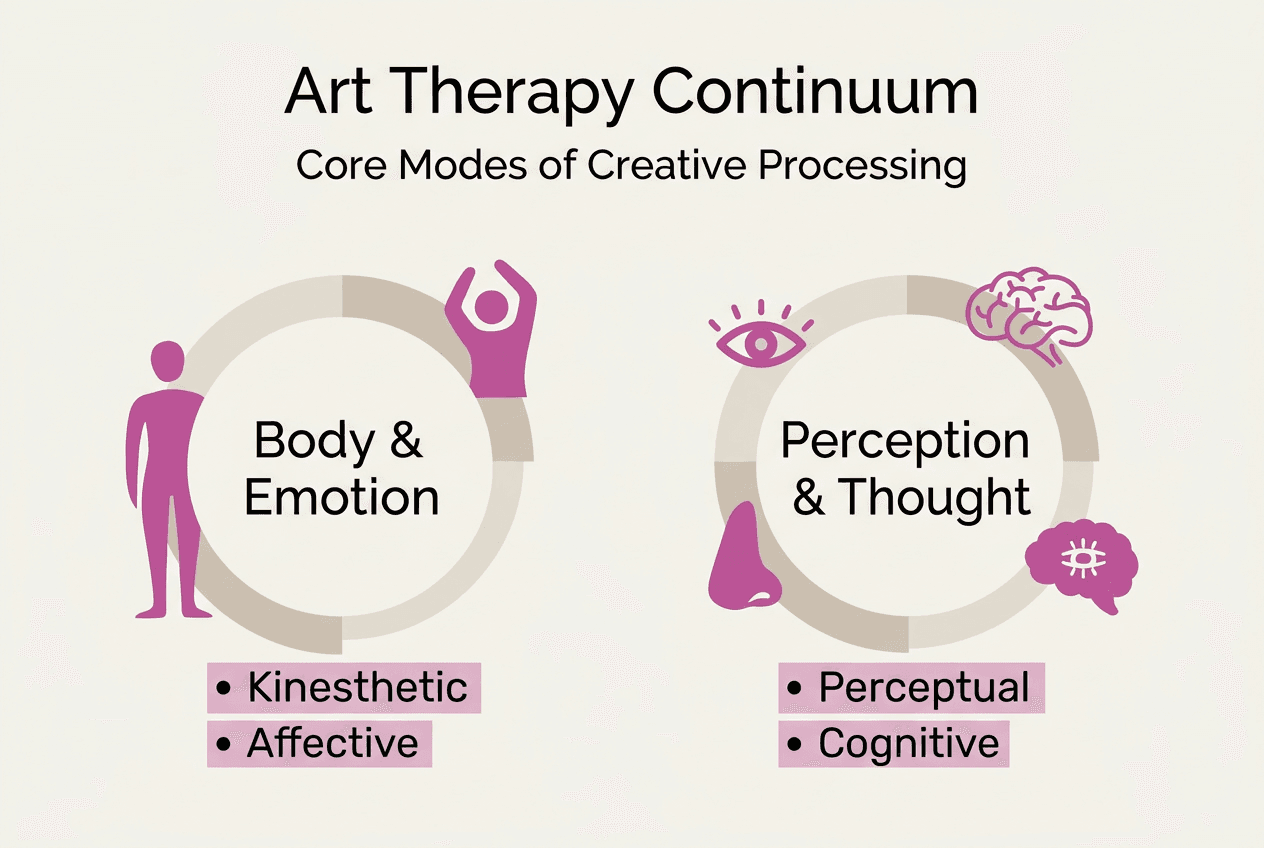
Cognitive/Symbolic functioning engages analytical thinking and meaning-making. Clients plan compositions, solve visual problems, and create symbolic representations of concepts or experiences. This modality supports executive functioning and abstract reasoning.
The Creative level represents integrated processing where spontaneity and intentionality merge. Clients access flow states, combining multiple modalities fluidly without rigid adherence to plans or rules. This integration often signals therapeutic progress.
| Modality | Primary Function | Therapeutic Application |
|---|---|---|
| Kinesthetic/Sensory | Body-based awareness and regulation | Calming aroused nervous systems, grounding dissociated clients |
| Perceptual/Affective | Emotional recognition and tolerance | Building affect awareness, processing feelings safely |
| Cognitive/Symbolic | Planning and meaning-making | Developing executive function, creating trauma narratives |
| Creative | Integrated spontaneous expression | Accessing flow states, demonstrating therapeutic progress |
Therapists select modalities based on client presentation and nervous system state. A hyperaroused client benefits from kinesthetic activities that discharge energy, while a hypoaroused client needs perceptual stimulation to increase engagement. Media properties influence these selections significantly. Fluid materials like watercolors or thin tempera paints encourage emotional expression and kinesthetic movement. Resistive materials like pastels or thick acrylics require more cognitive control and planning.
Task complexity and structure also shape therapeutic outcomes. Open-ended directives like “paint your feelings” suit clients with good affect tolerance and self-regulation. Structured tasks like “create a mandala using three colors” provide containment for clients who need external organization. Therapists adjust these parameters session by session, responding to client feedback and observable progress.
Pro Tip: Therapists often begin with lower ETC levels (kinesthetic/sensory or perceptual/affective) for trauma survivors, gradually introducing cognitive/symbolic work as clients develop greater stability and integration.
The framework’s flexibility supports diverse populations and conditions. Clients move between modalities as therapy progresses, with self-actualization through art emerging as various processing modes integrate. This responsiveness distinguishes art therapy from rigid protocols, allowing personalized pacing that honors each client’s unique healing timeline.
Efficacy and cultural considerations in art therapy
Empirical research validates art therapy’s effectiveness across multiple mental health conditions and populations. The strongest evidence supports interventions for PTSD, anxiety disorders, depression, and complex trauma. A 2025 meta-analysis found that creative arts interventions significantly reduced PTSD symptoms in young people, with particularly large effect sizes observed in West African and Middle Eastern samples compared to Western populations.
This geographic variation reveals important cultural dimensions. Western therapeutic models emphasize verbal processing and individual introspection, approaches that may not align with collectivist cultures prioritizing community connection and non-verbal expression. Art therapy’s inherent flexibility allows adaptation to diverse cultural contexts, making it accessible across populations where talk therapy faces acceptance barriers.
Community art therapy demonstrates these cultural strengths. Research on community-based interventions shows that group art-making promotes social integration, rebuilds trust in fractured communities, and provides emotional support through shared creative experience. Refugees, disaster survivors, and marginalized groups benefit from collective art projects that honor cultural identity while processing shared trauma.
| Population | Primary Benefits | Cultural Considerations |
|---|---|---|
| West African youth | Large PTSD symptom reduction | Community-oriented interventions align with collectivist values |
| Middle Eastern samples | Significant anxiety relief | Art-making bypasses verbal processing barriers in traditional cultures |
| Western populations | Moderate symptom improvement | Individual-focused approaches match cultural expectations |
| Refugee communities | Social integration and trust rebuilding | Group formats honor collective healing traditions |
Beyond PTSD and trauma, art therapy adapts effectively to developmental and personality conditions:
- ADHD: Kinesthetic art activities channel hyperactivity productively while building focus
- Autism spectrum: Visual communication reduces reliance on challenging verbal exchanges
- Grief and loss: Symbolic representation helps process complex bereavement emotions
- Narcissistic traits: Creative exploration can soften rigid self-concepts without direct confrontation
Therapist cultural competence significantly impacts outcomes. Practitioners must understand how different cultures view mental health, artistic expression, and therapeutic relationships. Materials selection carries cultural weight. Some traditions associate specific colors with mourning or celebration, requiring therapist awareness to avoid inadvertent distress. Directive phrasing matters too, as hierarchical cultures may expect more structured guidance than egalitarian societies.
“Cultural context shapes not only what art therapy addresses but how interventions are delivered, requiring therapists to adapt frameworks while maintaining therapeutic integrity.”
The evidence base continues expanding. Researchers are investigating optimal session frequency, duration, and specific modality matches for various diagnoses. Current gaps include limited randomized controlled trials comparing art therapy to established treatments and insufficient data on long-term outcomes. However, existing research supports art therapy as a valuable component of comprehensive mental health care, particularly for populations underserved by conventional approaches. Understanding why art matters across cultures provides broader context for these therapeutic applications.
Practical applications and customizing art therapy to client needs
Effective art therapy requires continuous therapist responsiveness to client presentation, history, and current functioning. Practitioners assess multiple factors before selecting materials and modalities: developmental stage, trauma history, emotion regulation capacity, cultural background, and nervous system state. This assessment informs personalized intervention plans that evolve throughout treatment.
Clients with developmental differences like autism or ADHD often benefit from starting with kinesthetic and perceptual modalities. A therapist might offer clay for tactile exploration or large-scale painting for whole-body movement. These body-based activities build sensory integration and self-regulation before introducing cognitive demands. As clients develop greater stability, therapists gradually incorporate symbolic work that supports abstract thinking and meaning-making.
Trauma survivors require particularly careful customization. Initial sessions typically emphasize safety and stabilization through structured, predictable activities. A therapist might provide pre-drawn mandalas for coloring or guided imagery painting with clear boundaries. These contained experiences prevent overwhelming activation while building trust in the therapeutic relationship. Later phases introduce more open-ended exploration as clients develop resources for processing traumatic material.
Case examples illustrate this progression. One therapist described working with a client experiencing relationship difficulties and emotional dysregulation. Initial cognitive approaches (planning compositions, discussing symbolism) yielded limited progress. Shifting to body-based art activities like large gestural painting and clay manipulation increased emotional access dramatically. The client reported feeling more connected to authentic feelings and subsequently developed healthier relationship patterns.
Another example involved a young adult with narcissistic traits and rigid self-concept. Direct verbal challenges to grandiosity triggered defensiveness. Creative exploration through abstract painting allowed gradual softening without confrontation. The unpredictable nature of fluid paints introduced flexibility, while the therapist’s non-judgmental presence during art-making modeled acceptance of imperfection.
Therapist flexibility extends beyond modality selection to include:
- Adjusting session structure based on client energy and focus capacity
- Modifying material properties (diluting paints for more flow, adding texture for resistance)
- Varying directive specificity from open prompts to detailed instructions
- Balancing art-making time with verbal processing according to client preference
- Incorporating client cultural practices and aesthetic traditions into therapeutic work
Pro Tip: Observe how clients naturally engage with materials during initial sessions, noting whether they seek control or spontaneity, prefer planning or improvisation, and respond to structure or openness. These patterns guide modality selection.
Client safety remains paramount throughout customization. Therapists monitor for signs of overwhelm, dissociation, or excessive activation. If a client becomes dysregulated during emotional art-making, the therapist might shift to grounding activities or introduce more structured tasks. This responsiveness prevents retraumatization while maintaining therapeutic momentum.
Progress occurs gradually at each client’s unique pace. Some individuals show rapid symptom improvement, while others require extended stabilization before deeper processing begins. The art therapy approach to well-being honors this variability, recognizing that healing timelines reflect individual differences rather than treatment failure. Therapists celebrate small gains like increased affect tolerance, expanded emotional vocabulary, or willingness to experiment with new materials. These incremental changes accumulate into meaningful transformation.
The therapeutic relationship provides the container for all customization efforts. Clients need to feel seen, understood, and accepted to engage authentically in creative exploration. Therapists cultivate this safety through consistent presence, genuine interest in client experience, and collaborative treatment planning. When clients trust the relationship, they risk vulnerability in art-making, accessing material unavailable through purely cognitive approaches. This combination of personalized intervention and relational safety distinguishes effective art therapy from generic creative activities, supporting self-actualization through structured therapeutic engagement.
Explore unique original artwork for your well-being
After discovering how art therapy supports mental health through structured creative engagement, consider how integrating meaningful artwork into your environment can complement your wellness journey. Eman’s Gallery offers original paintings that blend therapeutic themes with visual beauty, providing daily inspiration and emotional connection.
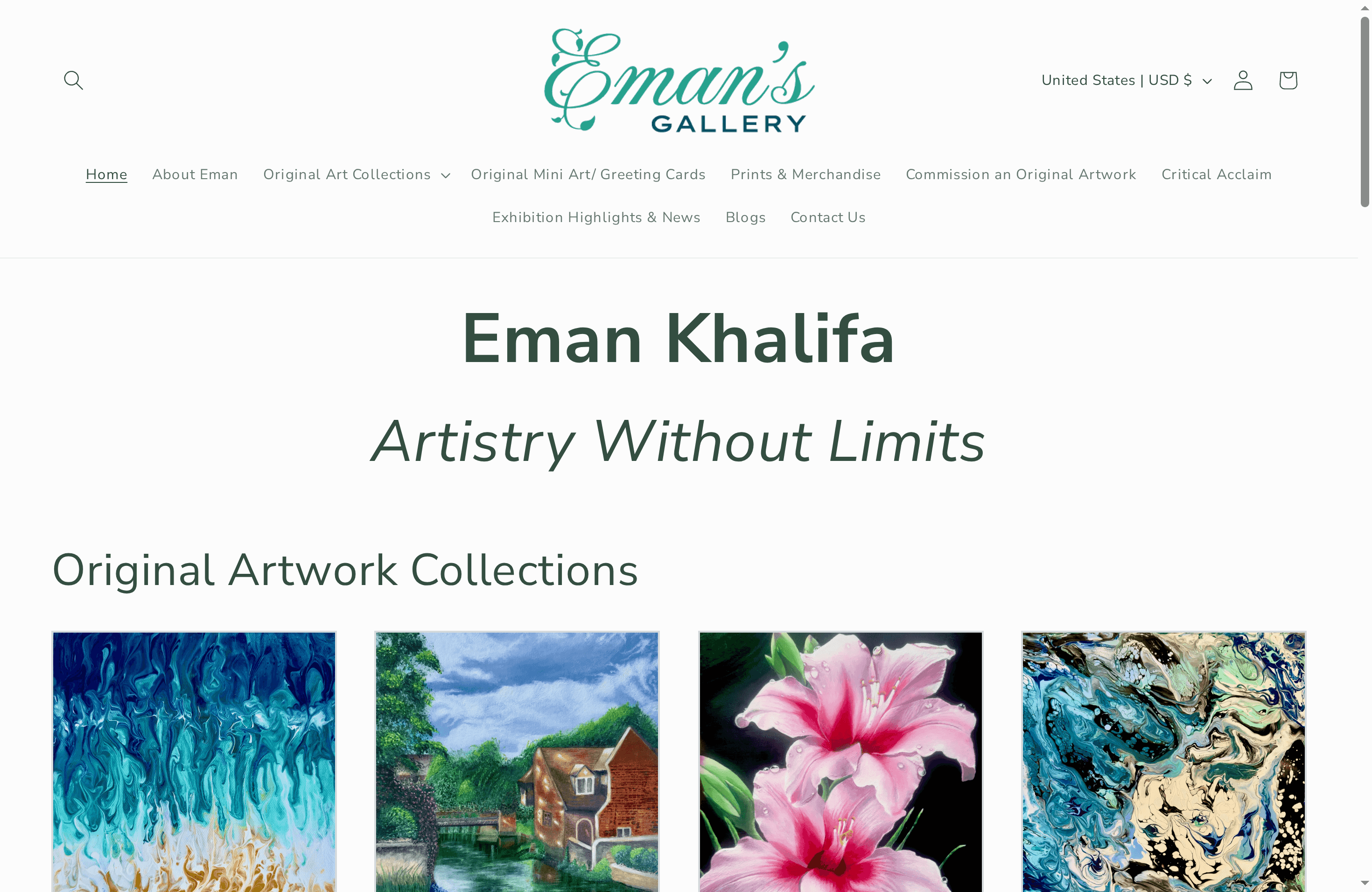
Discover pieces like Good Tidings, an original painting featuring fluid, uplifting forms that evoke hope and renewal. The abstract composition invites personal interpretation, much like therapeutic art-making encourages self-discovery. For those drawn to contemplative imagery, Nocturned offers deep, evocative tones that create calming visual anchors in your space.
If original paintings exceed your current budget, explore museum-quality wall art prints that bring the same artistic vision into your home at accessible price points. Engaging with art as a viewer, while distinct from therapeutic art-making, still supports mental wellness by providing visual stimulation, emotional resonance, and aesthetic pleasure. Building a personal art collection that reflects your journey creates an environment supporting ongoing well-being and creative inspiration.
Frequently asked questions
What conditions does art therapy treat most effectively?
Art therapy shows strongest evidence for PTSD, anxiety disorders, depression, and complex trauma, with particularly large effects in non-Western populations. It also adapts well to developmental conditions like ADHD and autism, grief processing, and personality-related challenges requiring non-confrontational approaches.
Do I need artistic skill to benefit from art therapy?
No artistic experience or talent is required for art therapy. The therapeutic value comes from the process of creating and exploring, not the aesthetic quality of finished products. Therapists select activities matching your current abilities and comfort level, gradually introducing new challenges as appropriate.
How do therapists choose which art materials to use?
Therapists assess your developmental stage, trauma history, emotion regulation capacity, and current nervous system state. Fluid materials like watercolors encourage emotional expression, while resistive media like pastels support control and containment. Material selection aligns with therapeutic goals and your processing needs.
Can art therapy work in group or community settings?
Yes, community art therapy effectively promotes social integration, trust rebuilding, and emotional support through shared creative experience. Group formats particularly benefit refugees, disaster survivors, and marginalized populations, honoring collective healing traditions while addressing individual needs within supportive contexts.
How does cultural background affect art therapy approaches?
Cultural context shapes intervention delivery, material selection, and therapeutic relationship dynamics. Therapists adapt frameworks to align with collectivist versus individualist values, verbal versus non-verbal communication preferences, and cultural associations with colors, symbols, and artistic expression while maintaining therapeutic integrity.
What is the typical duration of art therapy treatment?
Treatment length varies based on presenting concerns, goals, and individual progress. Some clients experience symptom relief within weeks, while complex trauma or developmental conditions may require months or years of consistent engagement. Therapists collaborate with you to establish realistic timelines and adjust as healing unfolds.
Recommended
- Art for well-being: How art improves mental health
- Why Art Boosts Creativity: Transforming Modern Spaces
- Why Art Matters – Impact on Culture and Wellbeing - Eman’s Gallery
- Why Display Art at Home: Transforming Modern Spaces
- How to Prepare Artwork for Print: Step-by-Step Success Guide
Stay Connected
- ✨ Explore Eman Khalifa’s original art and fine art prints
- 📸 Follow Eman Khalifa’s art journey on: Instagram @emans_gallery and Facebook Eman’s Gallery
- 📹 Watch Eman Khalifa creating live art on: YouTube @emans_gallery
