


Watercolor painting: A complete guide to techniques and styles
TL;DR:
- Watercolor is a challenging, luminous medium that requires precise technique, material knowledge, and acceptance of unpredictability. It relies on layered transparent washes, with paper reservation creating highlights instead of white paint, producing a unique glow. Mastery involves guiding the medium’s natural behaviors rather than forcing control, embracing accidents as creative opportunities.
Watercolor is often dismissed as a beginner’s medium, the kind of paint set handed to children on rainy afternoons. That reputation could not be further from the truth. As a painting medium where pigment is suspended in a water-based solution and applied with water, watercolor demands precise timing, deep material knowledge, and a willingness to work with unpredictable results. This guide covers the core concepts, essential techniques, material choices, and texture effects that define watercolor painting, giving beginners a solid foundation and enthusiasts a detailed reference for continued growth.
Table of Contents
- Defining watercolor painting: Core concepts and ingredients
- Essential watercolor techniques: Washes, edges, and layering
- Paper, pigments, and why materials matter
- Texture effects: Granulation, blooms, and watercolor’s magic
- Watercolor in practice: Finding your style and next steps
- The real secret behind watercolor mastery
- Explore original watercolor art and resources
- Frequently asked questions
Key Takeaways
| Point | Details |
|---|---|
| Unique painting medium | Watercolor paint uses pigment, binder, and water to create translucent, expressive artworks. |
| Core techniques matter | Mastering washes, edges, and layering is crucial for success in watercolor painting. |
| Materials shape results | Paper texture and pigment properties have a major impact on watercolor effects. |
| Texture effects add depth | Granulation and blooms create lively surfaces that characterize watercolor’s visual magic. |
| Embrace creative flow | Flexibility and openness to ‘happy accidents’ help artists grow their technique and personal style. |
Defining watercolor painting: Core concepts and ingredients
Watercolor’s signature look, those luminous, transparent washes of color, comes directly from its chemistry. Understanding what’s inside the paint tube helps explain why the medium behaves the way it does and why it differs so dramatically from oil or acrylic.
At its most basic level, watercolor paint contains three components working together:
| Ingredient | Role in the paint |
|---|---|
| Pigment | Provides color; determines staining strength and granulation behavior |
| Gum arabic (binder) | Holds pigment particles together and adheres them to paper |
| Water (solvent) | Dilutes the mixture, controls transparency and flow |
Unlike acrylic paint, which dries through a chemical process and becomes permanently opaque, watercolor remains water-soluble even after drying. This means you can reactivate dried paint on your palette or even lift color from paper if you act quickly enough. Oil paint builds form through thick, layered application. Watercolor works in the opposite direction, revealing form through absence, using the white of the paper as the lightest value in a composition.
“Watercolor’s defining quality is its translucency: light passes through the paint film, reflects off the paper surface, and travels back through the paint again, creating a luminous glow that no opaque medium can fully replicate.”
This optical phenomenon is why collectors and artists alike are drawn to the medium. The luminosity is built into the physics of how light interacts with thin pigment layers. Learning to use a range of painting techniques helps you take full advantage of this quality rather than fighting against it.
Key characteristics that set watercolor apart:
- Transparency: Layers are built up without losing the glow from the paper beneath
- Flexibility: Dried paint can be reactivated or lifted, giving artists correction options
- Luminosity: Light reflects off the paper through the pigment, producing a unique visual depth
- Unpredictability: Water moves, bleeds, and carries pigment in ways that require adaptation
Essential watercolor techniques: Washes, edges, and layering
Once you understand the basic formula, exploring how the paint is applied on paper is the next step toward mastery. Defining methodology in watercolor centers on washes and edge effects that are controlled by whether the paper is wet, damp, or dry. The same pigment produces radically different results depending on the paper’s moisture level at the time of application.
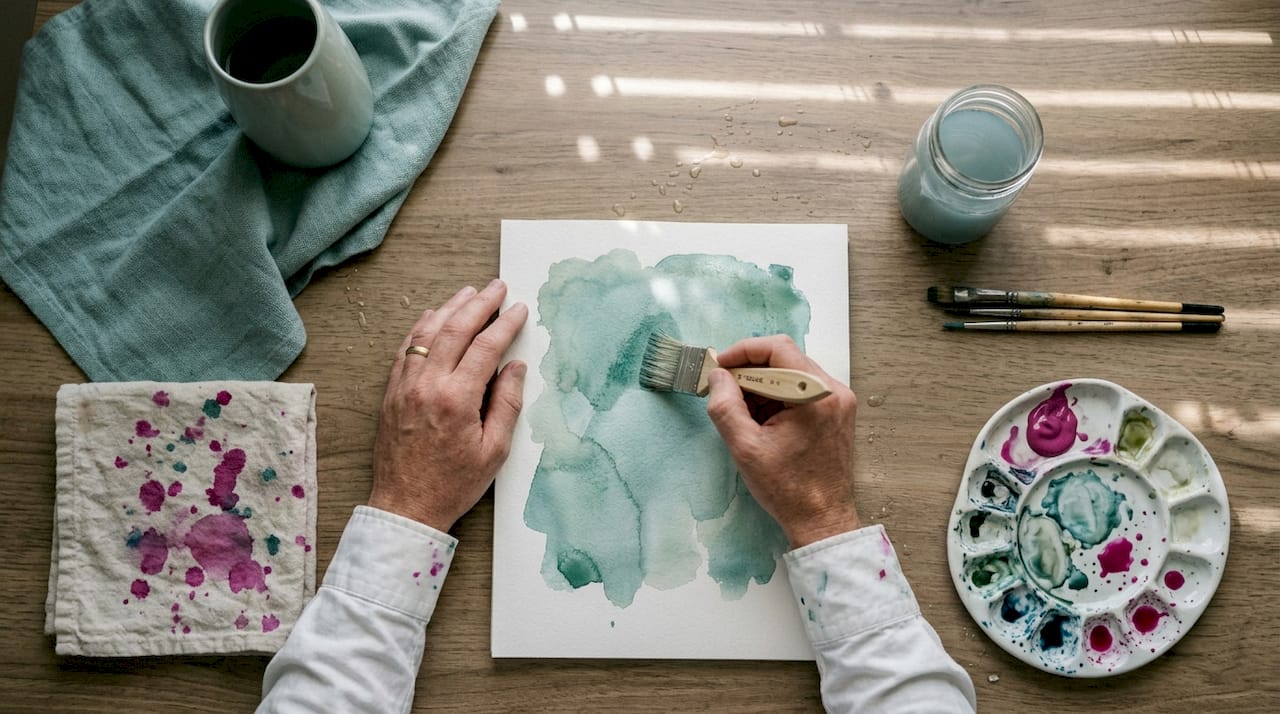
The three core techniques compared:
| Technique | Paper condition | Resulting effect |
|---|---|---|
| Wet-on-wet | Pre-wetted paper | Soft, diffused edges; atmospheric blending |
| Wet-on-dry | Dry paper | Crisp, defined edges; precise detail work |
| Glazing | Dry previous layer | Transparent color buildup; optical depth |
Step-by-step application for each technique:
-
Wet-on-wet: Brush clean water across the paper surface evenly. Wait 30 to 60 seconds until the sheen dulls slightly. Load your brush with a fairly saturated wash and touch it to the wet surface. Watch the pigment bloom and spread naturally. Add a second color while the first is still wet for soft blending without hard lines.
-
Wet-on-dry: Work on completely dry paper. Load your brush with a consistent pigment-to-water ratio and apply in confident strokes. Lift the brush cleanly at the end of each stroke to avoid backruns. The paint will stay where you put it, giving you full control over shape and edge.
-
Glazing: Allow your first layer to dry completely, which typically takes 10 to 20 minutes depending on humidity. Mix a transparent color wash and apply it smoothly over the dry layer. Avoid scrubbing or reworking the glaze, as this can lift the layer beneath. Repeat with additional layers once each one dries, and notice how the colors interact optically rather than blending physically on the palette. Glazing builds depth and luminous color through optical layering rather than mixing on the palette, and this distinction is what separates flat washes from complex, dimensional paintings.
Pro Tip: Use wet-on-wet technique for soft backgrounds like skies, fog, or water reflections, then switch to wet-on-dry for sharper foreground details. This combination creates natural visual hierarchy in your composition without complicated planning.
A note on white in watercolor: Unlike other paint media, watercolor rarely uses white paint for highlights. Instead, artists reserve the paper’s natural white by painting around light areas. This is called paper reservation, and it is a fundamental skill. The brightest whites in a watercolor painting are actually unpainted paper. White paint can be used sparingly for small bright accents, but the primary highlights always come from the paper itself.
When exploring different art mediums, watercolor stands out precisely because this concept, subtracting rather than adding light, requires a complete rethinking of how you plan and execute a painting.
Paper, pigments, and why materials matter
After covering foundational techniques, the choice of materials becomes the next critical factor. The paper you use and the pigments you select directly determine what techniques are even possible and how your finished piece holds up over time.
Paper surface types and their effects:
- Hot press paper: Smooth surface created by pressing paper through heated rollers. Best for fine detail, illustration, and precise linework. Paint dries quickly and edges stay sharp. Limited texture for granulation effects.
- Cold press paper: Medium texture, the most popular choice for general watercolor work. Provides enough tooth for pigment to settle into while still allowing detail. Balances control and texture well.
- Rough paper: Heavy texture with deep ridges. Paint settles unevenly, creating natural granulation and broken brush strokes. Best for expressive landscapes, seascapes, and abstract work where texture adds character.
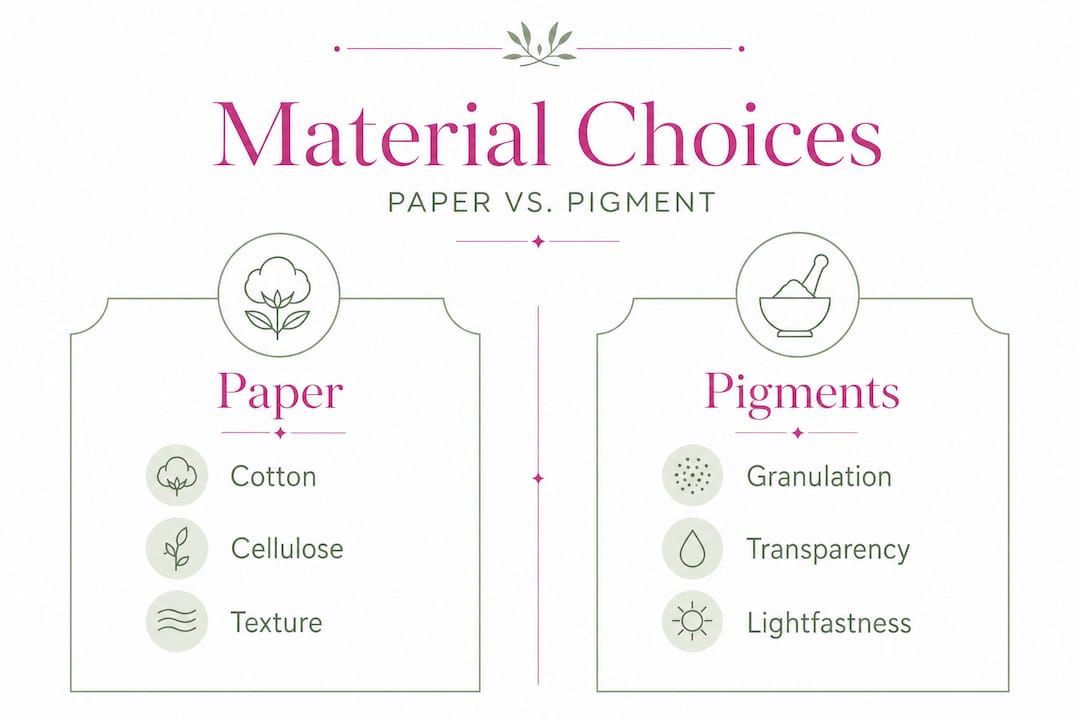
The choice of watercolor paper, whether hot press, cold press, or rough, and whether cotton or wood pulp, is a major control factor for technique outcomes like edge sharpness and granulation. This is not a minor consideration. The same painting executed on hot press versus rough paper will look like two entirely different works.
Cotton vs. wood-pulp paper:
Cotton paper (also called rag paper) is made from cotton fibers rather than wood pulp. It is significantly more durable, absorbs paint evenly, and holds up to repeated wetting and lifting without deteriorating. Professional artists prefer cotton paper for finished work. Wood-pulp student-grade paper is more affordable but yellows over time, tears more easily when wet, and does not hold pigment as cleanly. For practice, wood-pulp paper is acceptable. For work intended to last or be displayed, cotton paper is the standard.
Pro Tip: Before starting a painting on any new paper, test a corner of the sheet with a wet wash, let it dry, and observe how it buckles, how quickly it absorbs the paint, and whether edges stay soft or hard. This 60-second test prevents surprises mid-painting.
Pigment properties that change your marks:
Watercolor paint behaviors depend on pigment properties, including how much it granulates or stains, as well as handling and paper type. Two pigments that look identical in color can behave very differently on paper.
- Staining pigments sink into paper fibers and cannot be fully lifted once dry. These are useful for permanent undertones but limit correction options.
- Non-staining pigments sit on top of paper fibers and can be partially lifted with a damp brush, offering more flexibility for corrections and highlights.
- Granulating pigments separate into visible particles as they dry, creating a textured, speckled appearance. Ultramarine blue, raw umber, and cerulean blue are classic examples.
You can explore the artist background of Eman Khalifa to see how these material choices translate into finished contemporary artwork.
Texture effects: Granulation, blooms, and watercolor’s magic
With an understanding of materials, the unique texture effects that make watercolor visually distinct become easier to understand and control. Two effects in particular define the character of watercolor as a medium: granulation and blooms.
Granulation explained:
Granulation occurs when heavier pigment particles settle unevenly into the paper’s texture as the wash dries, producing a mottled or speckled texture. It is a direct result of pigment particle weight and paper surface interaction. Granulation differs from blooms; it is specifically the visible mottling created by pigment grains settling unevenly during drying, not the result of water flow patterns.
“Granulation is not a flaw to be corrected. It is a feature to be understood. The right granulating pigment on a rough surface can produce the texture of granite, weathered wood, or storm-cloud shadow with a single wash.”
Common watercolor texture effects:
- Granulation: Caused by heavy pigment particles on textured paper. Best used for rocks, earth, and atmospheric skies. Enhance it by using rough paper, tilting the surface, and choosing granulating pigments.
- Blooms (backruns): Caused by adding wet paint or water to a damp (not wet) area. Creates a cauliflower-shaped edge with a white halo. Can be used deliberately for organic texture in foliage, clouds, or abstract work.
- Hard edges: Caused by paint drying at a puddle’s outer boundary. Useful for defining shapes and creating graphic elements.
- Soft edges: Caused by working into wet paper. Creates gentle, atmospheric transitions between color areas.
These effects add life and movement to finished work. In seascape paintings, for example , controlled blooms and granulation can suggest the texture of waves, sea foam, and distant haze in ways that flat, even washes never could.
Watercolor in practice: Finding your style and next steps
Now that you know how to control, or harness, watercolor’s behavior, the practical question is how to put all of this into a consistent creative practice that develops your personal style over time.
Steps for building an ongoing watercolor practice:
-
Select a consistent set of materials. Start with three papers (hot press, cold press, rough), a set of 12 to 18 pigments that include both granulating and non-staining options, and two to three brush sizes (a flat wash brush, a round detail brush, and a medium round).
-
Practice isolated techniques. Spend dedicated sessions on single techniques: one session on graded washes, one on wet-on-wet blooms, one on glazing. Isolating techniques builds muscle memory faster than painting full compositions from the start.
-
Copy master works. Choose a classic watercolor work and attempt to reproduce it. This is not about plagiarism; it is about learning decision-making. Why did the artist leave that area white? Why is that edge soft? Copying answers those questions through practice.
-
Study contemporary watercolor artists. Contemporary artists push the medium into abstract, geometric, and large-scale territory that demonstrates how broad the medium’s range actually is.
-
Build layered compositions gradually. Start with a light compositional sketch. Apply a broad background wash. Add mid-tones after the background dries. Work toward finer detail in the foreground. Resist adding detail too early.
-
Review and reflect. After each session, photograph your work and compare it against the technique goals you set before starting. Note what worked, what failed, and what you want to try differently.
Learning why artists choose watercolor as their primary medium provides context that makes these technical steps feel more purposeful rather than mechanical.
The real secret behind watercolor mastery
Many aspiring artists approach watercolor believing that mastery means total precision. They aim for perfect edges, flawless gradients, and zero surprises. This approach often produces technically competent but visually lifeless work. The real turning point in watercolor development comes when an artist learns to guide the medium rather than control it entirely.
Even professional artists work with serendipity. A bloom that appears in an unexpected place becomes a cloud. A granulating wash that dries mottled becomes the texture of an old stone wall. The artists who produce the most compelling watercolor work are not the ones with the steadiest hands; they are the ones who recognize an interesting accident and know when to stop painting.
This perspective is worth considering directly. Many artists waste sessions trying to correct “mistakes” that are actually the medium doing what it does best. When you chase a bloom with a dry brush trying to eliminate it, you often create a muddy streak that is far more distracting than the original bloom would have been.
“The most honest advice in watercolor is this: learn the rules thoroughly, then trust the water. The paint knows things about the paper that your brush does not.”
Beginners especially benefit from this mindset shift. A session where three “ruined” paintings taught you about granulation, bloom control, and paper wetness is worth more than a session where one technically safe painting came out exactly as planned. Growth in this medium comes from understanding the artist’s philosophy of embracing the medium’s nature rather than fighting it. Mistakes are not failures. They are data points that make the next painting better.
Explore original watercolor art and resources
With practical knowledge and fresh perspective in hand, seeing finished original work brings these concepts to life in ways that text alone cannot.
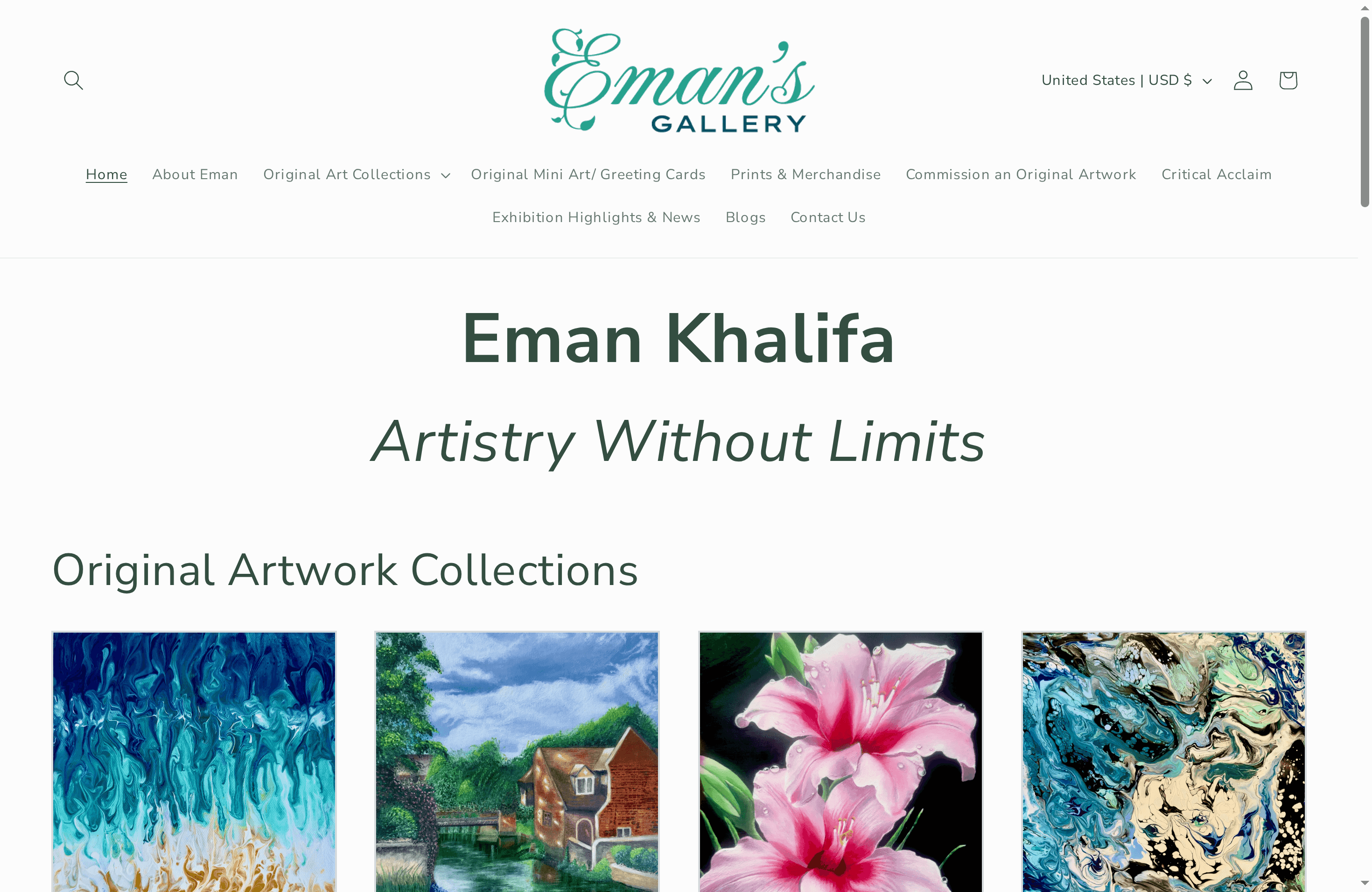
Eman’s Gallery offers original handmade paintings that demonstrate a range of watercolor and mixed-media approaches, from quiet still-life works to expressive seascapes. The Good Tidings original painting and the Nocturned original painting are examples of how layering, edge control, and material selection come together in finished artwork. For those who want to live with a piece before committing to an original, canvas and art prints — including framed archival prints and canvas prints — are available in museum-quality reproductions , shipped worldwide from locations including the UK, USA, Canada, Australia, UAE, and across Europe.
Frequently asked questions
What makes watercolor different from other paint types?
Watercolor uses water as its solvent and relies on transparent layers that allow light to reflect off the paper beneath, creating luminosity that opaque paints like acrylic or oil cannot replicate.
Do I need special paper for watercolor painting?
Yes. Watercolor paper is engineered to handle wet washes without buckling and to interact correctly with pigment, with surface type directly affecting edge sharpness, granulation, and how easily color lifts.
What is the best beginner technique in watercolor?
Wet-on-dry offers the most control for beginners because paint stays where it’s placed, while wet-on-wet creates softer atmospheric effects; practicing both early gives you a broader foundation.
How do I keep my highlights bright in watercolor?
Reserve white areas by painting around them from the start rather than adding white paint later; the brightest whites in a watercolor painting come from the unpainted paper surface itself.
How do I practice and improve my watercolor skills?
Experiment with isolated techniques on different paper types, copy works by established watercolor artists to study their decision-making, and review each session critically to identify what techniques to refine next.
Shop Watercolor and Nature-Inspired Art
Explore original works and prints from Eman's Gallery that capture the luminosity and texture of watercolor-inspired art:
- Seascape Originals — expressive ocean works with natural texture and depth
- Floral Art — nature-inspired originals and prints in full bloom
- Landscapes — atmospheric works that capture light and place
- Framed Archival Prints — museum-quality reproductions, ready to hang
Recommended
- Master 7 types of painting techniques to elevate your art
- Textured Artwork: Styles, Techniques & Uses - Eman’s Gallery
- Master line drawing: techniques, styles, and expert tips
- 7 Essential Tips for Exploring Different Art Mediums
Stay Connected
- ✨ Explore Eman Khalifa’s original art and fine art prints
- 📸 Follow Eman Khalifa’s art journey on: Instagram @emans_gallery and Facebook Eman’s Gallery
- 📹 Watch Eman Khalifa creating live art on: YouTube @emans_gallery
