


Types of Wall Art: Your Complete Home Decor Guide
TL;DR:
- Choosing wall art involves selecting the right material and style to suit your space and emotional mood.
- Gallery walls should start with an anchor piece and be hung at 57 inches to create a cohesive display.
Choosing wall art for your home is one of the most personal decisions in interior design, and the sheer number of options can make it harder than it needs to be. The types of wall art available span dozens of materials, formats, and styles, each with different visual effects, price points, and lifespans. This guide breaks down every major category, compares what matters most, and gives you a clear framework for deciding what works in your space.
Table of Contents
- Key takeaways
- 1. Types of wall art by material and format
- 2. Textile and three-dimensional wall art
- 3. Wall art styles and how they shape room mood
- 4. Comparing popular wall art types side by side
- 5. Wall art styles by room type
- 6. Gallery wall planning and layout strategies
- My take on choosing wall art that actually works
- Explore original art and prints from Emansgallery
- FAQ
Key takeaways
| Point | Details |
|---|---|
| Material affects lifespan significantly | Poster prints last 2–5 years; canvas lasts decades; metal can exceed 200 years. |
| Style shapes room mood | Abstract, minimalist, botanical, and geometric art each create a distinct atmosphere. |
| Gallery walls need an anchor piece | Start with one large work, then build outward with mixed sizes and mediums. |
| Hang at 57 inches center height | This museum-standard placement applies to both single pieces and multi-piece arrangements. |
| Textile art adds warmth flat prints cannot | Tapestries and fiber art bring organic texture and softness to any wall. |
1. Types of wall art by material and format
The first decision most buyers face is format. Wall art spans framed prints, canvas, photography, textiles, metal, and original paintings, and each material creates a completely different visual effect on the wall.
Here is a breakdown of the most common physical formats:
- Framed art prints. A frame adds immediate structure and sophistication. It signals “finished piece” to the eye and works across traditional, transitional, and contemporary interiors. Frames also protect the art, which matters for longevity. Read more about the impact on high-end decor when framing is done right.
- Canvas prints. Canvas gives artwork a painterly, textured surface without the reflective glare of glass. It works well as a statement piece in living rooms and bedrooms, and it reads as more substantial than a flat print.
- Poster prints. The most affordable format. Poster prints last around 2 to 5 years, making them ideal for renters or anyone who rotates their decor seasonally. They are lightweight, easy to swap, and widely available in every style imaginable.
- Metal wall art. Metal prints are the most durable option. They resist moisture and fading, making them well suited for bathrooms, kitchens, and any room with direct sunlight. Metal finishes read sharper and more contrasty than canvas or paper, which amplifies detail in photography and graphic art.
- Wood wall art. Wood adds warmth and a handcrafted quality. Laser-cut wood panels, carved relief pieces, and wood-mounted prints bring texture and dimension without the weight of metal sculpture.
Pro Tip: When choosing between canvas and a framed print, consider the room’s lighting first. Rooms with heavy natural light benefit from matte canvas over glass-framed prints, which can create glare across much of the day.
2. Textile and three-dimensional wall art
Flat prints are not the only option. Some of the most interesting home wall art types involve texture, depth, and material that extends off the wall plane.
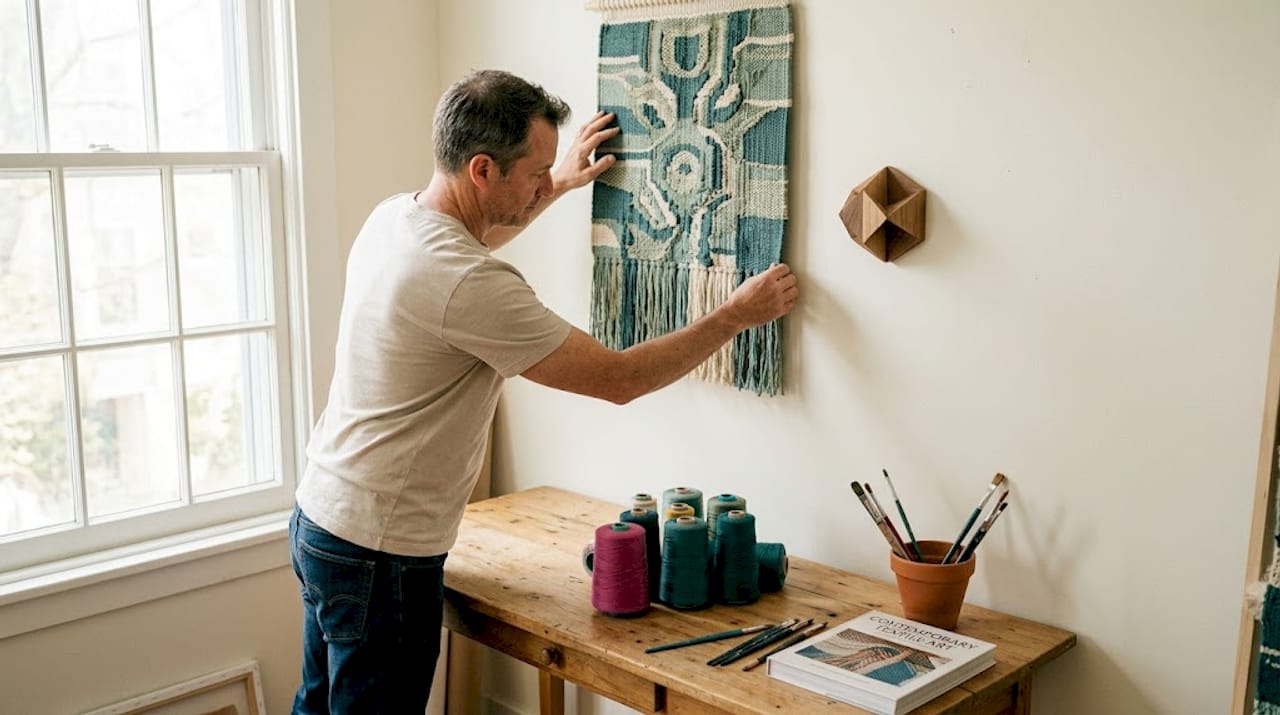
Textile art adds softness and organic warmth that glossy or flat print formats simply cannot replicate. That is why tapestries and fiber art have seen a significant surge in popularity, particularly in bedrooms and living rooms where comfort is the design priority.
Key textile and three-dimensional options include:
- Woven tapestries. Large tapestries work particularly well above beds or sofas, where they anchor the wall without competing with furniture. Smaller woven pieces suit powder rooms, entryways, and staircase walls.
- Macramé and fiber art. Knotted fiber art is among the most popular DIY wall art projects in current home decor circles. It adds handmade character and works especially well in bohemian, coastal, and Scandinavian-influenced spaces.
- Wall-mounted sculptures. Three-dimensional sculptures, whether ceramic, resin, or metal, add shadow play and visual intrigue that changes throughout the day as light moves across the surface.
- Fabric panels and quilts. Vintage quilts and stretched fabric panels are underused but highly effective for adding pattern and history to a wall, particularly in maximalist or eclectic rooms.
Pro Tip: Layer a small textile piece beside a canvas print rather than placing them on separate walls. Mixing flat and dimensional art within a single arrangement creates visual depth that makes the entire display feel curated.
3. Wall art styles and how they shape room mood
Beyond format and material, the style of the artwork determines the emotional atmosphere of the room. Selecting the medium alongside the mood you want is what separates well-designed rooms from rooms that look assembled without intention.
These are the most common different wall art styles and what each one delivers:
- Abstract art. Abstract works create movement, energy, and interpretive space. They are not tied to any specific subject, which makes them adaptable to almost any decor style. Blues and greens feel calm; reds and golds feel bold and warm.
- Contemporary and modern art. Clean lines, limited palettes, and graphic compositions define modern wall art designs. These pieces work in minimalist and industrial interiors without overwhelming the space.
- Minimalist art. Single-subject prints, negative space compositions, and monochrome line drawings reduce visual noise. They are the right choice for smaller rooms or spaces that already have a lot of pattern in furniture or textiles.
- Botanical and nature-inspired art. Plants, landscapes, seascapes, and florals ground a room and create a sense of calm. These types of wall decorations are consistently popular in kitchens, bathrooms, and reading nooks.
- Geometric art. Bold shapes and structured compositions add architectural interest. Geometric works pair especially well with mid-century modern and contemporary Scandinavian interiors.
- Typography and quote art. Words printed on a wall carry explicit meaning. Done well, they reinforce a room’s purpose. Done poorly, they state the obvious. Choose quotes that are personal and specific rather than generic.
- Photography prints. Fine art photography occupies an interesting middle ground between documentation and art. Black-and-white photography in particular works across almost any interior style.
4. Comparing popular wall art types side by side
Affordability, durability, and visual impact all influence which format makes the most sense for a specific situation. The table below compares the main options clearly.
| Format | Lifespan | Price range | Best environment | Key tradeoff |
|---|---|---|---|---|
| Poster print | 2–5 years | $ | Rentals, teen rooms, seasonal decor | Low cost, but fades quickly |
| Canvas print | 25–75 years | $$ | Living rooms, bedrooms, offices | Great texture, not moisture-proof |
| Metal print | 65–200+ years | $$$ | Bathrooms, kitchens, bright rooms | Most durable, harder to patch or reframe |
| Wood art | 20–50 years | $$ | Bedrooms, hallways, eclectic spaces | Warm texture, can warp in high humidity |
| Textile/tapestry | 10–30 years | $–$$ | Bedrooms, boho, layered interiors | Adds warmth, harder to clean |
| Original painting | Indefinite | $$$–$$$$ | Statement walls, collectors, luxury homes | Highest investment, highest uniqueness |
The canvas vs. paper prints comparison is one of the most common decisions buyers face. Canvas wins on texture and longevity. Paper wins on color accuracy and lower cost. For buyers who plan to keep a piece for years, canvas is the more practical choice.
5. Wall art styles by room type
Not every style fits every room. Here is how to match popular wall decor ideas to the spaces where they perform best.
Living rooms are the most flexible space in the home and can handle large-scale abstract works, gallery walls, and sculptural pieces without the composition feeling crowded. A single oversized canvas or original painting above a sofa creates a focal point immediately.
Bedrooms benefit from calmer, more personal art. Botanical prints, landscapes, and soft abstract works in muted palettes support rest and relaxation. Textile art above the bed is a strong alternative to a headboard in rooms with minimal furniture.
Kitchens and bathrooms call for moisture-resistant formats. Metal prints are the best material choice here. Keep the scale modest and the subject matter connected to the function of the room: food, nature, or simple geometric pattern.
Home offices respond well to art that motivates without distracting. Geometric pieces and clean photography work better than complex figurative art in spaces where concentration matters.
6. Gallery wall planning and layout strategies
A gallery wall is one of the most effective ways to combine different types of wall art into a single, cohesive display. It can include framed prints, unframed canvas, textile pieces, and three-dimensional objects simultaneously.
- Start with an anchor piece. Use one large print as the anchor, positioned at the center of the arrangement. All other pieces should radiate outward from this starting point. Without an anchor, gallery walls tend to feel random.
- Mix sizes and orientations. A wall of same-size frames reads as flat and static. Combine portrait, landscape, and square formats to create rhythm across the arrangement.
- Hang at 57 inches center height. The 57-inch center-hang rule applies to both single pieces and multi-piece compositions. It reflects the average human eye level and is the standard used in museums and professional galleries.
- Maintain 2 to 3 inches between pieces. Spacing of 2 to 3 inches between frames keeps the wall looking intentional rather than overcrowded.
- Mix flat and dimensional. Adding one textile piece or small wall sculpture to an otherwise flat gallery wall creates texture contrast that makes the entire arrangement more interesting.
- Plan on the floor first. Lay all pieces on the floor in the arrangement you are considering before putting a single nail in the wall. This saves significant time and prevents unnecessary holes.
Pro Tip: Use craft paper to trace each frame’s outline, cut them out, and tape the paper shapes to the wall before hanging. It is the most reliable way to preview spacing and composition without committing.
Read the full DIY gallery wall guide on Emansgallery for step-by-step layout templates.
My take on choosing wall art that actually works
I have made almost every mistake you can make when selecting and arranging wall art. Pieces too small for the wall. Gallery walls that felt busy because every piece competed with the others. Art that looked right in isolation but wrong in the room.
The biggest shift in my approach came when I stopped asking “do I like this?” and started asking “what do I want this room to feel like?” Those are very different questions. Matching medium and mood is not a suggestion. It is the actual mechanism behind why some rooms feel considered and others feel unfinished.
My other consistent observation is that people underestimate texture. A room full of framed prints, even beautiful ones, reads as flat. One textile piece, one sculptural object, or one original painting changes the entire temperature of the space. The tactile quality of a handmade work communicates something that a reproduction print simply cannot.
I also think people change more slowly than they expect to. Buy art you genuinely connect with now, not art that represents who you think you are becoming. The pieces that hold their place on the wall are always the ones with personal meaning, not the ones that were simply fashionable.
— Eman
Explore original art and prints from Emansgallery
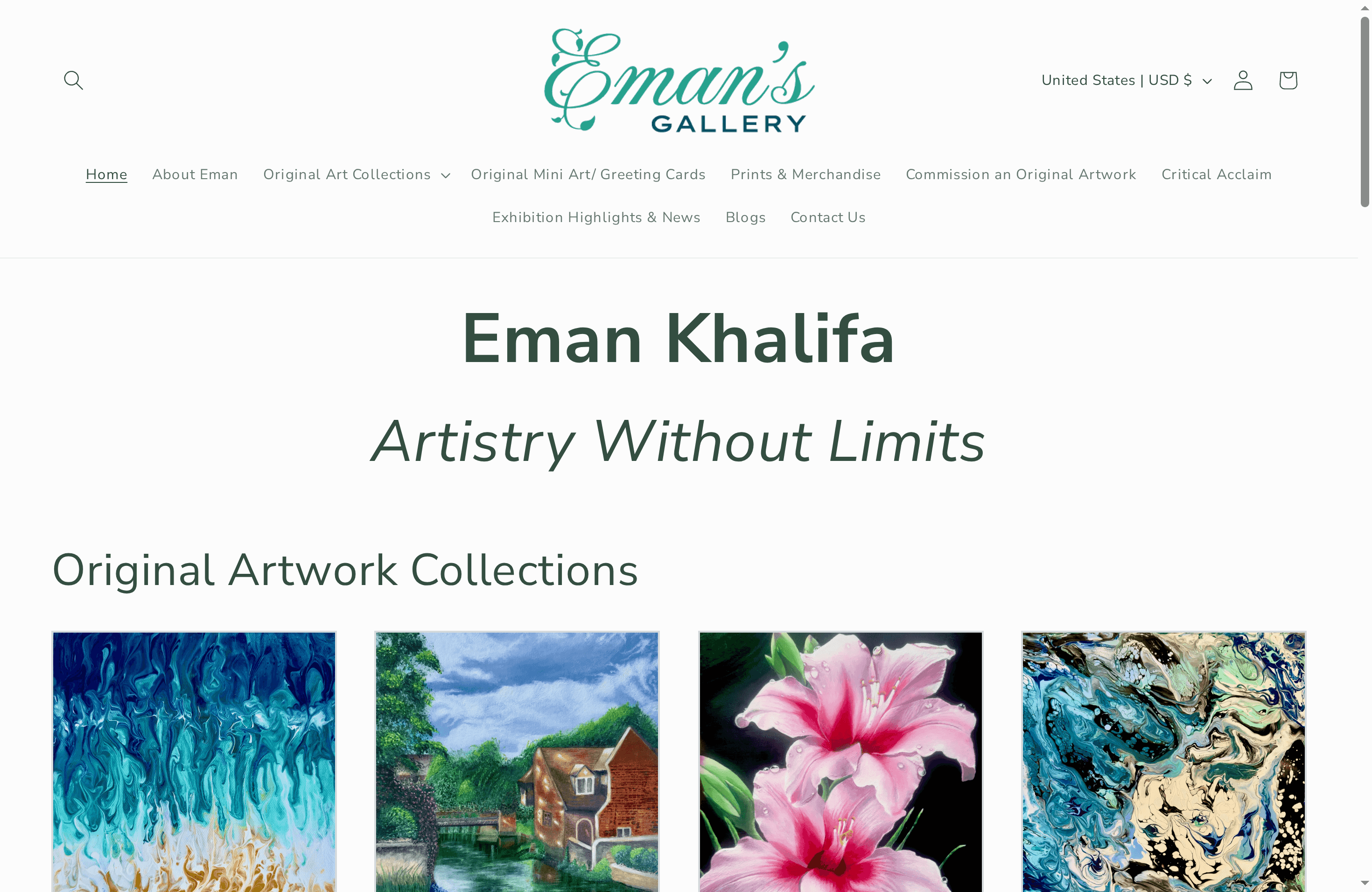
If you are ready to move beyond generic prints, Emansgallery offers original handmade paintings by artist Eman Khalifa across abstract, geometric, floral, landscape, and seascape styles. Each piece is one of a kind.
For buyers who want statement wall art, the fluid blue gold ocean original painting and the abstract ocean in gold are among the most striking large-scale works currently available. If you prefer moody, atmospheric pieces, the moonlit night scene original is a strong choice for a bedroom or living room feature wall.
For canvas prints across a wide range of styles including geometric, expressionist, and monochrome abstract, browse the full canvas and framed prints collection. Emansgallery ships worldwide from the UK, USA, Canada, Australia, and several other countries.
FAQ
What are the most common types of wall art?
The most common types include framed prints, canvas art, poster prints, metal prints, textile hangings, and original paintings. Each format differs in lifespan, price, and visual effect.
How long does wall art last?
Lifespan depends on the material. Poster prints last 2 to 5 years, canvas prints last 25 to 75 years, and metal prints can last 65 to 200 or more years with proper care.
What size wall art should I use?
For a sofa or bed, choose a piece that spans roughly two-thirds the width of the furniture below it. For a gallery wall, start with a large anchor piece and build outward with smaller works.
What height should wall art be hung?
Hang art so the center of the piece sits at 57 inches from the floor. This is the museum-standard height and applies to both single works and multi-piece gallery arrangements.
What wall art works best for a small room?
Minimalist art, simple line drawings, and smaller botanical prints work well in compact spaces. Avoid large-scale abstract works or busy gallery walls, which can make small rooms feel more cluttered.
Stay Connected
-
✨ Explore Eman Khalifa's original art, fine art prints & art merchandise
-
Follow Eman Khalifa's art journey on: Instagram @emans_gallery and Facebook Eman's Gallery
-
Watch Eman Khalifa creating live art on: YouTube @emans_gallery
-
Supported by BabyLoveGrowth
