


Framed Prints: Impact on High-End Home Decor
Choosing art for high-end interiors is never just about style. For American and British collectors, understanding how a framed print functions is key to both preserving value and elevating luxury spaces. Contemporary framing goes well beyond simple edges, acting as a connector between the artwork and its display environment and influencing how viewers interpret each piece. This article highlights why framed prints offer both protection and aesthetic impact, helping you make choices that shape the character and longevity of your collection.
Table of Contents
- Defining Framed Prints In Contemporary Art
- Types Of Framed Prints For Collectors
- Understanding Edition Types And Their Implications
- Materials And Construction: What To Look For
- Benefits Of Framed Prints In Luxury Spaces
- Choosing And Displaying Framed Prints Effectively
Key Takeaways
| Point | Details |
|---|---|
| Framing Influences Perception | The choice of frame significantly affects how viewers interpret and experience contemporary artworks. Frames are not just decorative but integral to the artwork’s narrative. |
| Material Matters | High-quality, acid-free materials and UV-protective glazing are critical for preserving prints, enhancing their longevity and investment value. |
| Types of Prints Define Value | Understanding variations such as original, limited edition, and hand-finished prints is essential for collectors as they impact both aesthetics and monetary value. |
| Strategic Display is Key | Thoughtfully selected and arranged framed prints enhance luxury interiors by creating focal points and complementing overall design aesthetics. |
Defining Framed Prints in Contemporary Art
Framed prints represent far more than reproduction artwork under glass. In contemporary art contexts, they function as deliberate curatorial choices that fundamentally shape how viewers experience and interpret visual works. A framed print combines multiple elements: the original artwork (whether a painting, photograph, or digital creation), the printing medium (canvas, paper, metal, or other materials), and the frame itself, which acts as both protective housing and aesthetic statement.
The frame plays a surprisingly active role that many collectors overlook. Rather than simply serving as decoration, the physical frame in contemporary art functions as what researchers call a “constructed surplus” that connects the artwork to its display environment and influences how observers interpret the piece. This means your choice of framing directly affects the narrative of the work. A minimalist aluminum frame tells a different story than an ornate wooden one. The frame mediates between the artwork and the viewer, creating what curators recognize as an essential presentation layer. When collectors from New York to London select framing options, they’re making conceptual decisions, not merely functional ones.
Contemporary framed prints also distinguish themselves through their intentional diversity in materials and formats. Unlike traditional framing practices that emphasized uniformity, today’s framed prints embrace varied approaches:
- Canvas prints on stretchers offer dimensional presence with gallery wrapping techniques
- Fine art paper prints with museum-quality matting and archival framing for longevity
- Metal and acrylic mounted prints that create floating effects and modern aesthetics
- Large-scale wall art installations where the frame becomes an architectural element
This shift reflects what contemporary art theorists recognize: the frame itself has evolved beyond being merely an edge. Framed prints now encompass broader concepts of display, protection, and mediation between the artwork and its context. For luxury interior designers working with high-end clients, understanding this distinction matters enormously. When selecting framed prints for a Manhattan penthouse or London townhouse, you’re choosing how that artwork will be contextualized within the space, how light interacts with it, and what emotional response it triggers.
Most importantly, framed prints challenge the misconception that contemporary art exists frameless or without boundaries. Research consistently demonstrates that frames remain integral to how contemporary artworks function, serving as narrative elements that shape both the physical and conceptual presence of the work. For collectors investing in pieces from artists like Eman Khalifa, who creates handmade paintings in abstract, geometric, and landscape styles, the framing decision represents an extension of the artistic vision itself. When you frame a contemporary print, you’re completing a conversation between artist, work, and space.
Pro tip: When selecting frames for your collection, consider the artwork’s color palette and your interior’s lighting conditions first; then choose frame materials and finishes that complement rather than compete with the print itself.
Types of Framed Prints for Collectors
Collectors face numerous choices when building their framed print collections, and understanding the distinctions between different print types is crucial for making informed purchases. The market offers several distinct categories, each with unique characteristics that affect both aesthetic value and investment potential. Original prints, hand-finished prints, and limited editions represent the primary divisions you’ll encounter, though each category contains meaningful variations that impact collectibility and long-term value. For American and British collectors, these distinctions matter significantly because they determine authenticity, rarity, and the piece’s standing within the broader art market.
Original prints demand particular attention because they represent artworks created specifically for the printmaking process rather than reproductions of existing paintings. When an artist like Eman Khalifa creates an original print work, it’s conceived as a print from inception, not converted from another medium. These pieces are typically signed and numbered, establishing provenance and edition size. A print numbered 5 of 50 tells you exactly how many authorized copies exist. Hand-signed original prints command premium prices because they prove direct artist involvement. Limited edition prints function similarly but often involve more controlled production runs. The numbering system works this way: the first number indicates which copy you own, while the second shows total production. A 1 of 100 print holds different value than a 87 of 100, despite both being legitimate limited editions. Collectors frequently prefer lower numbers in the sequence, though this preference varies by market segment.
Hand-finished prints occupy a fascinating middle ground between mass production and original artwork. These begin as professionally printed base pieces that the artist then customizes individually through techniques like hand-painting, drawing, or mixed media additions. This personalization increases value substantially compared to standard prints. A hand-finished canvas print might feature hand-applied brushstrokes or gold leaf elements that differentiate each piece from others in the same edition. This approach allows artists to maintain artistic control while producing multiple pieces more efficiently than completely original works. Monoprints stand apart as one-of-a-kind pieces created through single-printing processes, making them exceptionally rare and valuable. Unlike limited editions where 50 identical copies exist, a monoprint has no edition number because only one version was ever produced.
Understanding Edition Types and Their Implications
The framing presentation varies significantly depending on print type, and collectors should understand how framing choices interact with the print category:
- Museum-quality framing for original and hand-finished pieces protects investment value through archival materials
- Contemporary floating frames emphasize the print’s modern aesthetic without traditional matting
- Canvas mounting on stretchers works best for hand-finished pieces that benefit from dimensional presentation
- UV-protective glazing becomes essential for valuable limited editions or monoprints exposed to natural light
High-end collectors working with luxury interior designers should recognize that print type influences framing decisions. An original print demands museum-grade conservation framing, while a hand-finished art print might showcase contemporary frame styles that complement the personalized elements. The wrong framing choice can diminish a piece’s perceived value and longevity. When you invest in framed prints for a Manhattan apartment or London estate, you’re committing to long-term preservation alongside aesthetic display.
One critical distinction emerges between reproductions and collectible prints. Reproductions lack artist signatures, limited edition numbers, and hand-finishing elements. They’re affordable decorative options but hold minimal investment value. Collectors building serious portfolios distinguish carefully between these categories. The difference between a signed, numbered original print and an unsigned reproduction can represent thousands of dollars in value.
Here’s a quick comparison of primary framed print types and their characteristics for collectors:
| Print Type | Artist Involvement | Edition Size | Investment Potential |
|---|---|---|---|
| Original Print | Created, signed, numbered | Fixed, usually small | Highest, strong provenance |
| Limited Edition | Signed, controlled run | Fixed, typically moderate | Medium to high, editioned |
| Hand-Finished Print | Individual customization | Variable, each piece unique | High, personalized details |
| Reproduction | Minimal, unsigned | Unlimited, mass produced | Low, decorative use |
Pro tip: Always request certificate of authenticity and edition information before purchasing framed prints, and verify that any hand-finishing claims are documented with photographs showing the unique personalization on your specific piece.
Materials and Construction: What to Look For
The difference between a framed print that lasts decades and one that deteriorates within years comes down to materials and construction methods. Most collectors don’t realize that the frame itself represents only one component of a complex preservation system. What happens behind the glass matters as much as what appears in front of it. When you purchase a framed print from a reputable gallery, you’re investing in invisible protection layers that safeguard your artwork from environmental threats. Acid-free materials form the foundation of proper construction. Paper, mat board, and backing materials all contain acidic compounds that migrate toward your print over time, yellowing and degrading the image. Archival framing requires acid-free mats, backing boards, and protective glazing that work together as an integrated preservation system. For collectors in New York or London spending substantial resources on framed prints, understanding these technical details translates directly to artwork longevity.
The glazing you select determines how much light damage your print experiences. Standard glass allows ultraviolet rays to penetrate and fade artwork colors over years of display. UV-protective glazing filters these harmful wavelengths while maintaining optical clarity. Museum-quality collectors now insist on UV protection, recognizing that even indirect sunlight degrades prints without proper filtering. Conservation-grade materials go further than standard offerings. Conservation-grade framing materials including acid-free cotton rag mat boards and UV-protective glass prevent chemical degradation and physical damage simultaneously. The mat board deserves particular attention because it directly contacts your print. Cotton rag boards significantly outperform standard wood pulp boards, which contain lignin and chemical compounds that accelerate deterioration. High-end framers source 100 percent cotton rag boards because they maintain neutral pH levels indefinitely. When selecting framing for an original print or hand-finished artwork, specify conservation-grade materials explicitly. The cost difference between standard and archival materials typically ranges from 15 to 30 percent but protects your entire investment.
Critical Construction Details That Protect Your Investment
Proper spacing prevents physical contact between your print and the glazing, which can cause condensation damage or pigment transfer. Most high-quality framers employ spacers or separators that create air gaps while remaining invisible behind the frame edge. This seemingly minor detail prevents moisture from accumulating against the artwork surface. The backing system requires equal attention. Acidic backing materials allow chemical compounds to migrate backward into your print. Conservation framers use archival-quality backing boards and sometimes add additional barriers that completely isolate the print from external air and moisture. Mounting techniques matter tremendously as well. Improper mounting using tape, glues, or pressure-sensitive adhesives can permanently damage prints. Professional framers employ reversible mounting methods using conservation-grade materials that won’t harm your artwork if you ever need to remove the frame.
When evaluating framed prints for your collection, request specific information about materials used. Ask whether the framer used acid-free materials throughout, what type of glazing protects the print, and how the artwork was mounted. Luxury interior designers working with high-end clients should specify these requirements in their design specifications. A framed print featuring a museum-quality abstract or geometric composition from an artist like Eman Khalifa deserves construction standards that match its artistic value. The frame aesthetics matter for your home’s design, but the hidden construction determines whether your print remains vibrant for decades or deteriorates within years.
For reference, here are essential framing materials and their impact on artwork preservation:
| Material Type | Typical Use Case | Preservation Benefit | Longevity Impact |
|---|---|---|---|
| Acid-free Mat Board | Contact with artwork | Prevents yellowing and decay | Decades of color stability |
| UV-Protective Glazing | Glass cover for prints | Blocks harmful rays | Minimizes fading over time |
| Cotton Rag Backing | Archival support for prints | Maintains neutral pH | Maximum preservation |
| Standard Pulp Board | Basic framing | Contains acids, may degrade | Shorter lifespan |
Consider creating a documentation system for your collection. Record the framing specifications for each piece, including glazing type, mat board composition, and mounting method. This information becomes invaluable if you ever need restoration work or want to understand your print’s preservation history. Professional collectors maintain detailed records for insurance and preservation purposes.
Pro tip: When commissioning framed prints, always request written documentation specifying acid-free materials, UV-protective glazing, and reversible mounting methods, and ask your framer to provide photographs showing how your specific print was constructed before it’s sealed.
Benefits of Framed Prints in Luxury Spaces
Luxury interiors demand thoughtful curation, and framed prints have become essential tools for sophisticated design strategies. Beyond their obvious aesthetic appeal, framed prints deliver practical advantages that justify their prominent placement in high-end homes. Framed art prints offer protection, presentation, and sophistication by shielding artwork from environmental factors while simultaneously transforming spaces through character and visual depth. For collectors and interior designers in major American and British cities, understanding these multifaceted benefits clarifies why framed prints command such prominence in luxury design schemes. A well-selected framed print doesn’t simply occupy wall space. It functions as an investment in both preservation and ambiance. The frame itself protects against ultraviolet rays that fade colors, dust particles that accumulate on surfaces, and humidity fluctuations that damage delicate prints. Simultaneously, the frame establishes visual context that elevates the artwork’s impact. A museum-quality frame around a contemporary geometric print creates a focal point that anchors an entire room’s design narrative. In penthouses overlooking Manhattan or townhouses in Chelsea, framed prints create the precise balance between artistic expression and interior coherence that luxury design requires.
Creating Visual Impact and Spatial Definition
Framed prints excel at establishing visual hierarchy within luxury spaces. They naturally draw the eye and command attention without overwhelming rooms. When you hang a large-scale framed print above a statement sofa or within a gallery wall arrangement, you’re creating an intentional focal point that organizes the entire room’s composition. This directional power proves invaluable when designing cohesive high-end interiors. Customization options such as frame style, matting, and print selection help integrate artwork seamlessly into luxury interiors, allowing designers to match existing color palettes, material finishes, and design vocabularies. A collector with predominantly warm wood tones and neutral upholstery can select frames in complementary materials and matting colors that enhance rather than clash with existing design elements. The ability to customize every component of the framed presentation means luxury designers can achieve seamless integration that feels intentional rather than imposed. This level of control separates curated collections from randomly assembled artwork. Abstract prints in bold colors demand bold frame treatments, while subtle landscape paintings benefit from minimal framing approaches that don’t compete for attention. The frame becomes an extension of the design strategy, not an afterthought.
Framed prints also add measurable depth to spaces through layering and visual complexity. A collection of framed prints arranged thoughtfully on a single wall creates shadow variations, color transitions, and compositional rhythm that static wall treatments cannot achieve. In luxury apartments, where every design decision carries weight, framed prints transform blank walls into dynamic design features. The three-dimensional quality created by frames protects prints while simultaneously adding tactile interest. Residents and guests perceive depth and sophistication rather than flat decorative objects. This sculptural quality becomes particularly valuable in minimalist luxury spaces where every element must justify its presence and contribute to overall design coherence. A framed print featuring geometric shapes or abstract compositions adds personality without visual noise, which appeals to collectors seeking sophisticated restraint.
Mood Enhancement and Atmospheric Quality
The psychological impact of well-chosen framed prints extends beyond visual appeal. Colors, compositions, and subject matter influence mood and atmosphere in measurable ways. A serenity-inducing seascape in a bedroom creates a different emotional response than bold abstract work in a living area. Luxury homeowners increasingly view framed prints as tools for curating emotional environments, not simply filling wall space. The frame itself contributes to this atmospheric quality. A sleek black frame communicates modern sophistication, while brass or gold-toned frames suggest classic elegance. Collectors working with interior designers carefully consider how framing choices support their desired ambiance. In high-end spaces where every detail signals intentional design choices, framed prints demonstrate that thoughtfulness through their comprehensive presentation.
Framed prints from contemporary artists like Eman Khalifa offer particular advantages for luxury interiors seeking original artistic vision without mass production. Hand-finished prints and limited edition works provide exclusivity and authenticity that resonate with serious collectors. The framing of such pieces amplifies their value proposition, transforming individual artworks into carefully presented visual statements. When budget considerations permit investing in museum-quality framing alongside museum-quality art, the results justify the expense through decades of visual enjoyment and preservation.
Pro tip: Select framed prints for luxury spaces by first identifying your room’s dominant color temperature and material palette, then choose frame finishes and mat colors that echo existing elements rather than introducing competing design languages.
Choosing and Displaying Framed Prints Effectively
Selecting framed prints that actually work in your space requires a strategic approach that goes beyond choosing artwork you like. The process involves evaluating your room’s existing design language, understanding how scale and proportion affect perception, and making deliberate choices about frame styles and arrangements. When collectors and interior designers approach this decision thoughtfully, the results feel curated rather than assembled. Start by analyzing your room’s fundamental characteristics: dominant color palette, lighting conditions, architectural style, and available wall space. A modern minimalist apartment in London demands different framing choices than a traditional townhouse in Boston. The room’s color temperature matters enormously. Warm wood tones, cream walls, and brass accents benefit from frames in natural wood or gold tones, while cool grays and steel elements pair better with black or silver frames. Selecting artworks that harmonize with the room’s color palette, style, and scale ensures cohesiveness and prevents framed prints from feeling like afterthoughts rather than intentional design elements. Consider your lighting situation carefully. Natural light from large windows creates different viewing conditions than artificial spotlighting or ambient overhead fixtures. Direct sunlight fades artwork over time, so placing valuable framed prints away from unfiltered sun exposure preserves colors and protects your investment. Spotlighting or accent lighting strategically positioned near framed prints creates visual drama and highlights the artwork’s details.
Determining Scale and Creating Focal Points
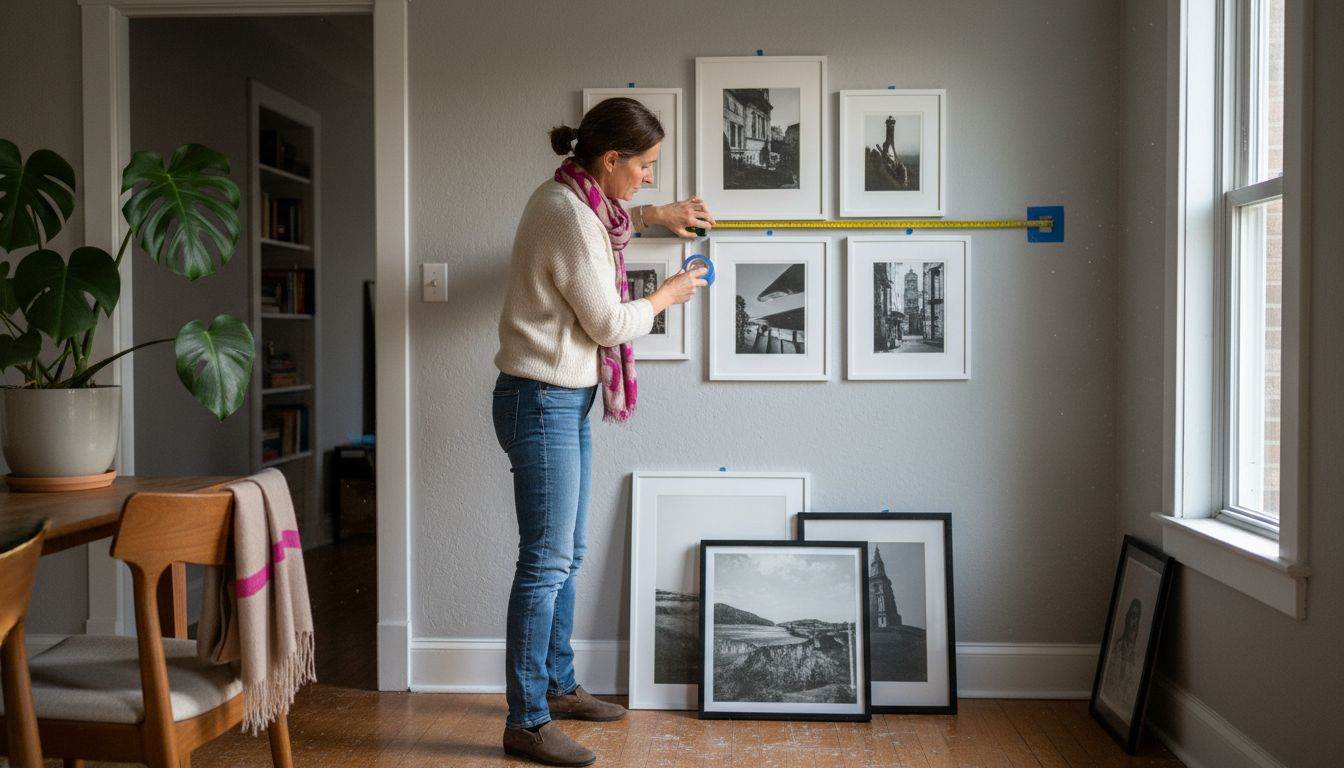
Size relationships between prints, walls, and surrounding furniture determine whether your display feels balanced or awkward. A 24 by 36 inch framed print on a 12 foot wall looks diminished and lost, while that same print above a console table becomes a powerful focal point. Professional designers follow the rule that artwork should occupy approximately 50 to 75 percent of the wall space above furniture pieces. For a sofa wall, this typically means selecting prints that span most of the wall’s width. Consider proportion relative to your eye level when standing in the room. Framed prints centered at eye height (approximately 57 to 60 inches from floor to center) create immediate visual engagement. When arranging multiple framed prints in gallery wall formations, maintain consistent spacing of 2 to 3 inches between frames to create visual coherence. The frames themselves should complement your chosen prints and interior aesthetic. A delicate contemporary geometric print from an artist like Eman Khalifa might be diminished by an ornate traditional frame, while a bold abstract piece benefits from substantial framing that commands attention. Frame materials like natural wood, black metal, white painted wood, or gold accents communicate different design messages. Warm wood frames suggest traditional elegance, while powder-coated metal frames convey contemporary sophistication.
Strategic Arrangement and Display Techniques
The arrangement you choose dramatically impacts how viewers perceive your collection. Common approaches include:
- Salon style walls featuring asymmetrical arrangements that feel collected and curated
- Grid arrangements providing structured, modern compositions with equal spacing
- Single statement pieces maximizing visual impact through deliberate focal points
- Linear arrangements organizing prints horizontally or vertically for architectural emphasis
Which approach works best depends on your room’s proportions and your design aesthetic. A gallery wall with mixed frame styles works beautifully in eclectic contemporary spaces but might overwhelm a minimalist luxury apartment. Conversely, a single large-scale framed print above a fireplace or bed creates the quiet sophistication that many high-end spaces demand. Lighting deserves continued emphasis because it transforms how viewers experience framed prints. Picture lights mounted above or below frames create professional gallery-like presentation. Track lighting allows adjustable focus on multiple prints. Ambient lighting reflected from surrounding surfaces creates subtle presentation that feels integrated rather than theatrical. Avoid placing framed prints directly opposite windows where backlighting creates glare and obscures details.
When displaying hand-finished or limited edition prints, ensure they receive conservation-quality treatment that honors their artistic and financial value. These pieces deserve prime wall locations, appropriate lighting, and thoughtful framing that enhances rather than competes with the artwork. A monoprint featuring subtle color transitions requires different display considerations than a bold geometric print with high color saturation. Understanding your specific print type informs every display decision.
Pro tip: Create a mock-up by photographing your wall space, then print test images of potential framed prints at actual size to visualize how they’ll appear before making purchase commitments.
Elevate Your Luxury Space with Museum-Quality Framed Prints from Eman Khalifa
The challenge of selecting framed prints that perfectly balance preservation with high-end interior design demands expert solutions. This article highlights how framing choices influence not only aesthetic impact but also the longevity and emotional resonance of artwork in sophisticated homes. If you seek original pieces that combine authenticity, exclusive hand-finishing, and museum-grade construction, your search ends at Eman’s Gallery. Explore our curated collection of Wall Art Prints | Canvas & Framed Art Prints by Eman Khalifa – Eman’s Gallery to find the ideal framed piece that complements your space’s lighting, color palette, and luxury materials.
Unlock the full potential of your home decor with framed prints that are as durable as they are beautiful. Whether you prefer bold geometric abstractions or serene landscapes, each print is professionally mounted and framed using archival-quality materials designed to preserve vibrant colors and texture for decades. Start creating curated walls that tell your unique story by browsing our Art Prints on Canvas for Inspired Home Decor | Shop Unique Designs. Experience seamless global shipping and personalized service at https://emansgallery.com. Don’t wait to invest in art that transforms your environment and lasts a lifetime.
Frequently Asked Questions
What are framed prints in contemporary art?
Framed prints are reproductions of original artworks that have been intentionally curated to enhance the viewer’s experience. They include the artwork itself, the printing medium, and the frame, which plays a crucial role in how the artwork is perceived.
How do different framing styles affect the presentation of art?
Different framing styles can significantly influence the narrative and aesthetic of a print. A minimalist frame may emphasize the artwork’s modernity, while an ornate frame can suggest tradition and depth, impacting how viewers respond to the piece.
What are the benefits of using museum-quality framing for prints?
Museum-quality framing includes acid-free materials and UV-protective glazing, which help protect the print from environmental damage, ensuring the artwork remains vibrant and preserved for decades. This type of framing is essential for maintaining the value of collectible prints.
How can I display framed prints effectively in my home?
To display framed prints effectively, consider your room’s color palette, scale, and lighting. Ensure artworks are at eye level and arranged thoughtfully, whether in a gallery wall style or as standalone pieces. Proper lighting enhances visibility and emphasizes the artwork’s features.
Recommended
- What Is Framed Art Print and Why It Matters – Eman’s Gallery
- Role of Art Prints in Interior Design Luxury Spaces
- Role of Prints in Decor: Elevating Luxury Interiors
- Top Art Print Merchandise – Expert Comparison 2026
- 8 Essential Examples of Vintage Frame Styles – ministry of sight
Stay Connected
- ✨ Explore Eman Khalifa’s original art and fine art prints
- 📸 Follow Eman Khalifa’s art journey on: Instagram @emans_gallery and Facebook Eman’s Gallery
- 📹 Watch Eman Khalifa creating live art on: YouTube @emans_gallery
